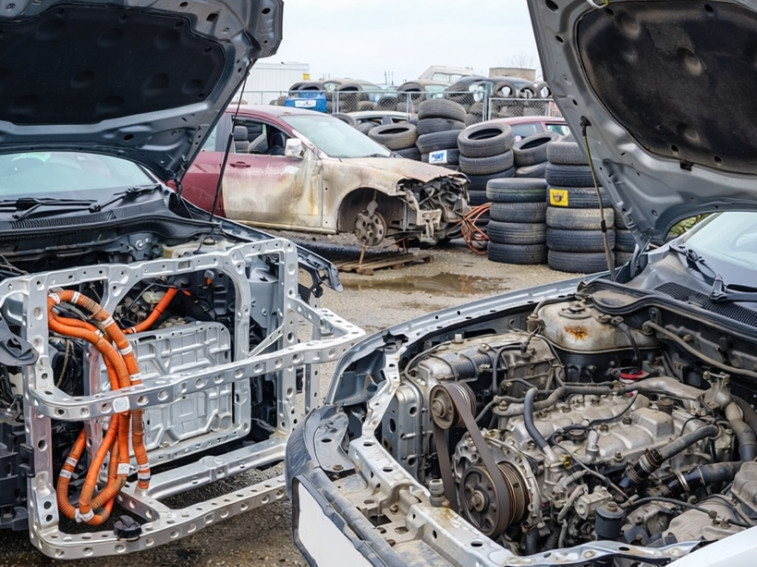
The electric vehicle sitting in that salvage lot isn't just a car with a different engine. It's a completely different financial equation.
Dealers make fortunes on petrol salvage cars only to lose their shirts on a single damaged Tesla. Why? They valued it like a conventional vehicle.
Traditional salvage valuation relies on a simple premise: assess the damage, subtract repair costs from market value, done. But with EVs, you're not just pricing bodywork and mechanical parts.
You're gambling on battery health, software compatibility, and a parts supply chain that's still finding its feet. The difference isn't subtle. It's fundamental.
RAW2K lists hundreds of salvage vehicles monthly. The EV arrivals require EV salvage value calculations that account for battery dominance, software locks, and technology obsolescence. Here's why the maths changes when batteries replace pistons.
The Battery Pack Problem
A petrol engine might cost £800 to replace in a salvage car. An EV battery pack? Try £8,000 to £15,000, sometimes more than the car's pre-accident value.
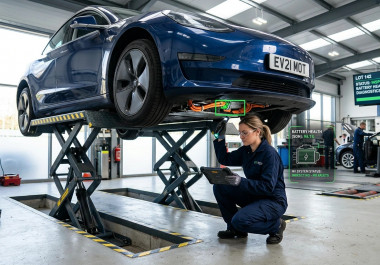
This single component dominates the entire valuation calculation. Even minor collision damage can compromise battery integrity. Here's the kicker: you often can't tell without specialist diagnostic equipment.
Visual inspection means nothing when the real damage is at the cellular level inside a sealed battery pack.
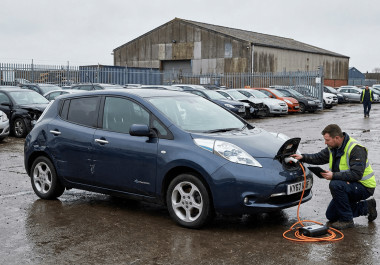
A trader once bought a Cat S Nissan Leaf for what seemed like a steal. The bodywork damage was superficial. A rear quarter panel and tailgate. Easy fix, right? Wrong.
The impact had triggered the battery management system's safety protocols. The pack needed replacing. He'd calculated a £1,200 repair. The actual bill was £9,400.
Battery degradation adds another layer of complexity. A five-year-old diesel might have lost 10% of its value due to mileage and wear. A five-year-old EV might have lost 20-30% of its battery capacity. That directly impacts range and therefore value.
Salvage assessors must factor in both the accident damage and the battery's state of health before the crash. Understanding battery pack replacement costs becomes essential for accurate EV salvage value calculations.
Most insurance engineers now use battery diagnostic reports as standard when assessing EV damage. If the state of health is below 80%, that alone can push a moderately damaged car into Cat B territory. This happens even if the chassis is repairable.
For EVs with severely degraded batteries, exploring end-of-life disposal options may prove more profitable than attempting repairs.
Software and Manufacturer Control
Here's something that catches out even experienced salvage buyers: you can't just replace parts and drive off. Modern EVs are software-locked ecosystems.
Tesla, for instance, maintains tight control over repairs through software authentication. Fit a second-hand door from another salvage car, and the vehicle might refuse to recognise it. Not without official Tesla recalibration, anyway.
Some features simply won't work until the manufacturer's diagnostic system approves the repair.
This creates a hidden cost structure that doesn't exist with conventional vehicles. You might source parts cheaply. But you'll pay hundreds for software unlocking or recalibration.
Sometimes the manufacturer refuses entirely. You're left with a legally repaired car that throws constant error codes.
Volkswagen's MEB platform vehicles, Nissan Leafs, and most Chinese EVs have similar software authentication systems. The parts might be available. But making them communicate with the car's brain requires dealer-level access.
Factor that into your salvage valuation or watch your profit margin evaporate.
Perfectly roadworthy rebuilt EVs sometimes fail to sell because buyers spot the "Service Required" warnings. These won't clear without manufacturer intervention. The repair was sound. The software disagreed.
Parts Availability and Lead Times
Salvage car repairs work on speed. Buy Monday, repair Tuesday, sell Friday. That model collapses with EVs.
Specific EV components have lead times measured in months, not days. Battery modules, power electronics, and charging systems often take this long to arrive.
Whilst you're waiting for a replacement inverter, your capital is tied up. The car's market value is dropping.
The second-hand parts market for EVs is still immature. Breaker yards are full of Mondeos and Corsas. Finding a matching battery module for a Hyundai Ioniq 5? You'll be searching.
When you do find parts, they're often priced at near-retail because supply is limited.
This fundamentally changes the salvage value calculation. With a conventional car, you can reasonably estimate a three-week turnaround. With an EV, you might be looking at three months.
That holding cost must be factored into your initial bid. Insurance, storage, depreciation all add up.
Some salvage buyers now specialise purely in EV battery packs and electronics. They break cars solely for these high-value components rather than attempting full repairs. The maths works better when you're not fighting lead times.
Different Insurance Write-Off Thresholds
Insurers write off vehicles when repair costs exceed a percentage of pre-accident value. Typically 60-70%. But with EVs, that threshold gets hit much faster.
A £30,000 petrol car might sustain £15,000 of damage and still be economically repairable. A £30,000 EV with the same damage often gets written off. Why?
The battery assessment alone adds £3,000-5,000 to the repair estimate. This happens even if the pack ultimately doesn't need replacing.
This creates an interesting opportunity. Cat N EVs with purely cosmetic damage can represent genuine value if you can verify battery health independently.
The insurance company wrote it off based on their assessment protocol. But if you've got access to proper diagnostics, you might find a perfectly healthy battery and purely cosmetic damage.
Conversely, Cat S EVs carry higher risk than their petrol equivalents. Any impact severe enough to damage the structure likely compromised the battery mounting points or the pack itself.
The repair might look good. But the battery's long-term reliability is questionable.
Check electric vehicle auctions regularly. Cat N EVs from minor accidents often appear undervalued because buyers fear battery issues that don't actually exist.
Understanding insurance write-off thresholds specific to EVs helps identify these opportunities before other bidders recognise them.
Depreciation Curves and Market Volatility
Petrol car depreciation follows predictable patterns. EVs? Not so much.
First-generation Nissan Leafs have depreciated catastrophically. Not because they're bad cars. Battery technology improved so rapidly that early models became obsolete.
A 2015 Leaf with 80-mile range can't compete with a 2023 model offering 230 miles. Both are in perfect condition, but the capability gap is massive.
This technology obsolescence factor doesn't exist with conventional engines. A 2015 diesel still does exactly what a 2023 diesel does: burn fuel and move.
But a 2015 EV is genuinely less capable than its modern equivalent.
Salvage valuations must account for these accelerated depreciation curves. You're not just calculating repair costs against current market value. You're estimating what the market value will be in six months when you've completed repairs and the next generation of EVs has launched.
Government policy adds another wild card. Grants, tax incentives, and clean air zone regulations can shift EV values overnight.
A salvage car you bought before a grant scheme ended might be worth significantly less than you calculated. Why? New EV prices dropped.
Browse salvage vehicle opportunities across different time periods to understand how policy changes impact values. This historical data helps predict future volatility.
Specialised Repair Requirements
You can't send an EV to any body shop. High-voltage systems require certified technicians and specialised equipment. That means higher labour rates and fewer repair options.
Many salvage buyers operate their own repair facilities or have preferred workshops that keep costs low. With EVs, you're often forced to use approved repairers charging £80-100 per hour instead of your usual £45-50.
That differential destroys traditional salvage margins.
The safety requirements are non-negotiable. Working on high-voltage systems without proper training and equipment isn't just expensive. It's potentially fatal.
Insurance won't cover amateur EV repairs. Selling a car with dodgy high-voltage work is asking for legal trouble.
Some components can't be repaired at all. Only replaced. Battery packs are sealed units. If the battery management system fails, you're buying a new one. No refurbishment, no aftermarket alternatives.
This binary outcome makes EV salvage riskier than conventional vehicles. Most components can be repaired or sourced second-hand with traditional cars.
Charging Infrastructure Damage
Here's one that rarely appears in conventional salvage assessments: charging system damage.
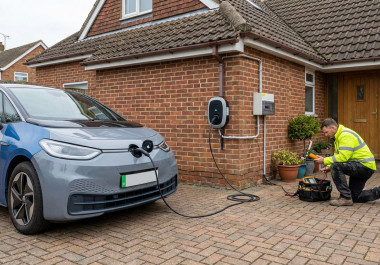
A rear-end collision might damage the charging port, the onboard charger, or the cables connecting them to the battery. These components are expensive and often integrated with other systems.
Replace the charging port, and you might need to recalibrate the battery management system.
Salvage EVs sold with "charging fault - cause unknown" in the description represent a red flag the size of a football pitch. Diagnosing charging issues requires specialist equipment and expertise.
You might be looking at a £200 cable replacement or a £3,000 onboard charger swap. You won't know until you've bought the car and paid for diagnostics.
Some EVs use proprietary charging systems that require manufacturer parts. Older Nissan Leafs use CHAdeMO fast charging. That's being phased out in favour of CCS.
This doesn't affect the car's functionality today. But it impacts resale value because buyers worry about future charging availability.
Regional Market Variations
EV salvage values vary dramatically by location in ways that petrol cars don't. Clean Air Zones in cities like London, Birmingham, and Bath create strong demand for EVs. This supports salvage values.
Bidding on salvage EVs in areas with good charging infrastructure and strong environmental policies means stiffer competition and higher prices. The same car in a rural area with limited charging options might sell for 20-30% less.
This creates opportunities for buyers willing to move vehicles between regions. A Cat N EV that's undervalued in Scotland might fetch strong money in the South East. ULEZ compliance matters there.
Check auction site locations across the UK to identify regional pricing patterns and transport logistics between areas with different demand levels.
Company car tax benefits also affect regional demand. Business buyers in urban areas actively seek EVs for tax efficiency. This supports values for repaired salvage cars that meet their requirements.
Private buyers in areas without charging infrastructure won't pay those premiums.
Future-Proofing Your Valuation
The salvage EV you're valuing today will be sold into a market that's changing monthly. Battery technology, charging speeds, and vehicle ranges improve constantly.
A salvage car with 200-mile range seems reasonable now. But if next year's models offer 400 miles at similar prices, your repaired car's value drops regardless of its condition.
This future-proofing risk doesn't exist to the same degree with conventional vehicles.
Smart salvage buyers focus on EVs with strong brand support and established parts networks. Tesla, despite its software restrictions, has proven residual values and an active second-hand market.
Nissan Leafs have been around long enough that parts availability is decent. Newer brands and models carry higher risk. You're gambling on their long-term market presence.
Warranty transferability matters more with EVs than conventional cars. Many manufacturers offer 8-year battery warranties. But some exclude salvage vehicles or vehicles that have changed hands multiple times.
A salvage EV with transferable battery warranty is worth significantly more than one without.
The Calculation Framework
How do you actually value an EV salvage car? Start with the conventional approach, then add these EV-specific factors.
Assess visible damage and estimate repair costs. Subtract from market value. Then add these EV-specific adjustments:
Battery health assessment: Budget £200-300 for professional diagnostics. If state of health is below 80%, deduct 30-40% from your valuation.
Software and recalibration costs: Add £500-1,000 for manufacturer diagnostics and system resets. Even if parts are available, this cost applies.
Extended repair timeline: Factor in 8-12 weeks instead of 3-4. Calculate holding costs accordingly.
Parts availability premium: Add 20-30% to parts costs compared to conventional equivalents. Limited supply drives prices up.
Technology obsolescence: Deduct an additional 10-15% annually for older EVs beyond normal depreciation.
Regional market adjustment: Add or subtract 15-20% based on local charging infrastructure and clean air zone requirements.
This isn't a precise science. But treating an EV salvage car like a conventional vehicle with a different engine is financial suicide. The battery alone changes everything.
Understanding EV salvage value calculations requires accounting for all these factors simultaneously. Miss one, and your profit margin disappears.
If you're new to EV salvage, start small. Buy a Cat N with verified battery health and cosmetic damage only. Learn the systems, understand the costs, and build relationships with EV-certified repairers.
The market's growing rapidly. So are the ways to lose money if you're using outdated valuation methods.
Explore current EV auction listings to see how these factors play out in real pricing. Compare similar models with different damage patterns and battery health reports when available.
Conclusion
Electric vehicle salvage values follow fundamentally different rules because the battery pack dominates the economics in ways that have no parallel with conventional vehicles.
A £15,000 battery in a £20,000 salvage car means you're essentially bidding on the battery with a free car attached. Assuming the battery is intact and healthy, of course.
The information asymmetry around battery condition creates both risk and opportunity. Buyers who invest in proper diagnostics, understand model-specific vulnerabilities, and calculate breaking values accurately can find genuine value.
Those who treat EVs like petrol cars with different fuel systems will make expensive mistakes.
As the EV market matures and more vehicles enter salvage, this knowledge gap will separate profitable traders from those left holding worthless battery packs.
The fundamentals are simple: know the battery's condition, know its replacement cost, and price accordingly. Everything else is just bodywork and trim.
RAW2K specialises in salvage vehicle auctions with comprehensive listings updated daily. Understanding EV-specific valuation factors helps identify opportunities others miss.
For guidance on specific EV listings or battery assessment requirements, get in touch with the support team. To start exploring electric vehicle opportunities, register for auction access and begin evaluating available stock.