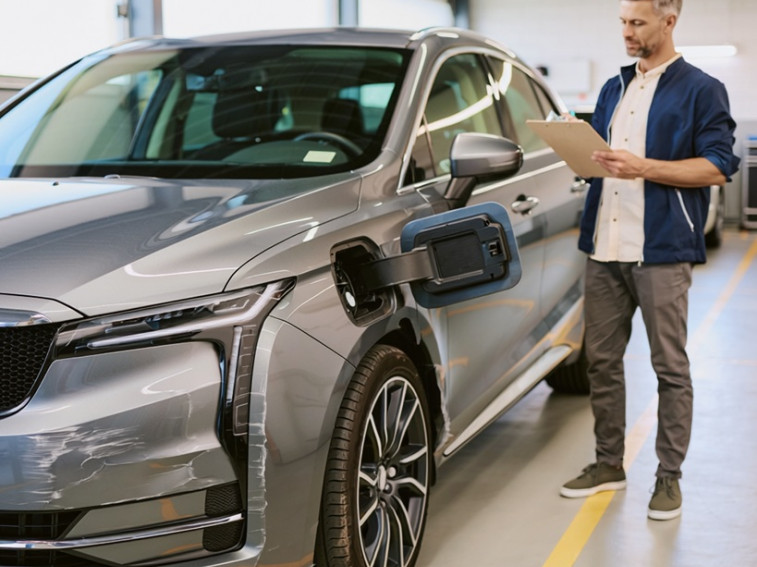
Fuel prices have swung unpredictably for over fifteen years. Every time crude oil spikes or a European refinery experiences an operational issue, the identical pattern emerges. Drivers panic, fleet managers scramble to adjust their budgets, and businesses urgently look for ways to cut overheads. However, an often-overlooked solution exists within the auction market. Taking advantage of a salvage EV investment offers a genuine hedge against global fuel price surges, providing access to electric driving for a fraction of the cost of a standard used petrol equivalent.
A Category N electric vehicle is rarely a complete write-off in the traditional sense. It is simply a vehicle that an insurer has classified as requiring repairs that exceed their strictly calculated economic threshold. Often, this involves cosmetic damage, minor collision repairs, or recovery from theft. Crucially, the battery and drivetrain frequently remain completely untouched. This reality creates a massive opportunity for anyone tired of watching fuel costs erode their profit margins.
The Reality of Fuel Market Volatility
Global fuel markets are inherently unstable. A single pipeline closure or geopolitical tremor can cause forecourt prices to jump overnight. The UK's reliance on imported oil means the transport sector is constantly exposed to these external shocks. Even when crude prices stabilise, the compounding costs of refining, distribution fees, and fuel duty ensure the baseline price remains painfully high. For anyone running a small business or commuting long distances, this unpredictability acts as a severe financial drag.
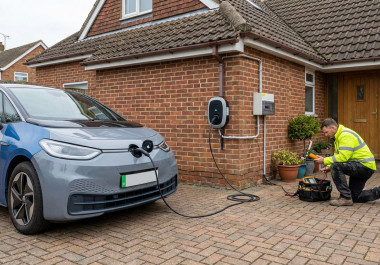
To protect against global fuel price surges, drivers must look to alternative energy sources. Electric vehicles neatly sidestep this dependency entirely. While electricity prices also fluctuate, they are tied to domestic generation, renewable integration, and grid infrastructure rather than international oil tankers. Drivers can charge overnight on predictable off-peak electricity tariffs and lock in their exact running costs.
The Economic Logic of Salvage
A salvage electric vehicle is not inherently a battered relic. The vast majority are recent models featuring light damage. This typically includes parking scrapes, bumper replacements, or paintwork that requires professional attention. In these scenarios, the most expensive component of the vehicle, the high-voltage battery pack, is completely fine.
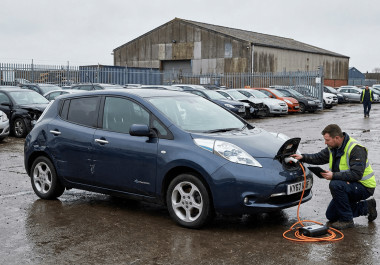
I once observed a 2020 Nissan Leaf with Category N status go through auction. The front bumper was cracked, the bonnet possessed a noticeable dent, and the headlight cluster required replacing. The total repair cost was calculated at approximately £800, and the car ultimately sold for £7,200. At the time, a clean-titled equivalent was listed at £13,500 on the retail forecourt. That represented a £5,500 initial saving for cosmetic fixes that any competent body shop could handle in a matter of days.
Most importantly, a diagnostic check confirmed the battery had an 89% state of health. That metric guaranteed years of reliable range and total insulation from the fuel pump. For a delivery driver or a tradesperson conducting local runs, the mathematical logic is difficult to dispute.
Assessing Battery Health Before Committing
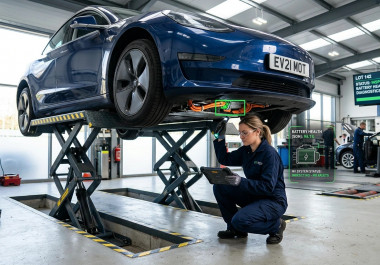
When evaluating salvage vehicles for sale, battery condition is the ultimate deciding factor. A salvage EV with a degraded battery represents a financial gamble, but one with a healthy pack is an exceptional find. Professional buyers always verify the State of Health (SoH) percentage. This metric indicates how much capacity the battery retains compared to when it was brand new. Anything above 85% is generally considered highly reliable, while figures dropping below 75% suggest noticeably reduced range.
Charge cycles also play a crucial role. Most modern EV batteries are rated for 1,000 to 1,500 full cycles before significant degradation occurs. If the service history contains comprehensive EV battery diagnostic data, buyers can accurately gauge the remaining lifespan. It is also important to weigh age against mileage. A three-year-old EV with 60,000 miles might boast better battery health than a five-year-old model with 30,000 miles if the latter sat unused at a low charge state for extended periods.
Understanding Category Classifications
Salvage categories dictate the nature of the damage, and understanding these definitions prevents buyers from acquiring unsuitable vehicles. A Category N electric vehicle has sustained non-structural damage. The chassis, crux points, and overall structural integrity remain intact. The required repairs usually involve bumpers, bolt-on panels, lighting fixtures, or interior trim. These are straightforward jobs, and the vehicle is perfectly safe once professional repairs are completed.
Conversely, Category S denotes structural damage. The chassis or crux points were affected during an impact, although the insurer deemed it technically repairable. This requires a much more cautious approach. A proper independent inspection is vital to confirm that the repairs are conducted correctly and the vehicle tracks straight. For an electric vehicle, buyers must also verify that the high-voltage battery mounting points were not compromised during the collision. For those newly entering damaged car auctions, focusing on non-structural damage is generally the safest strategy.
Maximising Value in Auction Listings
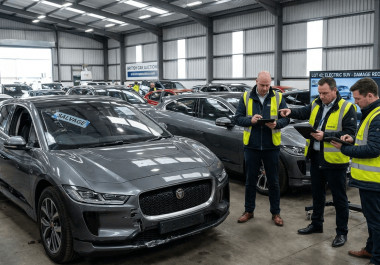
The wider market has not yet fully adapted to the nuances of electric salvage. Many traditional buyers see a salvage marker and immediately assume the vehicle is fit for scrap, even when the damage is entirely superficial. This hesitation creates a prime opportunity for anyone who knows exactly what to look for when browsing salvage car yards and online inventories.
In addition, electric vehicles tend to depreciate faster than petrol cars in their first few years, largely due to public misunderstandings regarding battery longevity. When the salvage status is added to this accelerated depreciation, vehicles frequently sell for 40% to 60% below their clean market value.
To secure these bargains on buy salvage cars online platforms, buyers must meticulously review the provided information. Clear photographic evidence is essential; multiple angles and close-ups of the damage allow for accurate repair estimates. Confirming the presence of the V5C logbook prevents administrative delays, and checking for replacement keys saves unexpected programming costs. Crucially, if EV battery diagnostic data is not visible on the listing, buyers should factor a professional health check into their post-purchase budget.
Strategic Bidding Practices
Successfully acquiring a salvage vehicle requires strict discipline. Buyers should calculate the clean market value, subtract the estimated repair costs, and subtract a further percentage to account for the salvage marker. This final figure becomes the absolute bidding ceiling.
To avoid the emotional pitfalls of a live sale, utilising a proxy bidding system during online vehicle auctions is highly recommended. The system incrementally places bids up to the pre-set maximum, ensuring the buyer never pays more than their strictly calculated limit. Buyers must also remember to factor in hidden costs such as transport, registration fees, and any necessary diagnostic checks before placing their first bid.
The Bottom Line
Fuel prices will inevitably spike again. Whether driven by a refinery shutdown, a supply chain bottleneck, or geopolitical tensions, the pattern repeats itself endlessly. Every time a new crisis hits the forecourt, electric vehicle drivers remain completely unaffected.
A well-researched salvage EV investment provides long-term immunity for a fraction of the traditional retail cost. By switching to electric power and charging on off-peak electricity tariffs, drivers are not just saving on fuel today; they are securing predictable, highly affordable running costs for the next decade with vehicles sourced from RAW2K.
For those exhausted by the unreliability of the petrol pump, transitioning to electric power is the smartest financial manoeuvre available. To explore the current market and protect yourself against future global fuel price surges, you can proceed with auction account creation to view available stock and secure your next vehicle today.