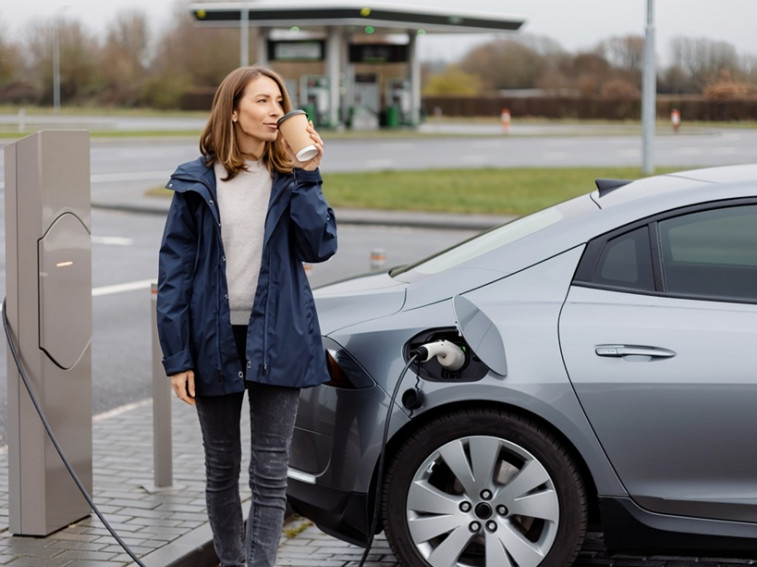
The events of September 2021 demonstrated the severe fragility of traditional fuel supply chains. While long queues and dry forecourts disrupted national travel, drivers of electric vehicles who charged domestically remained largely insulated from the chaos. This event highlighted a critical reality for the automotive sector: both fuel types possess distinct vulnerabilities, but they operate under entirely different risk profiles.
Understanding these systematic differences is no longer a purely academic exercise. For professional fleet managers and private buyers evaluating assets at auction, anticipating how these energy networks function under stress is crucial. Choosing between internal combustion and electric power requires a strictly objective analysis of how energy is distributed across the United Kingdom.
How Traditional Fuel Shortages Occur
Petroleum distribution relies on a highly complex and centralised logistical chain. The UK possesses approximately 8,000 active petrol stations, all of which require continuous replenishment from a limited number of regional depots and refineries. This fuel distribution network is inherently fragile; when one link fails, the disruption cascades rapidly.
During historical supply crises, the issue is rarely a lack of raw material at the refinery. Past UK petrol shortages have shown that disruptions are typically triggered by logistical bottlenecks, such as a deficit in certified HGV tanker drivers, industrial action, or severe weather blocking critical transit routes. Once minor distribution delays reach the public consciousness, immediate panic buying exhausts local forecourt supplies within hours, transforming a manageable logistical delay into a severe national shortage.
The Reality of Current Electric Infrastructure
Electric vehicle charging operates on a fundamentally different paradigm. Rather than relying on physical deliveries to specific retail locations, the EV charging infrastructure utilises the national electrical grid, which is already integrated into virtually every commercial and residential property.
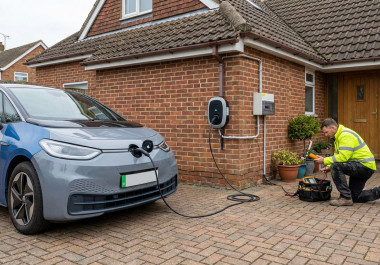
As of early 2024, the UK hosts over 47,000 public charging points, including approximately 8,800 rapid charging locations. However, the operational reality is that domestic charging accounts for roughly 80% of all electric vehicle energy consumption. Most owners utilise public infrastructure solely for extended intercity travel. This represents a complete departure from the petroleum model, where every driver is entirely dependent on external retail locations regardless of their daily mileage.
Systematic Failures and Grid Resilience
Both energy models experience failures, but they manifest differently. UK petrol shortages typically build over several days and affect broad regions simultaneously based on interrupted delivery routes. Conversely, electrical grid failures are usually highly localised and immediately resolved. The National Grid maintains exceptional resilience, and widespread, multi-day power outages are exceptionally rare.
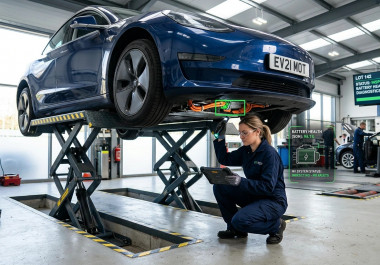
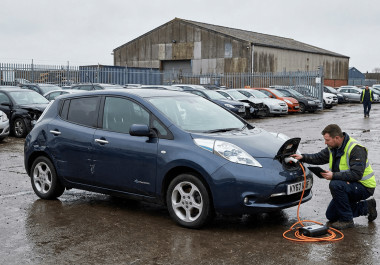
The critical distinction lies in energy storage. During a sudden petroleum crisis, a combustion vehicle with an empty tank is immediately immobilised until a functional forecourt is located. In contrast, an electric vehicle charged domestically overnight retains its full range regardless of subsequent grid issues. Buyers exploring damaged vehicles for sale must weigh this inherent domestic resilience against the convenience of rapid, liquid refuelling.
Refuelling Anxiety versus Range Limitations
The concept of "range anxiety" dominates automotive discussions, yet standard "refuelling anxiety" - watching a fuel gauge drop while searching for a motorway service station - is simply a normalised routine. Modern electric vehicles routinely deliver 250 to 300 miles of practical range. Given that the average UK daily commute is under 25 miles, daily range limitations are rarely a practical concern.
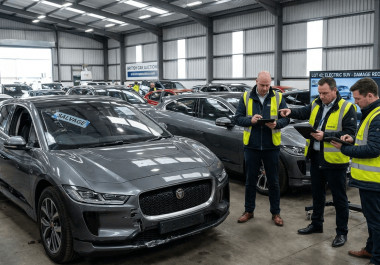
However, the EV charging infrastructure requires strategic journey planning for trips exceeding 150 miles. While a petrol tank can be replenished in five minutes, rapid charging typically demands 20 to 40 minutes. For buyers sourcing stock from salvage vehicle auctions, assessing whether their operational profile involves predictable local routes or spontaneous long-distance travel dictates which powertrain will provide optimal reliability.
The Commercial Fleet Equation
Light commercial vehicles introduce distinct operational requirements. For a local tradesperson operating within a 40-mile radius, an electric van offers profound operational efficiency. Charging overnight eliminates lost billable hours previously spent queuing at fuel stations.
Conversely, for logistics operators managing 200-mile daily routes across multiple depots, the current commercial fuel distribution network presents challenges. Many public rapid chargers are situated in retail car parks featuring height restrictors, making access difficult for high-roof commercial vans. As a result, many transport managers exploring salvage auto auctions adopt a mixed-fleet strategy, deploying electric vans for localised urban routes while retaining diesel assets for long-haul, unpredictable transit requirements.
Regional Variations in Charging Availability
Energy infrastructure is not distributed evenly across the UK. London, the South East, and major urban centres like Manchester and Birmingham boast excellent, high-density charging networks. In contrast, rural regions, particularly the Scottish Highlands and rural Wales, face severe limitations regarding regional public charging availability, exposing gaps in the wider EV charging infrastructure.
Buyers must critically evaluate the infrastructure specific to their operational postcode rather than relying on national averages. A vehicle that perfectly suits a London commute may prove entirely impractical in remote areas. Utilising platforms that host online car auctions allows buyers to source vehicles locally and assess whether their immediate geography supports electric adoption or necessitates continued reliance on internal combustion.
The 2035 Internal Combustion Phase-Out
Governmental legislation mandating the end of new petrol and diesel car sales by 2035 is fundamentally shifting long-term infrastructure investments. While existing combustion vehicles will remain operational for decades, the ratio of traditional forecourts to charging locations will alter significantly.
As rural petrol stations consolidate and new commercial developments mandate charging capabilities, reliance on regional public charging will steadily replace traditional refuelling habits. For buyers examining used cars for sale, this legislative trajectory directly impacts long-term residual values. Electric assets are positioned to appreciate in utility, whereas diesel models will gradually face a shrinking secondary market.
Practical Resilience Comparison and Sourcing Strategy
Neither energy system is completely infallible. Internal combustion relies on a fragile fuel distribution network susceptible to rapid panic buying, while electric mobility depends on evolving infrastructure that requires forward planning for extended journeys. For buyers hesitant to commit entirely to either extreme, plug-in hybrids offer a highly effective technological compromise, providing electric efficiency for local commutes alongside petrol range for extended travel.
When evaluating inventory across the national market, success relies entirely on matching the powertrain to the precise use case. Buyers must evaluate their access to off-street parking, calculate their genuine daily mileage, and assess the charging network along their primary transit routes.
UK petrol shortages are rare but highly disruptive when they occur, while the electric transition offers exceptional domestic reliability paired with intercity logistical challenges.
By treating both energy models objectively and avoiding industry hype, buyers can secure highly capable vehicles that precisely match their operational environments. To review current market pricing across all powertrain variants, commercial and private buyers can explore the extensive inventory hosted on the RAW2K platform.
Once prepared to execute a strategic acquisition, simply register for salvage auctions to begin securing the optimal vehicle for your specific driving requirements today.