Professional observers of the automotive auction industry frequently note that Category N electric cars represent one of the most compelling value propositions in the current salvage market. This spring, specifically, presents a unique window of opportunity. The broader market has not yet fully adapted to the nuances of electric salvage. Many traditional buyers still view electric powertrains and salvage markers as an unmanageable combination, and their persistent hesitation creates significant profit margins for informed purchasers.
The Structural Advantage of Electric Salvage
The Category N classification indicates that a vehicle has been written off by an insurer due to non-structural damage. This typically involves cosmetic panel damage, interior issues, or minor electronic faults, while the vehicle's chassis and core framework remain sound.
For Category N electric cars, this classification is particularly advantageous. The most expensive component of an electric vehicle, the high-voltage battery pack and drivetrain, is usually housed within a highly protected structural shell at the base of the chassis. Because of this robust structural protection, electric vehicles are often classified as non-structural write-offs for superficial damage that might also total a conventional combustion car, such as a crumpled bonnet or damaged headlights, leaving the critical powertrain completely untouched.
The Optimal Purchasing Window
Several converging factors make this season particularly lucrative for spring EV buying. Firstly, insurance companies frequently use highly conservative capacity degradation estimates from older generation models. Modern electric vehicles retain their capacity far better than early iterations, but administrative algorithms have not always updated to reflect this, resulting in cars being written off too early and entering the auction ecosystem at lower valuations.
Secondly, the effects of salvage market depreciation are stabilising. Prices across the broader used EV market experienced a drop as supply increased over the past year, but that trend is now levelling off. Vehicles acquired during the current spring EV buying window are well-positioned to hold their value over the subsequent months when they are repaired and returned to the road.
Understanding salvage market depreciation is key to timing a purchase effectively. Winter driving conditions invariably lead to higher accident rates, meaning a peak volume of non-structural vehicles is processed and enters the auction market by spring. By acquiring stock when seasonal supply peaks and retail demand is temporarily quiet, buyers insulate themselves against sudden valuation shifts while taking advantage of improved battery performance in warmer weather.
Essential Inspection Protocols
Acquiring an electric vehicle requires specific technical diligence. An industry anecdote highlights a buyer who paid £8,500 for a moderately damaged electric saloon requiring only £600 in cosmetic work. However, the buyer failed to check the service history. The battery had been poorly maintained, resulting in a severely degraded capacity, which ultimately led to a £2,000 loss upon resale.
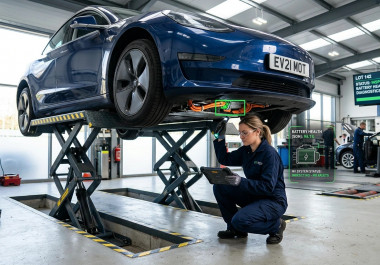
To avoid similar pitfalls, buyers must prioritise EV battery health data. This documentation is crucial; any robust auction assessment should incorporate capacity statistics. For vehicles under five years old, a remaining capacity of 85% or higher is the standard target. Anything falling below 80% requires a significant downward adjustment in the bidding price.
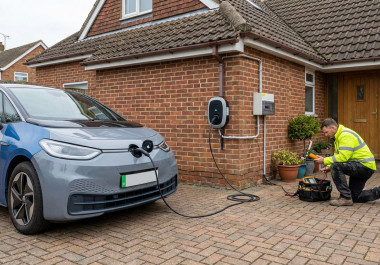
Charge cycle counts are equally critical. High mileage on an electric vehicle is less concerning than on a diesel equivalent, provided the charge cycles are reasonable. A vehicle with 40,000 miles but an excessive number of rapid-charge cycles may have degraded faster than a similar model charged primarily on slow, domestic AC currents. In addition, the location of the damage must be scrutinised. Front-end cosmetic damage is usually straightforward, but underside scraping near the battery housing should be approached with extreme caution.
Targeting High-Value Electric Models
Not all electric vehicles represent a sensible salvage investment. Some models suffer from restricted parts availability, while others have known technical quirks.
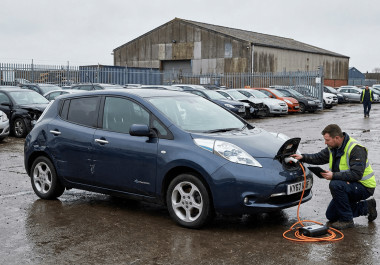
The Nissan Leaf (2018 onwards) remains a highly reliable choice for Category N electric cars. Replacement parts are abundant, independent mechanics understand their architecture, and the battery technology is proven. A cosmetically damaged Leaf with strong battery health provides a very predictable repair margin.
The Renault Zoe offers a similar value proposition, particularly for urban commuters, provided buyers confirm whether the battery is owned outright or leased. The MG ZS EV also presents an excellent opportunity. Heavy initial depreciation has made salvage examples highly affordable, yet the core vehicle is solid. When evaluating inventory across salvage auto auctions, buyers should exercise caution with early premium models featuring carbon-fibre bodywork, as repairs require expensive specialist intervention that quickly erodes any potential profit margin.
Calculating True Repair Expenditures
Evaluating the true cost of repairs requires examining actual figures rather than vague estimates. For instance, a 2020 electric hatchback with front-end damage (bonnet, bumper, headlight) might require £1,150 in parts and £400 in independent labour. If purchased at auction for £7,200, and with a post-repair market value of £12,800, the margin remains robust even after auction fees.
The pattern of profitability relies on targeting superficial damage. Cosmetic panels, lighting clusters, and trim are bolt-on components involving straightforward labour. What buyers must absolutely avoid are high-voltage system repairs. Any damage involving the core battery housing, structural welding near electrical components, or complex high-voltage system repairs requires certified specialists whose high hourly rates will immediately compromise the financial viability of the project.
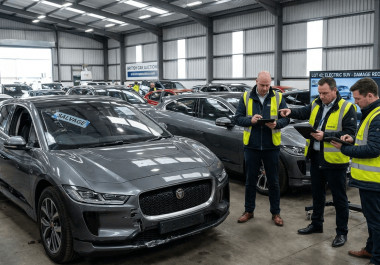
Professional platforms provide the necessary transparency for this level of evaluation. Quality listings for repairable vehicles for sale often include available EV battery health data directly from the seller, alongside clear photographic evidence of the vehicle's underside and confirmation of whether essential charging cables are included.
Strategic Bidding and Regional Sourcing
Enthusiasm can easily lead to overpaying if bidding discipline is not maintained. Setting a maximum bid requires a strict formula: calculate the post-repair market value, subtract the estimated repair costs, deduct the target profit margin, and remove an additional 20% safety buffer. This buffer protects against unexpected parts inflation or hidden administrative costs.
If bidding on online salvage car auctions exceeds this strictly calculated ceiling, the smartest move is to walk away. The auction environment continuously replenishes with new stock, and patience is always rewarded.
Additionally, regional variations can dictate pricing. While the South East often features a high volume of electric salvage due to heavier EV adoption rates, buyers frequently find less competitive bidding for UK salvage cars in other regions. Geographic flexibility allows purchasers to source better deals and absorb the transport costs while maintaining their desired profit margins.
The Bottom Line
Category N electric vehicles offer an exceptional combination of low acquisition costs and high retained value when repaired correctly. The current market conditions provide a unique opportunity for those willing to implement strict diagnostic checks and maintain disciplined bidding strategies.
By focusing on proven models, avoiding complex structural or electrical damage, and adhering to a calculated bidding formula, buyers can secure highly capable vehicles at a fraction of their retail cost.
To explore the diverse range of available electric models, buyers can browse the RAW2K platform to assess the current market landscape.
Once prepared to participate, simply open a bidding account to begin reviewing active inventory and secure your next vehicle today.