While navigating digital auction listings, commercial buyers constantly evaluate vehicles against two fundamental operational outcomes: repairable and for parts. On professional gateways, these outcomes are dictated by official ABI (Association of British Insurers) Salvage Categories, such as Category N, Category S, and Category B. Understanding this repairable vs for parts distinction is essential for making a profitable commercial investment. Misreading these labels frequently leads to significant financial loss, as the final value of the vehicle depends entirely on its ultimate destination.
A trade buyer might observe a vehicle like a 2018 BMW 3 Series displaying acceptable mileage and assume it represents a straightforward fix based on a Category S marker. However, if the chassis is twisted beyond viable repair parameters, that car operates strictly as a donor for components. Knowing the difference is comparable to knowing if a commercial property requires minor rectification or complete demolition. Consequently, professionals must look past the initial listing description to understand the technical reality of the lot.
Understanding the "Repairable" Classification
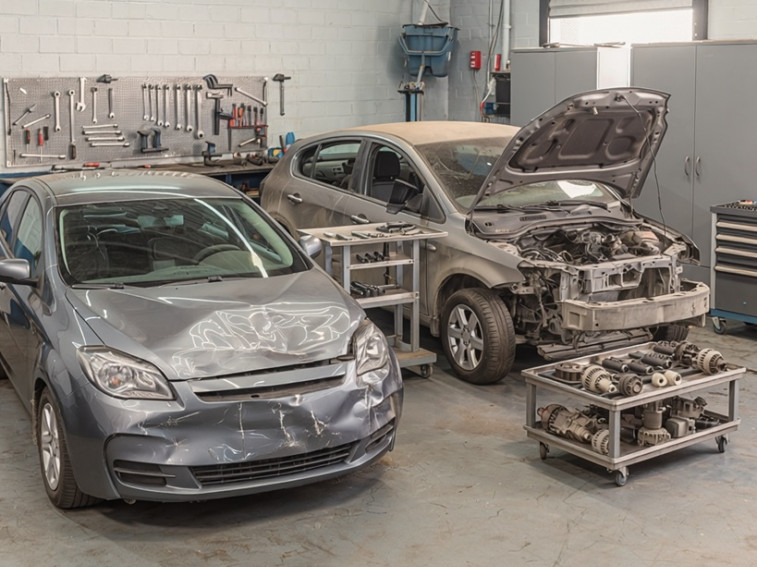
A repairable vehicle is an asset that can be returned to a roadworthy condition economically. This dictates that the total repair costs, including parts and commercial labour rates, should not exceed the vehicle's retail value after the work is completed. These vehicles frequently feature front-end damage, mechanical failures like a blown head gasket, or superficial cosmetic scuffs. For a trade buyer, a repairable vs for parts listing represents a potential margin if the underlying mathematics are calculated correctly.
However, a repairable classification does not necessarily mean the job will be inexpensive or simple. Commercial operators must always factor in the price of genuine replacement parts and the time required for professional workshop labour. Furthermore, any economical car restoration project requires a straight chassis and mostly intact safety systems to remain commercially viable. Verifying if a V5C logbook is present is also vital, as registering an undocumented vehicle creates severe administrative delays for the dealership.
What a "For Parts" Label Really Signifies
A parts classification indicates that the vehicle's primary commercial value sits entirely within its individual components. These are frequently units where the projected repair costs would be substantially higher than the car's actual market worth. While these vehicles might be headed for a breakers yard inventory, they represent a highly lucrative acquisition for operators requiring an engine, gearbox, or premium interior trim. Buying a parts vehicle is essentially acquiring a warehouse of components rather than a functional machine.
Typical scenarios for this classification include severe structural damage or extensive flood damage that has destroyed the complex electronic architecture. While the core shell will never return to the public highway, specific components like alloy wheels or leather seating can be liquidated quickly. This makes a breakers yard inventory unit a valuable asset for commercial operators who specialise in dismantling and resale. For operators burdened with an older vehicle that is fundamentally beyond help, utilizing an independent scrap my car service provides a rapid method to liquidate the chassis and recover baseline working capital.
Navigating the Grey Area Between Categories
Specific vehicles do not fit perfectly into one distinct category. A listing might sit on the borderline because the visual evidence regarding the extent of the hidden damage is inconclusive. For instance, a Category S vehicle might be listed as repairable when the severe structural work required renders an economical car restoration completely impractical. Conversely, a perfectly restorable car might be marked for parts simply because the primary administrative paperwork is missing.
Bidders should actively hunt for red flags, such as a repairable label applied to a car lacking a V5C logbook. If an operator cannot register the car for the road, it operates effectively as a parts donor. Studying every high-resolution digital photo provided on the gateway is the best method to verify if a description matches the physical reality. Transparent digital platforms provide detailed condition reports to help buyers spot these commercial nuances. Trade buyers evaluating complex assets, such as monitoring motorcycle auctions, rely heavily on these visual indicators to assess project viability before committing funds.
Choosing the Category That Suits Specific Commercial Skills
Targeting a repairable or parts vehicle depends entirely on internal workshop capabilities and operational goals. If an operator possesses mechanical knowledge and access to internal repair infrastructure, repairable units operate as an excellent pipeline for generating retail profit. Trade buyers traditionally dominate this space because they can manage the economical car restoration process highly efficiently without paying expensive external labour rates. These opportunities are frequently found within repairable vehicle inventory, presented with clear digital documentation.
Conversely, targeting a donor vehicle is optimal if the business operates as a licensed breaker facility or requires specific donor vehicle components for existing workshop projects. This strategy requires different commercial skills, such as knowing the exact secondary market value for used engines or body panels. The operation also requires the physical space to dismantle the shell and the capability to dispose of hazardous fluids and materials legally.
Legal and Administrative Considerations
Both classifications carry strict administrative duties. A repairable car must be correctly registered, insured, and pass an independent MOT assessment before it returns to public roads. If the V5C logbook is missing, the administrative team must be prepared for a delay while the DVLA processes a replacement document. Parts vehicles generally do not require a logbook if they are being strictly dismantled, but operators must retain all auction receipts to prove the extracted components were obtained legally.
The specific salvage vehicle categories assigned by insurance underwriters also play a major role in the vehicle's future. A Category N car frequently represents a straightforward cosmetic fix, while a Category S car carries a permanent history of structural work that suppresses resale value. Category B vehicles are strictly classified for parts, and the remaining structural shell must be crushed by a registered dismantler. Consequently, professional digital gateways strictly restrict Category B bidding access exclusively to operators who have uploaded verified Authorised Treatment Facility credentials and Environmental Agency waste licenses. Trade professionals actively tracking specific commercial inventory across vehicle auctions in Scotland must understand exactly how these distinct categories dictate the legal lifecycle of the asset.
Bidding Strategies and Regional Logistics
A successful bidding strategy requires an honest mathematical assessment of total acquisition costs. Before placing a bid on any damaged unit, operators must establish their end goal and the realistic retail market value. The most fundamental question involves whether the asset functions as a repair project or a donor shell. Accurately distinguishing between a repairable vs for parts classification ensures working capital is deployed efficiently and profitably.
Buyers must also consider transport costs, which fluctuate based on distance and vehicle condition. A heavily damaged non-runner requires specialist recovery equipment, instantly inflating the logistical overheads. Therefore, a low hammer price secured through vehicle auctions in the South East might become commercially unviable if the workshop is located hundreds of miles away in Northern England.
Setting a strict financial limit is the only reliable method to protect commercial profit. Bidders must consult the platform's transparent, tier-based buyer fee schedule to precisely calculate all overheads before committing funds. Sticking strictly to the calculated numbers prevents emotional overbidding on a project that lacks a genuine commercial margin.
Accessing Inventory through Digital Platforms
Modern digital platforms provide the absolute transparency required for evaluating both categories remotely. Professional buyers utilize extensive photography and detailed condition notes to conduct thorough digital assessments before placing a bid. The digital environment offers a massive variety of stock suited for diverse restoration or commercial breaking operations.
Evaluating similar lots through digital bidding tools allows operators to establish accurate market baselines based on recent transaction data. Operators sourcing specific inventory, such as analyzing active stock through vehicle auctions in the North West, understand that this transparent digital data operates as the most effective tool for making an informed commercial acquisition.
Conclusion: Making the Right Investment
The difference between these two operational labels is entirely financial. One represents a future asset operating on the public highway, while the other represents a lucrative collection of individual parts. Choosing correctly saves the commercial workshop time, working capital, and administrative stress. Therefore, trade buyers must treat every listing with strict commercial scrutiny and verify the classification against the provided digital imagery.
By understanding the true costs of restoration and the secondary market value of used parts, trade professionals can bid with absolute confidence and protect their bottom line.
If trade professionals require assistance with account verification or have questions regarding tier-based buyer fees, please Get in touch with our friendly team through our support portal for immediate guidance.
To apply this professional due diligence to live inventory and build a highly profitable acquisition strategy, secure auction bidding access today.
Once registered, professionals can immediately evaluate the extensive catalog of trade inventory available across the RAW2K digital gateway.