There is a certain magic to classic cars, is there not? Each one tells a story of design innovation, of engineering prowess, of a time when motoring felt different. For many, it is a deep-seated passion. But what if you could take that passion and forge it into more than just a weekend hobby? What if you could build a thriving Classic Car Restoration Business, breathing new life into forgotten beauties and creating rolling works of art?
It is a grand ambition, no doubt, one that blends meticulous craftsmanship with sharp business sense. And a key part of this journey often begins in the bustling, hopeful world of car auctions. Platforms like RAW2K can be a fantastic hunting ground for those elusive restoration business auction classics, the very projects that can become the heart of your enterprise. This is not just about fixing up old cars; it is about preserving automotive heritage and, if done right, building a rewarding and respected business.
Is a Classic Car Restoration Business Your True Calling? Beyond the Romance
The allure of gleaming chrome and the purr of a perfectly tuned vintage engine is strong. But before you swap your day job for a pair of oily overalls full-time, a serious dose of introspection is required.
The Heart of a Restorer: Passion, Patience, and Pinpoint Precision
This is not a venture you can enter half-heartedly. You need:
An Unshakeable Love for Classics: This will fuel you through the long hours and inevitable frustrations. You need to appreciate the history, the quirks, and the unique character of these vehicles.
Monk-Like Patience: Restorations are rarely quick. Sourcing rare parts, undoing previous poor repairs, achieving that perfect finish, it all takes an immense amount of time and perseverance.
Meticulous Attention to Detail: From panel gaps measured in millimetres to the correct period finish on a dashboard, quality is in the details. Cutting corners will show, and in the classic car world, reputation is everything.
Essential Skills and Expertise: What You (or Your Team) Absolutely Need in the Workshop
Passion is vital, but it needs to be backed up by serious skills:
Advanced Mechanical Knowledge: You are dealing with older technology. A deep understanding of carburettors, points ignition, and potentially more obscure engine and transmission systems is crucial.
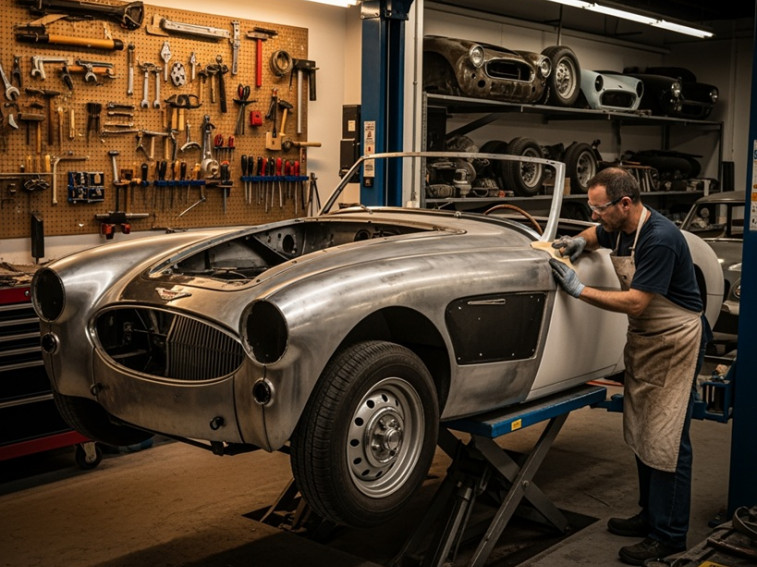
Masterful Bodywork Skills: This is often where the biggest transformations (and challenges) lie. Welding, panel beating, metal fabrication, rust removal, and flawless paint preparation are paramount.
Paint Spraying Artistry: Achieving a deep, lustrous, period-correct paint finish is an art form in itself.
Trim and Upholstery Craft: Sourcing or recreating authentic interior trim, headliners, and seating requires specialist skills or excellent contacts.
The Knack for Sourcing Rare Parts: Finding that elusive original part can be a detective mission. You will need to know where to look and who to ask.
The Business Brain: It is Not Just About a Shiny Finish
Many talented craftspeople falter because they neglect the business side. To succeed with your Classic Car Restoration Business, you also need:
A Solid Business Plan: This is your roadmap.
Financial Acumen: Managing cash flow, pricing jobs accurately, tracking costs, and understanding profit margins are vital.
Project Management Prowess: Each car is a project. You need to manage timelines, budgets, and resources effectively.
Market Knowledge: Understanding the values of different classic cars, both unrestored and fully restored, is key to buying wisely and selling profitably.
Laying the Foundation: Key Steps to Launch Your Classic Car Restoration Business
Right, if you are still fired up and ready, let us get down to the nuts and bolts of setting up your business.
Defining Your Niche: Will You Be a Specialist or a Generalist?
This is a crucial early decision.
Marque Specialist: Do you have a deep love and knowledge for a particular make, like classic Jaguars, MGs, Triumphs, or even more specific Fords or VWs? Specialising can build a strong reputation and attract a dedicated clientele.
Era Focus: Perhaps you are drawn to pre-war elegance, the sporty charm of the 60s, or the emerging classics of the 70s and 80s.
General Classic Restorer: Taking on a broader range of classics can offer more variety in project sourcing.
Crafting a Watertight Business Plan: Your Blueprint for Success
Do not skip this step! A solid business plan will guide your decisions and be essential if you are seeking funding. It should include:
Executive Summary: A brief overview of your business.
Company Description: Your mission, vision, and what makes your business unique.
Services Offered: Full restorations? Partial restorations? Sourcing and selling? Commission work for clients?
Market Analysis: Who is your target customer? What is the competition like?
Financial Projections: Detailed start-up costs, ongoing operational costs, pricing strategy, sales forecasts, and profit margin analysis. This is where you calculate the viability of turning those restoration business auction classics into profit.
Sourcing Your Stars: Finding Those Promising Restoration Business Auction Classics
With the foundations in place, it is time to find your raw materials, the classic cars themselves. Auctions can be an excellent source.
Why Car Auctions Can Be a Goldmine (And a Potential Minefield)
The Upside:
Potential for Undervalued Projects: You can find cars that, with your expertise, can be restored and sold for a significant profit.
Wide Variety: Auctions like those featured on UK salvage auctions offer a diverse range of makes, models, and eras, including those hidden gems perfect for restoration.
The Thrill of Discovery: There is a genuine excitement in unearthing a rare or interesting classic.
The Downside (The Minefield Bit):
Hidden Horrors: Cars can look better in photos than they are in reality. Rust can be cleverly concealed, mechanical issues masked.
Incomplete Vehicles: Project cars are often missing parts, and sourcing these can be time-consuming and expensive.
Master Strategies for Buying Classic Cars at Auction for Your Business
This is not like buying a daily driver. Your Classic Car Restoration Business depends on smart acquisitions.
Deep, Obsessive Research is Non-Negotiable: Before you even look at an auction listing, know the specific models you are targeting inside out. What are their common rust areas? What are the known mechanical weaknesses? How readily available (and expensive) are parts?
Forensic Online Inspection: Scrutinise every photo. Zoom in. Look for ripples in panels, signs of filler, inconsistent paint, rust bubbles. Read the description carefully, what is said, and importantly, what is not said.
Crucially Factor in Restoration Costs Before You Bid: Create a realistic (even slightly pessimistic) estimate of the parts, materials, and specialist labour required for that specific car. This will inform your maximum bid if you want to make a profit on your restoration business auction classics purchases.
Set a Firm Bidding Limit and Stick to It: It is easy to get caught up in auction fever. But this is a business decision. Do not overpay and destroy your profit margin before you have even turned a spanner.
The Art and Science of Restoration: Transforming Barn Finds into Beauties
This is where your skill, patience, and passion truly come to the fore.
The Disassembly and Assessment Phase: Uncovering the Full Story
This is more than just taking a car apart.
Meticulous Cataloguing: Bag, label, and photograph every single part as it comes off the car. Good organisation here will save you monumental headaches later.
Detailed Condition Assessment: Once stripped, you will often uncover more issues. Update your restoration plan and budget accordingly.
Metalwork and Body: The True Foundation of a Great Restoration
This is arguably the most critical and often most time-consuming stage.
Addressing the Tin Worm: Proper rust removal is essential, cutting out all affected metal and letting in new, correctly fabricated repair sections. Filler should be a finishing product, not a structural component.
Panel Perfection: Repairing or replacing damaged panels, ensuring correct alignment and achieving those precise, factory-perfect panel gaps.
Mechanical Rebirth: Engine, Transmission, Suspension, and Brakes
Bringing the oily bits back to life.
Rebuild or Replace? Originality vs. Usability: The big debate. For some purists, absolute originality is key. For others, subtle, reversible modern upgrades can enhance reliability and drivability without sacrificing character.
Thorough Rebuilds: If rebuilding the engine or gearbox, do it properly. Skimping here is false economy.
Paintwork Perfection: It is So Much More Than Just Applying Colour
A stunning paint job is what everyone sees first.
Meticulous Preparation is 90% of the Job: Hours and hours of filling, sanding, priming, and flatting are required for that flawless, glass-like finish.
Authentic Colours or Sympathetic Choices: Research original factory colour codes. If going for a non-original colour, ensure it is in keeping with the car's character and era.
Documenting Every Single Step: Building Provenance and Adding Value
This is absolutely crucial for a professional restoration business.
Comprehensive Photographic Record: Take photos before, during, and after every stage of the restoration. This visually tells the story of the car's transformation.
File of Invoices: Keep every invoice for parts, materials, and any outsourced specialist services. This documentation provides irrefutable proof of the quality and extent of the restoration, significantly adding to the car's value.
Turning Your Craft into Cash: Successfully Selling Your Restored Classics
The final, crucial step: finding a new custodian for your automotive masterpiece and realising your profit.
Understanding True Market Values and Setting Realistic Prices
This is not just plucking a figure out of the air.
Deep Market Research: Constantly monitor prices for similar restored classics. Condition, rarity, provenance, and the quality of the restoration are huge factors. Specialist magazines, classic car sales websites, and auction results are your guides.
Accurate Costing is Key: You MUST know exactly what each restoration cost you, car purchase price, all parts, all materials, your workshop overheads, and the value of your own labour. This will determine your selling price and profit margin.
Marketing Your Masterpieces: Finding and Enticing the Right Buyers
Your restored cars deserve to be showcased properly.
Professional-Standard Photography and Videography: Invest time (or money) in stunning visuals. Show the car from every angle, highlight its best features, and capture its character.
Detailed, Evocative, and Honest Descriptions: Tell the car's story. Detail the restoration process. Highlight its history, its unique features, and its condition. Be transparent about any non-original elements if they exist.
Targeted Sales Channels: Specialist classic car sales websites, high-end auction houses (for exceptional vehicles), classic car magazines, car shows and events, and your own website and social media are all options.
Commission Work: An Alternative or Supplementary Revenue Stream
As your reputation grows, you may attract clients who want you to restore their classic cars.
Benefits: Less upfront capital outlay for you (the client owns the car). Guaranteed work.
Challenges: Managing client expectations can be very tricky. You will need incredibly detailed quotes, regular progress updates, and clear agreements.
Growing Your Classic Car Restoration Business: From Strength to Strength
Once established, how do you ensure long-term success and growth?
Building Your Brand and Stellar Reputation: Your Most Valuable Assets
Uncompromising Quality is Your Best Marketing: Word-of-mouth referrals from delighted customers are incredibly powerful in the classic car world.
Gather Testimonials and Case Studies: Showcase your successes.
Be an Active and Respected Member of the Classic Car Community: Attend shows, join clubs, share your knowledge.
Reinvesting and Expanding (With Caution and Strategy)
Upgrade Workshop Equipment and Facilities: As profits allow, invest in tools and facilities that improve efficiency and quality.
Consider Hiring Skilled Staff: If demand outstrips your capacity, finding and retaining talented mechanics, bodywork specialists, or trimmers will be key.
Take on More Ambitious or Valuable Projects: As your skills and reputation grow, you can tackle more challenging or higher-value classics.
Diversification Opportunities?
Once your core restoration business is solid, you might consider related services:
Sourcing Specific Classic Cars for Clients.
Secure Classic Car Storage Solutions.
Pre-Purchase Inspection Services for Classic Car Buyers.
Classic Motorcycle Restoration: The skills are often transferable, and salvage motorcycle auctions offer another avenue for sourcing projects.
RAW2K: A Valuable Resource on Your Restoration Business Journey
For any Classic Car Restoration Business, a consistent and varied supply of project vehicles is essential. This is where auctions play a vital role.
Access to a Wide Range of Potential Projects: RAW2K and its associated auction listings frequently feature older vehicles that could be ideal candidates for restoration among salvage cars for sale listings. You might find anything from popular British classics to more obscure European models.
The Convenience of Online Browsing: You can monitor upcoming restoration business auction classics from your office or workshop, saving valuable time.
Understanding the Market: Observing what unrestored classics sell for at damaged vehicle auctions helps you gauge market conditions and inform your bidding strategy.
The salvage auction guide provides helpful information for those new to auction buying.
The Road Ahead: Forging a Legacy Through Passion, Profit, and Preservation
Building a successful Classic Car Restoration Business is undoubtedly a marathon, not a sprint. It demands an extraordinary blend of passion, technical skill, artistic talent, patience, and sharp business acumen. The financial investment can be substantial, and the hours will be long.
But the rewards can be equally immense. There is the profound personal satisfaction of taking a dilapidated wreck and transforming it into a gleaming piece of automotive history. There is the joy of connecting with fellow enthusiasts and seeing your craftsmanship admired. And yes, there is the potential for significant financial return if you manage your business wisely. More than that, you become a custodian of automotive heritage, preserving these beautiful machines for future generations to enjoy.
With meticulous planning, an unwavering commitment to quality, and a smart approach to sourcing your restoration business auction classics, your dream of turning rusty relics into stunning, roadworthy art can indeed become a thriving and deeply fulfilling reality. Browse Category N cars and other listings. Register for salvage auctions today. The open road of opportunity awaits!