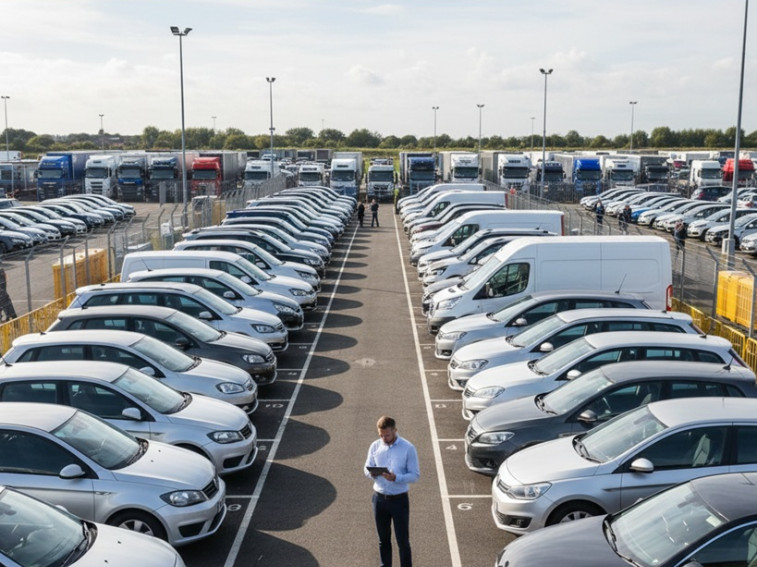
For professional dealers and breakers, acquiring multiple vehicles quickly through vehicle auctions is a primary sourcing channel. However, the profitability of this volume hinges entirely on disciplined cash flow management. Bulk salvage buying requires more than just a large budget; it demands a strategic financial plan that accounts for hidden costs and rapid turnaround cycles. Mastering these financial logistics ensures sustainable growth and maximises the return on every lot purchased.
Essential Pre-Auction Financial Planning
Before entering the competitive environment of auction live bidding, dealers must perform rigorous financial groundwork. A lack of financial preparedness can quickly strain working capital, forcing premature sales or limiting future purchasing power. Treat the pre-auction phase as the most critical step in securing profit margins for your business. This planning allows you to set non-negotiable price limits and prevents emotional overbidding.
Calculating the True Total Cost of Ownership
The successful acquisition of salvage stock begins with an accurate assessment of the total investment, not just the hammer price. Every professional buyer must perform a Total Cost of Ownership calculation for each potential vehicle. This TCO includes the final bid amount, the buyer's premium costs, any applicable VAT, and estimated collection or transportation fees. Ignoring any of these immediate auction costs will instantly erode your expected margin.
Furthermore, the Total Cost of Ownership calculation must integrate the realistic cost of repair or parts extraction labour, which can vary wildly between Category S and Category N classifications. These calculations are crucial for developing robust bulk salvage buying strategies that ensure profitability across the extensive range of all car listings. A slight miscalculation on a single vehicle can be magnified tenfold when purchasing a large consignment.
Establishing Credit Lines and Dedicated Reserves
Relying solely on immediate bank balances can hinder a dealer's ability to capitalise on unexpected auction opportunities or manage payment deadlines. Professional buyers often secure dedicated lines of credit or reserve funds specifically for auction purchases. This reserve should cover the buyer's premium costs and a portion of the immediate repair costs, acting as a crucial liquidity buffer. Having guaranteed access to funds allows the rapid settlement of multiple wins, which is often required when purchasing large quantities of vehicles simultaneously through online vehicle auctions.
This financial cushion is particularly important when utilising regional options, where local opportunities require quick action. Effective financial structuring provides the confidence needed to bid aggressively when the right stock becomes available. Always ensure your payment methods are verified and ready to execute immediately upon winning.
Strategically Bidding for Bulk Profitability
Bidding on multiple vehicles requires a fundamentally different mindset than bidding on a single car for personal use. The strategy shifts from acquiring the single best car to acquiring a viable portfolio of vehicles that, as a whole, generate profit. This requires intense focus and discipline to manage cash in auctions effectively. The goal is to avoid tying up capital in unprofitable stock.
The Power of the Fixed Maximum Bid
When engaging in bulk salvage buying, maximum bid discipline is the cornerstone of sound financial practice. Never deviate from your pre-calculated maximum bid. This limit is the price point where the vehicle transitions from being profitable to unprofitable for your business model. For example, if a dealer is focused on acquiring five vehicles for £2,000 each with a £1,500 repair budget, the final bid should be mathematically locked.
Employing the maximum bid feature on the platform is a useful tool to maintain this discipline. It allows the system to bid incrementally on your behalf, ensuring you pay only the minimum necessary amount up to your profit threshold. This prevents emotional bids that inevitably occur when competing directly with other dealers in the closing seconds of an auction.
Diversifying Risk Across Lot Types
A key component of successful bulk salvage buying involves mitigating risk by diversifying your purchases across various types of stock. Instead of acquiring ten identical, heavily damaged Cat S cars, professional dealers often mix their purchases. They might acquire a few high-value, lightly damaged Cat N vehicles alongside cheaper lots suitable only for parts harvesting.
This diversification acts like a portfolio approach, ensuring that if one heavily damaged vehicle requires unexpectedly expensive repairs, the quick turnaround on the less-damaged cars balances the cash flow management. Consider a scenario where a breaker successfully acquired a mix of five small cars and three large commercial vehicles. The fast sale of engines and gearboxes from the smaller cars immediately provided capital to fund the more time-consuming repairs required by the larger van stock.
Post-Purchase Cash Cycle Acceleration
The profitability clock starts ticking the moment a vehicle is won. Every day a purchased vehicle sits awaiting repair or sale represents capital that isn't generating revenue. Accelerating the cash cycle is essential for dealers who rely on continuous purchasing power to sustain their business. Efficient online vehicle auctions processes should support a fast turnaround.
Efficient Payment and Collection Protocols
Professional bulk buyers must streamline the two most significant post-sale administrative hurdles: payment and collection. Failure to pay within the required timeframe can lead to penalty fees, and delayed collection can incur storage charges, directly harming profitability. It's critical to have immediate access to the necessary funds and pre-booked transport logistics. This smooth transition from purchase to collection is vital for maintaining healthy liquidity.
Dealers should have standing relationships with transport companies or dedicated internal recovery vehicles ready to collect stock from the auction locations immediately. For a large volume of vehicles, scheduling multiple pickups simultaneously will minimise costs and time spent on the logistics.
Prioritising Repairs for Quick Resale
Effective cash flow management is about the speed of money returning to the business. Therefore, vehicles should be prioritised for repair based on their potential for the quickest sale and highest return through RAW2K. Lightly damaged, high-demand vehicles should jump to the front of the workshop queue. Focus on getting these cars repaired, inspected, and listed for sale as quickly as possible to replenish the capital spent at the auction.
Heavily damaged or specialist vehicles that require extensive structural work can be addressed later, funded by the profits from the faster turnover stock. This strategic workshop management ensures a steady stream of income, making it easier to manage cash in auctions when the next round of bidding begins.
Utilising Regional and Commercial Opportunities
Sourcing vehicles strategically based on geography and type significantly impacts the TCO, particularly concerning transport costs. Dealers who successfully manage cash flow leverage transport consolidation strategies to minimise logistical overhead through strategic locations sourcing. They look beyond their immediate local area for stock when a better value opportunity presents itself.
Sourcing Strategically for Lower Transport Costs
While you might secure a fantastic price on a lot through bike auctions further afield, the transport costs can negate the savings. Smart bulk buyers focus on combining loads from a single regional site, such as multiple vehicles from a single West Midlands location. These transport consolidation strategies allow for single, full-capacity collections rather than several small-capacity recovery trips, drastically reducing the per-vehicle transport expenditure. This strategic approach highlights why looking at the broad spectrum of auctions across the country is so beneficial.
A dealer purchasing ten units could save hundreds of pounds in logistics by ensuring all ten come from a cluster of local auction sites rather than ten dispersed locations. This simple logistical foresight contributes directly to the business's bottom line, reinforcing the need for smart, financially driven bulk salvage buying.
Confidence and Continuity in Auction Purchasing
Successful bulk purchasing is a marathon, not a sprint, requiring continuous financial oversight. By accurately calculating the TCO, establishing credit reserves, and maintaining maximum bid discipline through fixed limits, professional dealers can maintain healthy liquidity through disciplined cash flow management. These strategies ensure that capital remains fluid, ready for the next opportunity. Discipline and preparation are your greatest assets, allowing you to continually reinvest profits and grow your inventory. Register today to access the platform's full range of bulk purchasing opportunities.