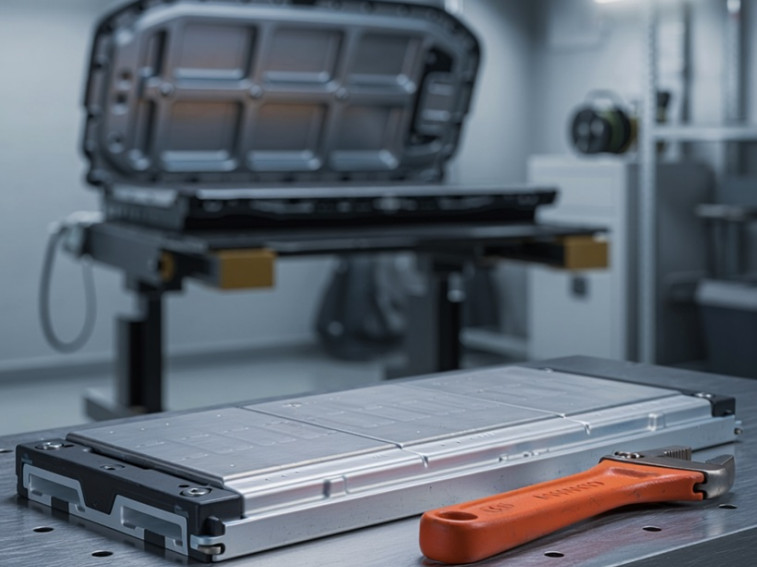
Whole commercial vehicles are not scrapped simply because an alternator fails. So why would entire electric vehicle battery packs be discarded when just a handful of internal cells degrade? That exact question is fundamentally reshaping the electric vehicle salvage market right now. For years, damaged EV batteries meant one thing to the insurance industry: total replacement. A massive £15,000 bill at main dealer rates that frequently wrote off otherwise perfectly sound vehicles.
The automotive industry is finally catching on to what salvage specialists and breakers have known for a decade. The vast majority of high-voltage failures are not total; they are highly localised. If electrical problems can be isolated accurately, fixes cost a mere fraction of a total unit replacement. The commercial shift toward partial ev battery replacement is now highly visible across the UK trade sector. Damaged modules or individual cell banks are being swapped out rather than binning entire packs. It is creating incredible, high-margin opportunities for trade buyers, licensed salvage specialists, and independent mechanics who possess the correct IMI certifications and know their way around a high-voltage multimeter.
Why Whole Battery Replacement Never Made Sense
Electric vehicle batteries are not monolithic, solid bricks of lithium. They are highly complex architectures made up of hundreds or thousands of individual cells, carefully grouped into distinct modules, sitting inside heavy protective casings. Think of it structurally like a block of terraced houses; just because one property has a leaking roof does not legally justify demolishing the entire street.
Yet that is exactly what major manufacturers and insurance assessors have been doing for years. A single module failure or a minor coolant leak damaging three cells instantly triggered an order for a completely new pack. The exorbitant cost of main dealer labour, extreme corporate liability fears, and a severe lack of proprietary diagnostic tools pushed repair networks entirely toward the nuclear option. A 2020 Nissan Leaf was famously written off because of a localized battery fault. Only two modules were damaged, but the rest of the pack tested perfectly. The car had only 18,000 miles on the clock. That vehicle could have been back on the road safely with a targeted repair, but the independent infrastructure simply was not there. Now it is. Understanding battery module repairs helps professional buyers identify which salvage EVs represent genuine, highly profitable repair opportunities versus unviable total losses.
What is Driving the Shift Toward Modular Repairs
Three massive industry factors are converging simultaneously to make partial EV battery replacement not just technically possible, but highly profitable for independent workshops.
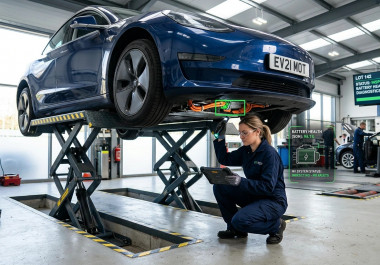
First, significantly better diagnostic equipment allows independent workshops to pinpoint exactly which modules or individual cells are failing without blindly ripping whole packs apart. Advanced Battery Management System (BMS) data interrogation, thermal imaging cameras, and sophisticated voltage testing tools have become far more accessible to the aftermarket. Costly diagnostic guesswork is entirely eliminated.
Second, parts availability has improved dramatically. Salvage yards and digital platforms are sitting on thousands of written-off EVs containing perfectly good modules. A Category S Tesla Model 3 might possess severe front-end crumple zone damage and a cracked exterior pack casing, but eighty percent of the internal lithium cells remain in excellent, factory condition. Finally, extreme cost pressure from insurance companies, fleet operators, and the second-hand EV retail market is forcing change. The market simply cannot survive if every battery fault means a financial write-off. Identifies battery module repairs as an economically viable alternative that frequently cuts repair costs by sixty to eighty percent compared to main dealer quotes.
How Partial Battery Replacement Actually Works
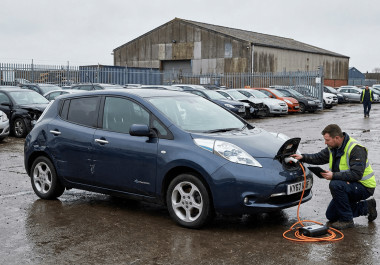
Executing this work is absolutely not plug-and-play, but it is a highly logical, repeatable process for trained technicians. First, faults are isolated digitally. Modern diagnostic tools interrogate the BMS and flag underperforming cells or modules with precise voltage drop readings. Thermal cameras help mechanics spot dangerous resistance hotspots under load.
Next, the packs are physically dismantled. This is where the operation gets highly technical and fatally dangerous without proper knowledge. EV batteries run at 400V or 800V architectures. Proper Personal Protective Equipment (PPE), Class 0 insulated tools, dedicated safety cordons, and a clear, certified understanding of high-voltage isolation are absolutely essential. Once the faulty modules are safely accessed, they are removed and replaced with known-good, tested units. Ideally, these donor modules come from the exact same make, model, and generation. Mixing battery chemistries, capacities, or heavily varying internal resistance levels creates severe balancing problems. The packs are then reassembled, the BMS is soft-rebooted or coded, and a rigorous series of charge-discharge cycles are run to confirm everything is perfectly balanced.
Where the Salvage Market Fits In
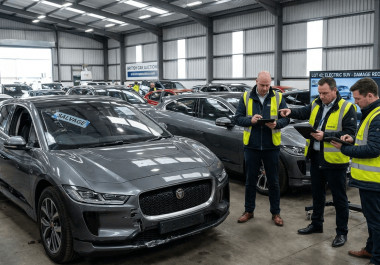
This exact mechanical reality is where the modern salvage ecosystem becomes incredibly lucrative for trade buyers and licensed breakers. Every Category S or Category N electric vehicle that processes through a digital auction is a massive potential parts donor. Vehicles written off purely for structural or cosmetic damage frequently possess battery packs worth thousands of pounds in raw module value.
Even Category B vehicles represent a massive supply chain. By strict UK law, Category B vehicles are strictly reserved for licensed Authorised Treatment Facilities (ATFs) holding proper environmental permits, and their body shells must be crushed. However, these licensed ATFs can legally harvest the high-voltage battery modules before destruction. Sharp upticks in EV listings over the past 18 months show many units being bought specifically by ATFs for battery stock.
For professional buyers looking to source standard inventory across huge car auctions uk catalogues, the goal is sourcing the right donor vehicles. Modules cannot simply be grabbed blindly off shelves. Part numbers, firmware versions, and ideally the total mileage need precise matching.
Legal and Safety Side Requirements
Let us be completely clear: this is not equivalent to swapping a conventional manual gearbox on a driveway. High-voltage systems are lethal. IMI Level 3 or Level 4 accreditation is an absolute legal requirement to work on live battery systems in the UK. Mainstream insurers will explicitly refuse to cover commercial workshop liability without seeing these exact certificates.
Furthermore, battery disposal is heavily regulated. Old, degraded lithium cells cannot simply be thrown into a standard commercial skip. They are strictly classed as hazardous waste. Licensed waste carriers are legally required to transport and handle them, involving extensive environmental compliance paperwork. Traceability also matters immensely. When sourcing stock from a vehicle auction to harvest modules, you must maintain documentation showing exactly where the donor modules came from, how they were load-tested, and their verified state of health before fitting them into a customer's vehicle.
What This Means for the Auction Market
The volume of EV listings is increasing rapidly, and the bidder demographic is shifting aggressively. Five years ago, a Category S electric car would sit unsold. It was deemed too risky, too expensive to fix, and possessed too many unknowns. Today, they are hammering for incredibly strong money, especially if the battery faults are explicitly documented and the rest of the chassis is completely sound.
Trade buyers are getting significantly smarter. Rather than attempting impossible physical yard inspections, they are meticulously analysing illuminated dashboard warning lights and strictly budgeting for deep BMS diagnostics immediately upon flatbed extraction to their own workshops. They are factoring in modular repair costs rather than mentally writing the car off before the hammer falls. For private buyers browsing vast salvage cars catalogues without specialist workshop access, electric vehicles with battery faults remain an absolute minefield.
The Skills Gap and Opportunity
The current bottleneck in the UK salvage market is a severe shortage of trained technicians. Most highly experienced mechanics can handle complex diesel engine swaps blindfolded. Far fewer can accurately diagnose proprietary BMS communication faults. Even fewer are legally certified and comfortable pulling apart a live 400V battery pack.
That specific skills gap is a temporary barrier for the broader market, but a massive financial opportunity for proactive businesses. For workshop owners or mobile mechanics, investing in EV certification is one of the smartest commercial moves available today. The work is plentiful, the margins are excellent, and local competition is still remarkably thin. If a project vehicle proves entirely unviable due to deep, hidden internal cell corrosion that cannot be modularly repaired, smart operators know they can utilize a rapid scrap my car valuation to liquidate the remaining unviable vehicle shell and heavy components to mitigate their exposure safely.
What is Next for EV Battery Repairs
The industry is still strictly in the early adoption phase. Right now, most partial replacements happen in highly specialist independent workshops or by licensed breakers who have invested heavily in proprietary testing hardware. But as the first massive wave of corporate EVs ages out of warranty, demand for battery module repairs will explode across the secondary market.
Manufacturers are slowly waking up to this reality. Some are finally starting to offer module-level repairs under their own extended warranty programs. Third-party aftermarket suppliers are emerging, offering fully tested, certified, and capacity-matched modules with their own commercial guarantees. This evolution extends beyond cars; as electric two-wheelers become more prevalent, monitoring a motorcycle auction for high-voltage commuter bikes will require the exact same diagnostic and modular repair skill sets.
Conclusion
The commercial shift toward partial ev battery replacement is not just a technical evolution; it is a strict economic necessity. Whole-pack replacements simply price far too many modern vehicles entirely out of the repair ecosystem, and the salvage market cannot function if every single battery fault mandates a total structural write-off.
Modular repairs make perfect logical sense. They are significantly cheaper, highly sustainable, and keep otherwise mechanically sound vehicles on the road. However, they demand precise knowledge, expensive insulated tools, and established access to tested donor parts. This is exactly where the digital auction market provides immense value. Every Category S or Category N EV represents a potential source of high-quality modules.
The RAW2K platform provides highly detailed digital photography and strict category markers, allowing educated trade buyers to spot incredible, high-margin EV opportunities. If you require any specific guidance regarding electric vehicle lot descriptions, battery diagnostic indicators, or navigating secure compound collection rules, please get in touch with our friendly team for professional assistance. To begin actively sourcing profitable, modern EV inventory for your specialist workshop, create your profile and register to bid today.