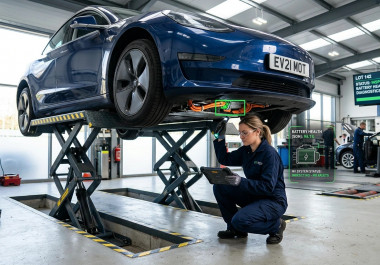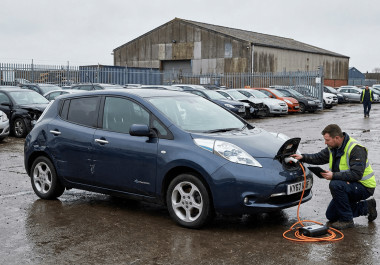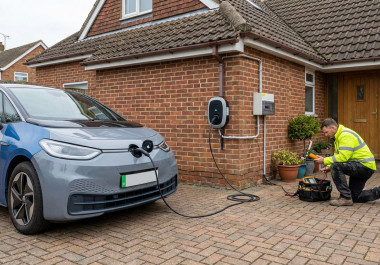
Standard OBD readers cannot simply be plugged into a salvage electric vehicle with the expectation that they will reveal every single hidden fault. That is the fundamental first lesson buyers must understand when acquiring electric and hybrid vehicles at auction. These assets are not conventional mechanical machines; they are immensely complex computer networks mounted on wheels. When they sustain accident damage or suffer electrical surges, the subsequent software problems can easily equal or exceed the cost of replacing physical, bent metal.
A trade dealer recently acquired a Category N electric hatchback that appeared visually perfect. The bodywork was clean, there was no visible structural damage, and the digital listing indicated a minor rear-end shunt. Three weeks post-extraction, the vehicle remained entirely immobile. The main computer refused to communicate properly with the high-voltage architecture. The physical repair cost zero pounds, but resolving the digital lockdown cost thousands. Mastering ev software diagnostics is the absolute dividing line between securing a highly profitable salvage bargain and acquiring an incredibly expensive, unmovable liability.
Why Salvage EVs Are Different from Petrol Cars
Traditional internal combustion salvage vehicles are highly predictable. Experienced mechanics can visually assess structural impact zones, spot dark fluid pooling beneath engine blocks in digital photos, and confidently calculate repair margins. Petrol engines operate on mechanical principles that independent garages have mastered over decades.
Electric and hybrid vehicles operate on entirely different architectural principles. They are controlled by multiple interconnected computer modules managing everything from thermal battery regulation to regenerative braking protocols. When one of these complex modules fails, or when a heavy collision severs a seemingly insignificant communication wire, the diagnostic process becomes exponentially more difficult.
The greatest operational hurdle is the presence of software-locked components. Many modern manufacturers engineer their electric vehicles so that only authorised main dealers possess the digital security tokens required to access specific diagnostic functions or execute module programming. A trade buyer cannot simply tow a heavily damaged premium EV to a local independent garage and expect them to clear the crash data. Consequently, a Category S hybrid might require £2,000 in physical chassis repairs, but demand an additional £3,000 in proprietary, dealer-only diagnostic labour just to clear the immobiliser network.
Common Software Problems in Accident-Damaged EVs
The high-voltage battery system serves as the heart of any electric vehicle, and it remains highly vulnerable to software lockdowns following a collision. Modern platforms utilise highly sophisticated monitoring protocols that constantly check cell voltages, internal temperatures, and resistance levels thousands of times per second.
When a vehicle suffers a severe impact, the architecture frequently generates battery management system errors that completely brick the propulsion system as a safety precaution, even if the physical battery casing remains completely untouched. Isolation faults are notoriously common; the vehicle detects a potential high-voltage leak to the vehicle chassis and permanently opens the main contactors to prevent electrocution. Crash sensor activation triggers a similar response, severing the high-voltage loop instantly. The vehicle will not charge, will not select a drive gear, and will absolutely not clear these critical safety errors without dealer-level diagnostic intervention.
The Hidden Cost of Proprietary Diagnostic Systems
Manufacturers guard their proprietary diagnostic software protocols fiercely. Several premium EV manufacturers historically refuse to sell their advanced diagnostic equipment or software licenses to independent garages. This creates a severe logistical bottleneck for salvage buyers. You might acquire a lightly damaged EV, repair the cosmetic panels flawlessly, but subsequently discover that the radar sensors cannot be recalibrated without the manufacturer's proprietary cloud-based software.
Volkswagen Group vehicles require dealer-level digital access for many fundamental functions. If an independent mechanic replaces a single damaged battery module on a modern Audi e-tron, proprietary software is legally required to register that new module's serial number with the main vehicle immobiliser. Japanese manufacturers currently offer slightly better aftermarket diagnostic tool availability, but complex safety system repairs still frequently require main dealer intervention. Professional buyers must systematically factor these premium £150-per-hour dealer diagnostic costs into their initial proxy bidding calculations.
Hybrid Systems and Their Unique Diagnostic Challenges
Hybrid vehicles introduce a unique layer of diagnostic complexity because they combine two completely different propulsion systems into one chassis. When a fault occurs, technicians must troubleshoot the high-voltage electric drive, the conventional petrol engine, and the immensely complex hybrid control unit that governs the transition between them.
Following an accident, these integrated systems frequently develop software conflicts that are maddeningly difficult to diagnose. A highly common scenario involves mode lock, where the hybrid system defaults to a restricted limp-home mode to protect the drivetrain. The physical collision damage might be repaired perfectly, but the software continues to restrict power output because a single sensor reading remains marginally out of factory tolerance. Diagnosing these specific crossover faults requires equipment and training that scales far beyond the capability of standard independent workshops.
What Buyers Can Actually Diagnose Themselves
Not all software issues strictly require main dealer intervention. Once the vehicle is securely extracted to your own workshop, certain faults can be identified and evaluated with the correct commercial equipment. A standard, cheap code reader is useless; executing proper ev software diagnostics requires professional hardware capable of interrogating manufacturer-specific modules, which typically costs upwards of £1,000 for trade-level equipment.
With capable hardware, a mechanic can read basic fault codes across the CAN bus network, evaluate the high-voltage isolation resistance readings, and check the current state of charge. However, what independent buyers typically cannot do without dealer software is execute deep system resets, clear crash data from the airbag modules, or reprogram replacement high-voltage controllers. Recognizing the strict boundary between what you can diagnose and what you must pay a dealer to program is essential for maintaining accurate repair budgets.
The Battery Health Wild Card
The most dangerous hidden variable in EV salvage is that accident damage can affect long-term battery longevity in ways that remain entirely invisible for months. A heavy structural impact might not breach the external battery casing, but the kinetic shock can subtly damage internal cell structures, accelerating future degradation.
The State of Health (SOH) reading is the most critical metric when evaluating an electric vehicle. This percentage indicates exactly how much capacity the battery retains compared to its factory original state. An EV displaying an 85 percent SOH retains excellent commercial value; the exact same model showing a 65 percent SOH represents a massive financial liability. Furthermore, severe impact data frequently triggers cascading battery management system errors, masking the true SOH percentage and forcing buyers to bid blindly on the vehicle's most expensive component.
Regional Considerations and Service Availability
Geographic location dictates absolute profitability when dealing with complex software issues. Operating a salvage business in the densely populated South East provides easy access to multiple main dealers and highly trained independent EV specialists. Conversely, operating in rural locations introduces massive logistical challenges.
If a complex software fault requires dealer intervention, buyers must factor in the severe cost of flatbed transport to haul the immobile asset to the nearest authorised service centre, which could be fifty miles away. While mobile EV diagnostic technicians are slowly entering the market to service vehicles at your own premises, their call-out fees typically start at £200 before a single line of code is evaluated. You cannot dispatch them to the auction compound; the vehicle must be hauled to you first. You must rigorously assess your local specialist support network before committing capital to a complex digital project.
What to Look for in Auction Listings
Because secure online compounds strictly prohibit physical public yard access for health and safety reasons, your ability to conduct a flawless digital inspection is paramount. When reviewing any listing on a standard vehicle auction platform, you must scrutinise the dashboard photography meticulously. Any illuminated warning lights relating to the high-voltage loop or the battery management system indicate that highly expensive diagnostic work is immediately required.
Missing keys are a massive red flag. Replacing a lost electronic key on a modern EV frequently requires replacing the entire paired immobiliser and ECU network, costing hundreds of pounds. You must also check if the V5C logbook is present; if it is missing, you must proactively budget for a V62 application to the DVLA to establish legal ownership. Finally, if the digital listing explicitly mentions flood or water damage, walk away immediately. Prolonged water immersion destroys high-voltage electrical architecture permanently, creating impossible diagnostic nightmares.
Makes and Models to Approach with Caution
Experience within the trade dictates exactly which models represent viable projects and which represent guaranteed financial losses. Approach highly complex, heavily damaged premium EVs with extreme caution. The proprietary diagnostic costs associated with repairing a luxury German hybrid can easily exceed the entire value of the physical vehicle.
Conversely, established platforms like the Nissan Leaf or the Toyota Prius are generally considered safer bets for trade buyers. The aftermarket support network for these specific vehicles is significantly more mature, meaning independent garages possess the necessary diagnostic tools to clear basic faults without relying on extortionate main dealer rates. If a highly complex vehicle ultimately proves mathematically unviable to repair due to locked proprietary software, utilizing a scrap my car valuation ensures you can safely liquidate the unviable vehicle shell and raw components to mitigate your commercial exposure.
Making the Numbers Work
Surviving the EV salvage market requires ruthless, emotionless mathematics. Professional buyers never base their calculations purely on the cost of replacing bent metal. You must account for the purchase price, the mandatory flatbed recovery costs, physical repair parts, and a dedicated diagnostic contingency budget.
Always budget a minimum of £500 to £1,500 purely for software recalibrations and dealer-level resets. Furthermore, you must aggressively factor in the catastrophic risk of a full battery replacement. A strict industry rule applies when sourcing inventory across large salvage cars networks: your maximum proxy bid, combined with your estimated physical repair and digital diagnostic budgets, should never exceed 60 percent of the vehicle's pristine retail market value. If the spreadsheet breaches that margin, the project is commercially unviable.
Getting Professional Help
If you lack deep experience with high-voltage architecture, guessing at diagnostic faults is a highly dangerous strategy. Building strong commercial relationships with independent EV specialists is absolutely vital. Many specialists offer fixed-fee post-extraction diagnostic inspections once you have hauled the vehicle back to your workshop.
Paying a certified technician £150 to £300 to interrogate the proprietary modules and provide a comprehensive report on battery health and locked software faults is an incredible investment. It prevents you from sinking thousands of pounds into physical bodywork on a chassis that possesses a fatally corrupted, £5,000 control unit. If you are regularly acquiring modern stock from comprehensive car auctions uk catalogues, treating these specialist diagnostic fees as a standard operational business expense ensures your long-term profitability.
The Future of Salvage EVs
The aftermarket repair industry is rapidly adapting to the influx of battery-powered salvage. Independent garages are actively investing heavy capital into advanced diagnostic equipment, and third-party software developers are slowly cracking the proprietary dealer firewalls. As the global push for Right to Repair legislation gains traction, accessing vital diagnostic data will become significantly easier for independent mechanics.
This evolution extends beyond passenger cars; as electric two-wheelers increase in popularity, monitoring a dedicated motorcycle auction for high-voltage bikes will demand the exact same diagnostic skill sets. For the foreseeable future, however, the severe software complexity and proprietary locks create massive barriers to entry. This strict barrier terrifies casual buyers, creating a highly lucrative environment for educated trade professionals who possess the correct tools and knowledge.
Conclusion
Electric and hybrid vehicles are not simply cars; they are highly advanced rolling computer networks. The software and diagnostic issues hidden within a salvage EV routinely equal or exceed the cost of replacing heavily damaged body panels. Standard code readers are entirely insufficient, and manufacturer-proprietary systems frequently demand highly expensive main dealer intervention.
To succeed in this rapidly expanding market, buyers must execute flawless digital inspections, meticulously check dashboard photography for illuminated warning lights, and run independent HPI checks prior to bidding to ensure clear title. Mastering ev software diagnostics and understanding the severe implications of battery management system errors allows professional buyers to confidently secure highly profitable inventory while their competitors bid blindly.
The RAW2K platform provides the high-resolution photography and detailed categorisation required to make informed, professional acquisitions. If you require specific assistance understanding digital EV lot descriptions or navigating secure compound collection rules, please feel free to contact us for professional guidance. To begin actively sourcing modern, high-margin inventory for your specialist workshop, create your profile and register to bid today.