When it's time to retire an old motor, the process should be straightforward, even if the necessary paperwork has gone missing. Many vehicle owners face the challenge of Selling a Scrap Car Without a Logbook (V5C) and assume the sale is impossible.
Fortunately, while the V5C is the preferred document for title transfer, established legal procedures exist to facilitate the recycling of end-of-life vehicles missing this document. This comprehensive guide details exactly how to legally and confidently sell a motor to an authorised facility or auction house when the logbook is unavailable.
The Role of the V5C in Vehicle Disposal
The V5C, often called the logbook, is the registration document that proves a driver is the keeper of the vehicle, which is necessary for a straightforward title change. It contains crucial information such as the vehicle's make, model, chassis number, and previous keepers.
Typically, when selling any motor, including salvage vehicles, the seller completes the yellow V5C section and sends it to the DVLA to transfer liability. This standard procedure ensures clear ownership transfer whilst notifying authorities of the transaction.
Losing this document can feel like a major setback, but it primarily affects the ease of administrative transfer, not the vehicle's scrappage eligibility. A professional buyer, such as an Authorised Treatment Facility (ATF), has the legal means to process the disposal correctly without relying solely on the V5C.
V5C replacement procedures:
If the V5C is genuinely lost, applying for a replacement through the DVLA is possible but time-consuming. The V62 application form costs £25 and typically requires 5-10 working days processing. However, for vehicles destined for immediate scrap disposal, this delay often proves unnecessary.
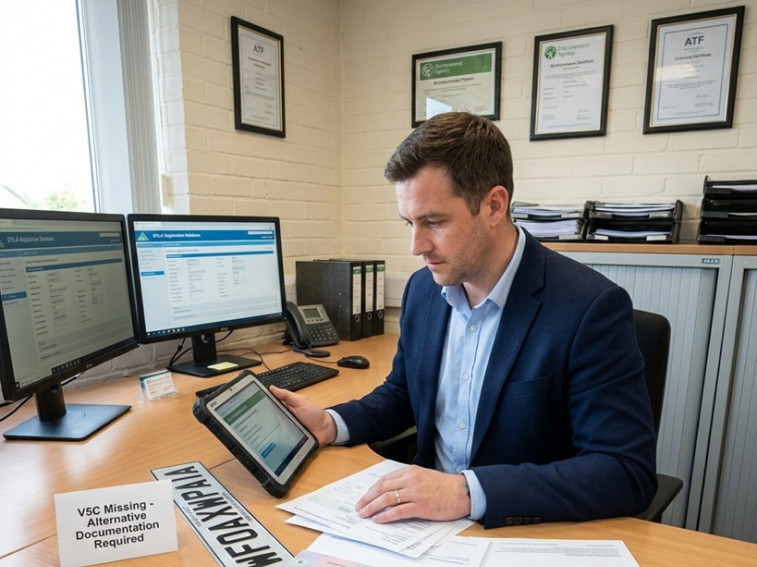
Professional ATFs and auction platforms possess alternative verification procedures accepting other documentation proving identity and ownership. They take responsibility for informing the DVLA using alternative methods, ensuring legal compliance without requiring V5C presence.
What the V5C contains:
-
Vehicle registration number and VIN
-
Make, model, colour, and engine size
-
Current keeper details (name and address)
-
Previous keeper information
-
Vehicle first registration date
-
MOT and tax expiry dates
-
Outstanding finance indicators
This information proves valuable but isn't irreplaceable. VIN verification, keeper identification through alternative documents, and DVLA database cross-referencing provide sufficient verification for legal disposal transactions.
Why the V5C Might Be Missing
There are numerous legitimate reasons why the official logbook might not be present when a car is ready to scrap. Understanding these scenarios helps explain why alternative procedures exist protecting sellers' interests.
Common reasons for missing V5C:
Misplaced over years of ownership: The document is easily lost during house moves, garage clearances, or general document organisation. Vehicles owned for 10-15 years often have V5Cs stored in long-forgotten filing systems or lost entirely.
Vehicle off-road for extended periods: Cars stored in barns, garages, or driveways for years whilst owners decide their fate often have missing documentation. SORN (Statutory Off Road Notification) vehicles particularly susceptible to document loss during extended storage periods.
Acquired without V5C: Sometimes vehicles are obtained as part of larger asset liquidations, estate settlements, or property clearances. Previous owners may have retained the V5C, never transferred it, or lost it before the current owner took possession.
These scenarios occur frequently in regional auction markets, where vehicles change hands through informal arrangements. Access complete auction inventory to explore salvage opportunities where professional documentation handling prevents complications even when original paperwork is incomplete.
Damaged beyond recognition: Fire damage, flood damage, or extreme weathering can render V5Cs illegible. Water-damaged documents lose printed information, whilst fire-affected vehicles often have completely destroyed paperwork.
Never issued to current keeper: DVLA processing delays, postal failures, or address changes can prevent V5Cs reaching rightful keepers. Owners sometimes drive vehicles for years without receiving official registration documents.
Regardless of the reason, it is the responsibility of the seller to provide the buyer with sufficient proof of identity and ownership. When the V5C is absent, other required documents simply need to substitute it, ensuring legal sale completion whilst protecting all parties.
Navigating the Legal Requirements for Scrap Car Sales
The primary concern when dealing with Scrap Car Sales Without V5C is ensuring legal compliance and preventing liability for the vehicle from remaining with the seller. The law requires notification of the Driver and Vehicle Licensing Agency (DVLA) immediately upon the car's transfer or destruction.
Failure to do so can result in serious fines and administrative hassle. The DVLA continues generating road tax demands, parking fine notices, and congestion charge penalties until receiving formal notification of vehicle disposal or transfer.
Legal penalties for non-notification:
-
Road tax demands continuing indefinitely at current keeper's address
-
Parking fines issued to registered keeper (£70-130 per penalty)
-
Congestion charge penalties (£160-240 per incident)
-
DVLA administrative penalties for registration offences (£1,000 maximum)
-
Vehicle seizure powers if abandoned whilst registered to keeper
-
Potential prosecution for failing to maintain accurate records
This necessity underscores why choosing an authorised and trustworthy buyer, such as a dedicated auction service, is non-negotiable. They follow strict protocols for identifying the vehicle and informing the authorities, protecting sellers from future liability.
Always insist on receiving a Certificate of Destruction (CoD) for scrap vehicles to legally confirm the car's end-of-life status. This document provides definitive proof of legal disposal, protecting against all future liabilities associated with the vehicle.
Certificate of Destruction legal protections:
-
Terminates keeper liability from destruction date
-
Prevents future tax demands and penalties
-
Enables immediate insurance cancellation
-
Provides DVLA query resolution documentation
-
Blocks fraudulent vehicle recreation attempts
Professional disposal through licensed ATFs ensures CoD issuance within 24 hours of vehicle acceptance, providing immediate legal protection versus months of uncertain liability.
The Essential Paperwork Substitution
Since the V5C is unavailable, alternative documentation must be provided to prove identity and, where possible, link the seller to the vehicle. This is required by the buyer to prevent the sale of stolen vehicles and ensure legal compliance.
Photo identification (usually a driving licence or passport) must be presented for the buyer to verify the seller's identity. This confirms the individual presenting the vehicle possesses legitimate authority to transfer ownership.
Driving licences provide photographic verification plus current address if recently issued. Passports offer definitive identity confirmation but require supplementary address verification. Professional buyers accept either document type, often requesting backup identification if concerns arise.
Recent utility bills or bank statements should also be provided to confirm the current residential address. These documents must be dated within the past three months, displaying the seller's name and address matching identification documents.
Acceptable proof of address documents include:
-
Gas, electricity, or water bills
-
Council tax statements
-
Bank or building society statements
-
HMRC tax correspondence
-
Mortgage statements or tenancy agreements
Most importantly, the vehicle's Vehicle Identification Number (VIN) must be located, typically stamped on the chassis or displayed on the dashboard. The VIN is a unique 17-digit code that allows the buyer to identify the car and notify the DVLA accurately.
VIN location guide:
-
Dashboard visible through windscreen (most common)
-
Driver's door jamb on metal plate
-
Under bonnet on chassis rail or bulkhead
-
Inside driver's door shut face
-
Vehicle handbook or service book
The VIN enables ATFs and auction platforms to verify vehicle identity through DVLA databases, cross-referencing make, model, registration, and keeper history. This verification prevents stolen vehicle processing whilst enabling accurate disposal notification.
Browse salvage vehicle auctions where professional buyers routinely handle missing V5C scenarios, possessing expertise and systems for alternative verification protecting both sellers and buyers.
Notifying the DVLA Correctly
Proper notification of the DVLA is the most critical step in preventing future fines and removing liability from the seller. If the car is sold to an ATF or through an auction that sends the car directly to be recycled, the DVLA must be notified of the transfer to them.
The official DVLA website provides clear guidance on how to declare a vehicle as scrapped or transferred to an authorised facility. Online notification services streamline this process, providing immediate confirmation versus postal submission delays.
DVLA notification without V5C:
If the V5C is not available, a letter must be written to the DVLA informing them that the vehicle has been sold for scrap. This letter must include specific information ensuring accurate record updating.
Required letter contents:
-
Vehicle's registration number (number plate)
-
Make and model (e.g., Ford Focus, Vauxhall Astra)
-
Seller's full name and current address
-
Date of sale or disposal
-
Name and address of the authorised scrap yard or auction house
-
ATF licence number if known
-
Certificate of Destruction reference if already issued
Sending this letter is the only way to safeguard against potential future penalties related to road tax or insurance. Address the correspondence to:
DVLA Swansea SA99 1BA
Send via recorded delivery or special delivery to obtain proof of posting. Retain copies of all correspondence for personal records, providing evidence of compliance if future disputes arise.
DVLA processing timelines:
-
Postal notifications: 4-6 weeks processing
-
Online notifications: 5-10 working days processing
-
Confirmation letters: sent automatically upon completion
-
Road tax refunds: issued 6-8 weeks after notification
Follow up with DVLA if confirmation is not received within stated timeframes. Online tracking services show notification status and processing progress, enabling proactive follow-up preventing administrative oversights.
Maximising Value During Scrap Car Sales Without V5C
Even without the logbook, the seller is entitled to the best price possible for an end-of-life vehicle. Its value is largely determined by the current market price for scrap metal and the condition of any reusable parts, such as undamaged tyres or internal components.
A professional auction platform will often generate higher offers because they have established links with dismantling specialists and metals recyclers. Understanding this value dynamic enables strategic decision-making between direct scrap sales and auction disposal.
Scrap value calculation factors:
Vehicle weight (primary driver): Larger vehicles contain more steel, commanding higher scrap prices. Small city cars (800-900kg) typically fetch £180-220, whilst commercial vans (2,000-2,500kg) achieve £480-650.
Scrap metal commodity prices: Global steel and aluminium prices fluctuate daily based on industrial demand. Monitor prices through metal trading indices, timing disposal during price peaks for maximum returns.
High-value components: Catalytic converters (£50-300), batteries (£15-25), and aluminium wheels (£10-30 each) add value beyond basic steel weight. Ensure quotations include these components separately.
Vehicle accessibility: Non-runners requiring collection incur fees (£30-80) reducing net returns. Vehicles driven to scrap yards avoid these charges, improving final payment.
When considering disposal options, remember that vehicles are often sold on weight, but the existence of valuable spares can increase the final bid. Professional buyers at auctions recognise component values, often bidding 150-300% above basic scrap quotations.
These dedicated services and the full scope of available vehicles, including scrap stock, can be easily accessed by checking the listings through professional auction platforms. Taking a few moments to prepare the vehicle can translate into a better financial return.
View motorcycle auction opportunities where even damaged motorcycles with seized engines command prices substantially above scrap weight due to frame, wheel, and component demand from restoration enthusiasts.
Auction versus scrap comparison (2016 Ford Focus, Cat N):
-
Direct scrap quote: £280
-
Auction sale to parts specialist: £850
-
Additional value realised: £570 (203% increase)
This substantial premium justifies modest time investment researching disposal options versus accepting first scrap quotation received.
Preparing the Vehicle for Collection
Before the buyer or collector arrives, there are a few practical steps to simplify the transaction and ensure retrieval of everything of value. Proper preparation prevents delays whilst ensuring personal items and documents are recovered.
Pre-collection checklist:
Remove all personal possessions: Thoroughly clean the car and remove all personal possessions, including satellite navigation units, CDs, important documentation hidden in the glove box, spare change, and personal items. The retrieval of personal items is essential before the transfer of ownership is completed.
Check all storage compartments systematically:
-
Glove box and centre console
-
Door pockets and seat back pockets
-
Under seats and in seat cushion gaps
-
Boot storage areas and under boot carpet
-
Roof storage compartments if present
-
Behind sun visors and in overhead console
Gather all available documentation: Secondly, gather all available documentation, even if it's not the V5C, such as old MOT certificates, service history invoices, and insurance paperwork.
While not legally required for scrappage, these documents help confirm the vehicle's VIN and history, making the buyer's administrative process easier. When a motor is intended for stripping and parts resale, proof of provenance is always required by professional buyers.
Additional useful documentation:
-
Purchase receipts or invoices
-
Previous insurance documents
-
Breakdown cover membership cards
-
Parking permits or congestion charge accounts
-
Highway toll tags or transponders
Photograph the vehicle: Taking photographs of the vehicle before collection provides personal records of condition at disposal. These images prove useful if future disputes arise regarding vehicle condition, completeness, or component presence.
Verify buyer credentials: Before permitting vehicle collection, confirm buyer identity and authorisation. Request company registration details, ATF licence numbers, and contact information. Legitimate buyers provide this information readily, whilst unlicensed operators often refuse or provide vague responses.
Access commercial vehicle auctions for vans and commercial vehicles where professional buyers handle documentation complexities routinely, possessing expertise with missing V5C scenarios common in commercial fleet disposals.
Choosing the Right Auction Partner
When dealing with a unique sale, like Selling a Scrap Car Without a Logbook, working with a trusted partner is paramount for a smooth, transparent, and legal transaction.
The best platforms, which host many different types of vehicle auctions, provide a direct line to professional buyers who specialise in acquiring scrap and salvage vehicles. They are adept at handling the administrative complexity of missing V5Cs and can guarantee an efficient collection process.
Professional auction platform advantages:
National buyer networks: Platform exposure reaches hundreds of professional buyers including dismantlers, parts specialists, exporters, and scrap processors. This competition drives prices significantly above local scrap yard quotations.
Documentation expertise: Experienced platforms possess systems and procedures for missing V5C scenarios, guiding sellers through alternative verification whilst ensuring legal compliance.
Transparent processes: Detailed vehicle listings include photographs, condition reports, and known issues. Buyers bid with full information, preventing post-sale disputes whilst ensuring realistic pricing.
Guaranteed payments: Professional platforms facilitate secure payment processing, holding funds until transaction completion. This protection prevents payment disputes common in informal scrap transactions.
Legal compliance: Platforms ensure proper DVLA notification, CoD issuance coordination, and regulatory compliance protecting sellers from future liabilities.
Whether disposing of a damaged private car or an old commercial van, the network of buyers ensures competitive bidding for the asset. We cover all regions, so whether looking for local service or wanting to assess market value across different areas, the right buyer can be found quickly.
Register to bid on salvage vehicles to access comprehensive vehicle information, professional buyer networks, and competitive bidding environments maximising disposal returns.
If there are specific concerns about paperwork or the sale process, professional guidance ensures optimal outcomes. For tailored advice regarding missing documentation scenarios, reach out to our team for expert support throughout the disposal process.
Alternative Disposal Considerations
Before committing to scrap disposal, evaluating all available options ensures maximum financial return whilst maintaining legal compliance. Missing V5Cs don't prevent auction sales any more than they prevent scrap disposal.
Repair and resale option: If the vehicle has minor damage but good mechanical condition, repair costs may prove economical versus post-repair market value. Missing V5Cs are replaceable through DVLA applications, enabling roadworthy vehicle sales once repaired.
Parts sales separately: High-value components (engines, gearboxes, body panels) can be removed and sold individually before scrapping remaining shell. This approach often yields 40-70% higher returns than complete vehicle scrap sales.
Export markets: Some professional buyers specialise in exporting damaged vehicles to markets with different regulatory standards. Vehicles uneconomical for UK repair may prove valuable in export markets, commanding prices exceeding domestic scrap quotations.
Charity donation: Certain charities accept vehicle donations, handling disposal whilst providing tax deduction benefits. This option suits sellers prioritising charitable contributions over financial returns.
Each disposal route possesses specific advantages depending on vehicle condition, seller priorities, and time availability. Professional auction platforms enable comparison between scrap quotations and auction values, facilitating informed decision-making.
Arrange verified scrap collection when scrap represents optimal value. Licensed ATF partners handle all documentation, DVLA notification, and CoD issuance, ensuring legal compliance whilst maximising convenience.
Legal Protection and Final Steps
By following these practical steps, sellers can confidently navigate Scrap Car Sales Without V5C, secure the best possible price, and ensure all legal obligations are met.
Taking care of the DVLA notification correctly is the priority, and partnering with an experienced auction house is the smartest way to make the entire process effortless. Professional platforms possess expertise handling documentation challenges whilst maximising financial returns through competitive bidding environments.
Legal protection checklist:
✓ Vehicle identity verified through VIN and supporting documents ✓ Buyer credentials confirmed (ATF licence or auction platform registration) ✓ Alternative documentation provided (photographic ID, proof of address) ✓ DVLA notification letter prepared and posted ✓ Certificate of Destruction received and stored permanently ✓ Confirmation of DVLA record update received ✓ Road tax refund claimed for unused months
Systematic adherence to these steps ensures complete legal protection whilst maximising financial returns from end-of-life vehicle disposal.
For comprehensive support throughout the disposal process, professional guidance ensures optimal outcomes. RAW2K Vehicle Auctions provides expert assistance with missing documentation scenarios, DVLA notification procedures, and disposal option comparisons ensuring sellers achieve maximum value whilst maintaining complete legal compliance.
Start exploring disposal options today and convert that old vehicle into cash whilst ensuring environmental responsibility and legal protection through proper disposal procedures.