For UK vehicle owners, an End-of-Life Vehicle (ELV) is one that can no longer be sold, repaired, or driven on the road. Disposing of an ELV requires a specific legal process to officially remove the car from the road and eliminate the keeper's liability. This process culminates in the issuance of a Certificate of Destruction (CoD).
This guide details the steps and legal requirements for Getting a Certificate of Destruction, ensuring compliance with UK environmental and vehicle registration legislation. Understanding this process protects owners from future liability whilst contributing to responsible environmental stewardship.
Why the Certificate of Destruction Matters
The Certificate of Destruction is a non-negotiable legal receipt that confirms a vehicle has been securely and environmentally processed. This document is the legal proof that the individual is no longer the registered keeper, eliminating any future legal responsibilities, such as road tax or insurance obligations.
Without a Certificate of Destruction, the former keeper could still be held liable for fines or subsequent issues related to the vehicle's existence, even if it is sitting dismantled in a scrapyard. The DVLA maintains vehicle registration records indefinitely unless officially notified of destruction, creating ongoing liability for unpaid road tax, parking fines, or congestion charges.
Common liability scenarios without proper CoD:
-
Continued road tax demands despite vehicle being scrapped
-
Parking fines issued to registered keeper's address
-
Congestion charge penalties for vehicles illegally returned to road
-
Insurance obligations that cannot be cancelled without proof of disposal
-
Administrative penalties for failing to maintain valid MOT
The CoD provides critical peace of mind and formal keeper deregistration documentation necessary for removing the vehicle from the Driver and Vehicle Licensing Agency (DVLA) records. It acts as a safety net, ensuring the vehicle is responsibly managed according to strict UK and European environmental standards.
Relying solely on a cash-for-scrap dealer who doesn't offer this certificate exposes the owner to unnecessary risk. Only facilities registered as Authorised Treatment Facilities possess the legal authority to issue Certificates of Destruction, making verification of ATF status essential before vehicle handover.
The Role of Authorised Treatment Facilities
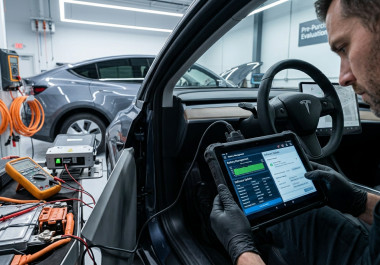
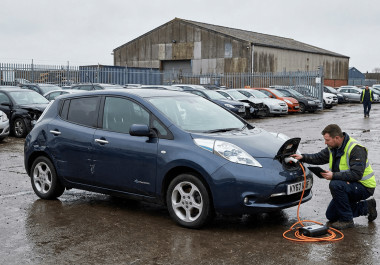
Only specific, licensed facilities known as Authorised Treatment Facilities (ATFs) are legally permitted to accept ELVs and issue a Certificate of Destruction. These professional centres are audited and regulated to ensure they adhere to rigorous environmental depollution and recycling targets.
This regulation is crucial for protecting the environment from hazardous materials found in vehicles, such as oils, coolants, and battery acids. Modern vehicles contain 15-25 litres of various fluids requiring specialist handling: engine oil, transmission fluid, brake fluid, coolant, power steering fluid, and air conditioning refrigerant.
Choosing an ATF guarantees the vehicle scrapping process will be handled correctly, removing all harmful substances before the remaining shell is crushed and recycled. This commitment to compliance is what underpins the legal validity of the CoD document received.
ATF environmental compliance requirements:
-
Mandatory depollution of all hazardous fluids within 24 hours
-
Safe removal and recycling of lead-acid batteries
-
Proper handling of mercury switches and airbag propellants
-
Recovery of air conditioning refrigerants to prevent atmospheric release
-
Separation of materials for maximum recycling efficiency
-
Achievement of 95% material recovery targets by weight
Owners must always verify that the facility chosen holds current ATF licensing before handing over the vehicle. The Environment Agency maintains a public register of licensed ATFs, searchable by postcode, providing verification of legitimate operators.
Unlicensed operators may offer higher cash payments but cannot provide legally valid Certificates of Destruction, leaving sellers exposed to continued liability. The modest difference in payment rarely justifies the substantial legal risk assumed when using non-ATF facilities.
Identifying a Compliant ATF
To avoid illegitimate operators, vehicle owners must actively check that the recycling centre is officially registered. A reputable ATF will be transparent about its ATF licensing and procedures, ensuring a seamless transaction and a guaranteed CoD.
This due diligence protects the owner from potential legal headaches down the line. Verification takes minutes but prevents months of administrative hassle resolving liability issues with the DVLA.
ATF verification checklist:
-
Request the facility's ATF certificate number
-
Verify registration through Environment Agency public register
-
Confirm facility displays current environmental permits
-
Check facility operates from fixed, permanent premises
-
Ensure written quotation includes CoD issuance commitment
-
Verify facility provides DVLA notification services
ATFs are often found through reputable auction houses or major vehicle marketplaces, as these maintain networks for handling both salvage vehicles for repair and those destined for scrap. Professional auction platforms conduct due diligence on disposal partners, ensuring only licensed ATFs receive end-of-life vehicles.
Access complete auction inventory to explore salvage opportunities where vehicles retain repair value exceeding scrap quotations. Professional buyers at auctions often bid substantially above scrap prices for vehicles with valuable components.
If uncertainty exists regarding legality or process, professional guidance ensures correct disposal pathways whilst maximising vehicle value. It's important to only trust partners who prioritise legal compliance and responsible recycling practices.
Meeting the CoD Requirements for Scrap Cars
Before any facility can issue a Certificate of Destruction, the vehicle must satisfy several core legal requirements relating to its completeness and documentation. The rules are strict because the CoD confirms the vehicle's permanent exit from the road network.
Understanding the CoD Requirements for Scrap Cars simplifies the process and prevents delays when the vehicle is delivered. Preparation ensures smooth processing and immediate CoD issuance upon vehicle acceptance.
The vehicle being scrapped should be largely complete, including all essential components like the engine, transmission, and bodywork. While minor parts may be missing, the ATF must be able to perform the full depollution process.
Completeness requirements:
-
Engine present (even if damaged or seized)
-
Transmission and drivetrain components intact
-
Fuel tank, though may be empty
-
Body panels sufficient for identification
-
VIN plate clearly visible and legible
-
Catalytic converter (if originally fitted)
Any attempts to scrap vehicles that have been heavily stripped may be flagged, potentially delaying the issuance of the CoD. ATFs require sufficient component presence to conduct mandatory environmental depollution procedures before issuing destruction certification.
Vehicles missing critical identification components, such as VIN plates or chassis stampings, require additional verification procedures. This verification prevents stolen vehicle processing but extends CoD issuance timelines from immediate to 5-10 working days.
Required Documentation
The most critical step in preparing a vehicle for scrapping is gathering the correct scrap vehicle documentation. Without these documents, the ATF cannot legally process the vehicle or complete the necessary DVLA notification on behalf of the owner. Preparing this in advance streamlines the entire transaction and ensures quick processing.
The following documentation is typically required:
The Vehicle Registration Certificate (V5C), often referred to as the logbook, with the correct sections completed. This document proves keepership and enables DVLA notification. Without the V5C, alternative procedures apply but extend processing timelines significantly.
Photographic identification, such as a driving licence or passport, to confirm the individual is the legitimate seller. This verification prevents stolen vehicle processing and ensures legal title transfer.
Proof of address, generally a recent utility bill or bank statement, matching the V5C details. This confirms current keeper residence and validates seller identity claims.
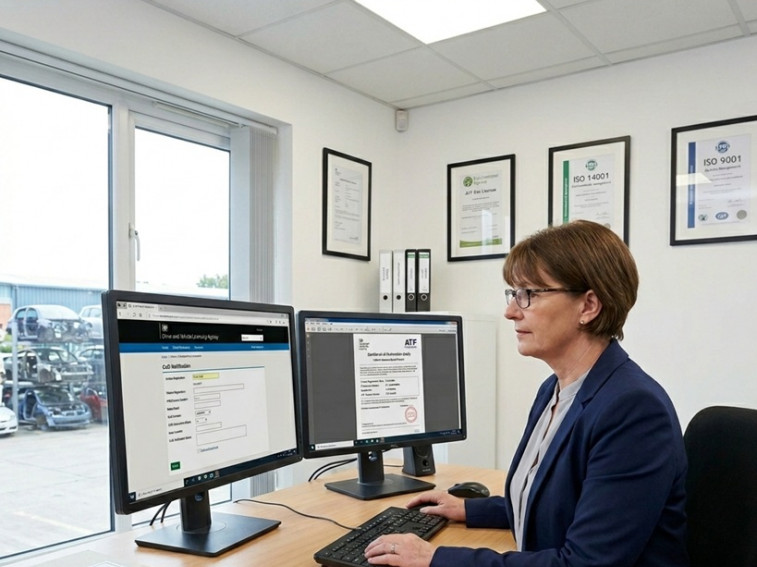
The ATF will fill out specific sections of the V5C (usually Section 4 and Section 9, depending on the document version) to confirm the vehicle has been scrapped. They then return the appropriate perforated portion of the V5C to the keeper, which must subsequently be used to notify the DVLA, confirming the individual is no longer the keeper.
Missing V5C procedures: If the V5C is unavailable, ATFs can still process vehicles but require alternative documentation. Sellers must complete a V62 form requesting a replacement V5C, costing £25 and requiring 5-10 working days processing. Alternatively, written notification to the DVLA with full vehicle details and ATF information satisfies legal requirements.
Professional auction platforms often assist with missing documentation scenarios, providing guidance on alternative verification methods. Browse salvage vehicle auctions where professional buyers handle documentation complexities routinely encountered with salvage stock.
Step-by-Step Guide to Getting a Certificate of Destruction
Getting a Certificate of Destruction is a straightforward process once the required sequence of events is known. It starts with the decision to scrap the vehicle and ends with the formal notification to the DVLA. Taking a methodical approach ensures that every legal box is ticked.
The following flow should be adhered to when disposing of an end-of-life vehicle:
Step 1: Select a Licensed ATF
Use the official government register or a trusted partner network to locate a fully licensed ATF near the vehicle. Proximity reduces collection costs, whilst multiple quotes ensure competitive pricing.
Search the Environment Agency register by postcode to identify local ATFs. Contact 3-5 facilities for quotations, as prices vary £50-150 for identical vehicles depending on current scrap metal commodity prices and facility capacity.
Step 2: Obtain a Quote
Contact the ATF with the vehicle's details (make, model, registration, and completeness) to get a guaranteed scrap value. Provide accurate information regarding condition, as incomplete vehicles command lower prices due to reduced recyclable material content.
Written quotations should confirm:
-
Scrap payment amount
-
Collection arrangements and costs
-
CoD issuance commitment
-
DVLA notification service provision
-
Payment method and timing
Step 3: Arrange Handover
Schedule a time for the vehicle to be dropped off or collected. Many ATFs offer free collection services within 20-30 mile radius, which is a significant help, especially for non-runners.
Collection timing flexibility varies by facility. Some offer same-day service, whilst others require 48-72 hours notice. Coordinate timing to minimise storage costs if the vehicle currently occupies paid parking.
Step 4: Complete Paperwork
At the point of handover, the ATF checks identification and processes the V5C. Thorough verification prevents stolen vehicle processing whilst ensuring legal title transfer.
Review all documentation before signing. Ensure the ATF provides:
-
Receipt acknowledging vehicle acceptance
-
Written confirmation of CoD issuance commitment
-
Copy of V5C sections retained by ATF
-
Contact details for follow-up queries
Step 5: Receive Your CoD
The ATF legally must issue the Certificate of Destruction immediately upon taking possession of the vehicle. This legal disposal proof confirms the transfer of ownership and liability.
Certificates may be issued physically or electronically. Electronic CoDs arrive via email within 24-48 hours, whilst physical certificates are provided at handover. Both formats possess equal legal validity.
Certificate of Destruction contents:
-
Vehicle registration number and VIN
-
Date and time of acceptance
-
ATF facility name, address, and licence number
-
Unique certificate reference number
-
DVLA notification confirmation
Store the CoD permanently. This document provides definitive proof of legal disposal if the DVLA queries vehicle status years later.
Step 6: Notify the DVLA
Use the perforated section of the V5C provided by the ATF to inform the DVLA that the vehicle has been scrapped. This notification can be completed online through the DVLA website or by posting the document section.
Online notification provides immediate confirmation and faster processing than postal submission. The process requires:
-
Vehicle registration number
-
V5C reference number
-
ATF details from CoD
DVLA processing typically takes 4-6 weeks for postal notifications, 1-2 weeks for online submissions. Confirmation letters confirm deregistration and calculate any road tax refund owed for complete unused months.
Understanding Alternative Disposal Routes
While Getting a Certificate of Destruction represents the standard end-of-life pathway, vehicles unsuitable for road use may still hold value exceeding scrap quotations. Understanding alternative disposal routes maximises financial returns whilst maintaining legal compliance.
Not every damaged or non-running vehicle requires immediate scrapping. Salvage auctions connect sellers with professional buyers seeking vehicles for parts reclamation, export markets, or specialist restoration projects.
Value comparison example (2017 Vauxhall Astra, Cat N):
-
Standard scrap quote: £280
-
Auction sale to parts specialist: £850
-
Value uplift: 203% above scrap
Vehicles with valuable components (engines, gearboxes, body panels) consistently achieve auction prices exceeding scrap values by 150-300%. This premium reflects parts market demand versus commodity metal pricing alone.
View motorcycle auction opportunities where even damaged motorcycles with seized engines command prices substantially above scrap weight values due to frame, wheel, and component demand.
Professional auction platforms facilitate this value discovery, connecting sellers with specialised buyers nationally. Geographic reach ensures competitive bidding, driving prices above local scrap quotations through market transparency.
Access commercial vehicle auctions for vans and larger vehicles where parts demand consistently generates auction premiums over scrap values. Fleet operators particularly benefit from auction disposal, maximising residual asset values across multiple units.
What Happens After You Receive Your CoD?
The Certificate of Destruction is a crucial milestone, but it does not completely conclude the legal responsibilities of the former keeper. The vehicle owner has one final, essential action to take to ensure the keeper deregistration is officially completed with the DVLA records.
Failure to complete this final step can still result in penalties. The DVLA maintains registration records until receiving formal notification, continuing to generate road tax demands and potential fines for non-compliance.
The CoD document must be held securely; this legal disposal proof is required if the DVLA ever queries the vehicle's status. The document confirms the date and time the liability for the vehicle was transferred to the ATF.
Long-term CoD storage importance:
DVLA records occasionally contain errors, particularly when multiple similar vehicles exist. CoD provides definitive proof of legal disposal, resolving disputes immediately versus months of administrative appeals.
Store CoDs with other critical vehicle documents: purchase receipts, insurance records, and correspondence. Digital copies provide backup protection against physical document loss.
Notifying the DVLA Correctly
The DVLA must receive notification directly from the last registered keeper that the vehicle has been transferred for scrap. This is done using the specific portion of the V5C form (often Section 9) that the ATF returns.
The completed scrap vehicle documentation can be posted to the DVLA or the notification can be completed online, which is often faster and provides instant confirmation. Online processing reduces administrative delays whilst providing immediate confirmation of successful submission.
DVLA notification methods:
Online notification (recommended):
-
Visit gov.uk/scrap-your-vehicle
-
Enter vehicle registration and V5C reference numbers
-
Provide ATF details from Certificate of Destruction
-
Receive instant confirmation reference
-
Processing completed within 5-10 working days
Postal notification:
-
Complete V5C Section 9 (keeper's portion)
-
Post to DVLA, Swansea, SA99 1BA
-
Allow 4-6 weeks for processing
-
Confirmation letter sent to registered address
Once the DVLA processes the notification, they will send a confirmation letter. This correspondence confirms deregistration and calculates any road tax refund for complete unused months remaining.
Standard refunds process within 6-8 weeks of DVLA receiving notification. Direct bank transfers require providing account details through DVLA online services, whilst cheque payments arrive automatically to the registered keeper's address.
If confirmation is not received within stated timeframes, verification prevents continued liability. Online tracking through DVLA services shows notification status and processing progress.
For questions about notification procedures or to discuss vehicle disposal options, reach out for guidance from experienced professionals. RAW2K Vehicle Auctions provides comprehensive support throughout the disposal process.
Maximising Value Before Scrapping
Before committing to scrap disposal, evaluating all disposal options ensures maximum financial return. Many vehicles deemed unsuitable for road use retain substantial component value exceeding commodity scrap pricing.
Pre-scrap evaluation checklist:
-
Obtain 3-5 scrap quotations for comparison
-
Research similar vehicle auction sales prices
-
Assess component condition (engine, transmission, body panels)
-
Consider parts market demand for specific model
-
Calculate collection costs versus auction fees
-
Evaluate timing flexibility versus immediate disposal need
Professional auction platforms provide transparent market pricing, enabling informed decision-making between scrap disposal and auction sale. Register to bid on salvage vehicles to access detailed vehicle information and competitive bidding across all categories.
Auction disposal typically generates 40-70% higher returns than direct scrap sales for vehicles with intact, valuable components. This premium rewards the modest additional time investment required for listing preparation versus immediate scrap collection.
Arrange verified scrap collection when scrap represents optimal value realisation. Professional scrap services handle all documentation, DVLA notification, and CoD issuance, ensuring legal compliance whilst maximising convenience.
Legal and Environmental Compliance
Getting a Certificate of Destruction ensures full legal and environmental compliance when disposing of end-of-life vehicles. By using an Authorised Treatment Facility and meticulously following documentation requirements, vehicle owners eliminate future liability whilst supporting sustainable recycling practices.
The process protects both individual interests and broader environmental objectives. Proper depollution prevents soil and groundwater contamination, whilst material recovery reduces manufacturing industry demands for virgin resources.
UK end-of-life vehicle regulations mandate 95% material recovery by weight, achievable only through licensed ATF processing. This stringent requirement ensures vehicles contribute to circular economy objectives rather than creating environmental hazards.
Understanding these requirements demonstrates responsible vehicle ownership, protecting personal interests whilst supporting sustainable automotive industry practices. The modest administrative effort required delivers substantial liability protection and environmental benefit.