A vehicle's life doesn't end when it's scrapped due to an accident or old age; instead, its Journey as a Scrapped Car is just beginning. This automotive recycling process is more than simple disposal; it's a meticulously regulated and environmentally vital procedure focused on recovering as much value as possible.
By understanding this journey, from initial registration to becoming raw materials, we gain a complete view of a vehicle's lifecycle. For both individual consumers and professional dealerships, knowledge of responsible vehicle handling builds industry trust and highlights the worth of quality used parts.
Arriving at the Authorised Treatment Facility
The first and most critical destination for a car at the end of its life is an Authorised Treatment Facility (ATF). These facilities operate under strict environmental legislation to manage and process End-of-Life Vehicles (ELVs). The initial step ensures the vehicle is handled responsibly and legally from the moment it leaves the owner's possession.
UK legislation mandates that only licensed ATFs can legally process end-of-life vehicles. The Environment Agency maintains strict oversight, conducting regular inspections to ensure compliance with depollution and recycling standards. Facilities failing to maintain certification face immediate suspension and potential prosecution.
ATF licensing requirements include:
-
Environmental permit authorising hazardous waste handling
-
Specialist equipment for fluid drainage and storage
-
Trained personnel with certified environmental qualifications
-
Insurance coverage for environmental liability
-
Regular audit compliance demonstrating 95% recovery targets
-
Secure storage preventing unauthorised vehicle access
These stringent requirements protect both environmental interests and vehicle owners' legal positions. Using unlicensed facilities exposes sellers to continued liability, as only ATFs can issue legally valid Certificates of Destruction.
Initial Documentation and Checks
Upon arrival, the ATF meticulously checks the vehicle's identity against its paperwork to ensure compliance. They verify the Vehicle Identification Number (VIN) and confirm the seller's authorisation to scrap the vehicle.
This process is essential for preventing the scrapping of stolen or fraudulently presented vehicles. Police maintain databases of stolen vehicles, cross-referenced during ATF intake procedures. Suspicious vehicles trigger immediate police notification, preventing criminal asset disposal.
Verification procedures include:
-
VIN plate inspection and database comparison
-
V5C logbook authentication checking security features
-
Seller identification verification through photographic ID
-
Address confirmation via utility bills or bank statements
-
Outstanding finance checks through HPI databases
-
Stolen vehicle database searches
A reputable facility ensures all necessary documentation, including the V5C logbook, is correctly handled to formally notify the DVLA. This notification removes the vehicle from road registration, eliminating ongoing keeper liability for road tax, insurance, and regulatory compliance.
Without proper documentation handling, sellers risk continued liability. The DVLA maintains registration records indefinitely unless receiving formal destruction notification, generating ongoing obligations years after physical vehicle disposal.
Depollution: The Critical First Step
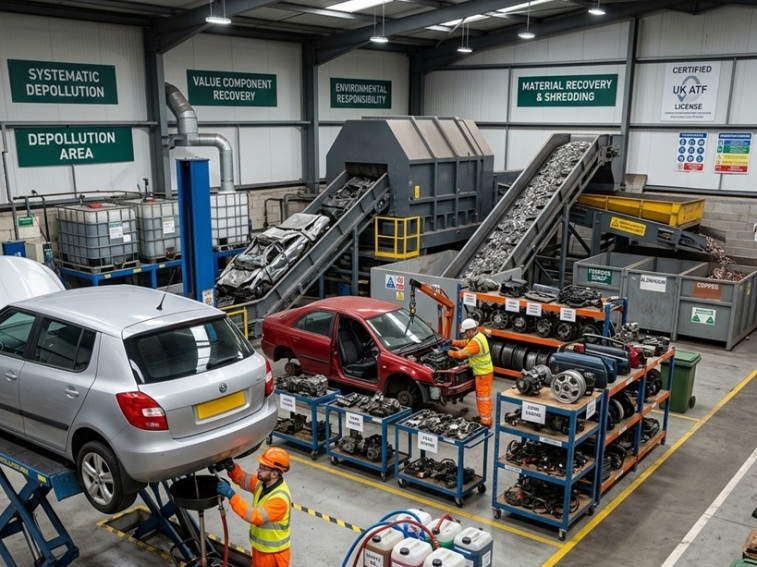
Before any dismantling or shredding can occur, the vehicle must undergo comprehensive depollution. This stage involves an intensive pre-flight check, where every hazardous fluid and material is carefully removed. This mandatory step prevents toxins from leaking into the environment later in the process.
Modern vehicles contain 15-30 litres of various hazardous fluids requiring specialist handling. Improper disposal creates severe environmental damage, contaminating soil and groundwater with toxic chemicals persisting for decades.
This includes removing and safely disposing of:
All fuel, oils, and lubricants from the engine, gearbox, and braking systems. Engine oil contains heavy metals and carcinogenic compounds. Gearbox oils include extreme-pressure additives toxic to aquatic life. Brake fluids are glycol-based solvents causing kidney damage if released into water supplies.
Coolant, antifreeze, and air conditioning gases. Antifreeze (ethylene glycol) is acutely toxic to humans and animals, with sweet taste making accidental ingestion particularly dangerous. Air conditioning refrigerants contribute to ozone depletion if released to atmosphere.
Components containing mercury, such as certain switches. Mercury is a potent neurotoxin accumulating in food chains. Older vehicles (pre-2000) may contain mercury in light sensors, ABS systems, and navigation displays.
Brake fluids, battery acid, and airbags, which require specialist handling. Lead-acid batteries contain sulphuric acid and lead compounds, both highly toxic. Airbags contain explosive propellants (sodium azide) decomposing into deadly hydrogen cyanide gas if improperly handled.
Removing these hazardous materials is a legal requirement in the UK, reflecting the industry's commitment to environmental protection. Access complete auction inventory to explore salvage opportunities where vehicles avoid end-of-life disposal through repair and resale.
Depollution timeline and procedures:
-
Hour 1: Fuel system drainage, battery disconnection
-
Hour 2: Oil and fluid extraction into sealed containers
-
Hour 3: Air conditioning refrigerant recovery
-
Hour 4: Airbag deployment or safe removal
-
Hour 5: Mercury switch identification and extraction
-
Hour 6: Final inspection and compliance certification
Professional ATFs complete depollution within 6-8 hours of vehicle acceptance, enabling next-day dismantling operations. Larger facilities processing 50-100 vehicles daily operate multiple depollution bays, maintaining continuous throughput.
Dismantling for Parts and Re-use
Once safely depolluted, the focus shifts to extracting value from the remaining components. Many parts of a Scrapped Car retain significant market value, especially for popular or premium models. This is where the vehicle's afterlife truly begins, supplying valuable stock to repairers and mechanics across the country.
The used automotive parts market in the UK generates over £1 billion annually, supporting thousands of independent repair shops, body shops, and specialist rebuilders. This secondary market enables cost-effective vehicle maintenance, extending fleet longevity whilst reducing manufacturing demand.
Parts market value breakdown:
-
Engines and gearboxes: £200-3,000 depending on model and condition
-
Body panels (doors, bonnets, wings): £50-400 per panel
-
Electrical components (alternators, starters): £30-150 per unit
-
Interior trim (seats, dashboard, door cards): £100-500 complete set
-
Wheels and tyres: £200-800 per set
-
Lighting units (headlamps, tail lights): £50-300 per unit
Premium vehicle parts command substantially higher prices. A Mercedes S-Class engine fetches £2,500-4,000, whilst a Ford Focus equivalent achieves £300-600. This value differential drives ATF priorities, with premium vehicles receiving meticulous dismantling versus bulk processing of commodity models.
High-Value Parts Recovery
Skilled technicians carefully dismantle the vehicle, prioritising components that can be immediately cleaned, tested, and resold as second-hand parts. This is a crucial step in the Journey of a Scrapped Car because it reduces the demand for new manufacturing.
Engines, gearboxes, alternators, headlamps, and body panels are all prime candidates for parts recovery and resale. Dealers who specialise in specific brands frequently source parts directly from ATFs to maintain stock of salvage vehicles.
Component recovery priorities by value:
Tier 1 (highest value): Complete engines, automatic gearboxes, turbochargers, ECUs, infotainment systems. These components undergo compression testing, diagnostic scanning, and function verification before resale. Warranties typically cover 30-90 days, providing buyer confidence.
Tier 2 (medium value): Manual gearboxes, alternators, starter motors, ABS modules, body panels. Visual inspection and basic function testing precedes resale. Minor cosmetic damage acceptable if functionality uncompromised.
Tier 3 (salvage value): Interior trim, glass, wheels, suspension components. Sold "as removed" with minimal testing. Buyers inspect condition before purchase, accepting components in found condition.
Professional dismantlers assess each vehicle's parts potential within minutes of depollution completion. Popular models with strong parts demand receive comprehensive stripping, whilst uncommon vehicles proceed directly to crushing with minimal component recovery.
Browse salvage vehicle auctions to compare auction values against scrap pricing. Vehicles with intact, valuable components consistently achieve 150-300% above scrap quotations through competitive bidding.
Why Second-Hand Parts Matter
The market for used vehicle parts is enormous and directly supports the competitive pricing found in vehicle auctions. A buyer winning a damaged commercial vehicle can significantly cut the repair budget by sourcing guaranteed used parts via listings.
Utilising recycled parts extends the life of other vehicles and represents a smart, cost-effective choice for repairs. This focus on parts recovery and reuse is a cornerstone of circular economy principles within the automotive sector.
Environmental benefits of parts reuse:
-
Manufacturing one new engine generates 500-800kg CO2 emissions
-
Reusing existing engines avoids these emissions entirely
-
Extracting and processing virgin aluminium requires 95% more energy than recycling
-
Parts reuse eliminates packaging and transportation of new components
-
Extended vehicle lifespans reduce total manufacturing demand
Economic benefits for repair sector:
-
Used engines cost 40-70% less than new equivalents
-
Body panels from salvage yards save £200-500 versus new
-
Electrical components offer 50-60% savings over dealer prices
-
Independent garages maintain competitive pricing through salvage sourcing
-
Vehicle owners access affordable repairs versus economically written-off vehicles
View motorcycle auction opportunities where even damaged motorcycles supply valuable parts for restoration projects and repair shops serving enthusiast communities.
Fleet operators particularly benefit from parts recycling. Commercial van fleets maintaining 50-100 vehicles reduce maintenance costs by 30-40% through strategic salvage parts sourcing versus new component purchasing.
The Final Stage: Metal Recycling
After all valuable parts are salvaged, the stripped chassis and remaining metallic structure are prepared for their ultimate fate: conversion into raw material through metal shredding. This process is highly efficient and forms the heart of environmental compliance for the automotive industry, with material separation ensuring maximum resource recovery.
It's the final leg of the vehicle's journey From Scrap Yard to Recycling plant, where purified metals await melting for remanufacturing into new products.
Shredding and Separation
The remaining vehicle shell, which is largely steel and other metals, moves into the metal shredding phase. Massive shredders break the car body into hand-sized pieces. These industrial machines process 200-500 tonnes of material daily, operating with rotating hammers spinning at 400-600 RPM.
Shredding process stages:
Stage 1 - Primary shredding: Vehicle shells fed into hammer mills where rotating beaters fragment material into 10-20cm pieces. Throughput reaches 30-50 tonnes per hour in modern facilities.
Stage 2 - Magnetic separation: Powerful electromagnets extract ferrous metals (steel and iron) representing 60-70% of shredded material by weight. Separated steel proceeds directly to steel mills for remelting.
Stage 3 - Eddy current separation: Non-ferrous metals (aluminium, copper, brass) separated using eddy current technology. Rotating magnetic fields induce electrical currents in conductive materials, repelling them from waste stream for collection.
Stage 4 - Density separation: Remaining materials sorted by density through air classification and water flotation. Heavy materials (residual metals) settle whilst light materials (plastics, rubber) float for separate processing.
Stage 5 - Manual sorting: Final quality control removes contaminants and verifies material purity before bale formation and transportation to recyclers.
Following this, advanced material separation technologies, including powerful magnets and eddy current separators, meticulously sort the materials. This intensive sorting separates the ferrous metals (steel and iron) from non-ferrous metals (aluminium, copper) and the remaining materials, known as shredder residue.
Material recovery statistics:
-
Steel recovery: 95-98% of ferrous content
-
Aluminium recovery: 90-95% of non-ferrous content
-
Copper recovery: 85-90% through manual sorting
-
Overall material recovery: 95% of total vehicle weight
-
Residual waste (landfilled): 3-5% of vehicle weight
This is the last phase, leading From Scrap Yard to Recycling plant, where the purified metals await melting. Separated materials achieve commodity-grade purity, commanding premium prices in international metals markets.
The Environmental Impact of Metal Recycling
Recycling the steel and aluminium from vehicles requires significantly less energy than manufacturing new metals from raw ore. This reduction in energy consumption is a major environmental benefit of the UK's stringent ELV regulations.
Modern automotive recycling processes are designed to recover over 95% of a vehicle's material weight, dramatically reducing landfill waste and minimising the industry's carbon footprint. This commitment to sustainability is reflected in the operations of major auction houses like RAW2K.
Energy savings through metal recycling:
-
Steel recycling uses 75% less energy than virgin production
-
Aluminium recycling saves 95% energy versus primary smelting
-
Copper recycling requires 85% less energy than mining and refining
-
Total energy savings: equivalent to powering 500,000 homes annually
Carbon emission reductions:
-
Recycling one tonne of steel avoids 1.5 tonnes CO2 emissions
-
UK automotive recycling prevents 6 million tonnes CO2 annually
-
Equivalent to removing 2.5 million cars from roads for one year
-
Supports UK climate commitments under Paris Agreement
Access commercial vehicle auctions for vans and trucks where size and weight generate substantial scrap values whilst providing extensive parts recovery opportunities before final recycling.
The circular economy model demonstrated by automotive recycling provides a blueprint for other industries. High recovery rates, valuable secondary materials markets, and environmental benefits combine to create genuinely sustainable product lifecycles.
Completing the Process: Certification and Compliance
The official closure of the vehicle's life is marked by the mandatory issuing of documentation. This ensures legal compliance for the former owner and confirms the responsible processing of the vehicle. Compliance is a non-negotiable part of the scrap cycle.
Issuing the Certificate of Destruction (CoD)
The most important document issued by the ATF is the Certificate of Destruction (CoD). This legal proof confirms that the vehicle has been processed and can never return to the road.
The CoD is issued to the last keeper and electronically sent to the DVLA, officially removing the vehicle from their records. This protects the former owner from any future tax or insurance liabilities related to the car.
CoD legal protections:
-
Terminates road tax obligations from destruction date
-
Prevents parking fines issued to former keeper
-
Blocks congestion charge penalties
-
Enables insurance policy cancellation
-
Provides definitive disposal proof for DVLA queries
-
Protects against fraudulent vehicle recreation attempts
ATFs issue CoDs within 24 hours of vehicle acceptance. Electronic certificates arrive via email, whilst physical certificates provide at point of handover. Both formats possess equal legal validity under UK and European environmental legislation.
Storing CoDs permanently protects against future disputes. DVLA records occasionally contain errors, particularly when multiple similar vehicles exist. CoD provides definitive proof resolving discrepancies immediately versus months of administrative appeals.
What it Means for RAW2K Vehicles
Many vehicles available through vehicle auctions often fall into the salvage categories precisely because the repair cost exceeds the market value, making them candidates for stripping or eventual scrapping.
Knowing the strict compliance surrounding the CoD gives buyers peace of mind that vehicles sold for scrap or parts will be handled ethically. We ensure all vehicles we list, including popular models and motorcycle stock, come with transparent documentation regarding their classification.
Salvage category transparency benefits:
-
Buyers understand vehicle history completely
-
Repair cost estimates become more accurate
-
Parts value calculations reflect actual condition
-
Professional buyers bid confidently on documented stock
-
Sellers achieve fair market prices through transparency
Register to bid on salvage vehicles to access detailed vehicle information, comprehensive photographic documentation, and condition reports enabling informed bidding decisions.
Professional auction platforms conduct thorough vehicle inspections, documenting damage accurately for buyer confidence. This transparency prevents post-purchase disputes whilst ensuring realistic pricing reflecting true vehicle condition.
Making Informed Decisions on Vehicle Value
Whether looking to scrap an old car or buy a damaged one for repair and resale, understanding the complete automotive recycling cycle is key to informed decisions. The high recovery rate of parts and materials maintains a valuable supply chain that supports the secondary vehicle market.
This knowledge allows accurate valuation of salvage potential versus repair complexity. Vehicles with extensive structural damage may generate better returns through parts reclamation than repair attempts, whilst minor damage cases often justify repair investment.
Decision framework for vehicle disposal:
Scenario 1 - Minor damage, good mechanics: Repair value exceeds scrap value. List through auctions attracting rebuilders and repairers. Expected return: 200-400% above scrap.
Scenario 2 - Major structural damage, good components: Parts value exceeds repair cost. List through auctions attracting dismantlers and parts specialists. Expected return: 150-250% above scrap.
Scenario 3 - Extensive damage, poor mechanics: Scrap value optimal. Arrange ATF collection ensuring proper CoD and DVLA notification. Expected return: commodity scrap pricing.
Scenario 4 - Fire/flood damage: Parts value uncertain. Obtain both scrap quotes and auction valuations. Professional inspection determines optimal disposal route.
Understanding these scenarios enables strategic decision-making maximising financial returns whilst ensuring legal compliance and environmental responsibility.
Arrange verified scrap collection when scrap represents optimal value. Professional services handle all documentation, DVLA notification, and CoD issuance, ensuring compliance whilst maximising convenience.
Buyers should explore high-value vehicles, including those with excellent parts potential. For specific questions about vehicle documentation or disposal procedures, speak to our team for professional guidance. RAW2K Vehicle Auctions provides comprehensive support throughout the disposal process.