Stolen vehicles occasionally enter secondary markets despite rigorous industry prevention efforts. Criminal networks constantly seek to dispose of stolen property by exploiting complex supply chains to launder vehicles back into legitimate circulation. Recognising stolen vehicle indicators protects buyers from severe legal complications, total financial loss, and unwitting participation in illicit activity.
Purchasing compromised property creates devastating consequences for the buyer. The vehicle is subject to immediate police seizure regardless of the purchase price paid or the buyer's complete lack of knowledge regarding its history. The invested capital vanishes instantly, the repair project is halted, and the purchaser faces an uncomfortable investigation to prove their innocence. Prevention through uncompromising verification remains the only effective strategy.
This material outlines a highly systematic, phased approach to identifying salvage auction theft red flags before any capital is committed. By structuring the evaluation into distinct investigative stages, buyers can effectively separate legitimate insurance recoveries from fraudulently manipulated inventory.
The Hidden Route of Compromised Inventory
Understanding exactly how compromised vehicles reach the secondary market helps purchasers recognise highly vulnerable situations. Legitimately recovered stolen vehicles enter the system strictly through insurance companies. When theft damage exceeds viable repair costs, insurers write off the recovered vehicles and process them as salvage. These specific vehicles possess legitimate salvage status, and their documentation clearly reflects this official processing route.
The primary threat involves vehicles introduced through fraudulent means with entirely concealed histories. Criminal operations attempt to mask stolen vehicles by fabricating paper trails, exploiting verification gaps, and manipulating category markers. Sophisticated networks might even inflict deliberate structural damage to create a highly plausible collision history, routing the vehicle through negligent intermediaries. Innocent purchasers who fail to look past the surface-level cosmetic damage often inherit these profound legal liabilities. The financial loss almost always exceeds the initial purchase price, as any subsequent investment in parts or restoration disappears the moment the police seize the asset.
Stage One: The Paper Trail and Digital Footprint
The investigation must begin before the vehicle is ever viewed in person. Commercial vehicle checks aggregate critical background data and represent a mandatory first line of defence. Running comprehensive background checks through multiple providers is essential, as these databases compile police theft reports and official write-off histories. A "clear" result indicates no adverse information currently exists, but it does not guarantee legitimacy, as freshly cloned identities might not yet appear in the digital system.
Document analysis frequently exposes deep inconsistencies. The V5C registration document requires careful scrutiny to ensure it features the correct DVLA security watermarks. The registered keeper history must demonstrate a logical, understandable progression. Stable, long-term ownership followed by a sudden flurry of rapid keeper changes strongly suggests the vehicle is being moved quickly to obscure its origins. Geographic inconsistencies also warrant heavy questioning. A vehicle registered in a known high-theft area that suddenly appears for sale hundreds of miles away without a credible explanation demands significantly elevated scrutiny.
Furthermore, the listing details themselves often broadcast warning signs. Vague descriptions that deliberately avoid specific details usually indicate a seller trying to limit their liability. Prices sitting drastically below the current market rate for equivalent vehicles suggest hidden problems. While buyers naturally seek value, suspiciously low pricing is one of the most prominent salvage auction theft red flags, indicating a seller prioritising immediate, untraceable disposal over maximising their financial return. For those requiring guidance on market values, consulting expert salvage buying advice ensures you recognise these pricing anomalies early in the process.
Stage Two: Forensic Physical Examination
Physical examination reveals mechanical manipulation that sophisticated document forgery attempts to hide. Vehicle Identification Numbers provide the primary verification anchor. Primary VIN plates typically sit at the base of the windscreen, while secondary numbers are stamped into door jambs or chassis legs. Missing VINs or numbers stamped in incorrect locations dictate that the buyer must halt the transaction immediately.
Inspect the primary VIN plates for any evidence of tampering. Look for disturbed rivets, non-original fasteners, adhesive residue, or surrounding paint damage consistent with hasty plate removal. The plates must appear entirely original, displaying aging consistent with the surrounding dashboard materials. Many vehicles also feature their VIN etched into the glass as a factory security measure. Replaced glass lacking matching etching raises questions, but mixed glass configurations strongly suggest selective replacement designed specifically to hide original identification marks. When evaluating write-off cars for sale UK, verifying these deeply embedded physical identifiers prevents the acquisition of a cloned vehicle.
The physical damage must logically correlate with the claimed history. Theft recovery damage differs entirely from standard collision damage. A vehicle claimed as collision salvage but strictly showing forced locks, destroyed ignition barrels, and disturbed interior panels represents a massive discrepancy. Professional buyers know that a vehicle's physical condition must tell a story that perfectly aligns with its digital paperwork.
Stage Three: Security Systems and Key Authentication
Key availability and security system integrity provide crucial clues regarding how the vehicle was acquired. Original vehicle purchases include multiple factory keys. A single, cheap aftermarket key for a modern luxury vehicle raises immediate questions about why the original keys are missing. If the original keys were retained by the true owner during a theft, the criminals are forced to utilise crude aftermarket bypass solutions to operate the vehicle.
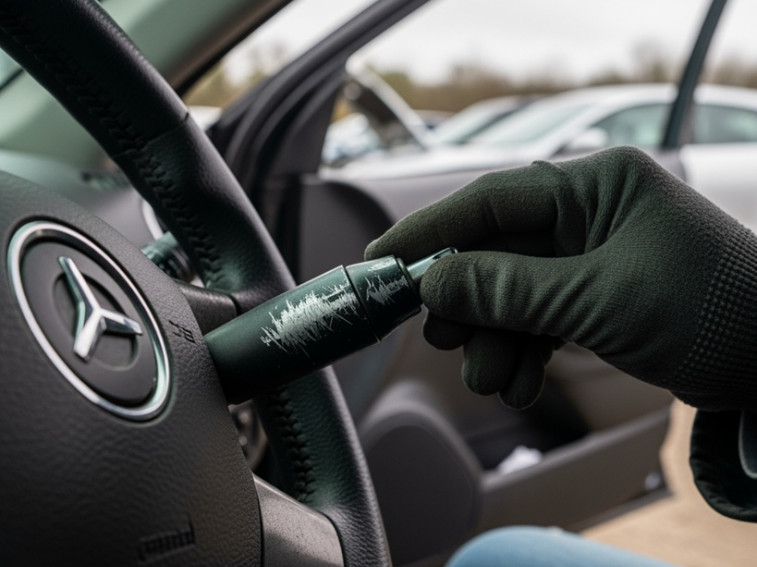
Modern vehicles feature highly complex immobiliser systems. Defeated or bypassed factory immobilisers indicate either a previous theft event or a massive security compromise. Evidence that security features were violently defeated, such as severed alarm wiring or destroyed steering column cowlings, heavily suggests a criminal history. If preparing to browse damaged vehicle auctions, understanding these specific security defeat signatures ensures buyers only bid on legitimately processed inventory.
Diagnostic scanning provides an additional layer of technical verification. Connecting professional diagnostic equipment reveals whether the internal computer modules correctly communicate with the factory security systems. Missing or non-communicating security sensors often indicate deliberate disconnection designed to prevent tracking or alarm activation, a principle that applies universally whether inspecting luxury saloons or evaluating stock at motorcycle salvage auctions UK.
Escalation Protocols and Buyer Protection
When strong stolen vehicle indicators are discovered, specific escalation protocols protect the buyer's capital and support law enforcement. If the physical evidence of cloning or theft is undeniable, the immediate action is to abandon the transaction entirely. No apparent bargain justifies the catastrophic consequences of possessing stolen property. If the vehicle is listed on an established platform like RAW2K, report the specific suspicions to the administration team immediately, as reputable platforms actively work to remove compromised inventory from their systems.
Innocent purchasers possess very limited legal protections regarding property retention, as true title never transfers from the original victim. While civil claims against fraudulent sellers exist in theory, identifying and successfully suing organised criminals is exceptionally rare. Therefore, robust prevention strategies remain infinitely superior to relying on eventual legal recourse. If a buyer determines a project is entirely unviable due to deep legal or structural complications, arranging proper end-of-life vehicle disposal for any remaining legitimate parts is a far safer alternative to continued investment.
Developing a consistent, uncompromising verification routine minimises risk exposure permanently. Systematic checking catches problems that rushed, emotionally driven assessments miss. By refusing to purchase inventory that fails basic identity checks, buyers protect their capital and maintain operational safety.
Conclusion
Identifying compromised vehicles requires a highly structured investigation combining digital history verification, forensic physical inspection, and technical security assessment. Relying on a single check is insufficient, but layering multiple verification methods successfully exposes the vast majority of cloned or stolen property before capital changes hands.
The devastating consequences of purchasing stolen vehicles justify immense prevention efforts. Establish strict minimum documentation standards and flatly refuse to purchase inventory failing to meet them. To build your next automotive project safely, complete your salvage auction registration and start browsing transparently documented arrivals.
If there are questions regarding interpreting database results or reading complex vehicle documentation, please don't hesitate to contact us. Our dedicated support team is ready to help clarify any concerns before the bidding process begins.