For many vehicle owners, a car's value is purely about its roadworthiness, mileage, and service history. However, once a vehicle is declared an insurance write-off, reaches the end of its useful life, or sustains damage that makes repairs uneconomical, its fundamental worth shifts. At this stage, the value of the vehicle becomes intrinsically linked to the underlying commodity market, specifically Scrap Metal Prices and Car Value.
Understanding this relationship is crucial whether the vehicle owner is a professional dealer disposing of old stock or a private owner making a final decision about a damaged asset. This guidance helps vehicle owners maximise returns when transitioning a vehicle from the road to the recycling stream.
The Commodity Market and Automotive Value
A car is essentially a collection of several valuable raw materials, predominantly steel, which is why global commodity markets dictate the final payout when the vehicle is dismantled. These markets are dynamic, influenced by international demand and supply chains that have nothing to do with whether the car passed its last MOT.
When manufacturers increase steel production, or global construction booms, the demand for scrap metal rises, directly increasing the salvage value of the vehicle. This interconnection between industrial commodity prices and individual vehicle worth creates opportunities for sellers who understand market timing.
The steel content alone in a typical family car weighs approximately 900 kilograms, representing the bulk of its scrap value. When global steel prices rise by £50 per tonne, the intrinsic value of that same family car increases by roughly £45 purely from commodity appreciation, before considering any reusable components.
Understanding these global market forces enables sellers to time their disposal strategically, potentially capturing significantly higher returns during periods of elevated commodity pricing. Access complete auction inventory to compare scrap values against potential auction prices for vehicles with salvageable components.
Key Factors Driving Metal Rates
The rates paid for vehicles intended for recycling fluctuate daily, and these changes are driven by a complex mix of economic, political, and industrial forces. These external pressures ensure that Car Value Changes with Scrap Metal Rates constantly, making timing an important element of the final sale price. Watching these trends can provide an advantage to those planning to dispose of a non-runner.
Several factors cause these significant market shifts:
Global Industrial Demand: Massive industries, particularly construction and infrastructure in Asia and Europe, drive the need for recycled steel and aluminium. High industrial output generally translates to higher scrap prices. China's infrastructure spending alone can shift global scrap prices by 15-20% within a single quarter.
Construction booms create insatiable demand for structural steel, with major projects requiring thousands of tonnes. When Beijing announces a £500 billion infrastructure package, UK scrap yards typically see price increases within weeks as global supply chains adjust to meet Asian demand.
Currency Fluctuations: Since metals are traded in US Dollars, the strength or weakness of the pound against the dollar significantly impacts UK scrap yard purchasing power. A weaker pound means local buyers may pay less to offset higher international costs.
When sterling drops 10% against the dollar, UK scrap processors face correspondingly higher costs for international sales, often reducing their local purchase prices by 8-12% to maintain margins. Sellers monitoring exchange rates can time disposal to coincide with stronger sterling periods, maximising returns.
Energy Costs: The processes of collecting, shredding, and smelting scrap metal require vast amounts of energy. When energy prices rise, the operational costs for recycling centres increase, which can dampen the prices they offer for end-of-life vehicles.
Industrial shredders consume 200-400 kilowatt-hours per tonne of processed material. When electricity prices double, as occurred during the 2022 energy crisis, scrap processors' margins compress significantly, forcing reductions in purchase prices offered to sellers.
Transportation and Logistics: The cost of collecting, transporting, and processing vehicles affects final scrap values. Remote locations face higher collection costs, potentially reducing net returns. Urban centres with concentrated scrap volumes often command better prices due to economies of scale in processing operations.
Regulatory Compliance Costs: Authorised Treatment Facilities invest heavily in environmental compliance, including hazardous waste handling, depollution equipment, and certification maintenance. These fixed costs influence the margins available for vehicle purchase prices, particularly affecting smaller processors with lower volumes.
The Breakdown: Ferrous Versus Non-Ferrous
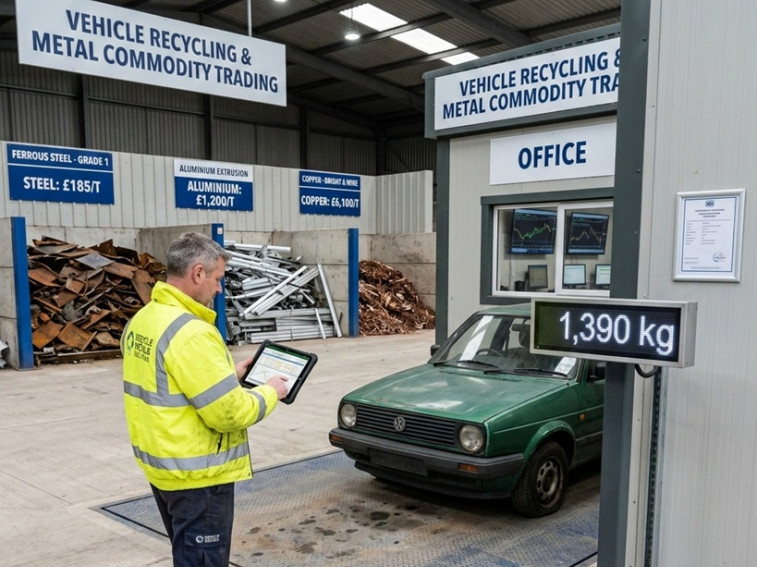
The metal content in a car is separated into two broad groups, and each is valued differently. Ferrous metals, like iron and steel, are abundant but command a lower price per tonne. Non-ferrous metals, which include copper, aluminium, and brass, are rarer in a vehicle but hold a much higher market rate.
The bulk of a vehicle, the chassis, frame, and body panels, is made up of cheaper, heavier steel. Conversely, the wheels (often aluminium), wiring harness (copper), and engine components (aluminium block, brass fittings) contribute significantly more per kilogram to the final recycling price.
Ferrous metal pricing (2024 averages):
-
Steel body panels and chassis: £120-180 per tonne
-
Cast iron engine blocks: £140-200 per tonne
-
Steel suspension components: £100-160 per tonne
Non-ferrous metal pricing (2024 averages):
-
Aluminium alloy wheels: £800-1,200 per tonne
-
Copper wiring harnesses: £4,000-6,000 per tonne
-
Brass radiator components: £2,500-3,500 per tonne
-
Aluminium engine blocks: £600-900 per tonne
A standard family car contains approximately 15-25 kilograms of copper wiring, worth £60-150 at current market rates. Premium vehicles with extensive electronic systems may contain 30-40 kilograms, significantly increasing scrap value beyond basic steel content.
Deconstructing Your Car's Components
The final figure offered for an end-of-life vehicle isn't just a flat rate per tonne; it's a careful calculation based on the estimated weight and the presence of valuable non-metallic components. Maximising a car's value requires an appreciation for every component that holds commodity value beyond the steel shell.
This holistic assessment helps determine if selling through a competitive auction is a better option than direct scrapping. Professional buyers at salvage auctions understand component values intimately, often bidding substantially above basic scrap weight prices for vehicles containing high-value parts in good condition.
Component value calculation example (2016 Ford Focus):
-
Base steel weight (850kg × £150/tonne): £127.50
-
Aluminium wheels (20kg × £1,000/tonne): £20.00
-
Copper wiring (18kg × £5,000/tonne): £90.00
-
Catalytic converter: £80-120
-
Battery: £15-25
-
Total scrap value: £332.50-£382.50
Compare this against potential auction value if the vehicle has repairable damage but good mechanical components. Browse salvage vehicle auctions to see current market prices for similar damaged vehicles, which often exceed scrap values by 200-400%.
High-Value, Non-Metallic Assets
Beyond the primary metals, certain non-metallic or composite parts of a vehicle contain precious metals or highly recyclable materials that boost the overall payout. Scrapping firms look closely at these components when quoting a price, as they represent reliable secondary revenue streams.
Two components stand out for their contribution to a car's final valuation:
Catalytic Converters: These contain trace amounts of platinum, palladium, and rhodium, which are among the most expensive metals in the world. Even a faulty converter can fetch a high price due to the reclamation process.
Modern catalytic converters contain 2-6 grams of platinum group metals. With palladium trading at £40-60 per gram and rhodium at £200-400 per gram, a single converter contains £150-300 worth of precious metals. Diesel converters typically contain more platinum, whilst petrol converters are richer in palladium and rhodium.
Hybrid vehicles command premium scrap prices partly due to their larger, more valuable catalytic converters. A Toyota Prius converter alone can fetch £200-400 at scrap, significantly exceeding the value found in conventional vehicles.
Batteries: Vehicle batteries contain lead and highly recyclable plastics. Scrap dealers separate these components, ensuring that the heavy lead content contributes substantially to the overall weight and value calculation.
Standard 12-volt car batteries contain 8-12 kilograms of lead, worth £15-25 at current scrap prices. Electric vehicle batteries represent substantially higher values, containing lithium, cobalt, and nickel worth £500-2,000 per battery pack depending on capacity and chemistry.
Professional scrap processors pay separately for batteries, recognising their environmental handling requirements and valuable lead content. Always ensure batteries are included when obtaining scrap quotes, as their removal represents lost value.
Weight, Size, and Density
The sheer weight of the vehicle is the primary driver of scrap value, as most metals are priced by weight (per tonne). Larger commercial vehicles like vans and trucks naturally command higher scrap prices than smaller hatchbacks, simply because they contain more steel.
For example, a heavy-duty pick-up truck will always yield a higher scrap return than a lightweight scooter. Access commercial vehicle auctions to compare scrap values against auction prices for commercial stock, where parts value often significantly exceeds scrap weight pricing.
Vehicle weight and typical scrap values (2024 averages):
-
Small city car (800-900kg): £180-220
-
Family hatchback (1,100-1,300kg): £250-320
-
Large saloon (1,400-1,600kg): £320-400
-
SUV (1,800-2,200kg): £420-550
-
Transit van (2,000-2,500kg): £480-650
-
Heavy pick-up (2,500-3,000kg): £600-800
When seeking a quote for a car that's been written off, scrap centres and bidders at end-of-life vehicle auctions often quote based on the expected 'clean' weight of the metal recovered after non-recyclable materials are removed. This ensures the final payment reflects the true commodity value of the materials being recycled.
Non-recyclable materials typically account for 5-10% of total vehicle weight, including seats, carpets, dashboard plastics, and glass. Professional scrap processors factor this wastage into their offers, explaining why quoted prices per tonne often appear below published commodity prices.
When Scrap Value Exceeds Repair Value
The most difficult decision for a vehicle owner or dealer is determining the tipping point, which is the moment selling a vehicle for its component and metal worth becomes financially smarter than repairing it for resale. This tipping point is defined by fluctuating repair costs, high salvage categories, and the current commodity markets. Making the right call here prevents further financial loss.
This choice is comparable to deciding whether to restore an old piece of furniture or sell it for firewood. If the cost of wood glue, varnish, and labour is far greater than the restored item's value, selling it as raw material (firewood) is the logical choice.
Similarly, if the repair estimate for a Category S car significantly exceeds its post-repair retail value, selling it for scrap or auction is the most sensible financial path. Understanding this calculation requires accurate assessment of three key values: repair costs, post-repair market value, and scrap value.
Decision Points for Salvage Owners
Owners of accident-damaged vehicles, such as those categorised as N or S, must calculate the net return accurately. A high current market rate for scrap metals could push the vehicle's inherent commodity value higher than its depreciated resale price after repair. This is where high Car Value Changes with Scrap Metal Rates is beneficial.
This is also true for commercial fleets; greater returns might be found listing damaged stock through van auctions rather than paying for uneconomical repairs. Fleet managers should compare scrap quotes against auction values quarterly, as commodity price movements can shift the economical decision point significantly.
For example, a calculation involving a delivery van with minor fire damage might show that the repair bill (£2,500 for wiring and panels) significantly reduces the net gain compared to the retail value (£3,500). If the scrap quote is £1,200, choosing the recycling option delivers a better, risk-free return than investing the £2,500 in uneconomical repairs to gain only £1,000 in equity.
Worked example (2015 Ford Transit with fire damage):
-
Post-repair retail value: £3,500
-
Repair costs (wiring, panels, labour): £2,500
-
Net equity after repair: £1,000
-
Current scrap value: £1,200
-
Decision: Scrap yields £200 better return with zero repair risk
To make this decision confidently, key steps include:
Obtain a Professional Repair Quote: Get a minimum of two quotes for repairing the vehicle to roadworthy status. Ensure quotes include all necessary work to meet MOT standards, not just cosmetic repairs.
Determine Post-Repair Market Value: Research how much the vehicle is currently selling for in good, used condition. Check multiple sources including classified listings, dealer forecourts, and recent auction results for identical specifications.
Secure a Scrap Price Quote: Contact reputable Authorised Treatment Facilities (ATFs) for their current scrap metal prices. Obtain quotes from at least three facilities, as prices can vary £50-150 for identical vehicles depending on processor capacity and current inventory levels.
Factor Collection Costs: If the vehicle is non-running, collection charges of £30-80 may apply depending on distance and vehicle size. Factor these costs into net scrap returns when comparing against repair-and-sell options.
Consider Time Value: Repairs typically require 2-4 weeks of workshop time, during which the vehicle generates no value whilst potentially incurring storage costs. Immediate scrap sales convert the asset to cash within 48 hours, improving cashflow for businesses managing multiple units. Arrange verified scrap collection through licensed ATFs to ensure proper legal disposal and maximum value recovery.
Account for Environmental Compliance: Ensuring the vehicle reaches a licensed Authorised Treatment Facility protects against future liability. Professional scrap services handle all DVLA notification and Certificate of Destruction requirements, eliminating administrative burden whilst ensuring legal compliance.
Maximising Value Through Competitive Auction Platforms
Whether a vehicle's optimal fate is repair, resale, or recycling, choosing a platform that attracts professional bidders ensures the best market price is achieved. The RAW2K Vehicle Auctions platform is frequently attended by professional scrap processors, dismantlers, and breakers who are keenly aware of current commodity market rates.
These professionals compete fiercely for vehicles rich in high-value metals and components, including stock found in specialised motorcycle auctions and other listings. View motorcycle auction opportunities where even damaged bikes with valuable aluminium frames and engines command prices exceeding basic scrap weight values.
Professional buyers at auctions understand component values intimately. A 2018 BMW 3 Series with structural damage might fetch £800 at scrap, but auction bidding between parts specialists and rebuilders frequently reaches £2,500-3,500 based on engine, transmission, and interior component values.
This competitive dynamic ensures sellers capture maximum value, whether from scrap metal content or reusable parts potential. Unlike single-quote scrap transactions, auctions create price discovery through competitive bidding, typically yielding 40-70% higher returns than direct scrap sales.
Leveraging National and Regional Coverage
When listing a salvage or end-of-life vehicle through a national platform, the benefit comes from intense, professional competition. Instead of accepting a single quote from a local scrap yard, the vehicle is exposed to a national network of bidders who factor the latest scrap rates into their final bids.
This competitive pressure often results in a higher final sale price than a direct scrap offer. Regional scrap processors typically offer £150-250 for a standard family car, whilst auction bidding between multiple specialists can reach £400-600 for identical vehicles based on parts value recognition.
For dealers needing to manage stock efficiently across various locations, RAW2K's regional presence ensures broad coverage and simplified logistics. Whether disposing of vehicles in the busy South East or the industrial north, specialised regional events can be leveraged.
This means buyers searching specifically for salvage opportunities find the listing, driving up competition and prices. By letting the market compete for the vehicle's metal and component value, the maximum potential return is captured. Register to bid on salvage vehicles to access professional buyer networks across all UK regions.
Regional price variation example (2017 Vauxhall Astra, Cat N):
-
South East scrap quote: £280
-
North West scrap quote: £245
-
Scotland scrap quote: £225
-
National auction result: £520
-
Auction premium: 85% above highest scrap quote
The auction model's transparency benefits both sellers and buyers. Sellers receive market-driven prices reflecting true component values, whilst buyers access detailed vehicle information enabling informed bidding decisions. This transparency prevents the information asymmetry that characterises many scrap transactions.
If there are questions about listing a damaged or non-running vehicle for sale on RAW2K, do not hesitate to contact the team for expert guidance. Professional support ensures optimal listing presentation, attracting maximum bidder interest and competitive pricing.
Understanding Market Timing for Optimal Returns
Scrap metal prices follow cyclical patterns influenced by seasonal construction activity, global economic conditions, and industrial production cycles. Understanding these patterns enables strategic timing of vehicle disposal for maximum returns.
Seasonal pricing patterns:
-
Spring (March-May): Construction season begins, demand rises, prices increase 8-12%
-
Summer (June-August): Peak construction activity, highest scrap prices of year
-
Autumn (September-November): Construction slowdown begins, prices plateau
-
Winter (December-February): Reduced industrial activity, lowest annual prices, 10-15% below summer peaks
Fleet operators managing multiple end-of-life vehicles can optimise returns by timing bulk disposals for summer months when commodity prices peak. Even private sellers benefit from waiting 4-8 weeks if current prices sit at annual lows, potentially capturing £30-80 additional value per vehicle.
However, storage costs, insurance obligations, and opportunity costs must be factored into timing decisions. Vehicles requiring secure storage at £50-100 monthly may generate negative returns if held purely for commodity price appreciation.
Final Considerations for Scrap Value Optimisation
Understanding how scrap metal prices affect car value enables informed decision-making when disposing of end-of-life vehicles. By recognising the interplay between global commodity markets, component values, and auction dynamics, sellers can maximise returns significantly beyond basic scrap yard quotes.
The key principles for optimising scrap value include:
-
Monitor commodity prices through metal trading indices
-
Obtain multiple quotes from ATFs and auction platforms
-
Recognise component values beyond basic steel weight
-
Time disposal strategically when possible to capture price cycles
-
Leverage competitive platforms to discover true market value
Whether choosing direct scrap disposal or exploring auction opportunities, informed sellers consistently achieve 30-70% higher returns than those accepting the first offer received. This financial benefit rewards the modest time investment required to understand market dynamics and disposal options.
For questions about listing a damaged or non-running vehicle, or to discuss optimal disposal strategies, feel free to get in touch for expert guidance. RAW2K Vehicle Auctions provides comprehensive support throughout the vehicle disposal process, from initial valuation through final sale completion.