There is a highly specific, clinical satisfaction in seeing a heavily damaged motorcycle transformed from an insurance write-off into pure commercial profit. Professional traders have routinely pulled mangled 600cc supersport machines from secure compounds and, within a single working day, methodically stripped thousands of pounds worth of pristine components that would have cost retail buyers an absolute fortune at a main dealer. That is the true operational reality of the liquidation market. Done correctly, it is one of the most consistently lucrative sectors of the entire auction industry.
Most traditional buyers look at a crashed motorcycle and instantly assume it is destined for the local metal crusher. Professional buyers look at the exact same machine and see a rolling, highly profitable parts catalogue. The defining difference is not simply basic mechanical knowledge; it is possessing a deep, analytical understanding of motorcycle parts salvage value. You must know exactly which specific components hold genuine, liquid profit potential, how to extract them without causing secondary damage, and where the most active buyer markets currently exist. Whether you are an independent trader looking to drastically maximise returns or a specialist mechanic seeking high-margin inventory, knowing exactly what to harvest transforms a £600 proxy bid into a highly lucrative commercial operation.
Understanding Salvage Categories and Part Viability
Before committing a single pound to a proxy bid, you must absolutely understand the strict legal framework governing insurance write-offs. Category A motorcycles are designated strictly as scrap; by UK law, absolutely nothing can be salvaged for reuse. The entire vehicle must be crushed. Category B indicates severe structural destruction where the frame must be legally destroyed, but the mechanical parts can be harvested. However, major platforms legally restrict Category B bidding strictly to licensed Authorised Treatment Facilities (ATFs) holding proper environmental permits.
For standard trade buyers and mechanics, Category N (Non-Structural) indicates purely cosmetic or electrical damage. These specific machines represent absolute goldmines for salvage motorcycle parts extraction because the highly valuable, core mechanical components are almost always entirely untouched by the impact. Category S (Structural) involves frame damage, but the bike can legally be repaired. Harvesting parts from a Category S machine requires exceptional digital assessment skills. Traders have wasted hours calculating profit margins on heavily damaged bikes, only to realise the impact shock travelled entirely through the front forks, shattered the internal yoke stops, and warped the expensive engine mounting points.
Engine and Transmission Components
The main engine block is the absolute crown jewel of any salvage extraction operation. A complete, flawlessly running engine extracted from a modern sports bike can easily command between £1,500 and £4,000, depending entirely on the specific make, generation, and verified mileage. Professional extraction operations focus heavily on removing these as complete, plug-and-play units with all vital ancillaries the alternator, starter motor, and intact wiring loom still attached. Buyers willingly pay massive premiums for complete units they can drop directly into a track bike frame without hunting for missing sensors.
Gearboxes represent another highly lucrative, easily extracted item. A cassette-style gearbox from a popular track-day machine like a Suzuki GSX-R can sell for £600 to £900 alone. Individual engine components also possess incredibly strong secondary markets. Pristine cylinder heads (£200-£600), un-scored crankshafts (£150-£400), and camshafts (£80-£200) are constantly required by specialist engine rebuilders. The fundamental key is understanding the specific market demand. Japanese sports bikes feature massive, high-volume demand due to heavy track usage. European machines, such as specific Ducati or Triumph models, command significantly higher individual component prices but possess a much narrower pool of potential buyers.
Suspension and Braking Systems
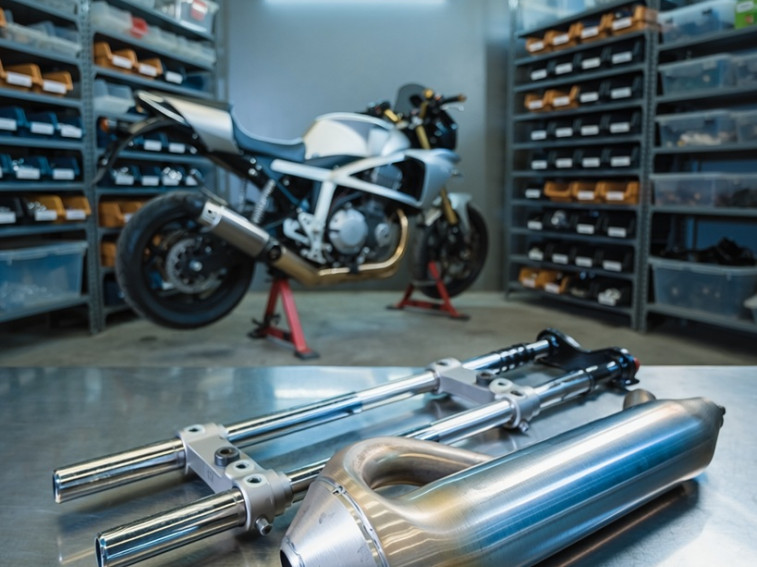
Front forks are consistently profitable, particularly when extracted from premium sports and heavy adventure motorcycles. A pair of undamaged front forks from a modern machine routinely fetches £300 to £800, sometimes exceeding £1,000 for premium models featuring semi-active electronic damping. Because physical yard inspections are prohibited, you must meticulously scrutinise high-resolution digital auction photos for weeping fork seals or visibly bent stanchions before calculating your potential return.
Rear shock absorbers from premium manufacturers like Öhlins or top-tier Showa units sell exceptionally quickly to riders upgrading their standard OEM suspension. Brake calipers are surprisingly valuable if handled correctly. Genuine Brembo monobloc calipers extracted from premium superbikes sell rapidly for £200 to £400 per pair. Even standard OEM Nissin or Tokico calipers reliably fetch £60 to £150, provided you guarantee the internal pistons are not entirely seized from winter road salt. ABS pump units from modern, complex motorcycles are particularly valuable (£200-£600) simply because the manufacturer replacement costs are exorbitant and the units frequently fail out of warranty.
Wheels, Tyres, and Drive Components
Motorcycle wheels are incredibly bulky to store and ship, but they remain highly profitable. Undamaged, perfectly straight alloy wheels from massively popular sports bikes sell for £300 to £600 per pair. However, buyers demand wheels they can fit instantly. Even minor cosmetic kerb damage or a slightly bent rim lip drops the resale value drastically.
Tyres hold genuine commercial value if they possess significant remaining tread. Anything exceeding 4mm of central tread on premium rubber brands (Michelin, Pirelli, Dunlop) can be sold alongside the wheels or stripped and sold separately to budget-conscious commuters. Furthermore, never overlook the minor drive components. Rear wheel sprocket carriers and cush drive rubbers seem insignificant, but these specific wear items frequently cost £80 to £120 new from a main dealer. Good used examples priced at £30 to £50 sell remarkably quickly. Meticulous traders frequently extract an extra £200 to £300 per bike simply by systematically harvesting these heavily overlooked minor assemblies.
Electronics and Instrumentation
Modern motorcycles are heavily reliant on complex electronics, and this specific sector is where used component values have absolutely skyrocketed. An ECU (Engine Control Unit) from a current-generation superbike can easily fetch £400 to £800. The absolute critical factor is ensuring the unit is not permanently locked or coded to a specific immobiliser key that is missing from the auction lot.
Instrument clusters are consistently highly profitable. Modern, full-colour TFT digital dashboards routinely sell for £200 to £500. Analogue clock sets from older machines still reliably fetch £60 to £150. Main wiring looms are incredibly tedious to extract cleanly, but a complete, entirely uncut loom from a modern fuel-injected bike easily sells for £150 to £400. The operational keyword is "uncut" looms that have been aggressively spliced or snipped during removal are functionally worthless. Switchgear (handlebar control clusters) sells briskly at £40 to £100 per side. If you can definitively prove through multimeter testing that electronic sensors (throttle position, crankshaft position, coolant temperature) function perfectly, you will consistently secure 50 to 100 percent more profit than traders selling components blindly marked as "untested."
Bodywork, Exhaust, and Accessories
Cosmetic bodywork aggressively divides professional opinion. Damaged fairings seem entirely worthless to casual observers, but a dedicated secondary market exists for almost everything. A completely undamaged, factory-original fairing set from a premium superbike can command £400 to £1,200. Even heavily scratched or mildly cracked side panels reliably fetch £50 to £150 because dedicated track-day riders simply do not care about cosmetic perfection; they just need cheap plastic to pass scrutineering.
Aftermarket exhaust systems are an absolute goldmine. A complete, undamaged Akrapovič or Yoshimura titanium system can instantly return £600 to £1,500, immediately covering the entire initial purchase cost of the salvage motorcycle. The most common mistake novice traders make is failing to accurately identify premium aftermarket brands in dirty auction photos. Uneducated traders have frequently sold premium titanium headers for £80, completely failing to recognise the manufacturer stamp, allowing the subsequent buyer to immediately resell the exact same system for £900.
Lighting, Radiators, and Cooling Systems
Front headlight assemblies are consistently expensive to replace at retail, making them highly profitable salvage components. Modern, complex LED headlight units from current sports bikes frequently sell for £200 to £500, while traditional halogen units command £60 to £150. When assessing digital auction photos, you must look exceptionally closely at the fragile plastic mounting tabs. If the rear mounting brackets are snapped off in the collision, the unit's value is instantly halved, regardless of how pristine the front glass appears.
Radiators and secondary oil coolers sell rapidly, provided they are absolutely puncture-free. A clean, straight radiator fetches £80 to £200. When reviewing listings on a standard motorcycle auction platform, check the high-resolution engine photos specifically for green or pink coolant crusting around the lower radiator seams, which indicates a fatal, value-destroying leak.
Parts to Avoid and Storage Strategy
Highly efficient traders know exactly what to throw directly into the commercial bin. Worn brake pads, perished rubber brake hoses, and stretched clutch cables possess absolutely zero resale value. Rusty chassis bolts, stripped engine fasteners, and broken plastic fairing clips simply consume valuable workshop storage space. Your commercial time is worth money; focus entirely on extracting components with genuine, proven resale demand rather than accumulating heavy boxes of unsellable junk.
Proper storage directly protects your financial investment. Electrical components must be stored in sealed bags utilizing desiccant packets to prevent workshop moisture corrosion. Highly machined engine components must be heavily coated in protective oil spray before wrapping. You must implement a rigorous labelling system, tagging every single component with the exact make, model, manufacturing year, and specific OEM part number to ensure rapid, error-free dispatch when the item eventually sells on standard vehicle auction peripheral sites or specialist forums.
Multi-Platform Sales Strategy and Documentation
Documentation literally multiplies your component value. Verifiable service history, stamped maintenance records, and proof of mechanical functionality can instantly increase a component's final sale price by 30 to 50 percent. Before you turn a single spanner to disassemble the machine, you must take high-resolution photographs of the fully illuminated instrument cluster clearly showing the exact digital odometer reading.
If the engine runs, recording a continuous, uncut video showing the engine starting from cold, idling smoothly, and revving without smoking is worth its weight in gold. When pricing your extracted inventory against similar parts sourced from heavy car auctions uk operations, always base your financial spreadsheet on completed, strictly sold listings rather than aspirational, unsold asking prices.
Financial Reality and Professional Approach
Consider the clinical financial reality of a typical operation. A highly desirable Category N supersport machine might cost £1,200 at the digital hammer. Before you turn a single spanner, you must run an independent HPI check to confirm the vehicle is entirely free of outstanding third-party finance; stripping an asset legally owned by a finance company constitutes illegal conversion of goods. Properly harvested over 20 hours of workshop labour, the yield is substantial: a running engine (£1,500), straight forks (£400), pristine wheels (£450), a tested ECU (£350), an undamaged TFT dash (£280), an aftermarket exhaust (£400), and various smaller components (£600). The total gross potential exceeds £3,900.
However, professional traders instantly subtract strict operational costs. You must aggressively factor in the heavy platform buyer fees, the mandatory flatbed transport costs from the secure compound, long-term shelf storage, digital listing fees, and secure shipping materials. If a purchase turns out to be entirely unviable due to hidden internal engine destruction, executing a rapid scrap my car or heavy metal recycling valuation on the raw aluminium and steel helps immediately mitigate the financial exposure.
Advanced Selection: Knowing What to Avoid
Successful parts harvesting relies entirely on highly selective buying. Purchasing a motorcycle with severe, catastrophic mechanical damage without fully understanding the secondary parts market is a guaranteed route to financial loss. An engine that is visibly seized or exhibits a massive hole in the crankcase drops the total vehicle value dramatically.
You must strictly avoid purchasing flood-damaged motorcycles for parts extraction. Being fully submerged destroys the highly valuable ECU, ruins the TFT instrument cluster, and causes severe, irreversible internal corrosion within the engine block and wiring loom connectors. When browsing vast catalogues of salvage cars and motorcycles, professional traders always prefer purchasing vehicles exhibiting obvious, highly isolated impact damage over machines possessing complex, undocumented, or hidden mechanical faults.
Conclusion
The salvage extraction market heavily rewards deep mechanical knowledge and ruthless operational efficiency. A written-off motorcycle is never just scrap metal; it is a highly structured business opportunity waiting for a buyer who knows exactly which high-value bolts to undo first.
Understanding true motorcycle parts salvage value separates the highly profitable professional traders from the casual hobbyists who end up hoarding unsellable parts. The ultimate difference between commercial success and failure lies entirely in selective buying, highly efficient processing, and a deep understanding of market demand. Stick strictly to popular models, harvest methodically, document every single component thoroughly, and price your inventory realistically based on actual market data.
If you require any specific assistance understanding damage category restrictions or navigating the secure platform interface, please contact our team for professional guidance. To begin actively sourcing highly profitable salvage inventory for your workshop, create your profile and register to bid on the RAW2K platform today.