Hailstorms can write off thousands of vehicles in a single afternoon. A 2019 storm in the Midlands damaged over 10,000 cars, flooding salvage auctions with seemingly intact vehicles hiding thousands in repair costs. Buyers who miss these signs pay twice - once at auction, then again at the body shop.
Spotting hail damage separates profitable salvage purchases from expensive mistakes. The damage often hides in plain sight, disguised by lighting, angles, or hasty cosmetic fixes. Learn exactly what to look for when browsing vehicle auctions before you bid.
Why Hail Damaged Cars Flood Salvage Auctions
Insurance companies total vehicles when repair costs exceed 60-70% of pre-damage value. A £15,000 car needs only £9,000 in hail damage to reach this threshold. The vehicle remains mechanically sound, but the cosmetic damage makes it uneconomical to repair through traditional channels.
These write-offs create opportunities for buyers who can assess damage accurately. A vehicle with £8,000 in panel damage might sell for £4,000 at auction. If you can repair it for £3,000 or accept the cosmetic imperfections, you've secured a mechanically sound vehicle at significant savings. Understanding how to identify hail damaged cars becomes your competitive advantage when you explore car auctions available through RAW2K.
The catch: sellers know these vehicles attract buyers, and some work hard to hide the extent of damage. Poor auction photos, strategic lighting, and quick filler jobs can mask thousands in hidden dents.
The Signature Pattern of Hail Damage
Hail creates a distinct damage pattern that differs from other impacts. Each hailstone strikes vertically, creating round or oval dents across horizontal and angled surfaces. The damage concentrates on the bonnet, roof, and boot lid - surfaces facing skyward during the storm.
Density tells the story. Severe hail damage produces 50-100+ dents per panel. The dents cluster together, sometimes overlapping. Light damage might show 10-20 dents per panel, spaced further apart. When inspecting salvage auction vehicles, count the dents on the bonnet alone - this number predicts total repair cost more accurately than any other metric.
Understanding Dent Sizes and Repair Complexity
Size matters for repair complexity. Small dents (under 10mm) respond well to paintless dent repair, costing £30-50 per dent. Medium dents (10-25mm) require more time and skill, running £50-80 each. Large dents (over 25mm) often need conventional repair with filler and paint, jumping to £100-150 per dent.
Vertical surfaces - doors, wings, and pillars - show less damage or none at all. If you see equal damage on vertical and horizontal surfaces, question whether hail caused it. That pattern suggests multiple impacts from different angles, pointing to other causes entirely.
Critical Inspection Points for Hail Damaged Cars
Bonnet and roof panels take the heaviest beating. Run your hand slowly across these surfaces with your eyes closed. Your fingertips detect subtle depressions your eyes miss. Work in a grid pattern, covering every square inch. Hail damage feels like a golf ball surface - regular, repeating dimples rather than random irregularities.
Boot Lid and Rear Deck Assessment
Boot lid and rear deck suffer similar damage patterns. Saloons and estates show extensive boot lid damage. Hatchbacks take hits across the entire rear hatch. Open the boot and inspect the underside of the lid - undamaged paint here confirms the dents came from above, not from items bouncing inside the boot.
Mirror and Trim Inspection
Wing mirrors and roof rails act as damage indicators. These protruding parts catch hailstones directly. Cracked mirror housings or dented roof rails confirm the storm's severity. Missing or recently replaced mirrors raise questions - sellers sometimes swap damaged parts to hide evidence.
Window surrounds and rubber seals show impact marks from large hailstones. Check the rubber trim around windows for splits, tears, or impact damage. Hailstones large enough to damage rubber typically cause severe panel damage too.
Lighting Techniques That Reveal Hidden Hail Damage
Auction photos use flat, diffused lighting that hides dents. Your inspection requires different light to reveal every imperfection.
Mobile Torch Technique
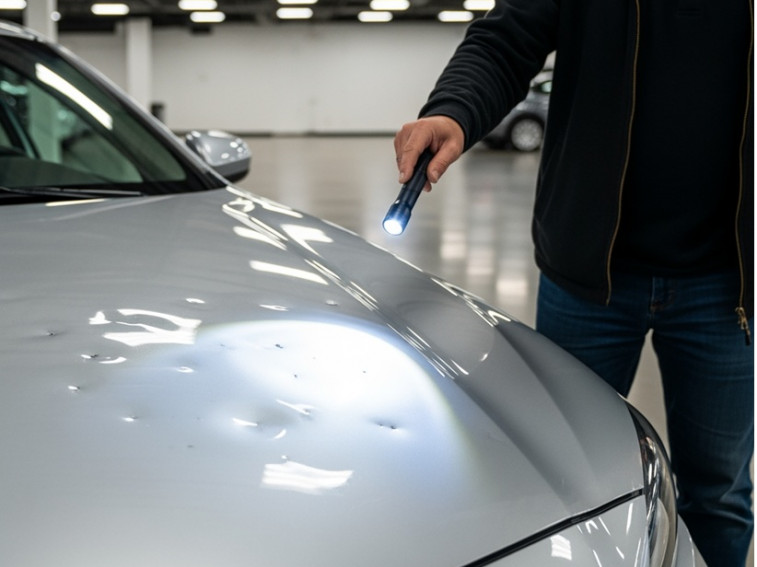
Use your phone's torch at a shallow angle. Hold the light near the panel surface, aimed across it rather than directly at it. This creates shadows in every dent, making them visible. Move the light slowly across the panel, watching for the shadows that indicate depressions.
Optimal Viewing Times
Inspect during different times of day if possible. Morning and evening light hits panels at low angles, creating natural shadows that reveal damage. Midday overhead sun hides the same dents completely. If you can only view at midday, bring a portable light.
Angle Variation Method
Change your viewing angle constantly. Squat down and look across the bonnet from eye level with the panel. Stand on a step and look down at steep angles. Each position reveals different dents. What looks smooth from above shows dozens of dents when viewed from the side.
Reflection Line Analysis
Use reflection lines as guides. Park the vehicle near a building with horizontal lines - brick courses, siding, or windows. Watch these lines reflect across the panel. Smooth panels show straight, unbroken reflection lines. Damaged panels distort the lines, creating waves and breaks at each dent.
Paint Condition Reveals the Hail Damage Timeline
Orange peel texture in the paint suggests recent refinishing. Factory paint shows a smooth, glass-like finish. Repainted panels often display a texture resembling orange skin - tiny bumps and valleys across the surface. Run your hand across suspicious panels. If the bonnet feels different from the wings, someone's repainted it.
Identifying Overspray Patterns
Overspray patterns reveal hasty repairs. Check rubber seals, plastic trim, and glass edges for paint mist. Professional repairs mask these areas carefully. Quick cover-ups leave telltale overspray on everything near the repaired panel.
Paint Thickness Testing
Paint thickness varies between factory and repair applications. Professional inspectors use paint depth gauges (£30-100 investment). Readings over 200 microns indicate filler or multiple paint layers. Factory paint typically measures 100-150 microns.
Colour Matching Assessment
Colour matching challenges expose repaints. Compare the bonnet to the wings in different lighting. Metallic and pearl paints prove especially difficult to match. Even slight colour variations indicate panel replacement or refinishing.
The Filler Test - Exposing Hidden Repairs
Sellers sometimes fill hail dents with body filler, creating a smooth surface that hides the damage. This repair fails within months as the filler cracks and falls out. Thorough inspection of salvage auction vehicles becomes critical because hail damaged cars with filler repairs cost more to fix properly than honest damaged vehicles.
The Magnet Test
The magnet test reveals filler instantly. Buy a strong magnet wrapped in cloth (protects the paint). Run it across every panel. The magnet sticks firmly to bare metal, weakly to factory paint over metal, and not at all to thick filler. If the magnet slides off the bonnet but sticks to the wings, filler's hiding something.
The Knock Test
Tap the panels with your knuckle. Metal panels produce a solid, resonant tone. Filler-packed panels sound dull and dead. Work across the entire bonnet, listening for tone changes that indicate filler.
Sanding Mark Detection
Check for sanding marks around suspicious areas. Filler requires sanding before paint. Look for circular scratches or flat spots that indicate recent bodywork. These marks show clearly in the right light.
Structural Versus Cosmetic Damage Assessment
Hail rarely causes structural damage - the impacts lack the force to bend frames or damage mechanical components. This distinction matters for vehicle recovery value and repair decisions.
Mechanical Systems Integrity
Mechanical systems survive hailstorms. The engine, transmission, suspension, and brakes remain unaffected. A hail damaged car drives identically to an undamaged one. This mechanical soundness makes these vehicles attractive for buyers willing to accept cosmetic imperfections.
Glass Damage Evaluation
Glass damage changes the equation. Windscreens, sunroofs, and windows crack under large hailstones. Check every glass surface for star cracks, chips, and bullseyes. A cracked windscreen adds £200-400 to repair costs. Damaged sunroofs run £500-1,500 depending on the vehicle.
Interior Water Damage
Interior water damage follows broken glass. If hailstones broke windows, rain entered the cabin. Check for water stains on seats, carpets, and door cards. Smell for mildew. Pull back carpets to check for dampness underneath. Water damage complicates repairs significantly and affects long-term reliability.
Calculating True Hail Damage Repair Costs
Professional hail damage repair costs £2,000-8,000 depending on severity. Build your estimate before bidding on featured auctions.
Dent-by-Dent Calculation
Count every dent on each panel. Multiply by repair cost per dent based on size. Small dents (under 10mm): £40 average. Medium dents (10-25mm): £65 average. Large dents (over 25mm): £125 average. This gives you the paintless dent repair estimate.
Panel Replacement Costs
Add panel replacement costs for severely damaged panels. Bonnets run £300-800 (part plus paint). Roofs cost £1,500-3,000 due to labour intensity. Boot lids range £250-600. If a panel has over 30 dents, replacement often costs less than repair.
Glass and Paint Correction
Include glass replacement for any damaged windows. Get specific quotes for your target vehicle's year and model. Sunroofs and rear screens cost significantly more than side windows.
Factor in paint correction for repaired panels. Even paintless dent repair sometimes requires paint touch-up around severe damage. Budget £300-500 per panel for quality paint work.
Red Flags That Should Stop Your Bid
Some salvage auction vehicles carry problems that make them poor investments regardless of price.
Mismatched Damage Patterns
Mismatched damage patterns suggest multiple incidents. If the bonnet shows hail damage but the roof looks perfect, the vehicle's had panel replacements. Question why - was the roof damage worse than disclosed? Are you buying someone else's incomplete repair project?
Fresh Paint Over Damage
Fresh paint over extensive damage indicates a cover-up. Sellers who paint hail damaged cars before auction hide the true extent of damage. The paint job cost £1,000-2,000, money they'll recover from an unsuspecting buyer. If the vehicle looks recently painted but the auction lists hail damage, walk away.
Interior Water Damage
Water damage inside the cabin multiplies your costs and risks. Wet carpets, stained seats, and mildew smells indicate broken glass let water in. This water damages electrical systems, corrodes metal, and creates ongoing problems. Unless you're experienced with water damage restoration, avoid these vehicles.
Missing Documentation
Missing service history on recent hail damage raises questions. Insurance companies document everything. If the seller can't provide the insurance assessment or repair estimates, they're hiding information. Legitimate hail damage comes with paperwork showing exactly what happened and when.
Smart Bidding Strategy for Salvage Purchases
Set your maximum bid before viewing begins. Calculate total cost: auction price plus repair estimate plus fees plus transport. Compare this to retail value for similar vehicles without damage. If your total cost exceeds 70% of retail value, you're paying too much.
Building in a Safety Buffer
Build in a buffer for unexpected issues. Add 20% to your repair estimate for problems you missed or complications during repair. Hail damage sometimes hides other issues - previous accident damage, mechanical problems, or additional cosmetic damage from other causes.
Focus on Common Models
Focus on common vehicles for your first purchases. Popular models offer more repair options, better parts availability, and easier resale. A hail damaged car like a Ford Focus or Vauxhall Astra provides more flexibility than an exotic vehicle with limited repair options.
Accepting Cosmetic Imperfections
Consider keeping the damage if it's minor. A vehicle with 20-30 small dents across the bonnet and roof drives perfectly and costs thousands less than pristine examples. If you can accept the cosmetic imperfection, you've secured excellent value.
When to Walk Away from Hail Damaged Cars
Not every hail damaged car deserves your bid. Severe damage (over 100 dents per panel) costs more to repair than the vehicle's worth in most cases. Luxury and prestige vehicles require expensive repairs at specialist shops - a hail damaged BMW costs twice as much to repair as a similar Ford.
Older vehicles (over 10 years) rarely justify extensive hail damage repair. The repair cost approaches or exceeds the vehicle's undamaged value. Vehicles with existing damage complicate assessment - you can't separate hail damage costs from previous accident repair needs.
Mastering Hail Damage Assessment
Hail damage assessment separates profitable salvage purchases from expensive mistakes. The damage creates distinct patterns - concentrated on horizontal surfaces, round or oval dents, and consistent density across affected panels. Your inspection must overcome auction photos and lighting designed to hide these imperfections.
Use shallow-angle lighting to reveal every dent. Count them methodically, calculating repair costs before you bid. Test for filler with magnets and knuckle taps. Check paint condition for evidence of hasty repairs. Verify that mechanical systems and glass remain undamaged.
Set your maximum bid based on cold mathematics: auction price plus realistic repair costs must leave you at least 30% below retail value. This buffer protects you from unexpected complications and ensures profit potential.
The best salvage auction vehicles show honest damage, complete documentation, and mechanical soundness. They offer genuine value for buyers willing to accept cosmetic imperfections or invest in proper repairs. Ready to find your next profitable opportunity? Contact us to get started, or register to bid and explore current opportunities in our auctions.