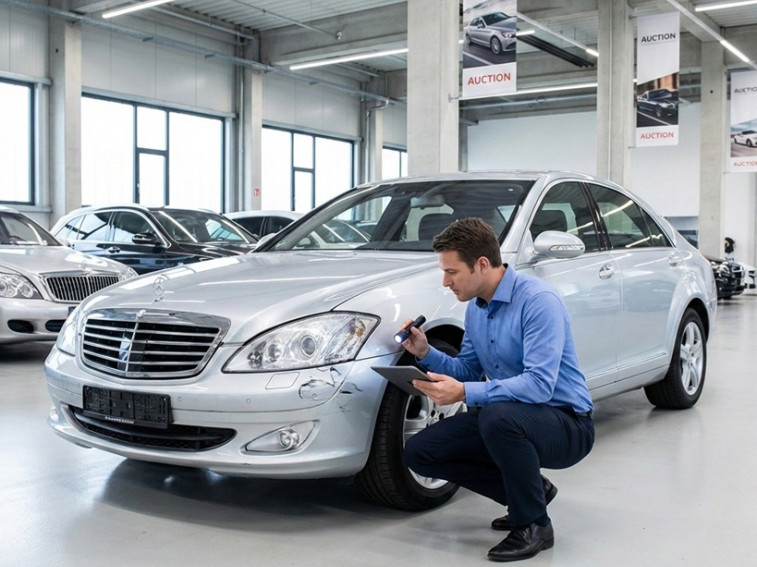
For expert buyers, vehicle auctions offer unique chances to obtain prestigious assets significantly below market value. Damaged luxury cars, in particular, represent a potentially profitable niche for dealers, restorers, and mechanics with the necessary skills and foresight.
Success in this area relies on accurately evaluating the repair costs or the resale value of high-end components when you find hidden value in damaged luxury cars. The key to substantial returns is learning how to identify and intelligently bid on luxury salvage.
This comprehensive guide provides crucial insights into valuation, strategy, and logistics for those looking to find value in luxury salvage.
The Unique Appeal of High-End Vehicle Auctions
High-end vehicles are often the most complex and expensive items on the secondary market, yet their presence in salvage vehicle auctions is frequent. Whilst a standard vehicle might be scrapped after an incident, a prestige model retains immense value even when significantly damaged.
These vehicles attract a sophisticated buyer base focused on restoring the car to its former glory or leveraging its highly valuable genuine parts. Specialist buyers know that the key to profiting from damaged luxury cars lies in understanding the specific demand for certain marques and models.
Why Prestige Vehicles Enter the Salvage Stream
Luxury cars enter salvage auctions for various reasons beyond simple mechanical failure or age-related wear. Often, they're involved in accidents where the insurance company deems the cost of repair greater than the vehicle's market value, resulting in a total loss classification.
Alternatively, some stock comes from finance repossessions or through specialist channels. Because of their initially high purchase price, the cost threshold for an insurer to write off a luxury car is much lower relative to its actual inherent worth.
Insurance economics for prestige vehicles differ dramatically from standard cars. A £12,000 repair bill on a three-year-old luxury saloon valued at £35,000 will often trigger a write-off, whereas the same percentage wouldn't necessarily write off a £15,000 family car. This creates opportunities for buyers who understand true repair costs versus insurance estimates.
Identifying Profitable Models for Restoration
To profit from damaged luxury cars, buyers must target specific makes and models known for high demand and expensive replacement components. European luxury saloons, high-performance sports cars, and premium SUVs consistently offer good restoration or parts value.
High-value marques to target:
German manufacturers (Mercedes-Benz, BMW, Audi, Porsche) command strong aftermarket demand for both complete vehicles and OEM components. A damaged Mercedes S-Class with intact AMG engine components can justify significant investment purely for powertrain value.
British luxury brands (Jaguar, Land Rover, Bentley, Aston Martin) attract enthusiast buyers willing to pay premium prices for expertly restored examples. These vehicles often appear in salvage due to electrical issues or suspension failures, expensive for insurance companies but manageable for specialist workshops.
Italian exotics (Ferrari, Maserati, Lamborghini) represent the highest-risk, highest-reward category. Whilst repair costs are astronomical, completed restorations command values that can justify six-figure investments for the right models.
Always check the auction description for details on known mechanical history, as that information can be invaluable for projecting repair costs. Service history documentation significantly increases confidence in purchasing decisions.
Understanding Market Demand for Specific Models
Not all luxury vehicles offer equal profit potential. Current market trends show particular demand for:
Executive saloons: BMW 7 Series, Mercedes S-Class, Audi A8 - strong demand from chauffeur services and executive transport companies seeking cost-effective replacements.
Performance SUVs: Porsche Cayenne, Range Rover Sport, BMW X5 M - family buyers seeking prestige marques at accessible prices drive consistent demand.
Classic luxury: Pre-2000 Mercedes SL, Jaguar XJ, BMW 8 Series - appreciating classic market values make restoration economically viable even with significant damage.
Research completed auction prices for comparable restored examples before bidding. This data informs maximum bid calculations and prevents overpaying based on speculation.
Decoding Damage: Risk vs. Reward
A significant portion of luxury salvage is classified based on damage severity, which determines its legal return to the road. Evaluating this damage requires a sharp eye and technical knowledge that goes beyond a superficial inspection.
For buyers targeting this high-value category, the risk is higher, but the potential reward for a successful restoration or parts harvest is substantial. Never underestimate the complexity of high-performance engineering in your cost assessment.
The Critical Difference in Category S Luxury Cars
When dealing with luxury Category S vehicles, the damage is structural, meaning the main chassis or frame has been compromised. Repairing such damage requires specialist equipment, manufacturer-certified bodywork expertise, and, crucially, a proper inspection and re-certification process.
The labour and materials for these high-specification repairs are significantly higher than for standard cars. Aluminium-bodied vehicles (Jaguar XE, Audi A8, Range Rover) require specialist welding equipment and certification that standard bodyshops cannot provide. Labour rates for manufacturer-approved aluminium repairs range from £120-180 per hour versus £60-80 for standard steel bodywork.
However, once a prestige Category S vehicle is expertly returned to the road and re-registered, its market value can justify the substantial investment. A properly repaired Cat S Mercedes S-Class might sell for 60-70% of unmarked market value versus the 40-50% typical for standard vehicles, reflecting retained prestige appeal.
Category N Opportunities in Luxury Sector
Category N luxury vehicles often represent the sweetest spot for profitability. Common scenarios include:
Cosmetic damage: Side panel scrapes, bumper impacts, or alloy wheel damage that triggers write-offs due to expensive OEM parts. A replacement Mercedes S-Class bumper assembly costs £2,500-4,000, making minor impacts economically unviable for insurers.
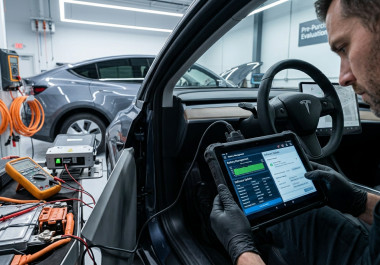
Electrical faults: Complex electronic systems in modern luxury cars can trigger total loss decisions when diagnostics prove inconclusive. Buyers with access to manufacturer-level diagnostic equipment can often resolve these issues cost-effectively.
Interior damage: Bespoke leather trim and veneer replacement costs £8,000-15,000 from manufacturers, yet specialist trimmers can achieve equivalent quality for £3,000-5,000.
Access luxury salvage inventory to identify current opportunities across all damage categories and marques.
Valuation Based on Parts and Components
Even if a vehicle is deemed irreparable, its component parts can represent a considerable percentage of its auction value. Luxury vehicles contain high-value items, including bespoke interior leather, complex infotainment screens, rare alloy wheels, and unique engine components.
Buying a damaged prestige car is like acquiring a dismantled, high-end Swiss watch: whilst the casing might be scratched, the internal mechanism, the movement, and the specialist metals still hold significant, standalone value to those who can repair or repurpose them.
High-value components to identify:
Engine and transmission: Twin-turbo V8 engines from BMW M models command £8,000-15,000. Eight-speed ZF automatic gearboxes from premium saloons sell for £3,000-5,000. Hybrid systems from Porsche Panamera or BMW 7 Series represent £6,000-10,000 in component value.
Interior trim: Nappa leather seat sets from Mercedes S-Class or BMW 7 Series fetch £2,000-4,000. Burl walnut or carbon fibre trim panels sell for £500-1,500 per set. Bespoke options like Rolls-Royce starlight headliners command £5,000-8,000.
Electronics: Head-up display units (£800-1,500), premium sound systems (£1,000-2,500), adaptive LED headlights (£1,200-2,000 per side), and advanced driver assistance modules (£800-1,500).
Wheels and brakes: Genuine Porsche centre-lock wheels (£3,000-5,000 per set), carbon-ceramic brake systems (£8,000-12,000), and forged alloy wheels from AMG or M Sport models (£2,000-4,000).
A deep understanding of the market for used OEM luxury parts is essential for precise valuation. Professional dismantlers often achieve 150-200% returns on Cat B purchases through systematic component sales.
Specialist Bidding and Budgeting Strategies
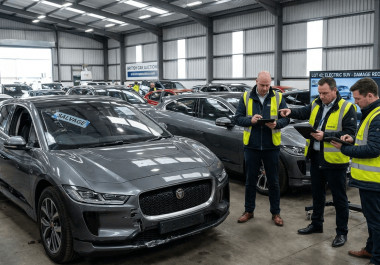
Bidding on damaged luxury cars requires greater discipline than bidding on general used stock due to the high sticker price and greater variance in repair costs. Your strategy must reflect a detailed, pre-auction analysis, ensuring that your maximum bid protects your projected profit margin.
Never allow the excitement of live bidding to push you past your predetermined financial ceiling. Emotional attachment to prestigious marques destroys profitability faster than any mechanical issue.
Building Your Own Repair Network
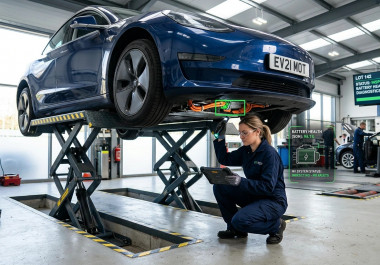
Before bidding on any Cat S or Cat N luxury car, buyers should secure preliminary quotes and estimates from established repair partners. Building a network of trusted, certified technicians helps solidify repair budgets and timelines, moving risk from unknown to quantifiable.
This proactive approach ensures buyers aren't solely reliant on online estimates, which often fail to account for the intricate repair procedures unique to prestige marques. Manufacturer-specific certification requirements add complexity standard estimators cannot appreciate.
Essential specialist relationships:
Manufacturer-approved bodyshops: For aluminium repairs, air suspension recalibration, and advanced driver assistance system realignment. Expect £120-180/hour labour rates but gain warranty-backed work.
Independent marque specialists: BMW, Mercedes, or Porsche specialists with factory diagnostic equipment charge £80-120/hour whilst maintaining manufacturer standards. Often more flexible on parts sourcing than main dealers.
Trim specialists: Independent leather workers and veneer craftsmen achieve OEM quality at 40-60% of dealer costs. Essential for interior damage assessment.
Electronics specialists: Dedicated ECU repair and programming services can resolve faults main dealers would replace entire modules for, saving £2,000-5,000 per repair.
For commercial buyers, having these specialist relationships makes the entire process of finding value in luxury salvage far more systematic. Browse salvage vehicle auctions across all categories to build consistent supply chains.
Setting a Realistic Reserve and Margin
For dealers, the final acquisition price must leave enough room for all fees, transport, repairs, and a healthy profit upon resale. Calculate backward from the expected market value of the restored vehicle, subtracting all projected costs to establish your net margin.
Comprehensive cost calculation example:
Target vehicle: 2019 BMW 740i M Sport, Category S, frontal impact Repaired market value: £28,000 Repair costs breakdown:
-
Structural repairs (aluminium bonnet, wings, chassis rails): £8,500
-
Paint and finishing: £2,500
-
Front suspension and steering components: £1,800
-
Headlights (adaptive LED): £2,400
-
Radiator, condenser, cooling components: £1,200
-
Labour (60 hours at £120/hour): £7,200
-
Total repairs: £23,600
Additional costs:
-
Buyer's premium (10% + VAT): Calculate on hammer
-
MOT: £54.85
-
Collection/transport: £250
-
Storage during repairs: £400
-
Total additional: £704.85
Calculation: £28,000 (market value) - £23,600 (repairs) - £704.85 (costs) - £2,000 (profit target) = £1,695.15
Maximum hammer price: £1,540 (allowing for 10% buyer's premium = total £1,694)
This disciplined approach accounts for complexity whilst maintaining profitability. Consider Sarah, a restoration expert, who identified a Cat S coupé with frontal damage but an untouched V12 engine. She calculated the engine value alone was £15,000. Knowing the repair cost was £8,000, she set a maximum bid of £10,000, ultimately securing the car for £9,200. Her meticulous planning turned a high-risk lot into a successful project, achieving £5,000 profit after transport and fees.
Understanding Auction Dynamics for Prestige Stock
Luxury salvage attracts specific buyer demographics with differing strategies:
Professional restorers: Seeking profitable projects, typically set strict maximum bids and walk away if exceeded. Represent 40-50% of luxury salvage buyers.
Enthusiast restorers: Emotionally invested in specific marques, often overpay by 15-25%. Represent 30-40% of buyers.
Parts dismantlers: Calculate value based purely on component resale, often competitive on Cat B vehicles but less interested in repairable stock. Represent 10-20% of buyers.
Understanding these dynamics helps predict bidding patterns. Professional restorers drop out at calculated maximums, leaving final bidding wars between enthusiasts. Sniping strategies work particularly well on luxury lots where emotional bidders reveal budgets early through aggressive bidding.
Navigating Regional Stock and Collection Logistics
Access to a diverse national inventory means that specialist luxury or high-performance vehicles may be clustered in specific regional auctions. Utilising regional filters can streamline your search for particular models.
This allows you to search effectively for assets that fit your repair specialism. Luxury vehicles cluster geographically based on original ownership demographics. Metropolitan areas yield higher volumes of executive saloons, whilst rural regions produce more premium SUVs.
Sourcing Specialist Stock Across the UK
Whilst the online platform grants access to all inventory, checking regional pages often reveals concentrations of specific vehicle types sourced from local fleets or insurance companies. Professional buyers may find that certain high-volume locations frequently list luxury salvage.
Metropolitan insurance companies (London, Manchester, Birmingham) produce regular flows of executive vehicles and performance cars from urban accident damage. Coastal regions yield luxury SUVs and convertibles from weather-related incidents.
Be flexible in your search radius to maximise your chances of securing a rare or desirable model that meets your profit criteria. Access commercial vehicle auctions for luxury variants like Mercedes V-Class or Range Rover conversions worth investigating.
Streamlining Transport for Non-Runners
Given the condition of most damaged luxury cars, they're highly unlikely to be roadworthy upon collection. Buyers must immediately arrange specialist, covered transport to protect their high-value asset during transit.
Low-profile tyres, air suspension systems, and carbon-ceramic brakes on luxury vehicles require enclosed transport to prevent transit damage. Expect £2.50-4.00 per mile for covered luxury vehicle transport versus £1.50-2.50 for open trailer standard vehicles.
Due to their specific collection windows, all buyers should have a trusted recovery service pre-booked before the auction closes. Many auction centres require 48-hour notice for luxury vehicle collections due to secure storage requirements.
Maximising Returns Through Strategic Parts Sales
For vehicles beyond economical repair, systematic dismantling maximises returns. Professional approach to component sales achieves 150-250% returns on Cat B purchase prices.
Platform-specific sales strategies:
List high-value mechanical components (engines, gearboxes, differentials) on dedicated marque forums where enthusiasts pay premium prices for proven working units. Provide compression test results, oil analysis, and mileage documentation to command top prices.
Interior components sell best through eBay or specialist trim suppliers. Photograph items professionally with accurate colour descriptions. Nappa leather variations in BMW alone include seven distinct shades buyers need to match precisely.
Body panels and lights achieve best prices through breakers' networks. Establish relationships with marque specialists who need regular supplies of accident-damaged panels for insurance repairs.
For vehicles beyond economic repair, arrange verified scrap collection to ensure proper disposal whilst recovering valuable component sales first.
Professional Documentation and Compliance
Luxury vehicle restoration demands meticulous documentation to preserve value and ensure legal compliance. Maintain comprehensive records throughout:
Photographic evidence: Document every stage from collection through repairs to completion. Time-stamped images prove repair quality and support higher resale values.
Receipts and invoices: Retain all parts purchases, labour invoices, and certification documents. Buyers of restored luxury vehicles expect to see complete expenditure histories.
Certification records: Manufacturer-specific certifications for aluminium repairs, ADAS recalibration, or hybrid system servicing add credibility and value. Independent engineers' reports for Category S vehicles provide additional assurance.
Taking Your Next Step in Luxury Salvage
Acquiring luxury salvage at auction is an expert-level undertaking that requires technical know-how, market awareness, and a disciplined bidding approach. By leveraging transparent, detailed listings and systematic valuation processes, you can transform damaged high-end vehicles into significant commercial success.
Your careful preparation is the most valuable tool in securing value. Understanding component values, establishing specialist repair networks, and maintaining strict budgetary discipline separate profitable ventures from costly mistakes.
Ready to source prestige vehicles with detailed component breakdowns? Register to bid on luxury salvage where high-value components are documented in listing descriptions, enabling accurate pre-bid valuations. Professional buyers rely on comprehensive photographic evidence when calculating parts values.
RAW2K Vehicle Auctions offers extensive luxury salvage opportunities across all marques and damage categories. Finding value in luxury salvage requires expertise, but the returns justify the investment for properly prepared buyers.