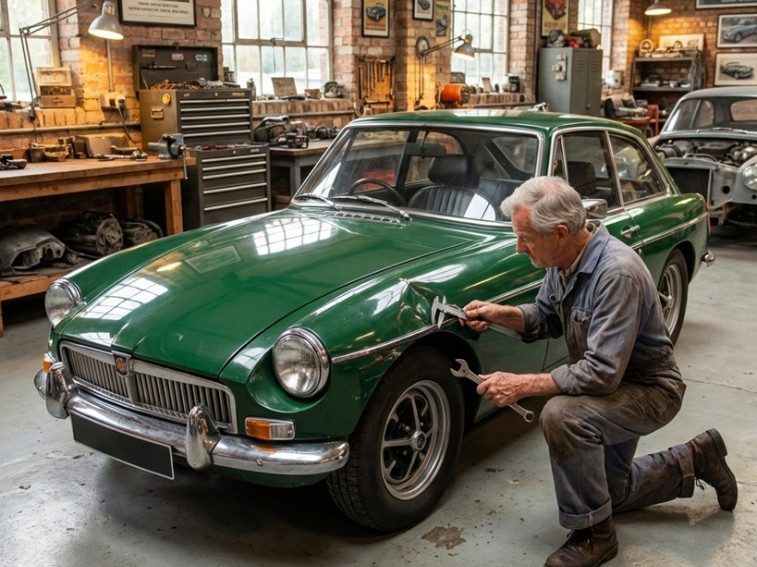
The opportunity to acquire a coveted piece of motoring history for a fraction of its market value is incredibly tempting. Classic and vintage vehicles occasionally appear as insurance write-offs at salvage auctions, creating a unique proposition: is this a dream restoration project or an unavoidable money pit?
For collectors, restorers, and specialist dealers, purchasing classic car write-offs worth restoring can be highly rewarding, but only if the decision is based on meticulous planning, not emotion.
The financial viability of such a project hinges on a rigorous assessment of the damage, the availability of vintage parts, and the capacity to manage labour costs. Before committing to bidding on these unique vehicles, buyers need a clear strategy that balances passion with a pragmatic business case.
The Financial Equation: When Does a Write-Off Become a Winner?
An insurer declares a vehicle a write-off when the estimated cost of repair exceeds a defined percentage of its market value. For classic vehicles, this threshold is often surprisingly low, meaning a relatively minor repair, such as locating a rare trim piece or performing specialist panel work, can trigger a write-off designation.
This is precisely where the opportunity lies for the knowledgeable buyer when evaluating classic car write-offs worth restoring.
Understanding the UK Classic Write-Off Categories
Whilst the modern system uses Category S (Structural) and Category N (Non-structural), older classic vehicles may still carry the legacy classifications of Cat C and Cat D. Buyers must be aware of both systems when evaluating salvage auction potential.
Category C (Cost): This older category is now equivalent to Category S. It means the repair costs exceeded the vehicle's value, and there was some element of structural damage. Repairing and re-registering a Cat C vehicle is feasible, but requires a rigorous process to confirm roadworthiness.
Category D (Damage): Now equivalent to Category N. The damage was non-structural, but the insurer still deemed the cost of repair uneconomical, often due to high labour rates or expensive, hard-to-find components. These are often the most appealing vehicles for hobbyists interested in restoring classic write-offs.
In both cases, the vehicle can be repaired and returned to the road. However, structural damage (Cat S/C) requires significantly greater expertise, and should only be undertaken by those with specialist frame and chassis repair knowledge.
The Write-Off Economics for Classic Vehicles
Classic car insurance valuations often lag behind actual market values, particularly for appreciating models. A 1970s sports car insured for £15,000 might have a current market value of £22,000, but the insurer's write-off calculation uses the lower agreed value.
This creates opportunities where relatively minor damage triggers total loss decisions despite the vehicle's true worth. A £5,000 repair bill on a £15,000 agreed value car becomes a write-off, yet the same vehicle might justify £8,000 in repairs when considering its £22,000 actual market value.
Common write-off triggers for classics:
Rare trim components: Missing or damaged dashboard veneers, period-correct instruments, or specific badge sets can cost thousands through specialist suppliers. Insurers often write off rather than source unavailable parts.
Paint and bodywork: Full professional respray costs £8,000-15,000 for classics requiring correct period finishes. Minor panel damage can trigger write-offs when insurers calculate total refinishing costs.
Mechanical obscurity: Specialist engines (twin-cam systems, carburetted setups) require expert knowledge insurers struggle to value. Perceived complexity often leads to conservative write-off decisions.
The Hidden Costs That Define Feasibility
The hammer price paid at auction is only the start. For classics, the true costs are dominated by labour and parts, and these can escalate rapidly.
Professional classic restoration often involves labour rates that surpass those of standard repair shops. A full, professional-grade restoration can easily require upwards of 1,000 hours of specialist work, particularly if rust or chassis damage is present.
Furthermore, the necessary labour may need to be spread across several experts: panel beaters, engine rebuilders, auto upholsterers, and electro-mechanical specialists.
Realistic Labour Cost Expectations
Classic car specialists typically charge £60-90 per hour for mechanical work, £70-100 per hour for bodywork, and £80-120 per hour for specialist tasks like chassis fabrication or engine rebuilding.
Common labour requirements:
Rust repair: Sill replacement (16-20 hours per side), floor pan replacement (20-30 hours), chassis section replacement (30-50 hours). A comprehensive rust remediation project can consume 200-400 hours before any cosmetic work begins.
Mechanical rebuild: Engine strip and rebuild (60-100 hours), gearbox rebuild (30-50 hours), suspension overhaul (20-40 hours), brake system renovation (15-25 hours).
Trim and interior: Full retrim (40-80 hours), dashboard restoration (15-25 hours), carpet and headlining (10-20 hours).
Professional restoration shops charge £40,000-80,000 for comprehensive rebuilds of desirable classics, with truly concours restorations exceeding £100,000 for rare models.
The Parts Availability Challenge
The cost of parts for vintage cars is highly volatile. Whilst common components for mass-produced classics like an MGB or an early Mini might be widely available, parts for rare or low-volume European and American imports can be astronomical, sometimes requiring custom fabrication.
This fabrication work quickly pushes project timelines and budgets well beyond initial estimates.
Parts cost categories:
Readily available: Popular British classics (MG, Triumph, Austin-Healey) benefit from specialist suppliers maintaining comprehensive stocks. Mechanical components typically cost 30-50% less than original new prices when adjusted for inflation.
Limited availability: Less common European classics (Alfa Romeo, Lancia, early BMW) rely on specialist importers. Expect premium prices (50-100% above equivalent British parts) and longer lead times (4-12 weeks).
Custom fabrication required: Rare coachbuilt bodies, unique trim pieces, or discontinued mechanical components need specialist fabrication. Costs become project-specific, ranging from £500 for simple brackets to £15,000+ for complex body sections.
Access classic salvage inventory to identify current salvage stock across all marques and eras.
Making Restoring Classic Write-Offs a Calculated Investment
The profitability of projects depends entirely on achieving a final restored value that substantially exceeds total investment (acquisition cost plus repair costs plus auction fees). To confidently calculate this, buyers must secure realistic quotes for specialist labour and create detailed parts sourcing plans before placing bids.
Successful buyers often leverage the auction network itself. Acquiring a Cat N classic for restoration, whilst separately buying a Cat B or seized, non-running model for its specific donor parts, can often be more cost-effective than attempting to purchase components individually through the classic spares market.
Strategic Parts Sourcing Through Auctions
The same auction platforms listing restoration projects also offer parts donors. A Category B vehicle (break for parts only, cannot be repaired) with intact mechanical components provides cost-effective alternatives to expensive replacement parts.
Donor vehicle strategy:
Engine and gearbox donors: A Cat B classic with seized body but running drivetrain offers complete ancillaries (carburettors, distributors, alternators, starter motors) often unavailable individually. Typical cost: £800-2,000 versus £4,000-8,000 for individual component replacement.
Interior donors: Complete interior sets from unrestored but original vehicles maintain period correctness. Seats, door cards, and dashboard components together cost £1,500-3,500 from donors versus £8,000-15,000 for professional retrimming.
Body panel donors: Rust-free wings, doors, or bonnets from accident-damaged vehicles avoid expensive fabrication. Individual panels cost £200-800 from donors versus £1,500-4,000 for specialist reproduction items.
The Critical Pre-Purchase Inspection for Vintage Vehicles
When bidding on classic car write-offs worth restoring, inspection must shift focus away from simple modern accident damage and toward the insidious threats unique to vintage metal. Since items are sold as seen through the auction process, the quality of remote inspection using the imagery and descriptions provided is non-negotiable.
Structural Integrity: The Corrosion Factor
For classics, damage to the structure is not just about accident impact. It's often about decades of exposure and corrosion. Rust is the most critical element to identify.
If a vehicle has been written off due to structural issues (Cat S/C), buyers must determine if the damage is repairable without full chassis replacement, which may not be feasible for many monocoque classics.
Carefully scrutinise images for signs of rust bubbles, holes in sills, floor pans, and wheel arches, as these indicate hundreds of hours of welding and panel replacement. If considering an investment, aim for a car with good bones: sound underlying metalwork, even if the mechanics are faulty.
Critical rust inspection points:
Sills and jacking points: Load-bearing structures that fail MOT if compromised. Look for paint bubbling, flaking underseal, or visible perforations in photographs.
Floor pans: Water collects in footwells and spare wheel wells. Check carpet edges in interior photos for lifting or discolouration indicating moisture.
Wheel arches and inner wings: Mud traps promoting corrosion. Rear arch lips particularly vulnerable to rust-through on classics.
Chassis members: For separate chassis classics (early Land Rovers, many sports cars), frame integrity is critical. Request underside photographs showing chassis condition.
A-posts and scuttle panel: Water ingress around windscreen rubbers causes hidden structural corrosion. Look for rust staining around screen edges or fresh underseal hiding repairs.
Mechanical and Electrical Complexities
Whilst engine work is often straightforward on simpler classics, electrical and transmission issues can become labyrinths of complexity. Vintage wiring harnesses can degrade over time, leading to unpredictable faults that are time-consuming and expensive to diagnose.
Similarly, specialist transmissions or fuel injection systems that pre-date modern electronic controls may require highly specific expertise to set correctly. If possible, try to determine the operational status of major components like the gearbox and rear axle from the listing description.
Common mechanical unknowns:
Engine condition: Without compression testing, internal engine condition remains speculative. Budget £3,000-8,000 for comprehensive engine rebuild on popular classics, £8,000-20,000 for rare or complex engines.
Gearbox and differential: Worn synchromesh, noisy bearings, or damaged crown wheels require specialist attention. Gearbox rebuilds cost £1,500-4,000, differential rebuilds £800-2,500.
Brake system: Classics with old brake fluid may have corroded master cylinders, wheel cylinders, and brake lines. Complete system renovation costs £1,200-3,000 including machining drums or discs.
Documentation: Securing the V5C
Regardless of restoration quality, a classic car's documentation is fundamental to its value. Before placing bids, buyers should always confirm the status of the V5C (logbook).
For modern Cat S classifications, the DVLA must be notified, and the vehicle must pass a new MOT after repairs. For older Cat C/D classics, the required process can vary, but the fact that the vehicle was once a write-off will always remain on the vehicle history.
Keeping meticulous records of restoration, including receipts, invoices, and photographic evidence, is essential to mitigate the reduced value associated with a write-off marker when eventually selling.
Documentation best practices:
Photographic restoration log: Document every stage from acquisition through repairs to completion. Time-stamped images prove repair quality and support higher resale values.
Itemised expenditure records: Retain all parts receipts, labour invoices, and specialist service records. Comprehensive documentation adds credibility and value.
Provenance research: Original handbooks, service books, and historical MOT certificates establish authenticity and continuous history. These documents significantly enhance values for rare models.
Maximising Potential Profits in Classic Rebuilds
The true goal for professional restorers is achieving total investment costs significantly below the final market value of comparable, non-salvage vehicles. Successfully achieving profits in classic rebuilds relies on smart initial acquisition and efficient project management.
The Market Value Multiplier
Some classic marques command disproportionately high values when restored to high standards, making them ideal candidates for salvage projects. High-demand, limited-production vehicles, such as early Land Rover models, certain German sports cars, or popular British roadsters, often see the largest percentage return on investment.
Conversely, restoring a write-off of a highly common or easily replaceable classic might see the repair costs quickly outweigh the potential resale value, leaving little room for profits in classic rebuilds.
Researching the fair versus concours prices in the classic market will help define maximum bids with confidence.
High-return classic categories:
Appreciating models: Values increasing faster than inflation create built-in profit buffers. Examples: Porsche 911 (964/993 generations), early Range Rovers, Jaguar E-Types. Typical appreciation: 8-15% annually for desirable examples.
Limited production vehicles: Rarity drives values. Low-volume sports cars (TVR, Morgan, AC) or special editions command premiums justifying restoration investment.
Cult following marques: Enthusiast communities (Alfa Romeo, Citroën DS, Saab) support strong parts supplies and ready buyer markets for completed projects.
Low-return categories:
Mass-produced family cars: Common saloons (Ford Cortina, Vauxhall Victor) rarely justify professional restoration costs unless exceptional provenance exists.
Recently classic vehicles: 1980s-1990s models still deprecating often cannot support restoration economics. Exception: genuine low-mileage examples or rare specifications.
The Power of Parts Sourcing and Regional Bidding
The challenge of restoring classic write-offs often comes down to logistics. To save money and time, look beyond main dealers or reproduction parts suppliers. Scouring regional listings for donor vehicles is key.
Searching for common donor cars in specific areas can yield original, cheaper components. Originality is prized in the classic car world, and using period-correct parts salvaged from other end-of-life vehicles can enhance the authenticity and therefore the value of completed projects.
View motorcycle auction opportunities which sometimes include classic motorcycles offering similar restoration opportunities in two-wheeled collectibles.
The Final Finish and Resale
The quality of the final finish will determine whether cars sell quickly and for premiums. A high-quality paint job and meticulously finished interior are what separate competent restorations from desirable investment-grade classics.
In the end, success in restoring classic write-offs hinges on deep understanding of the classic market's appreciation for authenticity and quality. The ability to execute professional, documented repairs will transform salvage titles into rewarding assets.
Concours-level finishing standards:
Paint quality: Professional multi-stage paint processes (primer, base, clear coat) applied in controlled environments produce finishes lasting decades. Costs: £8,000-15,000 for full bare-metal respray.
Panel alignment: Gaps and shut lines matching factory specifications demonstrate professional bodywork. Poor panel fit immediately signals amateur restoration reducing values 20-30%.
Interior details: Correct period materials, properly fitted carpets, and functioning switchgear separate authentic restorations from compromised rebuilds.
Mechanical presentation: Clean engine bays, properly routed wiring, and correct component finishes (cadmium plating, zinc coating) demonstrate attention to detail valued by discerning buyers.
Understanding Licensing and Age-Related Regulations
Classic vehicles benefit from certain regulatory exemptions, but salvage rebuilds must still meet legal requirements:
MOT exemption: Vehicles over 40 years old and substantially unaltered qualify for MOT exemption. However, Category S/C vehicles require MOT regardless of age to prove roadworthiness post-repair.
Road tax exemption: Rolling 40-year exemption applies to classics. Vehicles manufactured before 1985 currently qualify for free road tax.
Historic vehicle status: Maintains original registration number and age-related plates. Substantially altered vehicles (engine swaps, chassis modifications) may lose historic status.
Professional Project Management for Classic Restorations
Successful classic car restoration requires structured project management preventing cost overruns and timeline creep:
Phase 1 - Assessment (2-4 weeks): Complete dismantling, cataloguing all components, identifying all required work. Create comprehensive parts list and labour estimate.
Phase 2 - Structural work (8-20 weeks): All welding, chassis repairs, rust remediation, and structural restoration. Cannot proceed to Phase 3 until complete.
Phase 3 - Mechanical rebuild (6-12 weeks): Engine, gearbox, suspension, brakes, steering rebuilt to specification. Concurrent with body preparation.
Phase 4 - Paint and finishing (4-8 weeks): Professional paint application, curing, and finishing. Cannot rush this critical stage.
Phase 5 - Assembly and trim (4-8 weeks): Mechanical installation, interior trim, final adjustments, and testing.
Phase 6 - Certification (1-2 weeks): MOT, registration, insurance, and final documentation.
Total timeline: 6-12 months for comprehensive restoration. Rush projects compromise quality and devalue finished vehicles.
Taking Your Next Step in Classic Restoration
Classic car write-offs worth restoring offer tremendous potential for those with the right skills and market knowledge. By understanding the true costs, conducting thorough pre-purchase inspections, and strategically sourcing parts, buyers can achieve significant profits in classic rebuilds.
Success requires balancing emotional attachment to classic motoring with disciplined financial analysis. The most profitable restorations come from buyers who love the vehicles but bid with their heads, not their hearts.
Ready to source classics with verified originality and documented history? Register to bid on classic salvage where provenance details are specified in listings, helping buyers identify authentic restoration candidates versus modified or uncertain-history vehicles. Professional restorers prioritise documented heritage when selecting projects.
RAW2K Vehicle Auctions provides access to unique classic opportunities across all eras and marques. Access commercial vehicle auctions for classic Land Rovers and commercial variants worth investigating. For vehicles beyond economical restoration, arrange verified scrap collection to ensure proper disposal whilst recovering valuable period-correct components first.