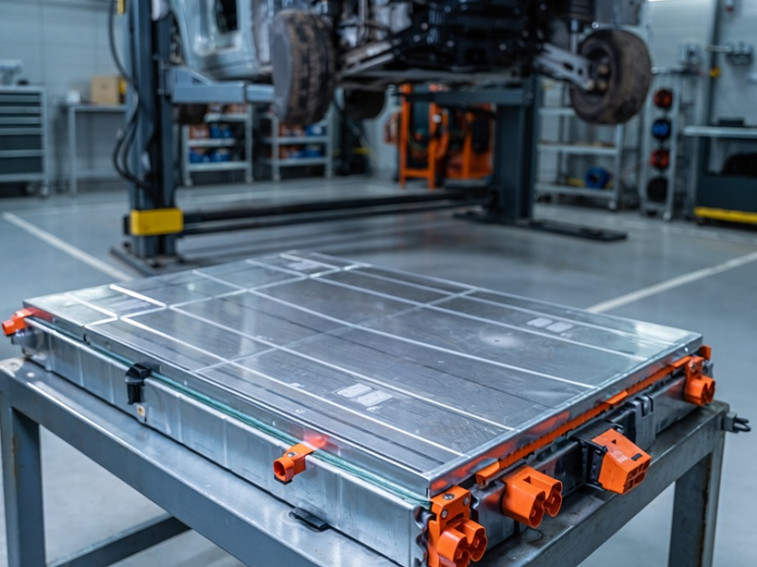
Electric vehicles have flooded the UK market over the past five years, and those massive initial sales volumes are now trickling through to digital salvage platforms in highly meaningful numbers. That is exactly where the modern liquidation market gets both incredibly interesting and exceptionally complicated. The battery pack in a modern EV is not like a traditional diesel gearbox or a turbocharger that you can price up with a quick phone call to a local breaker's yard. It is the single most expensive component on the entire chassis, frequently holding more raw financial value than the rest of the car combined.
Digital platforms have processed thousands of electric vehicle listings over recent years, and EV salvage values behave in ways that would have seemed completely bizarre to traditional mechanics just a decade ago. A Category S Tesla Model 3 exhibiting heavy front-end damage might fetch £18,000 at auction, while a standard petrol BMW 3 Series bearing the exact same structural damage would struggle to achieve £6,000. The defining difference is that the Tesla's high-voltage battery pack sits safely behind the front crumple zone, completely intact and worth a small fortune. Understanding this dynamic is not just useful; it is absolutely essential if you are committing working capital to electric salvage.
The Real Cost of EV Battery Replacement
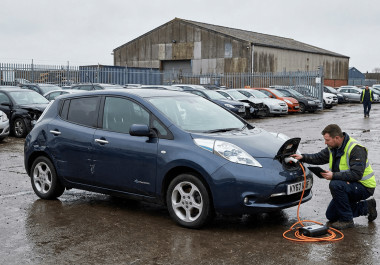
If you have spent your entire career dealing exclusively with petrol and diesel mechanics, the baseline numbers associated with high-voltage architectures are frankly shocking. A routine ev battery replacement for an older, heavily degraded Nissan Leaf typically costs between £4,500 and £8,000. That massive variance depends entirely on the required kilowatt capacity and whether you are sourcing a refurbished module or a brand-new factory unit. And that pricing reflects one of the most common, affordable EVs on the current market.
Move up the commercial food chain and the financial figures become truly eye-watering. Sourcing a replacement high-voltage pack for a premium Tesla Model S or a Porsche Taycan can easily run anywhere from £12,000 to £20,000. Even the relatively compact Renault Zoe will consistently set a buyer back upwards of £6,000 for a fresh power unit. Here is what makes this clinical reality particularly brutal for standard salvage buyers: fatal battery damage is very frequently invisible to the naked eye. A Category S petrol car featuring structural damage is highly straightforward to assess. You can look at the digital photographs to spot bent chassis rails, measure the panel gaps visually, and estimate the welding costs with reasonable accuracy.
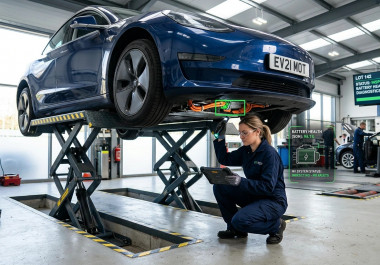
An EV bearing the exact same structural damage might look repairable, but its internal cell modules could be fatally compromised. Furthermore, standard automotive labour rates do not apply. Hiring an IMI Level 3 certified technician equipped with Class 0 insulated tools to safely isolate, drop, and replace a heavy traction battery adds another £500 to £1,500 to the final repair invoice.
Why Battery Condition Dominates EV Salvage Pricing
Think of a modern electric vehicle like a highly advanced laptop that simply happens to have wheels attached. The lithium-ion battery is the immensely valuable core component, and everything else is essentially just cosmetic plastic and stamped metal wrapped around it. This reality completely inverts traditional salvage economics. With a conventional internal combustion vehicle, you are pricing the asset based on the sum of its mechanical parts. The engine block, the transmission, the interior trim, and the alloy wheels all contribute.
With an EV, the traction battery routinely represents thirty to forty percent of the vehicle's total original value. That specific percentage actually increases as the car ages and the surrounding chassis depreciates. The absolute critical metric you must understand is State of Health (SoH). This percentage figure dictates exactly how much kilowatt capacity the battery retains compared to the day it left the factory. A five-year-old EV boasting an 85 percent SoH still holds excellent commercial value. The exact same car displaying a 65 percent SoH represents a massive financial liability, because potential buyers know a catastrophic replacement is looming. Understanding battery pack pricing variations across different manufacturers is the only way to accurately assess whether a degraded vehicle justifies a repair investment or should be stripped entirely for its raw materials.
How Accident Damage Patterns Affect Battery Risk
Not all impact damage is created equal in the electric vehicle sector. The specific location and severity of the collision dramatically affect whether the high-voltage pack is at risk, which subsequently dictates what the vehicle is actually worth at the digital hammer.
Front-end damage is ironically often the safest bet for trade buyers. Most modern EVs feature a massive front crumple zone explicitly designed to absorb severe impact energy long before it reaches the battery pack, which is typically secured safely between the front and rear axles. A Category S vehicle with severe front structural damage might still possess a perfectly intact battery worth £10,000. Side impact and undercarriage damage is where the financial risk multiplies exponentially. The battery pack is wide, flat, and highly vulnerable from beneath. Even relatively minor side swipes can crush the external cooling lines or crack the main casing. Undercarriage strikes from bottoming out on heavy debris can puncture the protective shell, allowing moisture to enter and permanently destroy the internal cells. Finally, fire damage is an automatic write-off. If an EV has suffered even minor heat exposure, the lithium-ion cells are considered fatally compromised and scrap.
The Diagnostic Problem in Salvage Auctions
This is where EV salvage requires strict logistical discipline. Proper high-voltage diagnostics require highly specialist equipment, including manufacturer-specific software, thermal imaging cameras to spot degraded cells, and insulation resistance testers. You cannot simply plug in a generic £50 code reader and expect an accurate State of Health report.
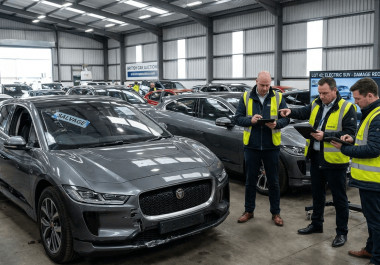
Furthermore, secure online salvage compounds strictly prohibit physical public yard access and third-party mechanics from operating on-site for severe health and safety reasons. You cannot simply dispatch a mobile EV technician into the yard to run a scanner before you place a proxy bid. You are bidding based entirely on the provided digital reports, the high-resolution photography, and your own expert interpretation of the visible impact damage. Professional buyers mitigate this risk by factoring heavy contingency budgets into their maximum bids, strictly planning to hire a mobile EV technician to run deep diagnostics only after the vehicle has been safely extracted to their own commercial workshop via flatbed.
Warranty Complications and Salvage Status
Most electric vehicle batteries are sold with highly robust 8-year or 100,000-mile factory warranties. This guarantee is frequently the single most valuable aspect of acquiring a newer used EV. However, acquiring a formal salvage status from an insurance company almost always voids this coverage entirely.
Major manufacturers will routinely refuse to honour battery warranties on any vehicle formally classified as Category S or Category N, even if the battery casing itself was completely untouched during the collision. This strict policy creates a massive value cliff for newer EVs entering the salvage market. A two-year-old electric vehicle with minor Category N panel damage might instantly lose sixty percent of its pre-accident value, purely because the protective factory warranty evaporated the moment the insurance assessor applied the marker.
Repair vs Dismantling Economics
The clinical decision to repair or break an EV follows entirely different logic than conventional car flipping. The battery pack's massive standalone value dictates the entire strategy. If a buyer determines that a complete ev battery replacement is financially unviable due to severe chassis damage, breaking the vehicle yields incredible returns.
The extracted battery pack holds immediate resale value to specialist EV repairers, classic car converters, and the rapidly expanding home solar energy storage market. The heavy electric motors, high-voltage inverters, and onboard charging modules are incredibly expensive to buy new, meaning they sell rapidly on the secondary market. If you are browsing standard salvage cars catalogues, you must mathematically calculate this exact breaking value before you bid. It provides your ultimate downside protection; if the vehicle proves too complex to repair, the raw components ensure you still turn a profit.
Model-Specific Value Patterns
Not all electric vehicles perform equally in the salvage sector. Tesla absolutely dominates the premium end of the market. Model 3 and Model Y salvage vehicles featuring intact batteries frequently fetch massive percentages of their pre-accident retail value because the secondary parts demand is fierce and the global repair ecosystem is highly established.
Conversely, the Renault Zoe presents a highly dangerous complication known as the leased battery trap. Many older Zoes were sold under a scheme where the owner bought the chassis but strictly paid a monthly finance lease for the battery. If you win one of these on a vehicle auction platform without running an independent HPI check, you do not legally own the battery; the finance company does. You must execute your own due diligence to verify clear title ownership of the high-voltage pack before committing to a purchase. Premium German EVs, such as the Audi e-tron, hold strong value, but understanding their specific battery pack pricing is critical, as sourcing replacement modules outside the main dealer network is notoriously difficult.
Insurance Write-Off Categories and EV Complications
The standard salvage categories apply to electric vehicles, but underwriters are incredibly cautious. Even minor suspension damage that would be classed as Category N on a petrol car frequently gets upgraded to Category S on an EV if the assessor suspects the impact shock travelled near the battery mounting points.
Category B EVs represent a highly specific scenario. By strict UK law, Category B vehicles are reserved for parts reclamation only, and major platforms legally restrict bidding on these lots strictly to licensed Authorised Treatment Facilities (ATFs) holding proper environmental permits. Furthermore, the high-voltage battery pack from a Category B vehicle frequently cannot be legally resold for use in another road-going car due to strict safety regulations regarding structural impacts. However, these packs retain massive value because they can be legally repurposed for static home energy storage. This secondary lifecycle is exactly why you will occasionally see the parallel electric motorcycle auction market also command surprisingly high prices for severely damaged, non-repairable high-voltage bikes.
The Future Market Trajectory
While ev battery replacement costs are slowly falling as global manufacturing scales up, the decline is heavily offset by inflation and the increasing complexity of modern thermal management systems. The expectation that massive battery packs would suddenly become cheap has not yet materialised in the workshop.
What is rapidly changing is the cell refurbishment market. Highly specialised independent companies can now open a sealed battery pack, identify the single degraded module, and replace it for a fraction of the cost of a complete unit. As this specific right-to-repair market matures, salvage values for EVs with degraded batteries will stabilise. If an EV is ultimately deemed too far gone even for module replacement, executing a scrap my car valuation on the remaining unviable chassis and heavy components ensures the buyer can safely liquidate the failed project.
Making Informed Bidding Decisions
If you are committing working capital to the electric salvage market, you must operate with clinical precision. Do not rely on visual generalisations. You must understand the specific high-voltage architecture of the model you are targeting. Know exactly where the battery sits within the wheelbase, what specific impact angles are most likely to compromise the cooling lines, and what the genuine secondary market battery pack pricing currently dictates.
Always run an independent HPI check to verify there are no hidden third-party lease agreements attached to the battery. You must calculate the breaking value of the electric motors and high-voltage components as your absolute baseline floor. If you are comparing inventory across multiple car auctions uk platforms, factoring a £300 post-extraction diagnostic fee into your initial spreadsheet is not an optional luxury; it is a mandatory cost of doing business safely in the EV sector.
Conclusion
Electric vehicle salvage on the RAW2K platform follows fundamentally different economic rules than traditional automotive flipping. A pristine £15,000 battery sitting inside a heavily crumpled £5,000 chassis means you are essentially buying a highly valuable power plant that simply happens to have a damaged car attached to it.
The massive information asymmetry surrounding EV diagnostics creates both severe risk and incredible opportunity. Trade buyers who invest the time to understand model-specific vulnerabilities, run rigorous HPI checks, and calculate exact component values can find massive, highly lucrative margins. If you require assistance understanding the specific high-voltage category markers on our digital listings, please feel free to contact us for professional support.
The fundamentals of this specific market are absolute: know the replacement costs, verify the legal title, and price your proxy bids accordingly. To begin actively sourcing highly profitable electric inventory, create your verified profile and register to bid today.