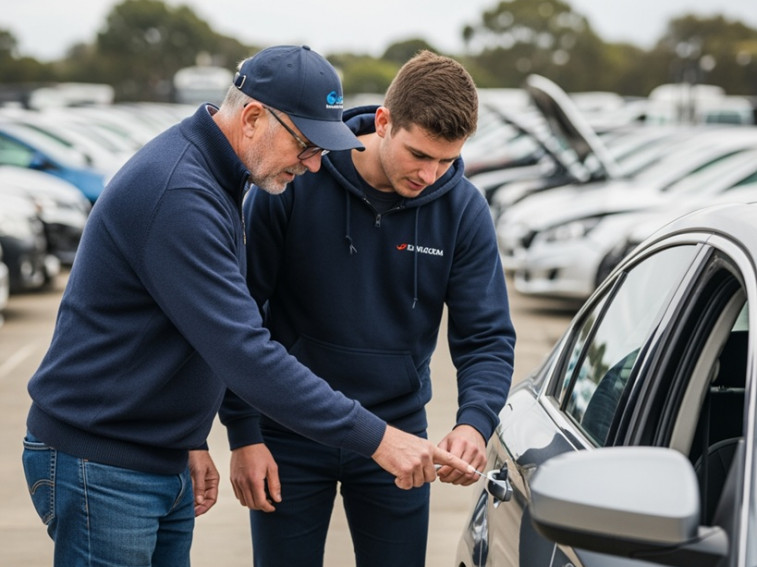
Mastering the salvage sector does not happen by reading textbooks. The vital skills required to navigate the market are learned from professionals who have successfully flipped commercial vans at auction and who understand precisely which damage classifications represent viable repair projects and which constitute financial disaster. Proper salvage mentorship operates within this environment: practical, hard-won intelligence passed systematically between operators.
The commercial vehicle and automotive salvage community operates differently from standard industries. Formal apprenticeship schemes for bidding on insurance write-offs do not exist. Instead, crucial information flows through digital networks, independent garages, and regional trade groups where established operators share insights gained through experience. Securing the right salvage mentorship frequently dictates whether a new buyer generates consistent margins or suffers significant capital loss during their initial acquisitions, making community relationship building essential.
Why Salvage Mentorship Matters
Industry case studies frequently highlight first-time buyers paying £4,500 for Category N premium vehicles that appear pristine in digital listings. Upon delivery, buyers occasionally discover the vehicles were stolen and recovered, with thieves having stripped entire wiring looms to bypass immobilisers, resulting in repair estimates exceeding £6,000. A brief consultation with an operator possessing basic salvage damage pattern recognition skills would have prevented the acquisition entirely.
That level of insight remains the primary value of salvage mentorship. It delivers the analytical capability to identify hidden red flags, understand which specific damage categories align with a buyer's repair capabilities, and recognise when walking away from an apparently inexpensive listing remains the most profitable decision.
The salvage sector utilises highly specific terminology. Category S, Category N, unrecorded damage, proxy bids, and V5C markers require contextual explanation. A mentor demonstrates exactly how these classifications directly impact subsequent resale value, future insurance premiums, and overall repair complexity.
Where to Find Salvage Mentors
Effective community relationship building requires more than sending unsolicited messages to successful traders. It involves maintaining a consistent presence, offering value, and demonstrating genuine commitment to the trade.
Physical Auction Houses and Digital Networks
While bidding has transitioned to digital platforms, participating in regional vehicle auctions remains excellent for auction community networking. The broader industry features the same commercial operators, breakers, and traders consistently operating within these regional networks. Engaging in relevant trade discussions builds the foundation for long-term relationships before transitioning those strategies to digital platforms.
Digital forums and dedicated automotive communities serve as essential resources. These platforms host both seasoned professionals and newcomers, creating natural environments for experienced trader knowledge transfer. The critical rule involves contributing valuable input before requesting assistance from senior members.
Local independent garages present excellent learning environments. Owners who regularly acquire salvage vehicles for parts recovery process hundreds of damaged cars annually. Assisting with basic workshop tasks provides invaluable exposure when a damaged vehicle undergoes professional assessment.
Dedicated social media groups focusing on specific manufacturer models or salvage categories frequently serve as goldmines. Groups dedicated to commercial vehicles or uk van auctions typically feature members possessing deep, highly specific salvage expertise.
What Good Mentors Actually Teach
True salvage mentorship enables experienced trader knowledge transfer through practical, transactional teaching rather than abstract theory. Effective mentors focus on three core operational skills.
Developing robust salvage damage pattern recognition forms the foundation. A mentor demonstrates the critical difference between cosmetic damage, which is inexpensive to rectify, and structural issues that compromise safety and drain repair budgets. They teach operators to identify subpar previous repairs, undetected chassis misalignment, and water ingress signs that remain invisible to untrained eyes.
Understanding auction dynamics firmly separates profitable operators from those losing capital. Mentors explain the timing of aggressive bidding, the strategic application of proxy bids versus live intervention, and the specific seasonal cycles that smart buyers exploit to secure inventory below market value.
Building a reliable supply network frequently represents the most valuable skill transferred. Mentors provide introductions to trustworthy transport logistics providers, honest damage assessors, component suppliers, and specialist mechanics.
How to Approach Potential Mentors
Established salvage buyers have invested years and significant capital acquiring their market intelligence. Requesting access to that knowledge requires offering tangible value in return.
Approaching potential mentors requires starting from a position of helpfulness rather than neediness. General inquiries asking for complete tutorials on salvage operations demonstrate a lack of basic research. Offering specific, practical assistance, such as helping coordinate vehicle collections or managing digital listings, establishes a fair exchange of value.
Queries must remain highly specific. Asking a mentor to review specific impact zones on a Category N saloon listing demonstrates serious preliminary research and respects their analytical expertise.
Demonstrating strict respect for a mentor's time remains non-negotiable. When an experienced operator agrees to review a listing or discuss bidding strategy, arriving prepared with specific data points proves the student values the interaction. Furthermore, accepting critical feedback without defensiveness ensures the relationship continues. When a mentor advises against an acquisition, they are actively protecting the student's capital.
Learning From Multiple Sources
Relying exclusively on a single mentor creates significant analytical blind spots. Different traders possess varying specialisms, risk tolerances, and regional market insights. An operator possessing exhaustive knowledge of commercial vans might lack the necessary insight to assess motorbikes for auction accurately.
Developing a diverse advisory network prevents these limitations. Connecting with a specialist mechanic to assess repair costs and a local trader who understands regional resale demand ensures every aspect of the transaction receives expert scrutiny.
Digital resources effectively complement human mentorship. Consulting online guides and forums resolves standard procedural queries regarding registration, bidding protocols, and documentation, allowing mentorship time to focus entirely on complex vehicle assessment and advanced market strategy.
Common Mentorship Mistakes
Promising learners occasionally sabotage valuable mentorship relationships through easily avoidable errors.
Taking value without offering reciprocity rapidly destroys professional bridges. If an experienced operator dedicates time to explaining structural assessment techniques, returning that value through practical assistance ensures the relationship remains balanced.
Ignoring provided advice creates immediate frustration. If a mentor strongly advises against acquiring a specific vehicle and the student proceeds regardless, the resulting financial loss damages the student's capital and the mentor's willingness to provide future guidance.
Sharing proprietary operational data guarantees immediate isolation from the community. If a mentor discloses specific bidding algorithms, supplier contacts, or margin calculations, that intelligence remains strictly confidential.
Rushing the educational process signals a desire for shortcuts rather than genuine competence. Salvage expertise accumulates slowly through repeated exposure to diverse damage categories, auction scenarios, and complex repair challenges.
Building Your Own Expertise
While mentorship accelerates the educational curve, operators must ultimately develop independent analytical judgement. The objective involves internalising the mentor's evaluation process until the operator can confidently assess vehicles autonomously.
Documenting every transaction builds a proprietary intelligence database. Maintaining strict records of vehicle assessments, predicted hammer prices, actual sale figures, and final repair costs refines the operator's salvage damage pattern recognition capabilities over time.
Executing small, low-risk acquisitions provides practical testing grounds. Securing inexpensive Category N stock with light cosmetic damage allows the operator to execute the entire repair and resale process with minimal financial exposure. Each successful transaction highlights knowledge gaps while building operational confidence.
Monitoring a salvage car for sale uk listing without actively bidding serves as a masterclass in market dynamics. Observing which specific models attract intense bidding wars and understanding the underlying factors driving that demand provides critical market intelligence.
Analysing failed acquisitions extracts maximum educational value from financial losses. Understanding precisely where an assessment failed, whether regarding hidden damage or misjudged market demand, ensures the mistake is never repeated.
The Long Game
The salvage sector consistently rewards operators displaying integrity and reliability over those chasing immediate, unsustainable margins. Experienced traders remember operators who ask intelligent questions, demonstrate trustworthiness, and maintain professional standards.
Salvage mentorship represents a long-term investment in operational reputation. The trader who assists with an initial Category N assessment frequently evolves into a reliable business partner, a source for off-market inventory, or a trusted buyer for surplus stock.
Consistent auction community networking establishes highly valuable regional connections. Operators frequently sourcing inventory from car auctions in the south east who build strong relationships with local logistics providers and mechanics secure distinct competitive advantages over isolated national buyers.
When You Become the Mentor
As operators gain experience, they inevitably transition into mentorship roles for new market entrants. Handling this transition professionally strengthens the broader community.
Sharing fundamental knowledge generously, such as explaining vehicle categories, bidding mechanics, or basic provenance checks, supports the industry's overall professionalism. However, operators remain entitled to protect their proprietary intelligence. Highly specific data regarding supplier networks or precise profit margins constitutes a hard-won competitive advantage.
Maintaining absolute honesty regarding operational limitations protects both reputations and capital. If consulted regarding a vehicle category outside their specialism, professional operators immediately redirect the query to a qualified specialist.
Conclusion
Securing effective guidance within the salvage sector requires deliberate community relationship building. Success depends on maintaining a consistent presence, demonstrating value before requesting assistance, and proving a genuine commitment to mastering the trade.
The most valuable advisors do not provide simple formulas. They teach operators to analyse damage critically, interpret shifting market dynamics, and cultivate the independent judgement necessary to avoid catastrophic acquisitions.
Immersing oneself in the digital salvage community, studying inventory patterns, and offering practical assistance builds the foundation for these critical professional relationships. Operators who combine the insights of experienced traders with their own dedicated market analysis navigate the auction sector with absolute confidence.
Once those skills are secured, maintaining the cycle by guiding the next generation of buyers ensures the community remains strong and professional.
To begin building your network and analysing live digital inventory, register to bid on the RAW2K platform today.
Should you require assistance navigating your digital account or accessing the auction interface, please speak with us directly through our support channel.