Electric vehicles are no longer simply the future of UK motoring. They are a massive, rapidly growing present reality currently sitting in secure salvage compounds nationwide. However, this influx has exposed a severe operational bottleneck. Brilliant, highly experienced technicians who can strip and rebuild a complex diesel engine blindfolded will frequently refuse to even touch a modern EV.
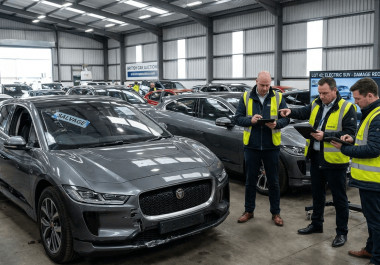
This hesitation is not simply an irrational fear of new technology. It is driven entirely by strict UK health and safety legislation, rigorous insurance requirements, and a genuine, highly specific knowledge gap within the independent garage sector. A trade buyer can easily secure a Category N Tesla or a lightly damaged Nissan Leaf at a digital auction for a mere fraction of its standard retail value. However, finding a commercial technician legally and technically qualified to work on that high-voltage architecture safely is currently the greatest challenge in the modern salvage industry. Electric salvage vehicles represent one of the absolute best high-margin opportunities in the digital auction market today, but without established access to properly trained technicians, that incredible bargain rapidly transforms into an immovable, highly expensive liability.
Why Traditional Mechanics Cannot Work on EV Salvage
The fundamental issue extends far beyond mere mechanical unfamiliarity. Modern electric vehicles operate at voltages that are instantly fatal. The vast majority of current EVs utilise 400-volt architectures, whilst premium models like the Porsche Taycan or Hyundai Ioniq 5 run on highly advanced 800-volt systems.
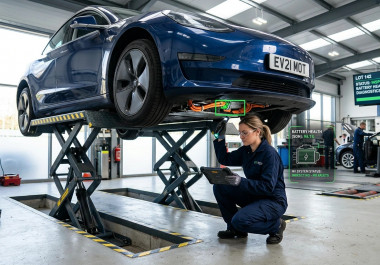
This level of electrical energy cannot be managed through basic trial and error or YouTube tutorials. High-voltage systems require uncompromising, highly specific safety protocols. Before any structural or internal repair work commences, the vehicle must be properly, manually isolated. This process involves physically disconnecting the high-voltage service plug and strictly verifying that absolutely zero residual electrical charge remains in the system using highly specialised, Category III insulated multimeters. Getting this specific isolation procedure wrong results in severe electrocution, catastrophic lithium-ion fires, or the complete destruction of immensely expensive control modules.
Furthermore, mechanics operating in standard traditional garages are almost certainly not insured to work on high-voltage systems. Their standard public liability and professional indemnity insurance policies explicitly exclude EV work unless the business can prove its technicians hold recognised, formal qualifications. It is entirely a matter of strict legal liability and workplace safety compliance. A brilliant residential plumber is not legally qualified to rewire a commercial mains board; the exact same strict operational boundary applies between traditional automotive mechanics and high-voltage technicians.
The Qualifications That Actually Matter
The UK automotive industry has aggressively developed rigorous training standards to manage EV repair work safely. However, trade buyers must understand that not all certificates carry equivalent operational weight. When you are vetting mechanics specifically for complex salvage EV repairs, you must know exactly which specific credentials demonstrate genuine, practical competence.
The IMI Level 3 certification (Institute of the Motor Industry Award in Electric/Hybrid Vehicle System Repair) is the absolute gold standard within the UK. This specific qualification legally proves a technician is competent to safely power down, work on, and re-energise high-voltage vehicle systems. The curriculum strictly covers complex battery module removal, high-voltage component replacement, and deep system diagnostics. If a technician does not hold this exact qualification or an officially recognised equivalent, they absolutely should not be touching anything beyond the superficial exterior body panels or the standard 12-volt auxiliary battery.
The City & Guilds 2919 qualification also covers hybrid and electric vehicle maintenance comprehensively and is highly recognised by major UK insurance underwriters. Additionally, manufacturer-specific training holds significantly more weight with EVs than with traditional combustion vehicles. Because Tesla, BMW, and Nissan utilise fiercely proprietary battery management systems (BMS) and distinct thermal management architectures, a technician highly qualified on a Nissan Leaf might struggle entirely with a Tesla Model 3's high-voltage bus.
Where to Find EV-Qualified Technicians
The current national shortage of qualified ev mechanics means trade buyers cannot simply call the nearest local garage and expect high-voltage expertise. You must be highly strategic about where you source your technical support.
Independent EV specialists have established highly successful operations in most major UK cities over the past three years. These are typically lean, highly modernised operations run by technicians who have invested tens of thousands of pounds in dedicated EV training, Class 0 insulated tooling, and proprietary diagnostic software. They intimately understand the salvage market because they recognize the massive value proposition of repairing EVs economically.
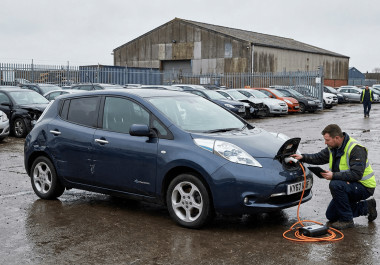
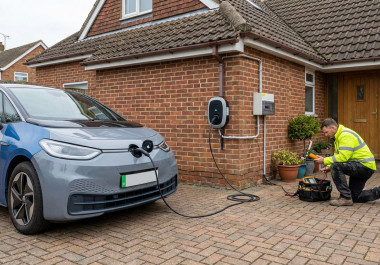
A highly practical starting point is the IMI's official "Find a Professional" digital database. This platform allows users to cross-reference registered technicians against their specific high-voltage certifications. Additionally, mobile EV technicians are rapidly becoming the preferred option for trade buyers. Because secure salvage compounds strictly prohibit third-party mechanics from operating within their perimeters for Health and Safety reasons, you must initially extract the vehicle using a professional flatbed. However, once the asset is securely delivered to your own premises, these mobile specialists travel directly to your commercial workshop. They perform critical high-voltage isolation procedures and deep electronic diagnostics on-site, entirely saving you the massive secondary cost of transporting the undriveable EV to a separate specialist repair centre.
What to Ask Before Hiring an EV Mechanic
Not every technician advertising basic hybrid servicing possesses the genuine skills or the comprehensive insurance required to handle heavily impact-damaged salvage work. Asking strict, highly clinical questions upfront will save trade buyers from catastrophic financial losses and legal liabilities later.
Your absolute first question must be requesting their specific certification numbers. A legitimate technician will gladly provide proof of their IMI Level 3 certification. They have invested immense time and capital into acquiring those credentials and use them as their primary selling point. Secondly, requesting proof of their specific high-voltage public liability insurance is entirely non-negotiable. If a workshop hesitates or provides vague answers regarding their insurance coverage, you must walk away immediately to protect your own commercial liability.
Furthermore, you must ask exactly what OEM-level diagnostic equipment they possess. Generic code readers are entirely useless for interrogating proprietary EV battery management systems. A properly equipped mechanic must possess the specific hardware required to accurately assess individual battery cell degradation, read deeply embedded crash data fault codes, and verify the physical integrity of the high-voltage isolation circuits.
The Cost Reality of EV Salvage Repairs
The clinical financial reality of the modern EV salvage market is that highly qualified technicians command premium labour rates. Your heavily discounted auction purchase can rapidly transform into a massive liability if you fail to calculate your repair spreadsheet using accurate specialist pricing.
Labour rates for verified, high-voltage technicians typically run £20 to £40 per hour higher than standard UK mechanic rates. This price premium strictly reflects their massive personal investment in mandatory safety equipment, continuous training, and exorbitant insurance premiums. Furthermore, the high-voltage traction battery represents the single largest financial risk in EV salvage. A complete replacement battery pack routinely costs between £8,000 and £20,000 depending on the manufacturer capacity. Furthermore, buyers must be hyper-aware of the "leased battery" trap. Many older UK electric vehicles, such as specific Renault Zoe or Nissan Leaf models, were originally sold with separate battery lease agreements. You must run an independent HPI check before bidding to verify that the high-voltage battery is actually included in the sale and not legally owned by a third-party finance company.
However, this specific complexity creates the ultimate opportunity. Category N electric vehicles featuring purely cosmetic damage represent exceptional trade value precisely because the broader public market is terrified of the EV aspect. If a vehicle requires nothing more than a replacement bumper and a suspension arm, and you have a specialist verify that the high-voltage battery casing is completely uncompromised, the profit margins completely eclipse those of standard internal combustion vehicles.
Building a Relationship with an EV Specialist
If a trade buyer intends to systematically acquire and flip electric salvage vehicles, they must forge a dedicated commercial partnership with a specialist. Operating on a transactional, job-by-job basis is highly inefficient in a market suffering from severe labour shortages.
Most independent EV specialists welcome regular, high-volume commercial arrangements. If a buyer can guarantee a consistent stream of diagnostic and repair work, specialists frequently offer preferential hourly rates or strictly guaranteed turnaround times. Professional buyers frequently negotiate fixed-price digital diagnostic checks for vehicles they are considering purchasing. While you cannot physically inspect the vehicle, having an EV specialist review the provided digital auction reports and warning light photographs removes a massive element of risk before placing a proxy bid.
When reviewing inventory across various salvage cars catalogues, buyers with established mechanic relationships operate with immense confidence. They already know exactly what their specialist charges for specific high-voltage component replacements, allowing them to calculate mathematically perfect maximum bids while untrained competitors are left guessing.
Red Flags When Vetting EV Mechanics
The severe shortage of qualified ev mechanics has unfortunately created an environment where unqualified operators attempt to exploit uninformed buyers. You must remain vigilant for warning signs indicating a technician lacks the mandatory safety training.
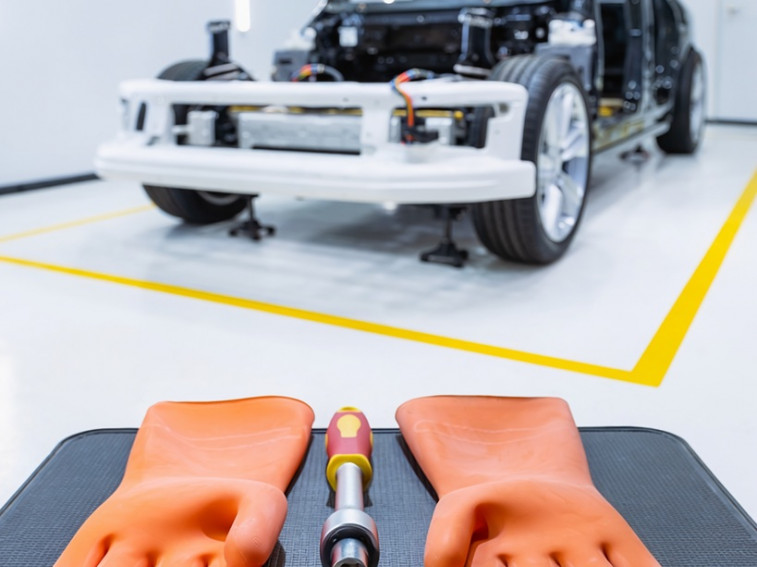
The most dangerous statement a mechanic can make is claiming an EV is "basically just a normal car with a big battery." This demonstrates a terrifying lack of understanding regarding high-voltage interlock loops, pyrotechnic disconnect units, and essential safety protocols. Reluctance to show you their dedicated high-voltage safety zone, insulated tools, or protective Class 0 gloves is an immediate deal-breaker.
Furthermore, quotes that appear exceptionally cheap usually indicate corners are being cut regarding safety or insurance. You must apply the same strict vetting to your mechanics as you do when researching a targeted vehicle auction purchase. If a technician attempts to diagnose a high-voltage fault without first securing the vehicle keys in a dedicated lockout box to prevent accidental activation, they are breaching fundamental industry safety standards.
The Future of EV Salvage and Mechanic Availability
While the current shortage of technical expertise presents a challenge, the UK market is adapting rapidly. The supply of certified technicians is growing exponentially as major training providers expand their high-voltage curriculum to meet massive industry demand.
The Institute of the Motor Industry reports a massive, sustained increase in technicians undertaking formal EV qualifications. As this certified workforce expands, the current premium labour rates will begin to stabilize. Most critically, the battery repair and module refurbishment sector is advancing rapidly. Instead of replacing an entire £15,000 battery pack due to a single failed cell, highly specialised technicians are now opening the packs and replacing individual modules for a fraction of the cost.
As you monitor standard car auctions uk platforms over the coming years, you will witness a massive increase in older, out-of-warranty EVs entering the salvage ecosystem. Trade buyers who have already established relationships with these emerging module-repair specialists will possess a massive, almost untouchable commercial advantage in the marketplace.
Making EV Salvage Work Without Local Expertise
If a buyer operates in a highly rural location where local qualified ev mechanics are entirely non-existent, EV salvage is not impossible; it simply requires more robust logistical planning.
Mobile EV diagnostic technicians frequently travel well over a hundred miles for guaranteed, high-value commercial work. While the call-out fee is substantial, factoring a £250 mobile diagnostic charge into the purchase of a heavily discounted £15,000 electric vehicle makes perfect mathematical sense. Furthermore, the principles of electric vehicle repair apply universally across different formats. If a buyer monitors a dedicated motorcycle auction and purchases a damaged high-voltage electric motorbike, the exact same strict isolation protocols and specialist diagnostic equipment are required before repairs can commence.
If a purchased EV turns out to have suffered catastrophic, hidden battery cell damage that renders it entirely unviable to repair, all is not lost. The individual raw materials, rare earth metals, and internal components still hold immense baseline value. Utilizing a scrap my car or specialist recycling valuation ensures that even in the absolute worst-case scenario, the buyer can effectively mitigate their financial exposure by liquidating the asset safely.
Conclusion
Electric salvage vehicles offer incredible profit margins, but only for buyers who secure access to properly qualified, legally compliant technicians. The industry-wide mechanic shortage is a temporary hurdle that smart, proactive trade buyers can use to their immediate advantage.
Never compromise on high-voltage safety qualifications to save a small amount on the hourly labour rate. Verify every single credential, demand proof of specific insurance, and ensure they hold the mandatory IMI Level 3 certification before allowing them to touch a high-voltage system. Build these critical technical relationships now, long before you actually place your maximum proxy bid on a salvage EV.
If you require guidance understanding the specific high-voltage category markers on our digital listings, contact our team for professional assistance. To begin actively sourcing the most profitable cosmetic-damage EVs in the market, create your verified profile and register to bid on the RAW2K platform today.