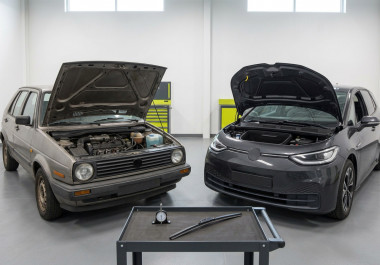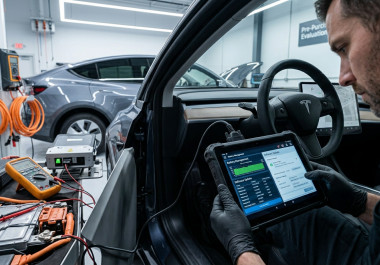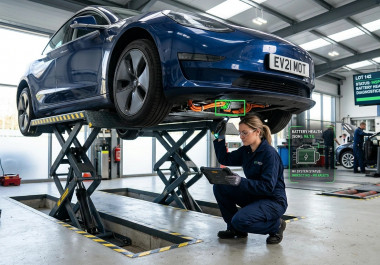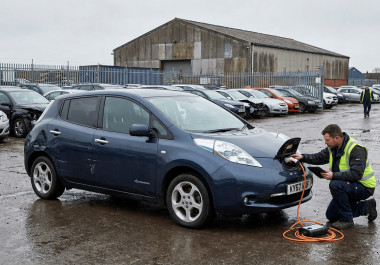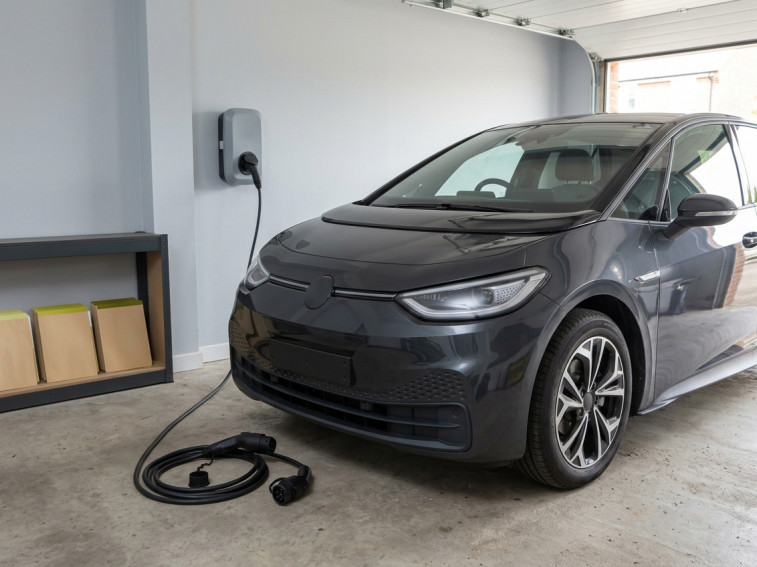
Before bidding on a Category N project involving an electric vehicle (EV), find a workshop willing and able to assess that particular car. Ask who will examine it and what work that person can do. A garage advertising EV servicing may not accept collision damage or a non-runner: a car that does not start or run. Finding certified EV mechanics means checking that their training, experience and equipment match the work your car may need.
Start by sending the workshop the available vehicle information. Confirm that it will accept the car in its reported condition, then agree what the first assessment will cover and cost. Do not approve repairs before you know what is needed. A workshop agreeing to investigate has not promised to fix every possible fault. Its initial response can help you decide whether to bid, approach another repairer or leave the vehicle alone.
Tell the Workshop About the Car
Under GOV.UK's write-off categories, Category N means a vehicle can be repaired following non-structural damage and used again if repaired to a roadworthy condition. That describes its write-off classification, not the size of the repair bill or the battery's health. A price for a 'simple Cat N repair' therefore starts with the wrong assumption: the mechanic needs the reported damage and the gaps in the vehicle's history before deciding what to investigate.
Send the registration or vehicle identification number (VIN), if available, along with the exact model and year. Include listing photographs, the damage description, whether keys are supplied and any existing reports. Make clear which details come from the seller and which have been checked by testing. Report charging problems, damage underneath the car or water exposure without guessing the cause. Ask which missing details the workshop needs before it can agree to receive the car.
Match the Qualification to the Work
High-voltage means the vehicle's powerful battery electrical system, which can deliver a fatal shock. This is not DIY work. Making it safe for routine maintenance, replacing its parts and working on live systems require different skills. Live means still electrically energised. Ask to see the technician's certificate and check its exact award title and scope against the proposed work, whether issued by the Institute of the Motor Industry (IMI) or another awarding organisation. A level number alone is not enough. One award is the IMI Level 2 Technical Specialist in Electric/Hybrid Vehicle Routine Maintenance Activities. It includes learning to isolate and reinstate high-voltage systems for routine maintenance and repairs: a trained person makes the system electrically safe, then reconnects it afterwards. However, this award does not certify direct work on the high-voltage system. It teaches more than awareness, but is not a high-voltage repair qualification.
If the car needs a high-voltage part removed and replaced, look at the IMI Level 3 Technical Specialist in Electric/Hybrid Vehicle System Repair and Replacement award. It covers diagnostic, testing and repair activities, including the ability to remove and replace high-voltage components. That goes beyond routine maintenance outside the high-voltage system. It does not mean the technician can undertake every kind of live electrical work. Ask the workshop to state which jobs its technician can do and which would require someone else.
For work on systems that are still electrically energised, the relevant award is the IMI Level 4 Award in the Diagnosis, Testing and Repair of Electric/Hybrid Vehicles and Components. It specifically addresses live high-voltage components and associated systems. This does not mean every fault-finding job legally requires Level 4. The Health and Safety Executive (HSE) explains that the skills needed depend on the task. HSE's professional EV guidance says live electrical work should be considered only when there is no other way and it is reasonable and safe. The mechanic should explain why the proposed work is necessary and how it matches their skills.
Verify the Person Who Will Do the Job
Ask the workshop to identify the technician who will handle your car and confirm their place of work. A business logo, membership letters or a certificate belonging to someone elsewhere in the company does not identify who will handle your car. Ask the booking contact to connect the proposed technician with the qualification evidence, and clarify whether another person will take over if the work expands beyond the initial assessment.
A qualification award records an achievement. TechSafe is ongoing IMI recognition, not another name for that certificate. To gain it, a technician needs an eligible qualification or accreditation: a training or assessed-skill route accepted for entry. They must also opt in and complete required continuing learning to retain recognition. Eligible achievements from other awarding organisations can qualify, but not every certificate is accepted. Recognition has separate categories for electric vehicles, hydrogen vehicles and Advanced Driver Assistance Systems (ADAS). ADAS includes features such as lane assistance and automatic emergency braking. An EV entry does not establish ADAS ability. Neither an award nor recognition is a universal legal licence for every repair; check actual ability for your car. An absent listing does not automatically mean a specialist is incompetent.
You can approach an independent specialist, a manufacturer's franchised dealer or a mobile technician. Ask whether they accept collision-damaged and non-running cars from private buyers. Normal EV servicing does not necessarily include either. Compare what each repairer agrees to do before comparing prices. A workshop may investigate a fault but decline to repair damage to the battery's protective casing. That is a different offer from agreeing to manage the complete repair.
For a mobile visit, agree where the technician will work, whether attendance is permitted and what can be done there. Do not book on the assumption that an auction yard allows inspection or that your own premises are suitable for every job. If the car needs workshop facilities instead, agree who books the next appointment and sends the findings to the workshop. Confirm the extra visit or transport costs before approving them.
Check Model-Specific Tools and Outside Work
A relevant award is only part of the picture. The workshop also needs the exact model's technical information, suitable tools and test equipment. EV designs differ substantially between manufacturers. A general fault-code scanner alone does not show that the workshop can test your model or follow its repair instructions. Ask whether it has the software and access needed to investigate the reported problem. Confirm whether the price includes any software setup needed after repair. If another business must do part of the job, arrange that before committing.
Keep any diagnostic codes, the fault messages recorded by the car's systems, with the vehicle information. A code naming a part is not, by itself, a verdict that the part needs replacing. Ask what tests the workshop proposes, what results would justify replacement and what will remain unchecked. If the car reportedly will not charge, for example, you could pay for investigation and a written report first. Decide on replacement parts after reading the findings.
For driver-assistance systems, the repairer should establish what your model and repair actually require. This may include calibration: checking and adjusting sensors or cameras so they measure correctly. Not every repair calls for the same work, and EV qualifications alone do not establish ADAS ability. If an outside specialist is needed, agree who books and pays for the work, coordinates appointments and supplies the repair details. Name the person who checks the specialist's report and arranges the next step if the result is unsuccessful. 'Calibration included' does not answer those questions.
Confirm Delivery Before Arranging Collection
An assessment appointment does not mean you can send a damaged car without first discussing its condition. Arrange professional collection. The recovery operator and workshop need to agree the delivery address, arrival time, unloading arrangements and named contact. Give them any new damage information before collection. GOV.UK's EV recovery guidance covers professional checks of the risks, information handover and transport precautions, including manufacturer instructions. Category N alone does not tell the operator how to transport the car or confirm that the workshop can receive it as it is.
Send the available accident, recovery and previous assessment records with the car, not just its keys. Components can retain dangerous voltage after switch-off, and collision damage can prevent the electrical system from being fully isolated. Even after isolation, some parts can retain dangerous electrical energy. A booking is not proof that switching on or charging is safe. Leave disconnection, charging and arrival safety measures to appropriately trained professionals. Do not prepare the electrical system yourself. Written records help the workshop distinguish what someone recommended from what was actually done.
Set an Assessment Budget Before Approving Repairs
Put the first assessment agreement in writing with a fixed maximum spend. State whether labour is charged by the hour or at a fixed price, and whether the quoted amount includes VAT. Write down what you will receive and what is not included. Is the workshop only reviewing records, examining the car or testing a reported fault? Require further approval before spending beyond the limit. Agree how the car will be left when work stops and whether storage charges will begin. You are paying for investigation, not approving every repair it might reveal.
Use the findings to request a repair estimate that lists the parts, their availability, labour and work sent to other businesses. Ask what could change the price or completion date. Agree who must approve a different part and what testing is included after replacement. Keep the assessment bill separate from estimated repairs and work that has not yet been priced. A low hourly rate is little help if a necessary part cannot be sourced or nobody has agreed to do an excluded job.
For example, assessment-only approval can end with a findings report, followed by a separate decision on dismantling and then replacement parts. Each stage gives you a point to stop before the next expense. If a necessary part proves unavailable, the immediate decision becomes where the car can safely remain, what storage will cost and whether another supplier or repairer is workable. Payment milestones should follow those actual stages, rather than assuming that an initial estimate has settled the cost and timing of unseen damage.
Know When to Pause or Walk Away
Pause the purchase if no workshop will accept the car as described. Do the same if the technician cannot show the relevant skills or still needs software, information or outside help that has not been arranged. Tell the workshop about suspected damage to the battery casing or water exposure. Those reports need professional assessment; they do not automatically mean the whole battery must be replaced. Walk away if the likely work is beyond your budget or the repairers available to you, however attractive the auction price looks.
If a vehicle is emitting fumes, showing flames or making unusual hissing or popping sounds, stop checks, retreat to safety and call the fire service. No visible warning signs does not mean there is no risk of overheating or fire. A quiet car or reassuring photographs cannot show that a damaged EV is safe to charge. These warnings tell you when to leave and seek emergency help; they are not a battery test for buyers. Leave battery-risk assessment and handling to appropriately trained professionals.
Agree Which Records You Will Receive
Agree which documents you will receive when you book the work. Request an invoice identifying the car and completed jobs, plus assessment findings, relevant test results, parts details and reports from outside specialists. Ask for repair photographs where useful and available. The records should clearly state recommended work that remains, jobs not completed and the workshop contact responsible for answering questions. That gives you a usable repair history instead of leaving you to piece it together from messages after collection.
Keep the vehicle identity, assessment date and details of what was checked with any battery-health or calibration report. A result answers only the questions covered by that assessment, not every question about the car's condition. Include bodywork and painting in the agreed repair plan too. Panel work needs precautions around high-voltage cable locations. Painting must account for the battery's temperature limits, because a heated paint booth may exceed them. Keep the relevant findings and completed work in the records supplied with the car.
Conclusion
Choose a mechanic who can show the right training and practical ability for your model and the agreed work. Confirm that the workshop accepts the car in its reported condition. Before committing, set the first spending limit and require approval for later work. Agree who arranges and checks work sent elsewhere. Those answers give your Category N project a firmer starting point than a qualification number or a low estimate that leaves important jobs out.
Use what your chosen workshop can actually handle to narrow the vehicles you consider in the current auction stock. Compare each listing's model, reported condition and missing information with what the workshop has agreed to assess. Do not bid on a vehicle that the workshop cannot receive, cannot assess or that you cannot afford to investigate and repair.