Modern vehicles contain hundreds of pounds worth of electronics that most people simply overlook when a car reaches the end of its road life. I've seen perfectly good ECUs, sensors, and control modules crushed alongside write-offs simply because no one took twenty minutes to extract them first.
The truth is, electronic salvage components represent some of the most profitable items you can recover from accident-damaged or end-of-life vehicles. A single working airbag control module might fetch £150, whilst a set of parking sensors could bring in another £80. Over my years in the motor trade, I learned which bits were worth the effort and which weren't - and more importantly, how to store them so they'd still work months or even years later. This is about identifying high-value electronics, removing them properly, and storing them in ways that preserve their function and value.
Why Electronic Components Hold Their Value
Vehicle electronics fail far less frequently than mechanical parts, yet they're often the most expensive items to replace at main dealers. A new BMW parking sensor might cost £120 from the dealer, but a salvaged one in working order sells for £35-45 all day long.
The demand comes from several directions. DIY mechanics need affordable replacements for failed components. Independent garages source parts for customer repairs. Even other salvage operations buy components they couldn't recover from their own stock.
Electronic salvage components maintain value because:
They rarely wear out through normal use Dealer prices remain artificially high Many are vehicle-specific and hard to source They're compact and easy to ship Testing equipment has become more accessible
I once pulled a complete set of rain sensors, ambient light sensors, and a auto-dimming mirror module from a 2015 Audi A4 that had been rear-ended. The front end was pristine. Those components brought in £340 within three weeks of listing them. The car itself sold for £2,800 at our online vehicle auctions, but I'd already recovered a significant portion of value from parts most people would have left in place.
High-Value Components Worth Salvaging
Not every electronic part deserves your attention. Focus on items that combine decent resale value with straightforward removal.
Engine Management Components:
ECUs (Engine Control Units) - often worth £100-400 depending on vehicle MAF sensors (Mass Air Flow) - £30-80 for working units Throttle bodies with integrated sensors - £50-150 Camshaft and crankshaft position sensors - £20-50 each Lambda sensors - £25-60 each
Engine management parts fail regularly enough that there's constant demand, yet they're usually protected from collision damage. Even in front-end impacts, the ECU typically sits in a protected location. Salvage electronics from engine bays often emerge unscathed.
Safety Systems:
Airbag control modules - £80-200 Seat belt pretensioners (unfired) - £40-80 per seat ABS modules - £60-180 Steering angle sensors - £30-70
Here's where you need caution. Never salvage deployed airbag components or fired pretensioners. They're worthless and potentially dangerous. But if the collision didn't trigger these systems, they're valuable salvage.
Comfort and Convenience Electronics:
Parking sensor sets (complete with module) - £60-120 Reversing cameras - £40-100 Climate control modules - £50-120 Electric window switches and motors - £20-60 per door Mirror adjustment switches - £15-40
These items rarely suffer damage except in severe impacts, and they're surprisingly expensive to buy new.
Infotainment and Navigation:
Sat-nav head units - £100-400 for premium systems Amplifiers - £60-180 Digital display clusters - £80-250 Steering wheel control stalks - £30-80
The catch with infotainment is that it's often model-specific and may require coding to work in another vehicle. Still, the demand exists, particularly for premium brand systems.
Components to Avoid
Some electronics simply aren't worth your time, either because they're low-value, difficult to test, or have limited resale potential.
Skip basic relays and fuses - they're worth pence. Avoid heavily corroded components, even if they might work. Water-damaged electronics are a gamble that usually doesn't pay off.
I learned this the hard way with a batch of BCM (Body Control Modules) from flood-damaged vehicles. Spent hours extracting them, only to have three of five fail testing. The two that worked barely covered my time investment.
Also leave behind vehicle-specific programmed keys unless you're certain you can supply the matching immobiliser components. A key without its paired system is just an expensive paperweight.
Proper Removal Techniques
Electronic components are more fragile than mechanical parts. Rough handling or incorrect removal can turn a £150 part into worthless scrap.
Always disconnect the battery first. Wait at least fifteen minutes before touching any airbag-related components. The system holds residual charge that can deploy airbags during removal, which is both dangerous and destroys the part's value.
Use proper tools. Forcing connectors damages the pins and renders components unsellable. Most automotive electrical connectors have a tab or clip that releases with gentle pressure. If it's not immediately obvious, look closer rather than pulling harder.
Label everything immediately. As soon as a component comes out, tag it with the vehicle make, model, year, and part location. A parking sensor from a 2016 VW Golf looks identical to one from a 2018 model, but they're not interchangeable. Your future buyer needs this information, and your future self will thank you for recording it.
Photograph components before and after removal. This documents their condition and helps with identification later. I keep a simple smartphone folder for each salvage vehicle with dated photos of major components.
When removing multi-pin connectors, check for corrosion or damage. A £200 ECU is worthless if its connector has three bent pins. Sometimes the connector itself is the valuable part - Mercedes and BMW multi-pin connectors often sell for £20-40 on their own.
Testing Before Storage
A working component is worth five times what an untested one brings. Basic testing doesn't require expensive equipment for many parts.
Visual inspection catches obvious issues. Cracks in circuit boards, burnt components, heavy corrosion, or physical damage all indicate problems. I use a jeweller's loupe to inspect circuit boards on higher-value items.
For basic electrical components:
Continuity testing with a multimeter identifies open circuits Resistance checks verify sensors are within specification Visual inspection of connector pins shows corrosion or damage
More complex items like ECUs and ABS modules require diagnostic equipment. If you're regularly salvaging electronics, a basic OBD scanner and some vehicle-specific software becomes worthwhile. I bought a second-hand Autel scanner for £280 that's paid for itself many times over by letting me verify ECU function before listing parts.
Some components simply can't be fully tested outside the vehicle. In these cases, clear photos, accurate description of the donor vehicle, and honest disclosure about testing limitations maintain your reputation with buyers.
Storage Conditions That Preserve Electronics
Electronics hate three things: moisture, temperature extremes, and static electricity. Get storage wrong and you'll watch valuable inventory deteriorate into worthless scrap.
Moisture is the primary enemy. Even small amounts of humidity cause corrosion on circuit boards and connector pins. I learned this after storing components in an unheated garage through winter. Condensation destroyed about 30% of them.
Use sealed plastic storage containers with silica gel packets. The containers don't need to be fancy - basic food storage boxes from any supermarket work fine. Add several silica gel packets (the kind that come with shoes or electronics) and replace them every few months.
For higher-value items, anti-static bags provide additional protection. These are inexpensive - a pack of 100 costs about £15 - and prevent static damage to sensitive circuits. Slide the component into the bag, fold the top over, and seal with tape.
Temperature stability matters more than specific temperature. A cool, dry storage area is ideal, but consistent temperature is more important than it being particularly cold. Rapid temperature changes cause condensation, which brings us back to moisture problems.
Label your storage containers clearly. I use a simple system: vehicle make and model, component type, and date salvaged. This lets me find parts quickly and helps identify stock that's been sitting too long.
Inventory Management for Salvaged Electronics
Even a small salvage operation quickly accumulates dozens of electronic components. Without a system, you'll waste time searching for parts and forget what you have in stock.
I keep a simple spreadsheet with these columns: part type, vehicle make/model/year, date salvaged, storage location, condition notes, and sold date. Takes thirty seconds to add each item, but saves hours when someone asks if you have a specific part.
Photograph everything and link images to your inventory records. When someone emails asking about a parking sensor module, you can send photos immediately rather than digging through storage boxes.
Price items when you inventory them, not when someone enquires. Research completed eBay listings for similar parts to establish realistic values. I typically price salvaged electronics at 40-50% of the cheapest new equivalent price, adjusting for condition and testing status.
Common Storage Mistakes
I've made most of these errors myself, so I can tell you exactly why they're problems.
Storing components in cardboard boxes seems fine until you discover that cardboard absorbs moisture, which then transfers to your electronics. After a particularly damp winter, I opened a box of supposedly pristine ECUs to find green corrosion on several connector pins.
Mixing components from different vehicles in the same container creates identification headaches. That BMW sensor looks identical to the Audi one until someone buys the wrong part and you're dealing with a return and refund.
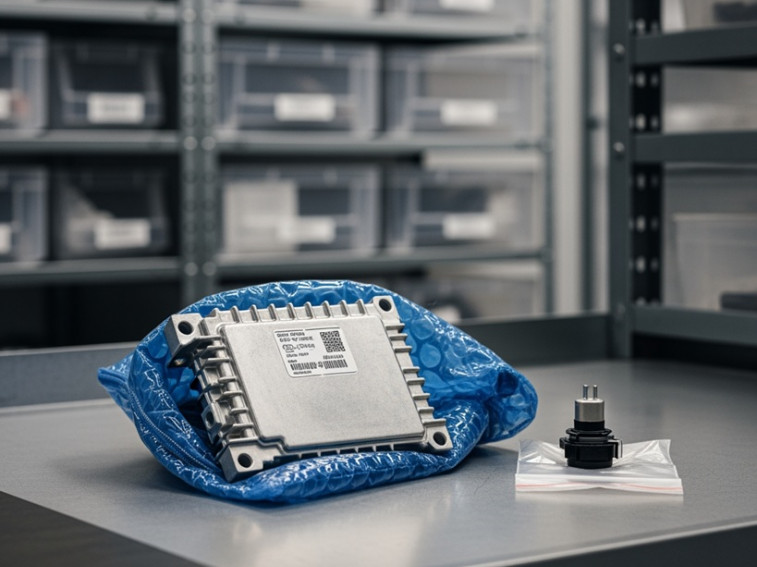
Failing to protect connector pins is expensive. The component might be perfect, but damaged connectors make it unsellable. I wrap exposed connectors with bubble wrap or foam before storage.
Ignoring stock rotation means your oldest inventory sits forever whilst you list newer items. Date everything and prioritise selling older stock. Electronics don't spoil like food, but they do become less relevant as vehicles age out of the active repair market.
Selling Salvaged Electronics Successfully
Having quality components properly stored means nothing if you can't convert them to cash.
Online marketplaces work well for electronic components. eBay remains the largest audience, though Facebook Marketplace and specialist automotive forums have their place. I list higher-value items (over £100) on multiple platforms simultaneously.
Your listing makes the difference between a quick sale and dead stock. Include the complete vehicle specification the part came from, clear photos showing all angles and any markings, honest condition description, and whether it's been tested.
Never claim a part is "fully working" unless you've actually tested it. I use "removed from working vehicle" for untested items and "tested and verified working" only for components I've actually checked. This honesty builds buyer confidence and reduces returns.
Price competitively but don't race to the bottom. Someone selling an ECU for £50 when others are £120-150 either has a damaged unit or doesn't know what they have. Position yourself in the middle of the market range for tested, properly described components.
Shipping electronics requires care. Wrap components in bubble wrap, use boxes rather than padded envelopes, and mark packages as containing electronic components. I've had buyers report damaged items that clearly suffered from poor packaging - an expense that eliminates your profit margin.
Legal and Safety Considerations
Salvaging electronic components comes with responsibilities beyond just removing and selling parts.
Airbag components require special attention. Never sell deployed airbags or fired pretensioners. In some cases, selling airbag components requires specific licensing - check your local regulations. I avoid the entire category because the liability isn't worth the profit.
Keep records of where components came from. If a part fails and causes damage, you need documentation showing it was salvaged from a legitimate source. This includes the donor vehicle's registration, your purchase documentation if you bought the vehicle, and any testing records.
Environmental regulations cover electronic waste. Components you can't sell shouldn't go in general waste - they contain materials that require proper disposal. Most areas have electronics recycling facilities that accept automotive components.
Making It Worthwhile
Salvaging electronics becomes profitable when you develop efficiency. My first few vehicles took hours to strip of worthwhile components. Now I can assess a vehicle, identify valuable electronics, and extract them in under an hour.
Focus on vehicles where the economics make sense. A 2008 Ford Fiesta might have £100 worth of electronics worth salvaging. A 2016 BMW 5 Series could easily yield £800-1,200 in electronic components. Your time investment is similar, but the return differs dramatically.
Build relationships with buyers. Regular customers who know you supply quality, properly described components will pay premium prices and come back repeatedly. I have three independent BMW specialists who check with me before ordering new parts because they trust my salvaged components.
The real value in electronic salvage isn't just the immediate return - it's building inventory that generates income over time. Those parking sensors you pulled last month might not sell immediately, but properly stored, they'll be worth the same money in six months when the right buyer appears.
Building Your Electronic Salvage Operation
Start small and expand as you learn what sells in your area. Your first few vehicles teach you which components move quickly and which sit in storage forever.
Invest in basic equipment gradually. A decent multimeter costs £30-50. Anti-static bags are cheap. Proper storage containers are reusable. You don't need thousands in equipment to start salvaging valuable electronics.
The vehicles coming through quality online auctions often contain more value in salvageable components than many people realise. Whether you're buying vehicles to break for parts or simply want to maximise return on vehicles you're already processing, electronics represent consistent profit margins with relatively little investment.
Document everything you learn. Which components from which manufacturers sell quickly? What price points work? Which storage methods prevent damage? This knowledge compounds over time and becomes your competitive advantage.
Conclusion
Modern vehicles are computers on wheels, and those computers contain valuable components that survive accidents which total the vehicle. Understanding what to salvage, how to remove it properly, and how to store it correctly transforms electronic waste into steady income.
The skills aren't complicated - careful removal, basic testing, proper storage, and honest selling. But they do require attention to detail and willingness to learn vehicle-specific quirks. Some manufacturers make electronic components easy to access; others seem to have hidden them deliberately.
If you're already involved in vehicle salvage or considering entering the market, salvage electronics deserve serious attention. They're compact, relatively easy to ship, hold value well, and face consistent demand. The initial learning curve pays dividends as you develop efficiency and build inventory.
The market for quality salvaged electronics isn't going anywhere. As vehicles become more complex and dealer prices remain high, the demand for affordable replacement components only increases. Position yourself as a reliable source of properly tested, accurately described components, and you'll find buyers seeking you out rather than the reverse.
For those interested in exploring the salvage vehicle market further, browse all current auction listings to see what's available. Whether you're looking to source vehicles for electronic components or expand existing operations, register today to access premium inventory. And if you have questions about getting started or specific component requirements, please contact our specialist team.