Pulling a perfectly good alternator from a written-off Mondeo feels like finding a tenner in an old coat pocket. But here's the catch - that alternator's only worth something if it actually works. I've seen too many folks rush to list salvage parts online without testing them first, only to face returns, negative feedback, and a reputation that's harder to fix than the dodgy parts they sold.
Testing salvage car parts isn't just about avoiding angry buyers. It's about building a business where people trust what you're selling. After decades in the motor trade, I learned that a methodical approach to testing parts saves time, money, and headaches down the line. The difference between profit and loss often comes down to spending 20 minutes with a multimeter instead of guessing whether something works.
The salvage parts market thrives on reliability. When you're sourcing components from vehicles at RAW2K or similar auctions, you're dealing with parts that have been through trauma - whether that's a collision, flood damage, or mechanical failure. Some emerge unscathed. Others look perfect but failed internally. Your job is to separate the wheat from the chaff before money changes hands. Testing salvage parts properly is what separates professionals from amateurs.
Why Testing Matters More Than You Think
Every untested part you sell is a gamble with your reputation. One dodgy gearbox can cost you five future sales when that buyer tells their mates to avoid you. The online salvage market moves fast, and word spreads faster.
Testing protects three things: your profit margin, your business reputation, and your legal standing. Under UK consumer law, you're responsible for accurately describing what you're selling. Claiming something works when you haven't verified it puts you on shaky ground if it fails.
I once knew a breaker who listed 30 alternators in a single weekend without testing a single one. He shifted 15 before the complaints started rolling in. Half were dead, another quarter were intermittent. By the time he'd processed returns and refunds, he'd lost money and gained a reputation as someone who couldn't be trusted. The practice of testing salvage parts before sale prevents this nightmare scenario. Don't be that person.
Essential Testing Equipment You'll Actually Use
You don't need a workshop full of diagnostic gear to test most salvage car parts effectively. Start with the basics and expand as your business grows.
Digital multimeter (£20-50) - Tests electrical continuity, voltage, resistance Battery jump pack (£40-80) - Powers components for bench testing OBD2 scanner (£30-200) - Reads ECU fault codes from electronic modules Compression tester (£25-60) - Checks engine cylinder health Brake fluid tester (£15-30) - Verifies brake component integrity Set of jumper wires with alligator clips Inspection lamp or torch Basic socket set Cleaning supplies (brake cleaner, rags, wire brush)
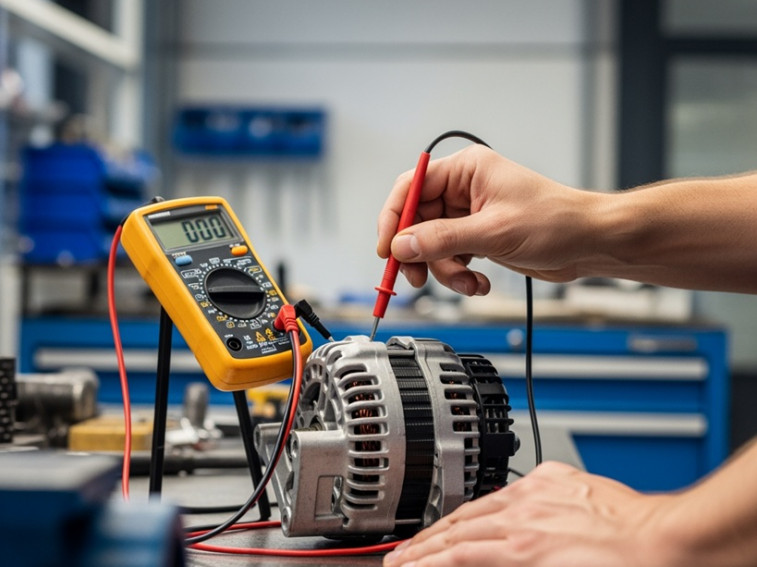
The multimeter alone will handle 70% of your electrical testing needs. Learn to use it properly - there are countless YouTube tutorials showing how to test alternators, starter motors, sensors, and switches. It's not complicated once you've done it a few times.
Testing Electrical Components
Electrical parts make up a huge chunk of salvage sales. They're also the easiest to test if you know what you're doing.
Alternators need three checks. First, inspect the casing for cracks and the pulley for wear. Second, use your multimeter to check for continuity between the main terminals - you're looking for resistance readings that match the manufacturer's specs (usually available online). Third, if possible, bench test it by connecting to a battery and measuring output voltage while spinning the pulley with a drill. A healthy alternator produces 13.5-14.5 volts.
Starter motors get similar treatment. Check for physical damage, then test the solenoid by applying 12V directly. You should hear a solid click. Test the motor itself by connecting to a battery - it should spin freely without grinding or hesitation. A starter that turns slowly or draws excessive current (over 200 amps) is on its way out.
Sensors are trickier because they often need specific conditions to test properly. At minimum, check resistance values against manufacturer specs. An oxygen sensor, for example, should show specific resistance readings when cold. Mass airflow sensors can be tested by measuring voltage output at different airflow rates (blow through them gently while monitoring voltage). Test electrical components systematically using these proven methods.
ECUs and control modules require an OBD2 scanner. Plug them into a compatible vehicle or test bench, read any stored fault codes, and verify they communicate properly. A module full of permanent fault codes is suspect, even if it powers up.
Mechanical Component Inspection and Testing
Mechanical parts can't be tested with a multimeter, but they still reveal their condition if you know where to look.
Engines demand the most thorough inspection. Start with a compression test across all cylinders - readings should be within 10% of each other and meet manufacturer specs (typically 120-180 PSI for petrol engines). Pull the oil filler cap and inspect for sludge or metallic debris. Check the coolant for oil contamination (indicates head gasket failure). Look for external leaks around gaskets and seals.
Turn the engine by hand using a socket on the crankshaft bolt. It should rotate smoothly without tight spots or unusual noises. If it's seized or has significant resistance, walk away or price it as a core for rebuild.
Gearboxes need visual inspection first. Check for cracks in the casing, damaged mounting points, and leaking seals. Drain a sample of the oil - it should be relatively clean without metallic particles. Rotate the input shaft while holding the output shaft - you should feel smooth engagement without grinding. Check all gear selections if it's a manual box with the linkage attached.
Suspension components like shock absorbers, springs, and control arms need careful examination. Shocks should show no oil leakage and compress smoothly without binding. Springs shouldn't have cracks or deformation. Control arm bushings should be intact without excessive wear. A shock that's leaking oil is scrap, regardless of how well it compresses. Mechanical part inspection reveals problems that surface inspection misses.
Testing Braking System Parts
Brakes are safety-critical, so testing standards need to be higher. Never sell brake components you're not confident about.
Calipers should move freely without seizing. Check the pistons for corrosion and scoring - even minor pitting can cause seal failure. Test the sliding pins (on floating calipers) - they should move smoothly with light pressure. Brake fluid inside should be clear, not dark or contaminated. If you're selling calipers from vehicles at car auctions, remember that collision damage often extends to brake components even when not immediately obvious.
Master cylinders and brake servos are harder to test without installing them. At minimum, check for fluid leaks, inspect internal bores for corrosion (if accessible), and verify all ports and connections are undamaged. A servo should hold vacuum when tested with a hand pump.
ABS pumps and modules require diagnostic equipment. Connect an OBD2 scanner and check for stored fault codes. Test the pump motor by applying voltage - it should run smoothly without excessive noise. ABS modules often fail electronically rather than mechanically, so code reading is essential. Brake system testing requires meticulous attention to detail.
Body Panels and Glass
These seem straightforward, but small defects can derail a sale.
Body panels need inspection under good lighting. Look for previous repair work (filler, overspray, mismatched paint). Check mounting points for damage - a bonnet with bent hinges is harder to sell. Stone chips and minor scratches are expected, but document them clearly in your listing.
Glass must be crack-free for resale. Small stone chips are usually acceptable if disclosed, but any crack longer than a credit card makes the item unsaleable for road use. Check heated rear screens by testing resistance across the heating elements - all lines should show continuity.
Lights and lenses should be tested electrically if you're selling complete units. Check for condensation inside (indicates seal failure), cracks in the lens, and corrosion on the reflective surfaces. LED units are expensive and worth testing thoroughly - connect to 12V and verify all elements illuminate.
Interior Components Worth Testing
Interior parts often get overlooked, but buyers expect them to work.
Seats with electric adjustment need power to test properly. Connect to a battery and verify all motors function - lumbar support, height adjustment, fore-aft movement. Check for torn leather or fabric, broken frames, and working seatbelt mechanisms.
Airbags and seatbelt pretensioners are one-use items. If they've deployed, they're scrap. Check the impact sensor area of the vehicle - if the airbags didn't deploy in a collision, they're likely still good. Most vehicles at vehicle auctions will have deployment status visible in the listing or damage report.
Infotainment systems require power and often need coding to specific vehicles. At minimum, verify they power up, accept inputs, and don't have screen damage. Test radio reception, CD mechanisms, and Bluetooth connectivity if possible. A head unit that powers up but doesn't function properly is worth less than one you can fully demonstrate.
Creating a Testing Checklist System
Consistency matters when you're processing multiple vehicles. A checklist ensures you don't skip steps when you're tired or rushing.
Develop part-specific checklists covering every test point. For an alternator, that might include: visual inspection, pulley condition, bearing noise, continuity test, voltage output test, and amperage check. For a gearbox: casing inspection, oil condition, input shaft rotation, gear selection, and mounting point condition.
Document your results with photos and test readings. This protects you if a buyer claims something doesn't work. I photograph multimeter readings, compression test results, and any defects I've noted. It takes an extra two minutes per part but saves hours of dispute resolution later.
Grade parts honestly using a simple system. Grade A means tested and perfect. Grade B means tested with minor cosmetic issues but fully functional. Grade C means untested or has known faults (sold for repair or core exchange). Never sell Grade C as Grade A, no matter how tempting.
Common Testing Mistakes to Avoid
Even experienced breakers fall into these traps.
Testing parts while still installed in a damaged vehicle can give false readings. A sensor might test fine electrically but fail when exposed to heat or vibration. Remove the part and bench test it whenever possible.
Assuming cosmetic condition indicates functionality is dangerous. I've seen pristine-looking alternators that were completely dead internally, and battered ones that worked perfectly. Always test, regardless of appearance.
Skipping tests on "simple" parts like switches and relays causes problems. These components fail frequently and are quick to test. There's no excuse for not spending 30 seconds with a multimeter.
Not researching part-specific failure modes before testing. Some components have known weak points. BMW VANOS units, for example, need specific checks beyond basic functionality. Spend five minutes researching common faults for high-value parts before testing.
When To Walk Away From a Part
Not everything is worth your time. Some parts are too risky or time-consuming to test properly.
Turbos and superchargers need specialist equipment to test thoroughly. Unless you have access to a test bench, you're guessing. Shaft play and bearing wear aren't always obvious, and a failed turbo can damage an engine. Only sell these if you're confident in your assessment or price them as untested cores.
Catalytic converters are valuable for their precious metal content, but testing them for functionality requires exhaust gas analysis. Most salvage cats are sold for scrap value rather than as functional parts.
Complex electronic modules from high-end vehicles often have vehicle-specific coding. An infotainment system from a 2020 Mercedes might need dealer-level programming to work in another vehicle. Unless you have the equipment and knowledge, stick to simpler electronics.
Building Trust Through Transparency
The best testing process in the world means nothing if you're not honest about what you find.
List every defect you discover, no matter how minor. "Small crack in mounting lug" or "slight oil weep from seal" shows you've inspected thoroughly. Buyers appreciate honesty and are more likely to leave positive feedback.
Offer return policies that reflect your confidence in testing. A 30-day return policy on tested parts shows you stand behind your work. Parts sold as untested or for repair should be clearly marked as non-returnable.
Take clear photos showing test results, part numbers, and any defects. A photo of your multimeter showing voltage output is powerful proof that you've done your homework. When sourcing inventory from quality auction platforms, document the vehicle condition report alongside your own testing results for complete transparency.
Scaling Your Testing Process
As your salvage business grows, efficiency becomes crucial.
Batch similar parts for testing. Process all alternators together, then all starter motors, then all sensors. This reduces setup time and helps you spot patterns in failure modes.
Invest in better equipment as volume increases. A professional alternator test bench costs £500-1,000 but pays for itself quickly if you're processing dozens per month. An engine crane makes pulling and testing engines safer and faster.
Consider specialising in specific part types where you can develop deep testing expertise. Becoming the go-to person for BMW gearboxes or Audi ECUs lets you charge premium prices because buyers trust your knowledge.
Legal and Safety Considerations
Testing salvage parts isn't just good business practice - it's often a legal requirement.
Consumer Rights Act 2015 requires that goods match their description and are of satisfactory quality. If you describe something as "tested and working," it needs to actually work. Selling untested parts as functional leaves you liable for refunds and potential legal action.
Safety-critical parts like airbags, seatbelts, and brake components carry additional responsibility. If you sell a faulty brake caliper that contributes to an accident, you could face serious consequences. When in doubt, don't sell it.
Environmental regulations govern disposal of parts that fail testing. Engine oil, brake fluid, coolant, and refrigerants must be disposed of properly. Batteries and electronic waste have specific recycling requirements. Factor disposal costs into your business model.
Making Testing Part of Your Business Identity
The salvage market is crowded. Testing thoroughly and documenting your process sets you apart.
Create video content showing your testing procedures. A 60-second clip of you testing an alternator and explaining the results builds trust with potential buyers. Post these on your salvage auction listings or social media.
Develop a reputation for specific expertise. If you're known as someone who tests everything properly, buyers will pay more and come back repeatedly. Word spreads in the salvage community.
Use your testing process as a marketing advantage. "All electrical parts tested with results documented" becomes a selling point that justifies higher prices than competitors who don't test.
Conclusion
Testing salvage car parts properly isn't complicated, but it does require discipline and the right tools. Every part you test thoroughly is an investment in your reputation and a step away from the cowboys who give the salvage industry a bad name.
Start small with basic electrical testing, expand your capabilities as you learn, and never compromise on honesty about what you find. The breakers who succeed long-term are the ones buyers trust, and trust comes from consistently delivering parts that work as described.
Whether you're sourcing vehicles from our dedicated auction platform or elsewhere, remember that your testing process is what transforms scrap metal into sellable inventory. Do it right, document everything, and build a business that people return to because they know you've done the work others skip.
The difference between a profitable salvage operation and one that struggles often comes down to those 20 minutes with a multimeter. Don't skip the testing. Your bank balance and your reputation will thank you. Ready to source quality vehicles for testing and parts extraction? Register today to access our auction listings and start building your professional salvage business. For expert guidance on sourcing strategy or specific testing requirements, please contact our team.