You've just won a salvage car at auction for £400. It's a write-off, sure, but sitting in that twisted metal is potentially £1,200 worth of parts. The question isn't whether there's profit to be made - it's whether you know how to extract it without leaving money on the table.
Salvage car stripping isn't about swinging a sledgehammer and hoping for the best. It's methodical work that rewards those who understand what buyers actually want, which parts hold value, and how to remove components without damaging them. Get it right, and you'll turn a weekend's work into serious profit. Get it wrong, and you'll end up with a pile of scrap metal worth less than the disposal fees.
The difference between breaking even and doubling your investment comes down to knowledge. Not just any knowledge - the specific, practical kind that only comes from understanding the salvage market inside out. When it comes to salvage car stripping properly, discipline separates professionals from amateurs.
Understanding the True Value of a Salvage Vehicle
Before you pull a single bolt, you need to see the car differently. Stop looking at it as a broken vehicle. Start seeing it as a collection of individual products, each with its own market value.
A 2015 Ford Focus with front-end damage might be worthless as a car, but it contains a perfectly good engine worth £600, a gearbox fetching £300, four alloy wheels at £200 for the set, and interior trim pieces that add another £150. Suddenly, that £400 purchase looks rather different. This is the essence of understanding salvage vehicle parts and their individual worth.
The key components that typically hold the most value include:
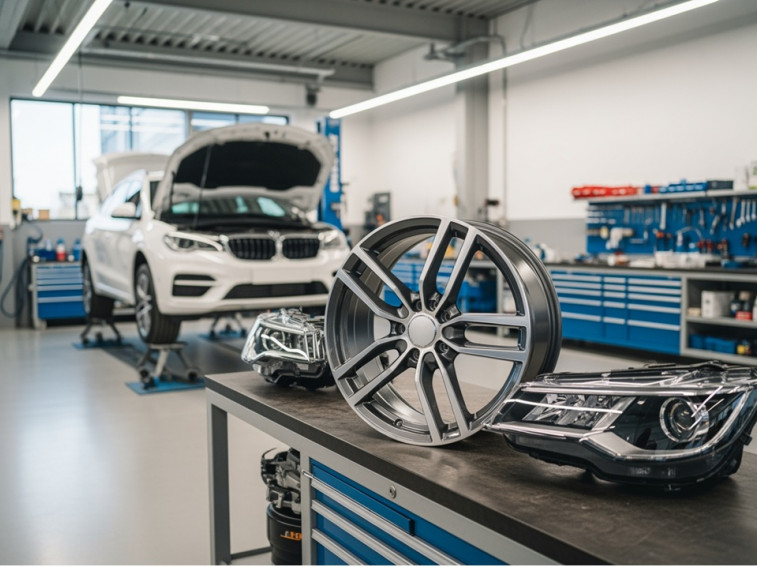
Engine and gearbox - Often the biggest money-makers if undamaged Body panels and bumpers - Particularly for newer or popular models Alloy wheels and tyres - Quick sellers with consistent demand Interior parts - Seats, dashboards, door cards, steering wheels Electronics - ECUs, infotainment systems, instrument clusters Lights - Headlights, tail lights, especially LED units Suspension components - Arms, springs, dampers from low-mileage vehicles
The real trick is knowing which parts are worth your time. On a 15-year-old Vauxhall Corsa, you might strip the entire interior. On a newer BMW, even the door handles and window switches have buyers waiting. Breaking cars for profit means understanding which components will generate the best returns.
Essential Tools and Equipment for Professional Stripping
You can't do this work properly with a basic socket set and good intentions. Professional stripping requires specific tools that pay for themselves within a few vehicles.
Your essential toolkit should include socket sets in both metric and imperial (yes, you'll need both), a decent breaker bar for stubborn bolts, and a comprehensive screwdriver collection. But here's what separates amateurs from people making real money: specialised extraction tools.
Invest in proper panel removal tools - those plastic trim tools that prevent you cracking £50 worth of dashboard trim while trying to remove it. Get yourself a good set of Torx bits, as modern vehicles use them everywhere. An impact driver saves hours of work and prevents stripped threads.
Safety equipment isn't optional. You're working with sharp metal, heavy components, and potentially hazardous fluids. Steel-toe boots, heavy-duty gloves, and safety glasses are mandatory. If you're cutting or grinding, add a face shield and respirator to that list.
The workspace matters more than most people realise. A flat, stable surface is essential. Trying to strip a car on soft ground or an incline makes everything harder and more dangerous. Proper axle stands and a trolley jack aren't luxuries - they're requirements.
Legal Requirements and Documentation
Here's where people often come unstuck. You can't just buy a salvage car and start pulling it apart without understanding the legal framework. The DVLA has specific rules about what you must do with the vehicle's identity.
When you acquire a salvage vehicle, it comes with a classification. Category A vehicles must be completely crushed - you cannot strip and sell parts from these legally. Category B means the shell must be crushed, but you can sell parts. Categories S and N (formerly C and D) can potentially be repaired and returned to the road.
You need to notify the DVLA when you're breaking a vehicle. This removes it from their records and prevents future complications. Keep the V5C document - you'll need it to prove you're the legal owner of the parts you're selling.
Environmental regulations apply to your operation. You must dispose of hazardous materials properly. Engine oil, coolant, brake fluid, and air conditioning refrigerant can't just be poured down the drain. Your local waste management facility will have specific procedures for these materials.
If you're doing this commercially, you need an Authorised Treatment Facility (ATF) licence. Operating without one when you're regularly breaking cars carries serious penalties. Even if you're just doing occasional vehicles, understanding these regulations protects you from legal trouble.
Strategic Disassembly: Where to Start
The order you strip components makes a massive difference to both efficiency and profit. Start wrong, and you'll damage valuable parts trying to access less valuable ones. I've watched people crack £200 headlights because they didn't remove the bumper first - completely avoidable with proper planning.
Begin with the interior. It's clean work, and you want to extract trim pieces before they get damaged by later work. Remove seats first - they're bulky and getting them out creates workspace. Then tackle the dashboard, door cards, and centre console.
Document everything as you go. Take photos of connectors before you disconnect them. Label wiring if you're removing the loom. This isn't just for your benefit - buyers pay more for salvage car parts selling when they include clear fitting instructions or photos showing proper installation.
Next, move to external trim and lights. Bumpers, grilles, badges, mirrors, and light units all have good resale value if removed carefully. Rush this stage and you'll snap mounting clips that make parts worthless.
The mechanical components come last. Drain all fluids before you start - it's messy work, but necessary. Remove the wheels and suspension components, then tackle the engine and gearbox. These are heavy, so proper lifting equipment is essential.
Leave the shell work until everything else is stripped. Body panels, doors, bonnets, and tailgates can be removed once you've extracted everything else of value. This prevents damage to these items during the earlier stripping stages.
Maximising Value from Key Components
Not all parts are equal. Some components fly off the shelf at premium prices. Others sit for months before someone makes a lowball offer. Knowing the difference transforms your profit margins.
Engines and gearboxes represent your biggest potential profit, but only if you can prove they work. A compression test on the engine costs you 20 minutes but can add £200 to the sale price. Video the engine running before you remove it - that footage is worth money.
Electronic components need special attention. ECUs, instrument clusters, and infotainment systems must match the buyer's vehicle exactly. Note down all part numbers, software versions, and compatibility information. An ECU from a 2015 Ford Focus 1.6 diesel won't work in a 2016 model, even though they look identical.
Interior parts sell better when they're clean. Spending 30 minutes shampooing seats can double their value. Buyers want parts they can fit straight away, not components that need cleaning first.
Alloy wheels are straightforward money-makers, but check them carefully. Kerb damage, corrosion, or buckles reduce value significantly. Clean them properly and photograph them from multiple angles. Buyers want to see what they're getting.
Common Mistakes That Destroy Profit
The costliest mistake is rushing. You're excited to get started, so you attack the car without planning. Result? Broken clips, snapped connectors, and parts that should have sold for £50 now worth nothing.
Improper removal damages more parts than anything else. Using a screwdriver to pry off trim pieces instead of proper tools cracks the plastic. Forcing stuck bolts rounds off the heads. Disconnecting wiring without releasing clips breaks the connectors.
Failing to research part values before stripping costs you money. You spend three hours removing a component worth £20 when you could have focused on parts worth £200. Check sold listings on eBay before you start - it tells you what actually sells and for how much. Understanding vehicle dismantling UK market prices before you begin is essential for maximising profit.
Storage damage is another profit killer. You carefully remove parts, then stack them in a damp garage where they corrode or get damaged. Proper storage - dry, organised, and protected - maintains value.
Poor photography tanks your selling price. Blurry photos taken in bad light make buyers suspicious. They assume you're hiding damage. Clear, well-lit images from multiple angles build confidence and justify higher prices.
Selling Your Salvage Parts Effectively
You've stripped the car perfectly. Every component is undamaged, cleaned, and ready to sell. Now comes the bit that actually puts money in your pocket - and it's where many people fall short.
eBay remains the primary marketplace for salvage parts, but you need to understand how it works. Listing a part as "collection only" severely limits your market. Offering postage, even for larger items, dramatically increases your potential buyers. Yes, packaging an engine is work, but it's work that gets you £100 more.
Your listing title needs to include the exact vehicle, year, and part number. "Car part" won't cut it. "BMW 3 Series E90 2008-2012 N47 2.0 Diesel Engine 163bhp 118k Miles Tested" gets found by buyers searching specifically for what you're selling.
Facebook Marketplace works brilliantly for local sales of bulky items. Buyers can collect directly, saving you postage hassles. The downside? You'll get more time-wasters and lowball offers. Screen buyers carefully.
Specialist breakers' yards will buy complete lots, but they want trade prices. You'll get perhaps 40% of retail value. The advantage? It's immediate cash with no selling hassle. Sometimes shifting everything in one go makes more sense than selling piecemeal over six months.
Price competitively but don't undervalue your work. Check what similar parts actually sold for (not what they're listed at - that's fantasy pricing). Factor in your time, but be realistic. A part sitting unsold for three months isn't making you money.
Environmental Responsibility and Disposal
The bits you can't sell still need proper handling. Dumping hazardous waste isn't just environmentally destructive - it's illegal and carries serious fines.
Fluids must go to proper disposal facilities. Most household waste centres accept oil, coolant, and brake fluid in reasonable quantities. Keep them in sealed containers and don't mix different fluids. Air conditioning systems require specialist evacuation by someone qualified to handle refrigerants.
Scrap metal has value. Once you've stripped everything saleable, the remaining shell and metal components can go to a scrap yard. Prices fluctuate, but you'll typically get £150-250 for a car shell, depending on weight and current scrap values. Separate ferrous and non-ferrous metals - aluminium and copper fetch higher prices.
Tyres present a disposal challenge. Most tyre shops will take them for a small fee. Some councils accept them at waste centres. Don't leave them lying around - they're breeding grounds for mosquitoes and fire hazards.
Batteries contain lead and acid. They're hazardous waste but also have value. Scrap yards and many parts retailers will take old batteries, sometimes even paying you for them. Never throw them in general waste.
Building a Sustainable Salvage Business
If you're serious about making consistent money from salvage stripping, you need systems. One-off jobs are fine for learning, but real profit comes from volume and efficiency.
Develop relationships with auction houses and insurance companies. Regular access to salvage vehicles at good prices is the foundation of a sustainable operation. Browse car auctions regularly to understand current market prices and availability.
Create a proper workspace. Working in your driveway is fine for occasional vehicles, but serious volume requires dedicated space. Proper lighting, tool storage, and weather protection make you faster and more efficient.
Build an inventory system. Knowing exactly what parts you have, where they're stored, and what they cost you is essential for profitable operation. Even a simple spreadsheet prevents you buying duplicate stock or forgetting what you have.
Consider specialising. Stripping everything from Fiestas to Ferraris sounds appealing, but focusing on specific makes or models builds expertise. You learn the quirks, know the common failure points, and understand which parts have demand. This knowledge translates directly to profit.
Maintain proper records for tax purposes. If you're doing this commercially, HMRC will want to see proper accounting. Track purchases, sales, and expenses. It's boring work, but it prevents nasty surprises later.
The Reality of Profit Margins
Let's talk actual numbers, because that's what matters. A typical salvage car costing £400-600 can yield £1,200-2,000 in parts if you strip it completely and sell everything effectively. That sounds brilliant until you factor in your time.
Properly stripping a vehicle takes 12-20 hours, depending on the car and your experience. Add another 10-15 hours for cleaning, photographing, listing, and handling sales. You're looking at 25-35 hours of work per vehicle.
If you net £800 profit after costs, that's £23-32 per hour. Not bad, but not spectacular either. The real money comes from efficiency and volume. Get your stripping time down to 10 hours, streamline your sales process, and handle multiple vehicles simultaneously.
Some vehicles are goldmines. A low-mileage premium car with rear-end damage might contain £3,000 worth of undamaged parts. Others are duds - you buy what looks like a bargain, then discover half the parts are damaged or have no market demand.
Experience teaches you which vehicles are worth buying. Certain models have strong parts demand. Others sit forever. Popular family cars generally strip well because there's always demand for parts. Obscure or very old vehicles can be risky unless you know there's demand.
Conclusion
Stripping salvage cars for profit isn't a get-rich-quick scheme. It's skilled work that rewards knowledge, patience, and attention to detail. The people making serious money understand vehicle mechanics, know their market, and treat it like a proper business rather than a hobby.
Start small. Buy one vehicle, strip it properly, and learn from the experience. You'll make mistakes - everyone does. The key is making them on a £400 Fiesta rather than a £2,000 BMW.
Build your knowledge systematically. Learn which parts sell, how to remove them without damage, and how to present them to buyers effectively. Every vehicle you strip teaches you something new.
The salvage market offers genuine opportunities for those willing to put in the work. Whether you're looking for a side income or building a full-time business, the fundamentals remain the same: buy smart, strip carefully, sell effectively.
Ready to find your first salvage project? Explore the range of vehicles available through RAW2K and start building your salvage stripping knowledge. The profit is there for those who know how to extract it. Just remember - the difference between success and frustration lies in doing it properly from the start. If you have questions about sourcing vehicles or need expert guidance, please get in touch with our team.