Browsing digital salvage platforms frequently reveals two near-identical vehicles sitting in the compound. They share the same manufacturer, similar mileage, and comparable panel damage. One is fully electric; the other is a standard petrol variant. The electric model is listed with a current proxy bid sitting £2,000 cheaper than its combustion counterpart.
For an uneducated buyer, this appears to be an exceptional bargain. For a seasoned trade professional, it is a massive, flashing warning sign. The clinical truth is that the fundamental cost difference between fixing an EV and a petrol car is never straightforward. It depends entirely on what specific component has failed, who is executing the repair, and whether the buyer possesses the highly specialised tools required to complete the job safely. Independent traders have routinely secured salvage EVs assuming they have found a highly lucrative project, only to discover that sourcing a single replacement battery module costs significantly more than completely rebuilding a standard diesel engine. Understanding the exact financial mechanics of electric motor repairs versus traditional combustion fixes is the only way to protect your working capital from catastrophic mistakes.
The Upfront Reality: Parts and Labour
When evaluating damaged inventory on a digital platform, the absolute first calculation is establishing a realistic repair budget. For petrol engines, this mathematical equation is highly predictable. If a vehicle requires a replacement head gasket, an independent mechanic will typically charge £800 to £1,200. If a timing belt has snapped and destroyed the valves, the repair costs £1,500 to £2,500 depending on the specific engine complexity. Even sourcing a completely replacement engine block from a commercial breaker usually costs between £500 and £1,500, plus a single day of standard labour.
In theory, electric motor repairs should be drastically cheaper. Electric traction motors are fundamentally brilliant in their simplicity. They possess drastically fewer moving parts, zero delicate valves, zero pistons, and no complex timing chains. If the physical electric motor itself fails, sourcing a replacement unit typically costs between £1,000 and £3,000.
However, this is where the theoretical advantage completely collapses. The electric motor itself is almost never the actual problem in an EV failure. The true, exorbitant repair costs originate entirely from the highly complex, high-voltage architecture surrounding that motor.
Where Electric Vehicles Get Expensive
The true financial risk in EV salvage lies inside the battery pack and the power management systems. The main traction battery is the single most expensive component on the entire chassis. A damaged, degraded, or flooded battery pack typically costs between £5,000 and £20,000 to replace with a factory unit. Even if a highly specialised workshop possesses the software to replace a single degraded internal module, that isolated repair frequently exceeds £2,000 to £4,000.
Consider a highly common salvage scenario: a trade buyer secures a Category S premium EV featuring minor front-end structural damage. The structural repairs are perfectly manageable, but the impact subtly cracked the sealed battery casing, triggering an internal safety isolation fault. The manufacturer quotes £18,000 for a complete replacement pack because they strictly refuse to authorise modular repairs on compromised casings. The vehicle immediately becomes entirely unviable to repair and must be broken down for individual component parts, completely destroying the buyer's projected profit margin.
Inverters and power distribution modules represent another massive financial liability. These highly sophisticated components convert DC power from the battery into AC power for the motor. If an inverter fails due to a coolant leak or a voltage spike, a replacement unit easily costs £1,500 to £5,000. Furthermore, replacing these units frequently requires proprietary manufacturer diagnostic software to code the new component to the vehicle's immobiliser network, forcing independent mechanics to pay premium main-dealer programming fees.
Petrol Engine Repairs: The Devil You Know
Standard petrol and diesel engines break in entirely predictable ways. Overheating warps cylinder heads. Neglected servicing destroys turbochargers. Contaminated oil ruins main bearings. While these failures are mechanically catastrophic, they represent "the devil you know" for the independent motor trade.
The primary commercial advantage is that aftermarket parts for combustion engines are massively abundant and highly affordable. A replacement water pump for a standard hatchback costs £40. A reconditioned alternator costs £80. Independent garages have rebuilt thousands of these exact engines. They intimately understand the common failure points, possess the exact timing tools required, and can provide highly accurate, fixed-price quotes. Compare this predictable environment to an EV, where simply diagnosing a high-voltage communication fault might require purchasing a £3,000 proprietary software license before a single spanner is even turned.
Hidden Costs of Electric Vehicle Repairs
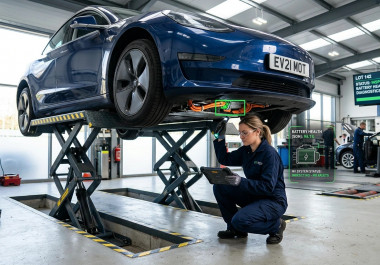
Beyond raw component pricing, several severe hidden operational costs completely alter the EV repair spreadsheet. High-voltage safety certification is legally mandatory. A standard mechanic cannot simply unplug a 400-volt battery pack. The workshop must employ technicians holding strict IMI Level 3 or Level 4 certifications to legally isolate and work on live EV systems.
Acquiring this certification costs significant capital, and those training costs are directly reflected in the specialist's hourly labour rate, which typically runs £30 to £50 higher than a standard mechanic's rate. Furthermore, the workshop must invest heavily in Class 0 insulated tooling, dedicated high-voltage safety cordons, and Category IV 1000V multimeters. Finally, commercial liability insurance premiums for independent garages actively repairing heavy crash-damaged EV batteries are exceptionally high, creating a massive barrier to entry for smaller trade operations.
Real-World Cost Examples
Applying realistic clinical mathematics clarifies exactly how EV vs petrol repair pricing diverges in the workshop.
Scenario One focuses on direct propulsion replacement. Sourcing a second-hand 1.6-litre petrol engine for a 2015 hatchback from a breaker costs roughly £600, with £500 in standard labour, totalling £1,100. Sourcing a replacement electric motor for an equivalent 2015 EV costs roughly £2,000, with £400 in labour, totalling £2,400. The petrol vehicle wins the immediate cost comparison, though the margin is relatively narrow.
Scenario Two focuses on cooling and energy storage. Replacing a failed radiator, water pump, and thermostat on a 2017 diesel saloon costs roughly £400 in parts and £300 in labour, totalling £700. Conversely, replacing a single failed battery module on a 2017 EV requires a £3,500 replacement cell and £500 in highly specialised high-voltage labour and balancing diagnostics, totalling £4,000. The petrol vehicle wins by a massive, highly profitable margin.
Scenario Three examines standard electrical faults. An alternator failure on a standard petrol estate requires a £120 part and £100 in labour, totalling £220. The equivalent power conversion failure on an EV requires a replacement high-voltage inverter costing £2,800, plus £400 for physical installation and mandatory main-dealer software coding, totalling £3,200. Again, the financial risk leans entirely toward the combustion engine.
When Electric Vehicles Are Cheaper to Fix
The commercial reality is not entirely negative for electric vehicles; they possess highly specific mechanical advantages. Minor mechanical work involving the standard chassis is frequently simpler on EV platforms because the packaging is less cluttered. There is no complex exhaust routing, no heavy dual-mass clutch to replace, and no traditional gearbox linkages to seize.
Routine operational maintenance is exceptionally cheap. Electric vehicles require zero oil changes, no spark plugs, and no expensive timing belt intervals. Furthermore, aggressive regenerative braking systems mean standard brake pads and discs frequently last upwards of 80,000 miles, which is entirely unheard of in the combustion sector. However, from a strict salvage auction perspective, buyers are rarely calculating ten-year lifetime maintenance savings; they are focused entirely on the immediate, upfront cost of returning a crashed vehicle to a legally roadworthy condition.
The Auction Buyer's Perspective
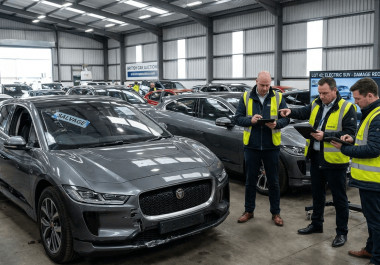
For trade buyers actively sourcing inventory from massive car auctions uk platforms, the cost comparison ultimately dictates overall business risk. Petrol vehicles are undeniably easier to sell once repaired. The retail market is significantly larger, standard consumers completely understand the technology, and third-party financing is readily available.
Electric vehicles undoubtedly offer higher potential profit margins, simply because terrified retail buyers refuse to bid on them, driving the hammer prices down for educated trade buyers. However, that margin requires accepting massive diagnostic risk. When evaluating EV vs petrol repair pricing, you must scrutinise the digital damage descriptions with extreme prejudice. If an EV listing explicitly notes "water ingress," "flood damage," or displays an illuminated red high-voltage isolation warning light on the dashboard photograph, you must treat the vehicle as a massive financial liability rather than a lucrative bargain.
What to Check Digitally Before Bidding
Because secure online salvage compounds strictly prohibit physical yard access for severe health and safety reasons, you cannot simply arrive with a mechanic to execute compression tests or physically probe battery casings. You must execute a flawless digital inspection.
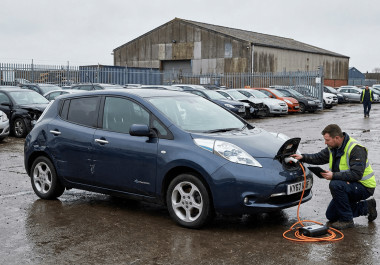
For petrol vehicles, meticulously analyse the high-resolution compound photography for dark fluid pooling beneath the engine block, which indicates severe oil or gearbox leaks. Review the provided digital service history to ensure critical intervals were met. For electric vehicles, your digital inspection must be drastically more analytical. When browsing any vehicle auction listing for an EV, zoom heavily into the illuminated instrument cluster photographs. Any visible warning message regarding the BMS (Battery Management System) or the charging loop is an immediate red flag. Furthermore, you must run your own independent HPI check prior to bidding to ensure the EV is free of outstanding finance and does not possess a third-party leased battery, which is a common, highly complicated legal trap on older electric models.
The Long-Term Picture
The exorbitant cost gap between electric and petrol repairs will inevitably narrow over the next decade. As the first massive wave of corporate EVs falls entirely out of manufacturer warranty, the independent repair market is rapidly scaling up to meet demand. Advancements in modular battery pack design mean that replacing individual, degraded cells will eventually become a standard, highly affordable workshop procedure.
Furthermore, emerging right-to-repair legislation is actively forcing manufacturers to provide independent garages with access to proprietary diagnostic software, which will rapidly break the main-dealer monopoly on EV coding. However, if you acquire a highly complex EV today that ultimately proves mathematically unviable to repair due to hidden internal battery corrosion, executing a rapid scrap my car valuation on the remaining unviable vehicle shell and heavy components ensures you can safely mitigate your commercial exposure.
Making the Right Choice
Successfully bidding on digital platforms requires absolute mechanical honesty. If you possess deep experience rebuilding combustion engines and maintain a highly reliable network of standard breaker yards, sticking exclusively to petrol and diesel inventory guarantees highly predictable stock turnover.
If you intend to transition into the EV market, you must pre-invest heavily in IMI Level 3 training, Class 0 insulated equipment, and specialist diagnostic software long before you place a proxy bid. Whether you are sourcing electric commercial vans or monitoring a dedicated motorcycle auction for high-voltage two-wheelers, the exact same rigid safety protocols apply.
Furthermore, you must rigorously calculate your collection logistics. You cannot legally or safely drive an unrecorded salvage vehicle out of a secure compound; you must mandate a professional flatbed recovery truck into your initial purchase spreadsheet for every single acquisition.
Conclusion
The debate surrounding electric motor repairs versus traditional combustion fixes is never a simple binary calculation. Petrol engines provide trade buyers with highly predictable repair costs, massively abundant aftermarket parts, and familiar mechanical architecture that guarantees a rapid return on investment.
Electric vehicles undoubtedly offer lucrative margins for highly specialised buyers, but they demand exorbitant upfront investments in safety equipment and carry the severe risk of five-figure battery replacement costs if a digital inspection misses a critical fault.
For buyers browsing extensive catalogues of salvage cars, the smartest approach is to bid strictly within your proven mechanical capabilities. Assess every single listing entirely on its own digital merits, execute rigorous HPI checks, and ensure your proxy bid leaves a massive financial buffer for unexpected component failures.
The RAW2K platform provides the high-resolution photography and strict categorisation required to make highly informed, professional acquisitions across both combustion and electric markets. If you require any specific assistance in understanding digital EV lot descriptions or navigating secure compound collection rules, please contact our team for professional guidance. To begin actively sourcing profitable, predictable inventory for your commercial workshop, create your profile and register to bid today.