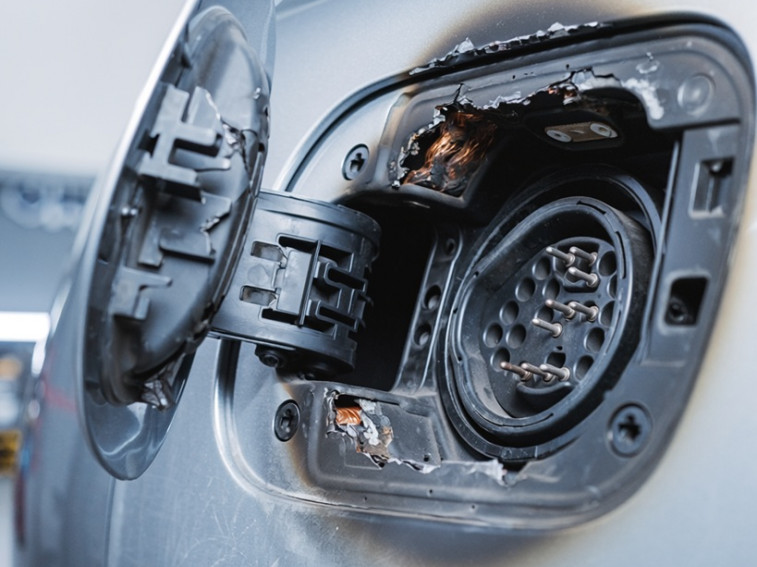
Electric vehicles are not simply traditional cars featuring battery packs instead of plastic fuel tanks. They are highly complex, rolling electrical grids with integrated charging systems that can instantly transform a perceived auction bargain into a catastrophic financial nightmare if buyers do not know exactly what they are looking at. Too many novice auction participants get highly excited about heavily discounted EVs, only to extract the vehicle, plug it in, and discover the charging system has been completely compromised in ways that make the asset functionally worthless.
The charging infrastructure on a modern electric vehicle is completely different from checking if a petrol car's fuel cap closes securely. You are dealing with volatile high-voltage systems, immensely sophisticated battery management electronics, and proprietary components that frequently cost thousands of pounds to replace. When these specific systems sustain damage in heavy collisions or subtle floods, the subsequent specialist repair bills can easily exceed the vehicle's total pre-accident value. Properly identifying ev charging system damage separates highly profitable, clinical trade purchases from incredibly expensive, unviable yard ornaments.
Understanding the Electric Vehicle Charging System
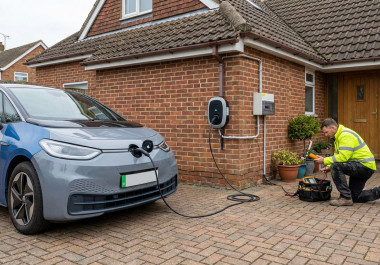
An electric vehicle's charging system comprises several highly critical, interconnected components. The primary hardware is the onboard charger. This heavy, liquid-cooled unit is physically responsible for converting the alternating current (AC) power supplied from standard wall sockets or domestic charging stations into the direct current (DC) power that the main traction battery can actually store.
The exterior charge port is the physical connection point. This assembly is significantly more vulnerable than most casual buyers realise. It contains intricate communication pins, locking actuators, and heavy-gauge cables. Furthermore, the Battery Management System (BMS) acts as the absolute brain of the operation, actively monitoring everything from individual cell temperatures to maximum charge rates. Damage to any single component in this chain frequently disrupts the entire system. A cracked plastic charge port housing might appear highly superficial, but if moisture has penetrated the seal, corroded communication pins will completely lock out the entire charging circuit.
High-voltage cabling routes run extensively throughout the vehicle chassis, often positioned in locations that make them highly vulnerable during severe collisions. Heavy front-end impacts can easily crush these thick orange cables against the bulkhead. Severe side impacts can sever them entirely. Even seemingly minor rear-end shunts can permanently warp the delicate internal mounting brackets of the main charge port assembly.
Common Types of Charging System Damage
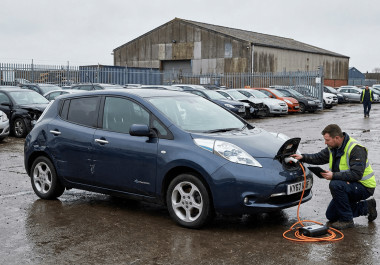
Physical impact damage typically affects the charge port and the immediately surrounding structural bodywork. A professional digital assessment of a salvage Nissan Leaf might reveal a front quarter panel impact where the exterior charge port flap looks completely fine, but the hidden internal mounting bracket has completely shattered. This causes the internal high-voltage connectors to pull partially away from their sealed housings, resulting in dangerous, inconsistent charging handshakes.
Water ingress is particularly disastrous for electric vehicles. The charging system is strictly designed to be highly weather-resistant against standard rain, but it is absolutely not waterproof against standing water. Flood-damaged EVs routinely develop severe, irreversible corrosion inside the charge port pins, within the main connector housings, and deep inside the expensive onboard charger units themselves. This specific ev charging system damage cannot always be seen immediately in auction photographs. The fatal internal corrosion frequently develops silently over weeks or months while the vehicle sits in a holding compound.
Fire damage is an automatic, non-negotiable write-off in the EV salvage sector. Lithium-ion battery fires generate intense, sustained heat that destroys everything in proximity. Even if a small fire did not originate directly within the charging system, the radiating heat typically melts the thick protective insulation on the high-voltage cables and permanently warps the sealed electronic housings.
Identifying Charging System Issues Digitally Before Bidding
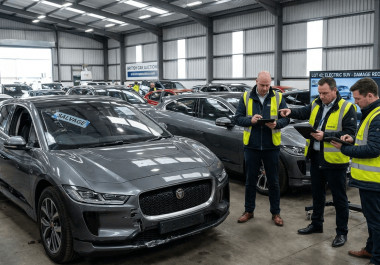
Because secure online salvage compounds strictly prohibit physical public yard access for severe health and safety reasons, you cannot simply walk in, plug a scanner into the dashboard, and test the charging port. Your ability to execute a flawless digital inspection using high-resolution lot photography is your primary defence mechanism.
Start by meticulously zooming in on the charge port area in the provided digital images. Is the protective flap missing, heavily scratched, or sitting at an unnatural angle? Look for distinct discolouration around the plastic port surround, which strongly indicates dangerous heat buildup or dirty water staining. If the digital listing explicitly shows the dashboard illuminated, look immediately for specific warning text or red battery isolation symbols. Modern EVs throw highly specific fault codes when the charging loop is compromised. You must strictly believe the provided auction descriptions; if a platform lists the vehicle as featuring "electrical damage" or explicitly states "not charging," these are not simple blown 12-volt fuses. They are massive, high-voltage failures.
The Financial Reality of Charging System Repairs
The clinical financial reality of EV electrical repairs frequently shocks mechanics transitioning from the internal combustion market. When diagnosing onboard charger failures, buyers must understand that a replacement unit typically costs between £800 and £2,500 for the bare part alone, depending entirely on the manufacturer. Labour adds another £300 to £600 rapidly, because these liquid-cooled units are frequently buried deep beneath complex thermal management plumbing and require complete high-voltage system isolation before a spanner can even be turned.
Charge port assemblies might seem relatively affordable at £150 to £500 for the core parts, but if the surrounding structural metalwork is heavily deformed, the required panel realignment costs add up exponentially. If the main wiring harness connecting the port to the battery is severed, splicing is strictly prohibited by EV safety standards; the entire expensive loom must be replaced. Battery Management System repairs are equally brutal. A replacement BMS module easily costs £1,000 to £3,000, assuming the short circuit has not cascaded into the main battery cell modules. Furthermore, these specific repairs typically require proprietary manufacturer diagnostic software, forcing independent buyers to eventually pay premium main-dealer hourly rates simply to code the new components to the vehicle's immobiliser network.
Salvage Categories and Charging System Damage
Understanding the UK salvage category markers is essential when evaluating electrical risk. Category S indicates structural damage. A Category S vehicle with heavy front-end damage has a massive statistical probability of featuring compromised high-voltage wiring, shattered cooling lines, or direct damage to the front-mounted onboard charger.
Category N indicates non-structural damage. However, buyers must understand that severe, unviable electrical damage is routinely classified under Category N because the core chassis is technically straight. A Category N electric vehicle with an illuminated high-voltage fault light might require £8,000 in proprietary electrical repairs despite exhibiting absolutely zero exterior body damage. Furthermore, buyers must respect Category B restrictions. Category B vehicles are strictly reserved for licensed Authorised Treatment Facilities (ATFs) for parts reclamation only. Finally, always run an independent HPI check before bidding. Many older EVs feature leased batteries owned by third-party finance companies. You must verify clear legal title to ensure you are not buying a highly complex liability.
Post-Extraction Diagnostic Considerations for Buyers
Because you cannot test these complex systems inside the secure auction compound, you must strictly budget for professional diagnostics immediately upon extracting the vehicle to your own commercial premises. Professional diagnostic equipment capable of interrogating a proprietary EV network costs thousands of pounds. Generic, cheap OBD readers will not provide the necessary high-voltage cell data.
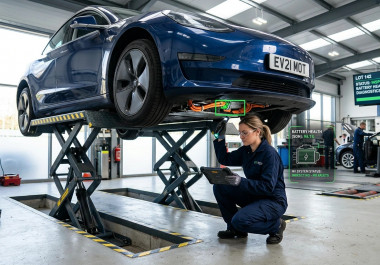
Once the vehicle is securely in your workshop, an IMI Level 3 certified technician must perform an insulation resistance test. This critical test verifies whether the high-voltage system is properly isolated from the metal vehicle chassis. If the resistance is dangerously low following an accident, the vehicle is a severe electrocution risk and requires extensive teardowns. The technician will also run specific communication handshake tests on the charge port to verify it can successfully talk to public rapid chargers. Budgeting £150 to £300 for this immediate post-extraction specialist inspection is a mandatory cost of doing business safely in the EV sector.
Making the Decision: When to Walk Away
Strict financial discipline is your greatest asset. You must walk away immediately if the digital listing explicitly notes the vehicle has been submerged in water. Ev charging system damage caused by deep flooding is entirely irreversible, and the repair costs will mathematically exceed any perceived savings from buying salvage. Flood-damaged EVs are absolute money pits unless you are a licensed ATF breaking them down purely for uncontaminated raw metals.
Avoid any vehicle displaying localized fire damage anywhere near the main battery housing or high-voltage cable runs. You must also walk away if the vehicle is missing its primary immobiliser key. Replacing a lost electronic key on a modern EV frequently requires replacing the entire paired BMS and ECU security network, adding over £1,000 to your immediate repair bill. Multiple, cascading electrical fault codes visible on the digital dashboard suggest massive systemic architecture problems rather than a single failed sensor. These vehicles require hundreds of hours of complex diagnostic tracing.
Digital Evidence to Check Before Bidding
Because you are bidding blindly on digital platforms, you must extract every possible piece of intelligence from the provided data. Scrutinise the digital condition reports to see if the auction yard staff noted the vehicle as a "non-runner." While a petrol car might be a non-runner simply due to a flat battery, an EV listed as a non-runner frequently indicates the high-voltage contactors have permanently locked open due to a detected critical safety fault.
When you review listings on a standard vehicle auction platform, you must also understand the warranty implications. Most EVs carry robust 8-year battery warranties, but acquiring a formal Category S or Category N salvage marker almost universally voids this factory coverage instantly. Do not base your financial repair spreadsheet on the assumption that a main dealer will replace a failed onboard charger under warranty once they see the salvage marker on the V5C logbook. If the original logbook is missing from the listing, you must factor in the time delay of submitting a V62 application form to the DVLA to secure legal registration.
The Trade Buyer's Perspective
Professional trade buyers approach complex onboard charger failures completely differently than enthusiastic private buyers. Trade professionals possess deep established relationships with specialist EV breakers, access to expensive Class 0 insulated tooling, and dedicated workshop space. What looks like an absolute bargain to an uninformed private buyer is often ignored by a trade buyer because the professional accurately understands the true, exorbitant cost of proprietary diagnostic software licenses.
If you are sourcing an electric van for a commercial fleet, you must prioritise absolute reliability. A commercial van that fails to charge consistently overnight is entirely useless for multi-drop fleet work the following morning. Professional buyers also understand the raw baseline value of parts. If an EV proves entirely unviable to repair, the trade buyer knows they can still extract the electric motor, the high-voltage inverter, and the undamaged cell modules. If you are browsing a motorcycle auction for high-voltage electric bikes, the exact same rigorous component valuation principles apply.
Insurance, Logistics, and Legal Considerations
Insuring a repaired salvage EV that previously sustained severe electrical system damage is increasingly challenging in the UK market. Many mainstream insurers explicitly refuse to cover vehicles with prior high-voltage fault histories. You must frequently utilize specialist commercial brokers who understand the salvage sector, which subsequently increases your ongoing operational costs.
Logistics also demand strict planning. You cannot legally or safely drive a salvage vehicle out of a secure compound. All collections must be strictly executed utilizing a professional flatbed recovery truck. If you misjudge the severity of the electrical damage and realize the vehicle is mathematically beyond economical repair, utilizing a rapid scrap my car service to liquidate the remaining unviable chassis and heavy components can occasionally mitigate the financial disaster. Furthermore, returning a structurally repaired Category S electric vehicle to the public road often requires an expensive, independent engineer's report to satisfy specialist insurers that the high-voltage isolation circuits are completely safe for highway use.
Making Salvage EVs Work
Despite the massive technical hurdles, salvage EVs represent incredible commercial value if approached with clinical precision. To succeed, you must focus your bidding exclusively on vehicles displaying minor, clearly defined cosmetic or standard suspension damage, actively avoiding any listings suggesting complex electrical faults. A cracked plastic charge port flap that simply requires a new £50 hinge is highly manageable; a melted high-voltage distribution box is not.
When sourcing standard inventory across massive car auctions uk catalogues, your success depends entirely on building strong relationships with independent EV specialists long before you place a proxy bid. Knowing exactly who will diagnose your vehicle, where you will source second-hand components, and what their hourly labour rate is ensures your spreadsheet remains accurate. The rapidly growing EV parts breaking market now provides excellent access to tested, used onboard chargers and battery modules, drastically reducing repair costs compared to buying brand new components from the main dealer network.
Conclusion
Charging system damage transforms electric salvage vehicles from highly profitable opportunities into massive financial liabilities faster than any other type of mechanical fault. Unlike conventional petrol cars where an engine misfire might be a cheap, easy fix, EV high-voltage systems do not offer the same forgiving odds. The brutal combination of proprietary component costs, strict safety regulations, and premium diagnostic requirements means you must operate with absolute certainty.
Vague digital descriptions and unverified dashboard warning lights are massive red flags that must never be ignored. Trade buyers who possess the correct IMI Level 3 certifications, insulated equipment, and trusted parts networks can generate incredible margins in this specific sector. However, buyers lacking this specific infrastructure must proceed with extreme caution. Always verify the V5C, calculate flatbed transport logistics, and price your maximum proxy bids assuming the worst-case scenario.
If you require any specific assistance understanding digital lot descriptions or navigating compound extraction rules, please speak with us for professional guidance. To begin actively sourcing viable, profitable electric inventory for your commercial workshop, create your profile and register to bid on the RAW2K platform today.