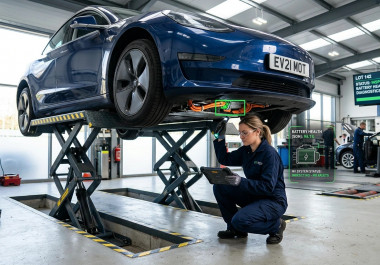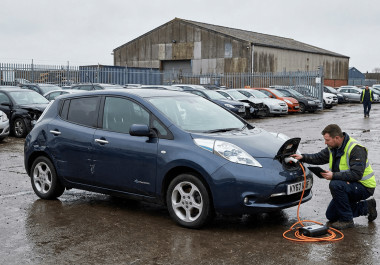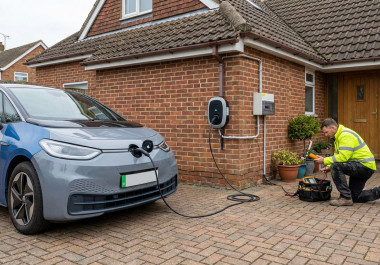
The automotive landscape across the United Kingdom has transformed dramatically in recent years, leading to a massive influx of electric vehicles hitting online salvage auctions. Trade buyers who previously built their businesses around diesel saloons and petrol hatchbacks are now seeing a steady, daily stream of Teslas, Nissan Leafs, and premium electric SUVs crossing the digital block. However, buying an electric vehicle at auction requires a completely different risk assessment than bidding on a conventional combustion engine vehicle.
You are no longer just evaluating panel damage, structural integrity, and engine condition. When assessing a damaged EV, you must carefully consider the state of the high-voltage battery and, crucially, the charging cables that may or may not be included with the vehicle. Trade buyers sometimes successfully win a Category N electric car for what appears to be an exceptional price, only to take delivery and realise the vehicle arrived with absolutely no charging cables or associated wall connectors. That perceived bargain suddenly requires a significant, unexpected capital investment just to make the vehicle operational for resale. Understanding exactly what charging equipment should be included, and budgeting for its absence, is absolutely vital for sustained profitability when dealing with any EV charging cable salvage car purchase.
Standard EV Factory Equipment Explained
To accurately calculate your potential repair costs, you must first understand what the manufacturer originally supplied with the vehicle. Most modern electric cars leave the factory equipped with at least one, and frequently two, distinct types of charging cables. The most basic unit is typically a standard three-pin plug cable, universally referred to within the industry as an emergency charging cable. While this unit charges the battery incredibly slowly, drawing limited amperage from a standard UK domestic socket, it acts as a crucial safety net for drivers caught without access to dedicated infrastructure.
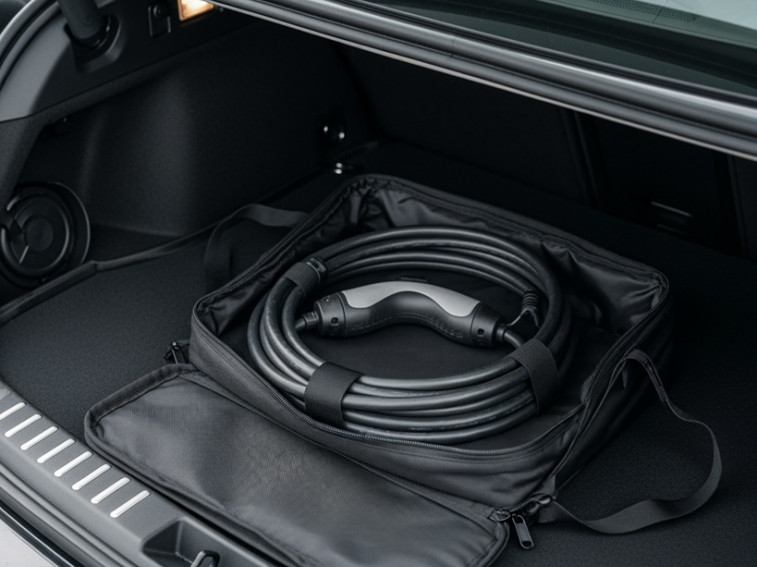
Alongside the emergency unit, the vast majority of manufacturers also supply a Mode 3 Type 2 cable. This is the heavier, thicker cable required to connect the vehicle to public AC charging posts and untethered domestic wall boxes. This specific Type 2 connector has become the universal standard across Europe and the UK, acting as the absolute workhorse for the average EV driver. Some early electric vehicles featured varying connection standards, but to achieve maximum resale value today, a repaired salvage EV must ideally be supplied to the retail customer with a complete, fully functional set of these essential charging components.
The Reality of Accessories in Salvage
When a vehicle is involved in a severe collision and is subsequently processed through the insurance and salvage ecosystem, the charging equipment does not always follow the physical car to the storage yard. There is often a significant logistical disconnect between the accident site, the recovery operator's initial holding yard, and the final facility. During this turbulent process, loose items stored in the boot are easily misplaced.
Furthermore, previous owners frequently remove and retain the cables intentionally. If an owner knows their vehicle is a total loss, they will often keep the valuable emergency charging cable and domestic leads to use with their next electric vehicle, completely unaware or unconcerned that the accessories should technically remain with the salvage unit. Additionally, if the vehicle suffered a front-end or side impact while actively plugged into a charging station, the cable itself was likely crushed or structurally compromised during the collision. Experienced buyers operate under the assumption that the chaotic nature of vehicle recovery generally results in missing or damaged loose accessories.
Analysing Listings for Missing Equipment
Because trade buyers rely entirely on digital platforms like RAW2K to source their inventory, mastering the art of photographic analysis is a mandatory skill. When you browse the digital listings, you must scrutinise the provided digital imagery specifically looking for evidence of charging equipment. You should carefully examine the photos of the boot space, the under-floor storage compartments, and the front trunk (frunk) if the vehicle features one. Manufacturer-supplied cables are almost always stored in distinctly branded, heavy-duty fabric zip bags. If you cannot spot these specific bags in the interior or boot photos, it is highly probable they are absent.
Equally important is a close visual inspection of the charging port condition on the exterior of the vehicle. If the images show that the exterior flap is missing, the plastic housing is cracked, or the internal metal contact pins are visibly bent from an impact, you must assume that any cable plugged in at the time of the accident was also destroyed. A compromised charging port condition acts as a clear visual warning that the electrical connection system requires professional repair and complete replacement of the associated cables.
The Financial Impact on Repair Budgets
Failing to budget for missing cables is a classic error that quickly destroys the profit margin of inexperienced trade buyers. Replacing these components is not cheap. A genuine manufacturer-branded emergency charging cable can cost several hundred pounds direct from the dealership parts counter. These units contain sophisticated safety relays and heat sensors, making them highly engineered pieces of equipment rather than simple extension leads.
The costs escalate further when replacing the primary daily charging lead. A high-quality Mode 3 Type 2 cable, particularly one rated for 22kW three-phase charging or manufactured to a longer length, represents another significant financial outlay. If you are dealing with premium brands that utilise proprietary wall connectors, the replacement costs increase exponentially. When a buyer fails to factor these missing essentials into their initial cost calculations, their meticulously planned repair budget is instantly compromised before the EV charging cable salvage car even arrives at their workshop.
OEM vs Aftermarket Charging Solutions
When an electric vehicle arrives completely devoid of its charging leads, buyers must decide whether to invest in expensive genuine OEM (Original Equipment Manufacturer) parts or explore the aftermarket. For standard Mode 3 replacements featuring a standard Type 2 connector, the aftermarket offers highly viable, cost-effective solutions, provided the buyer acts responsibly. There are numerous reputable, established third-party brands that manufacture exceptional quality cables that meet all stringent UK electrical safety regulations.
However, buyers must exercise extreme caution. The internet is flooded with remarkably cheap, unbranded charging cables imported from overseas that lack proper CE or UKCA safety certifications. Utilising these substandard cables presents a severe fire risk and can potentially cause catastrophic damage to the vehicle's onboard charging inverter. While aftermarket cables are perfectly acceptable for getting a vehicle back on the road, supplying a premium luxury EV with cheap, unbranded charging accessories can negatively impact consumer perception and ultimately lower the vehicle's final retail resale value.
Rapid Charging Infrastructure Clarified
It is important to clarify a common point of confusion for buyers new to the electric vehicle space regarding rapid charging. While missing AC cables represent a significant financial headache, buyers do not need to worry about sourcing or supplying DC rapid charging cables. When a driver uses a high-speed rapid charger at a motorway service station, the heavy, liquid-cooled cable is permanently tethered directly to the commercial charging unit itself.
The vehicle simply requires the correct built-in receiver port, typically the CCS (Combined Charging System) standard in the UK and Europe, or occasionally the CHAdeMO standard for older Japanese models. Therefore, when calculating your budget for a damaged EV, you only need to allocate funds for the loose, portable AC cables designed for domestic and destination charging, entirely removing the complex and expensive DC rapid charging infrastructure from your financial equation.
Regional Variations in Charging Priorities
The perceived value and strict necessity of home charging equipment can vary slightly depending on regional infrastructure and the end-buyer's demographic. In densely populated urban environments like Greater London, where a vast network of on-street public chargers exists, retail buyers often rely heavily on their standard Type 2 cables and may place less emphasis on three-pin emergency chargers. Conversely, for buyers in rural areas, possessing a complete, flexible charging setup that includes an emergency plug is absolutely critical due to the vast distances between public rapid chargers.
Regional logistics also play a massive role in maintaining your profit margins. Because RAW2K operates as an online auction platform, trade buyers win vehicles digitally but must still arrange physical collection. Therefore, factoring in the transport distance from various regional salvage auctions across the UK is essential. If a vehicle requires heavy investment in replacement charging cables, you must aggressively minimise your logistical transport costs by sourcing lots stored closer to your repair facility to ensure the overall project remains financially viable.
Safety Risks and Insurance Implications
The salvage industry involves inherent risks, and high-voltage electrical components amplify these risks significantly. Trade buyers must be acutely aware of the dangers associated with compromised charging equipment. If an electric vehicle was assigned a Category B status due to severe flood damage, every single electrical component, including the charging leads stored in the boot, must be considered highly dangerous and strictly designated for disposal. Water ingress completely compromises the sensitive safety relays housed within modern charging cables.
Furthermore, supplying a repaired salvage vehicle with damaged or uncertified aftermarket charging equipment carries serious insurance and liability implications. If a faulty cable causes a thermal event or electrical fire at a customer's home, the liability can easily trace back to the dealership or trade buyer who supplied the uncertified equipment. Utilising a transparent platform to browse damaged cars for sale helps mitigate some risk by providing visual data, but thoroughly checking the charging port condition and strictly utilising certified, safety-tested replacement cables is not just best practice; it is a fundamental requirement for professional, responsible vehicle repair.
Building a Strategic Bidding Buffer
The most successful trade buyers in the EV salvage sector employ a highly disciplined, systematic approach to their bidding strategy. To completely insulate themselves against unexpected costs, they operate under the strict assumption that every single electric vehicle they bid on is missing all its associated charging equipment, unless the provided photographs explicitly prove otherwise.
Before committing capital on write-off vehicle sales, these professionals incorporate a fixed financial buffer directly into their proprietary bidding spreadsheets, automatically deducting the cost of a replacement emergency charging cable and a standard Mode 3 lead from their maximum permitted bid. They also routinely check their baseline scrap car valuation to deeply understand the absolute worst-case scenario if the high-voltage battery proves irreparable. This calculated discipline guarantees they never overpay for incomplete inventory.
Final Thoughts
The transition to electric transport offers incredible opportunities for trade buyers, provided they adapt their traditional purchasing strategies. Treating an EV exactly like a conventional diesel vehicle is a guaranteed path to financial loss. The hidden costs of missing charging cables, damaged ports, and uncertified equipment can rapidly erode the profit margins of an otherwise excellent repair project. Success requires meticulous digital inspection, a deep understanding of standard factory equipment, and the absolute discipline to walk away from a bidding war when the numbers no longer make sense. If you require any assistance understanding platform features or managing your account limits, feel free to contact us directly, and our support team will gladly assist you.
To begin sourcing premium EVs for your repair business and tracking your next EV charging cable salvage car, complete your salvage auction registration today and join the digital marketplace driving the future of vehicle recovery.