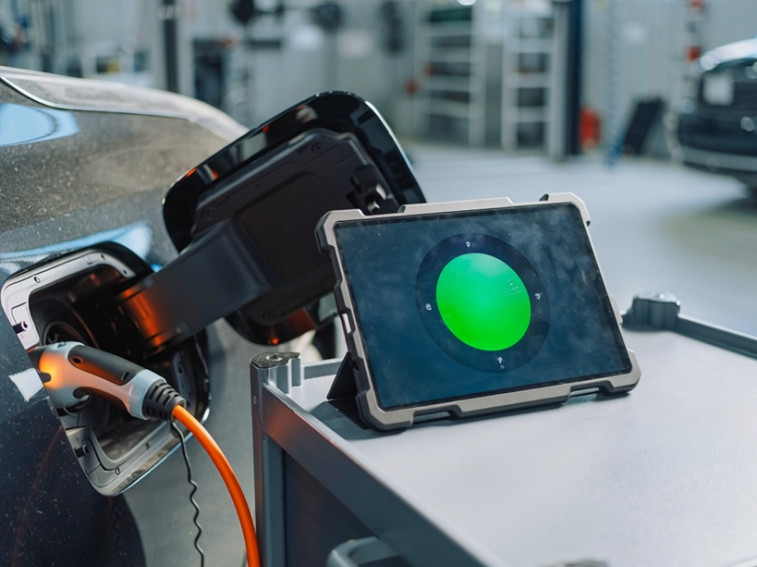
Electric vehicles have changed the game at auction. Not just because they're quiet or eco-friendly, but because they've introduced a whole new risk factor that most buyers don't fully understand: battery degradation.
Countless bidders jump on a salvage EV thinking they've bagged a bargain. Then they discover the battery pack needs replacing. That cost wipes out any profit margin. It's brutal.
Unlike a petrol engine where you can hear a misfire or spot a leak, a battery's health isn't always obvious. You can't just pop the bonnet and eyeball it.
That's why understanding battery health assessment in salvage electric vehicles is absolutely critical before you place a bid. Get it wrong, and you're looking at a £5,000-£15,000 replacement bill on top of whatever damage already put the car into salvage.
The stakes are higher with EVs. Much higher.
Why Battery Health Matters More Than You Think
When you're buying a salvage petrol car, you're mainly concerned with structural damage and mechanical issues. Will it pass an MOT? The engine might need work, but parts are relatively affordable and widely available.
With electric vehicles, the battery pack represents 30-40% of the vehicle's total value. On a Tesla Model 3 or Nissan Leaf, that's potentially £8,000-£12,000 just for the battery.
If the pack is degraded beyond 70% capacity, you're essentially buying an expensive paperweight.
A dealer once picked up a Cat N Renault Zoe for what seemed like a steal. Minor rear-end damage, cosmetic mostly. He didn't conduct proper battery health assessment.
Turned out the pack was down to 65% capacity after years of rapid charging. The car was worth half what he paid once he factored in replacement costs.
Here's the thing: salvage categories don't tell you about battery condition. A Cat S vehicle might have a perfectly healthy battery. Meanwhile, a Cat N with light damage could be hiding severe degradation.
You need to dig deeper.
Understanding Battery Degradation Basics
Electric vehicle batteries degrade over time and use. It's unavoidable.
Every charge cycle, every rapid charge session, every year that passes chips away at the pack's total capacity.
Most manufacturers warrant batteries to retain 70-80% capacity over eight years or 100,000 miles. Below that threshold, range drops significantly. The vehicle becomes less practical for everyday use.
Key degradation factors include:
-
Charge cycles - Every full charge and discharge counts
-
Fast charging frequency - Rapid chargers accelerate wear
-
Temperature exposure - Extreme heat or cold damages cells
-
Age - Even unused batteries degrade over time
-
Depth of discharge - Regularly draining to zero hurts longevity
When you're assessing a salvage EV at auction, you need to determine how much capacity remains. A five-year-old Leaf with 80% battery health is a viable project. The same car with 60% capacity is a money pit.
Modern EV batteries use lithium-ion cell degradation patterns that accelerate under certain conditions. Understanding these patterns helps predict remaining battery life. Browse electric vehicle auctions to see how battery condition affects pricing across different models.
What the Auction Listing Won't Tell You
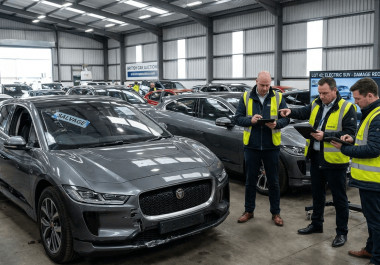
Standard auction listings for salvage vehicles focus on physical damage, mileage, and service history. They rarely include battery health reports or State of Health percentages.
You'll see photos of bodywork damage, interior condition, and maybe an engine bay shot. But battery diagnostics? Almost never included unless specifically stated.
This puts you at a disadvantage. You're bidding blind on the most expensive component.
That's why you need to request additional information before committing serious money.
If you're serious about a particular EV at salvage vehicle auctions, don't hesitate to ask for battery data. Some sellers provide it, some don't, but it never hurts to request additional information before committing.
Tools and Methods for Battery Assessment
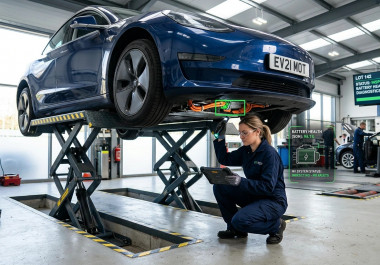
Professional battery diagnostics require specialist equipment. However, there are several approaches you can use depending on access to the vehicle.
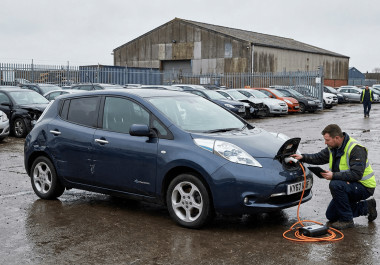
OBD-II diagnostic tools can pull battery data from most modern EVs. You'll need a compatible scanner and the right software for the specific make and model.
Tools like the Nissan Leaf Spy app or Tesla-specific OBD readers can show crucial information. They display State of Health, individual cell voltages, and charge cycle counts.
The readings you're looking for include:
-
State of Health (SOH) - Percentage of original capacity remaining
-
State of Charge (SOC) - Current charge level
-
Cell voltage variance - Difference between highest and lowest cells
-
Battery temperature - Should be consistent across modules
-
Charge cycle count - Total number of full charge cycles
If you can't physically access the vehicle before auction, you're relying on seller-provided data. That's common with online bidding. Otherwise, you're making an educated guess based on age, mileage, and usage patterns.
Using OBD-II diagnostic tools effectively requires understanding manufacturer-specific protocols. Different EV brands require different software interfaces. Some manufacturers restrict access to detailed battery data without authorised diagnostic equipment.
Interpreting State of Health Readings
State of Health readings tell you how much capacity the battery retains compared to when it was new. An SOH of 85% means the pack holds 85% of its original energy storage.
Here's how to interpret those numbers in practical terms:
-
90-100% SOH - Excellent condition, minimal degradation
-
80-90% SOH - Good condition, normal wear for age
-
70-80% SOH - Acceptable but declining, factor into price
-
Below 70% SOH - Significant degradation, replacement likely needed soon
But State of Health readings alone don't tell the whole story.
You also need to check cell balance. If individual cells within the pack vary by more than 0.1-0.2 volts, that indicates uneven degradation. It points to potential failure points.
Think of it like this: a battery pack is only as strong as its weakest cell. One failing cell can drag down the entire pack's performance and trigger safety shutoffs.
Professional battery health assessment combines State of Health readings with cell voltage analysis. Add thermal imaging and charge cycle history to build a complete picture. This shows battery condition and remaining lifespan.
Red Flags That Scream Battery Problems
Certain warning signs should immediately make you cautious about a salvage EV's battery condition. You'll spot these even before you run diagnostics.
Rapid charging history is a major concern. If the previous owner exclusively used rapid chargers, expect accelerated lithium-ion cell degradation. Fast charging generates heat and stress that shortens battery life.
Accident damage near the battery pack is another critical red flag. Even if the listing shows Cat N (non-structural), impact to the underside or rear could be problematic. The vehicle might have compromised the battery casing or individual cells.
A BMW i3 once came through with minor front-end damage. Cat N, looked straightforward.
But the impact had jarred the battery mounts and created micro-fractures in several cells. The car worked fine for two weeks. Then it threw battery errors and went into limp mode. Total write-off.
Warning lights and error codes related to the battery management system should be taken seriously. These aren't like a check engine light you can clear and ignore. Battery faults often indicate genuine problems that require expensive fixes.
Unusual mileage patterns can also hint at battery issues. A four-year-old EV with only 15,000 miles might seem like a bargain. However, low usage can actually harm battery health if the car sat unused for long periods.
Manufacturer-Specific Considerations
Different EV manufacturers use different battery technologies and management systems. What's acceptable degradation for a Nissan Leaf might be concerning for a Tesla.
Nissan Leaf batteries (especially older models) are notorious for degradation because they lack active thermal management. It's not uncommon to see 2015-2017 Leafs with 65-70% SOH. Factor this into your valuation.
Tesla vehicles generally hold battery health better due to sophisticated thermal management. An 80% SOH on a 2018 Model S is reasonable. Anything below 75% warrants investigation.
Renault Zoe batteries were often leased separately from the vehicle. This complicates salvage purchases. Make sure you understand whether you're buying the battery or just leasing it from Renault.
Hyundai and Kia EVs (Kona, e-Niro, Ioniq) have shown good battery longevity. However, some models had recall issues related to fire risk. Check if recall work was completed.
When browsing salvage vehicle auctions across different regions, pay attention to climate. EVs from hotter areas typically show faster degradation than those from cooler regions.
Understanding EV battery warranties specific to each manufacturer helps assess long-term value. Most manufacturers offer 8-year battery coverage. However, warranty transferability varies significantly between brands. Salvage status often voids these warranties entirely.
The Cost Reality of Battery Replacement
If you determine a salvage EV needs a new battery pack, you need to understand the financial implications before bidding.
Replacement costs vary wildly by manufacturer:
-
Nissan Leaf - £4,500-£6,500 for a new pack
-
Tesla Model 3/S - £10,000-£15,000 depending on capacity
-
BMW i3 - £7,000-£9,000
-
Renault Zoe - £6,000-£8,000
-
Hyundai Kona Electric - £8,000-£11,000
These are ballpark figures for genuine manufacturer replacements. Refurbished packs or third-party options might be cheaper but come with their own risks.
Labour costs for battery replacement add another £500-£1,500 depending on the vehicle. Some EVs make battery access relatively straightforward. Others require significant disassembly.
Do the maths before you bid. If you're looking at a salvage Tesla with 60% battery health, add £12,000 to your total project cost.
Can you still make money? Probably not unless you got the car for next to nothing.
Check current salvage car listings to understand realistic pricing for EVs with known battery issues. This helps calibrate your expectations before placing bids.
EV battery warranties typically cover capacity degradation below 70% for 8 years or 100,000 miles. However, salvage status frequently voids these warranties. That eliminates what would otherwise be valuable coverage for replacement costs.
When Battery Damage Isn't Obvious
Physical damage to the battery pack doesn't always show up in diagnostics immediately.
Impact damage, water ingress, or thermal events can create latent failures. These only appear weeks or months later.
Water damage is particularly insidious with EVs. If a salvage vehicle has flood history or water damage, the battery pack is at serious risk. This applies even if it appears to function normally. Moisture can corrode connections and create short circuits that manifest later.
Thermal events from accidents can damage cells without triggering immediate failures. If the vehicle was involved in a fire or severe impact, the battery may have experienced temperatures outside safe operating range.
Structural damage to the battery housing compromises safety systems. Even if the cells themselves are fine, a damaged casing means the pack won't protect occupants properly in a subsequent accident.
This is where buying salvage EVs gets genuinely risky. You might pass all your diagnostic checks and repair the visible damage. But you could still end up with a battery that fails three months down the line.
Making the Bid Decision
Armed with battery data (or reasonable estimates based on available information), you can make an informed bidding decision.
Calculate your maximum bid using this framework:
Market value of equivalent vehicle in good condition minus repair costs minus battery replacement or degradation adjustment minus your required profit margin equals maximum bid.
For example: A 2019 Nissan Leaf in good condition sells for £14,000. Your salvage example has Cat N damage requiring £2,000 in repairs. Battery SOH is 75% (meaning £3,000 depreciation for reduced range). You want £2,000 profit.
Maximum bid: £14,000 - £2,000 - £3,000 - £2,000 = £7,000.
Don't get emotionally attached to winning the auction. The numbers either work or they don't.
Too many buyers chase a bid beyond what makes financial sense. They've convinced themselves they need that particular car.
When browsing electric vehicles at auction, run the numbers cold and hard before bidding. Emotion is expensive.
Questions to Ask Before Bidding
If the auction platform allows pre-bid enquiries, these questions can save you thousands:
-
Has a battery health assessment been performed?
-
What is the current State of Health percentage?
-
How many charge cycles has the battery completed?
-
Was the vehicle involved in water damage or flooding?
-
Are there any battery-related warning lights or error codes?
-
Has the battery pack been inspected for physical damage?
-
Is the battery under manufacturer warranty?
-
What was the previous owner's typical charging pattern?
You won't always get answers. But asking demonstrates you're a serious buyer who understands the risks.
Some sellers will provide additional information to credible bidders.
The Future of Salvage EVs
As electric vehicles become more common, salvage EVs will increasingly appear at auction. Battery health assessment will become as routine as compression testing on petrol engines.
We're already seeing specialist EV salvage buyers who focus exclusively on electric vehicles. They've invested in diagnostic equipment and developed expertise in battery repair and refurbishment.
Third-party battery refurbishment services are emerging. They offer cell-level repairs that cost significantly less than full pack replacement. This changes the economics of salvage EVs considerably.
Within a few years, battery health reports will likely become standard in auction listings. They'll join HPI checks and MOT history as expected documentation. Until then, buyers who educate themselves have a competitive advantage.
Explore vehicle auction opportunities regularly to track how battery assessment practices evolve across different sellers.
Conclusion
Battery health assessment isn't optional when buying salvage electric vehicles. It's absolutely essential.
The battery represents such a significant portion of the vehicle's value that degradation can turn an apparent bargain into a financial disaster.
You can't rely on salvage categories alone. A Cat N vehicle might have a failing battery, whilst a Cat S could have a perfectly healthy pack.
You need specific battery data or at least enough information to make an educated estimate.
Use OBD-II diagnostic tools when possible. Understand what State of Health readings mean in practical terms. Always factor battery condition into your maximum bid calculation.
Watch for red flags like water damage, accident impact near the battery location, and unusual usage patterns.
The maths on salvage EVs is brutal if you get the battery health assessment wrong. Replacement costs can exceed £10,000 on premium models, completely erasing any profit margin.
But get it right, and you can find genuine value in salvage electric vehicles. Others overlook these opportunities because they don't understand battery diagnostics.
When exploring electric vehicles at auction, treat battery health as the single most important factor in your bid decision. Everything else - bodywork damage, interior condition, cosmetic issues - is secondary to whether that battery pack will deliver reliable service or need replacing within months.
RAW2K has been a leading figure in salvage vehicle auctions for over 20 years. Do your homework, ask the right questions, and don't bid beyond what the numbers support.
The salvage EV market rewards knowledge and punishes assumptions.
For specific guidance on EV listings or battery condition reports, get in touch with the support team. To begin exploring opportunities, register for auction access and start viewing available electric vehicles.