Most traditional buyers mistakenly believe that online liquidation platforms are exclusively reserved for standard passenger cars and light commercial vans. They are missing out on a massive, highly lucrative industrial sector. Heavy agricultural equipment and robust site machinery turn up at secure compounds consistently, often at prices that make standard retail main dealers weep. Understanding exactly how a farm equipment salvage auction operates can save trade buyers and independent farmers tens of thousands of pounds on tractors, quad bikes, and heavy implements.
Mechanically savvy farmers have frequently discovered heavy-duty quad bikes selling for a fraction of their retail value simply because they sustained minor cosmetic damage. A replacement plastic fairing secured from an aftermarket supplier instantly transforms the purchase into a highly valuable working asset. That is the exact kind of value available if you possess the mechanical knowledge to interpret the listings. Farm equipment arrives from multiple distinct sources: agricultural insurance claims, commercial lease returns, business liquidations, and rapid finance repossessions. Unlike modern unibody cars, agricultural machinery is fundamentally rugged; it frequently sustains damage that appears entirely catastrophic on paper but does not affect the core functionality of the engine or the heavy hydraulics. The fundamental key to success is understanding exactly what you are evaluating, why it was sent to the compound, and how to rigorously calculate your logistics.
Why Farm Equipment Ends Up at Salvage Auctions
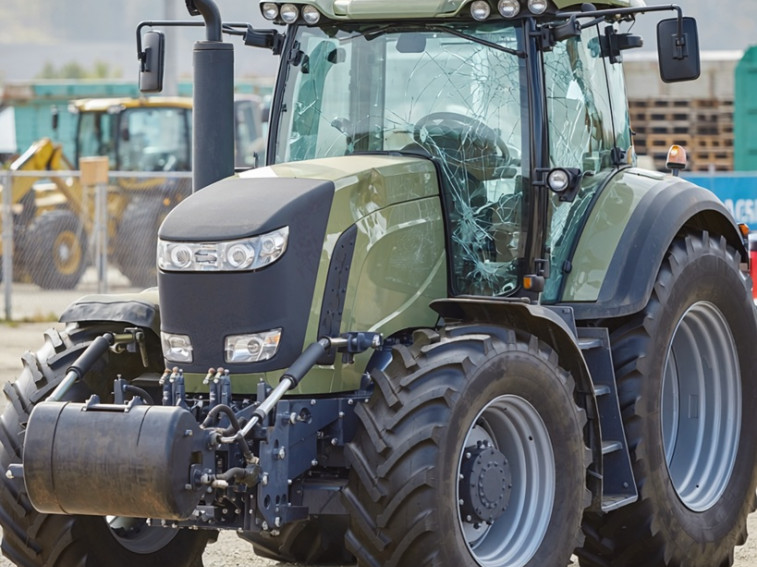
Agricultural machinery reaches digital auction houses through several highly specific commercial routes. Thoroughly understanding the original source helps you accurately gauge the potential mechanical risks. Insurance write-offs are incredibly common within the sector. A massive telehandler that has gently rolled onto its side on soft, uneven ground might sustain shattered cab glass and dented bodywork, but possess a perfectly sound diesel engine and flawless hydraulic rams. Commercial insurers frequently write off this equipment simply because genuine main-dealer replacement cabs and the associated specialist labour rates exceed the vehicle's mathematical book value.
Lease returns and fleet disposals introduce significantly newer equipment to the market. Major agricultural contractors and massive country estates regularly upgrade their entire machinery fleets on rigid three-year operational cycles. Their decommissioned stock flows directly through liquidation channels. This specific type of farm machinery salvage is highly desirable because these machines, despite frequently displaying high operating hours, possess meticulous, legally mandated maintenance records. Conversely, business liquidations can be brutal for the original seller but brilliant for the educated buyer. When a massive farming cooperative or landscaping business enters administration, everything is liquidated rapidly to satisfy creditors. Finally, ex-council and municipal utility vehicles—such as ride-on mowers from public golf courses or maintenance tractors from local authorities are routinely sold off in large batches when they age out of the municipal ledger.
What Farm Equipment Actually Appears at Auction
The sheer diversity of available agricultural stock frequently surprises first-time digital buyers. The inventory covers everything from agile compact tractors to heavy-duty site generators and massive tipping trailers. Tractors undeniably dominate the heavy listings. Compact models ranging from 20 to 40 horsepower perfectly suit independent smallholders and commercial landscapers. Mid-range machines handle the vast majority of general farm haulage, while massive 100+ horsepower units occasionally appear following severe commercial liquidations. Premium brands including John Deere, Massey Ferguson, New Holland, and Case IH are consistently represented.
Quads and ATVs turn up at secure compounds constantly. Farmers utilize these incredibly versatile machines for everything from checking remote livestock fencing to towing heavy feed trailers. The associated damage is predominantly cosmetic they get rolled on steep slopes, scraped against stone walls, or simply suffer heavy weathering from permanent outdoor storage. Telehandlers and heavy forklift equipment also appear regularly. These essential machines handle everything from stacking heavy hay bales to moving palletised construction materials. Damage frequently results from overloading incidents that stress the main boom. Furthermore, agricultural implements and trailing attachments get massively overlooked but offer serious financial value. Heavy ploughs, harrows, tipping trailers, and PTO-driven mowers frequently sell for mere pennies on the pound compared to retail prices, simply because they lack an engine and are difficult to transport.
Understanding Salvage Categories for Agricultural Equipment
The vast majority of standard automotive buyers understand the standard UK insurance write-off categories, but agricultural equipment occasionally operates in a grey area. When farm machinery is formally categorised, Category N (Non-Structural) damage signifies that the core chassis and structural integrity remain completely uncompromised. For a heavy tractor, this typically involves a shattered safety cab, heavily dented engine cowlings, or severed electrical wiring looms. The vital mechanical systems the engine block, the transmission housing, and the hydraulic pumps—remain entirely sound.
Category S (Structural) explicitly indicates severe damage to the load-bearing frame. On agricultural equipment, this could mean a visibly bent tractor chassis, a severely cracked telehandler boom, or a twisted heavy-duty trailer frame. Structural repairs on this massive scale require highly specialist commercial welding and engineering certification. Furthermore, buyers must understand Category B restrictions. Category B indicates severe structural destruction; the vehicle can never return to use and is strictly reserved for licensed Authorised Treatment Facilities (ATFs) to break down for parts. Crucially, unrecorded damage is incredibly common with farm equipment. Because many agricultural machines are strictly utilized entirely on private land and are never formally road-registered, they do not appear on standard insurance databases, meaning you must rely entirely on your own rigorous digital assessment.
How to Assess Agricultural Equipment Before Bidding
Because modern secure online compounds prohibit physical yard access for vital health and safety reasons, you cannot simply walk in with a spanner and inspect the machinery. Your ability to execute a flawless digital inspection is your most valuable asset. The provided high-resolution photographs act as your absolute primary mechanical report. Count them meticulously. If a complex machine features only three generic photos, you must assume the seller is hiding severe undercarriage damage. Zoom in specifically on the hydraulic rams, the engine block, and the heavy tyres.
Hour meters are absolutely critical. Agricultural machinery wears out based on brutal operational usage, not simply chronological age. A tractor displaying 2,000 hours is barely run-in, whereas a machine showing 12,000 hours requires an immediate, massive mechanical contingency budget. Fluid leaks are frequently visible in high-resolution digital imagery if you know exactly what to look for. Dark, heavy staining under the main engine block indicates severe oil leaks. Bright red fluid pooling near the lifting arms suggests blown hydraulic seals. Tyre condition also drastically affects your true acquisition value. Massive agricultural tyres frequently cost thousands of pounds to replace; if the photos show severe sidewall cracking or entirely bald treads, you must instantly deduct that replacement cost from your maximum proxy bid.
Common Issues with Salvage Farm Equipment
Every single type of heavy agricultural machinery possesses highly predictable failure points. Knowing exactly what fails helps you spot hidden problems in digital listings and accurately estimate your required repair margins. Tractors universally suffer from severe hydraulic pump failures, heavy dual-mass clutch wear, and complex electrical gremlins caused by damp outdoor storage. Replacing a burnt-out clutch on a mid-sized tractor is a massive job requiring splitting the tractor in half, easily costing upwards of £1,500 in parts and specialist labour.
Telehandlers notoriously suffer from micro-cracks in the main lifting boom, which require highly specialized, certified professional welding to repair safely. Their massive hydraulic pumps also fail frequently from contaminated fluid or severe overloading. Utility side-by-side vehicles frequently present with entirely burnt-out automatic CVT transmissions caused by unsympathetic operators towing trailers far exceeding the manufacturer's rated capacity. Implements and trailing attachments suffer heavily from basic neglect; PTO shafts seize entirely from rust if not greased regularly, and massive bearings fail catastrophically on heavy rotary mowers.
Bidding Strategy for Agricultural Equipment
Bidding on heavy commercial equipment demands an entirely different mathematical approach compared to purchasing standard passenger vehicles. The market is significantly smaller, highly specialized, and values fluctuate wildly based on seasonal farming demands. You must meticulously research current tractor salvage values and retail baselines using dedicated agricultural dealer websites before you even consider placing a bid. This exact strategy is utilized by professionals navigating standard car auctions uk to establish firm, unyielding price ceilings.
Set your absolute maximum bid and stick to it ruthlessly. You must accurately factor in the heavy replacement parts, your own workshop time, and the massive cost of specialist low-loader transport. Submit your maximum figure into the automated proxy system and walk away. This clinical strategy completely prevents the emotional "auction fever" that causes unprepared buyers to overpay during the frantic final seconds of a timed sale.
Legal and Registration Considerations
Agricultural equipment occupies a highly complex legal space regarding road registration. Farm equipment registration is not universally required. Tractors and heavy agricultural vehicles utilized solely on private land do not legally require standard road registration, vehicle tax, or MOT certification. However, if your operational intention involves driving that specific machine on public UK highways even for a short distance to move between two separate fields—you must possess proper road registration, full lighting kits, and valid insurance.
If you are sourcing road-legal equipment, you must verify the presence of the V5C logbook in the listing description, much like you would when purchasing standard salvage cars. If it is missing, you must apply for a replacement via the DVLA. Understanding UK Agricultural Vehicle tax classes is also highly critical. Vehicles utilized strictly for agriculture, horticulture, or forestry frequently qualify for vital vehicle tax exemptions. However, if you acquire a heavy tractor at auction and subsequently utilize it for non-agricultural commercial construction haulage, you instantly invalidate that specific exemption. You must accurately classify the machine with the DVLA, particularly if you rely on strict 'limited use' exemptions for short journeys on public UK roads.
Who Should Buy Agricultural Equipment at Auction
While the financial discounts are massive, these specific auctions are not suitable for every buyer. Working farmers and independent smallholders extract the absolute best value because they already possess the heavy workshop facilities, the heavy lifting gear, and the deep mechanical skills required to repair complex machinery. If you can execute your own heavy servicing, salvage equipment makes incredible economic sense. If an asset turns out to be entirely beyond repair, highly capable buyers frequently utilize scrap my car or heavy metal recycling services to recoup the baseline commodity value of the raw steel and cast iron.
Agricultural contractors frequently utilize these platforms to build extensive, highly profitable machinery hire fleets. A telehandler purchased at auction, fully serviced, and certified can generate massive weekly revenue on busy construction sites. Independent machinery dealers and dedicated commercial flippers also profit immensely by leveraging their deep mechanical knowledge to spot easy repairs that terrified casual buyers, subsequently returning the pristine machine to the standard retail market for a substantial margin.
Where to Find Agricultural Equipment Auctions
The massive expansion of secure online liquidation platforms has completely transformed access to heavy farm machinery salvage. You are no longer restricted to attending local farm dispersal sales in the freezing rain. By utilizing digital platforms like RAW2K, buyers gain immediate, nationwide access to a massive daily influx of commercial and agricultural stock from the comfort of their site offices.
Secure digital platforms have largely replaced the traditional model of kicking the tyres in a muddy yard. Professional buyers utilize advanced filtering systems on salvage vehicle auctions to completely isolate heavy plant and agricultural listings from standard automotive stock. Because business liquidations and commercial fleet clearances happen continuously throughout the financial year, the available heavy inventory rotates rapidly, requiring buyers to check their specific saved search parameters daily to spot the best commercial opportunities.
Final Checks Before You Buy
Before committing your commercial working capital to a heavy proxy bid, you must run through a clinical logistical checklist. Transport logistics represent the single highest variable cost in this sector. You cannot simply tow a broken 8-tonne tractor home with a standard 4x4. You must secure advance quotes from specialist commercial hauliers utilizing heavy low-loader trailers, exactly as you would when arranging collection from a standard vehicle auction, but scaled up for massive industrial weight.
You must also verify the exact compound collection deadlines. Heavy machinery compounds charge exceptionally high daily storage fees if you fail to extract the asset within the designated 48 to 72-hour window. Finally, if the agricultural vehicle is formally road-registered, conducting an independent HPI check remains absolutely mandatory to ensure you are not accidentally acquiring a machine burdened with outstanding third-party commercial finance.
Conclusion
A digital farm equipment salvage auction offers unparalleled, genuine financial value for buyers who execute ruthless due diligence. The savings compared to main-dealer retail prices can easily exceed fifty percent on machines that require only minor hydraulic repairs or straightforward cosmetic panel replacements.
The fundamental key to unlocking this massive industrial value is knowing exactly what you are looking at digitally. You must accurately understand the operational difference between a superficial dented cab and a fatally cracked lifting boom. You must calculate heavy haulage costs meticulously, and you must maintain strict mathematical discipline when setting your proxy limits. Whether you are sourcing a heavy tractor or monitoring a motorcycle auction specifically for rugged agricultural quad bikes, preparation is everything.
If you require any specific assistance understanding commercial lot descriptions, navigating complex VAT rules on commercial machinery, or arranging compound collection, please get in touch with our friendly team for professional guidance. To begin actively sourcing premium agricultural machinery for your farm or business, create your professional profile and register to bid today.