Bidders have lost out on desired vehicles countless times, not because they were outbid by a competitor, but because their internet connection dropped at the absolute worst possible moment. A buyer might be winning a commercial Transit van with twenty seconds left on the clock, only for their home Wi-Fi to momentarily hiccup. By the time the web page refreshes and the connection returns, the hammer has fallen, and someone else has secured the vehicle.
Online vehicle auctions are not like passively browsing social media or streaming a film where buffering is a minor inconvenience. Every single millisecond counts in those closing moments. A two-second latency spike can mean the definitive difference between securing a vehicle and watching it slip away to another bidder. Ensuring the connection does not fail when it matters most is the foundational element of successful internet connection auction bidding. Before you analyze market values or set your proxy limits, you should master the technology connecting you to the auction floor.
Why Your Connection Matters More Than You Think
Online vehicle auctions operate on highly complex real-time bidding systems. When those final seconds tick down on a popular lot, the platform's central servers are receiving thousands of data requests per second from users all over the country. The platform needs to register your specific bid instantly, timestamp it, and update the live price for all other users to see.
If there is even a slight delay in your data packet reaching the server, another bidder with a faster connection can jump ahead of you in the queue. People often erroneously blame the auction platform when they lose connection or their final bid isn't accepted, but in many cases, it is their own local internet setup that caused the failure. Your connection needs to be highly reliable, fast, and remarkably consistent. The sheer financial impact of missing a lot due to local lag far outweighs the minimal effort required to ensure a stable, dedicated digital connection.
The Wi-Fi Trap Most Bidders Fall Into
Wi-Fi is undeniably convenient. Browsing through hundreds of salvage vehicles in comfort from your living room sofa is highly appealing. However, domestic Wi-Fi signals can be temperamental and vulnerable to localized interference. They are affected by physical obstructions like thick brick walls, the distance from the primary router, and other smart devices utilizing the available network bandwidth.
Common Wi-Fi problems include sudden micro-signal drops, invisible bandwidth throttling by your Internet Service Provider, and peak-time neighborhood congestion. If your family is streaming high-definition video in the next room or your smart home devices are running background updates, your Wi-Fi router is constantly prioritizing and splitting that traffic. These routing issues are often unnoticed during casual web browsing but become apparent during the critical final seconds of an auction. Connection drops are a significant hurdle for any active bidder.
When Wi-Fi Actually Works Fine
Wi-Fi isn't always the villain in this scenario. If you are utilizing a modern router and sitting in the same room with minimal physical interference, it can be perfectly adequate. Furthermore, for the casual browsing and extended research phases, such as checking out the damage descriptions on dozens of vehicles, comparing VINs, or reading through MOT histories, Wi-Fi does the job well.
During the prolonged research phase, you rely on Wi-Fi to load high-resolution image galleries and review complex salvage listings without worrying about burning through cellular data allowances. In these passive phases, latency does not matter. If an image takes an extra half-second to load, no auction is lost. It is only when you transition from the passive research phase into the highly active final bidding phase that you must rethink your connectivity strategy.
The Mobile Data Advantage
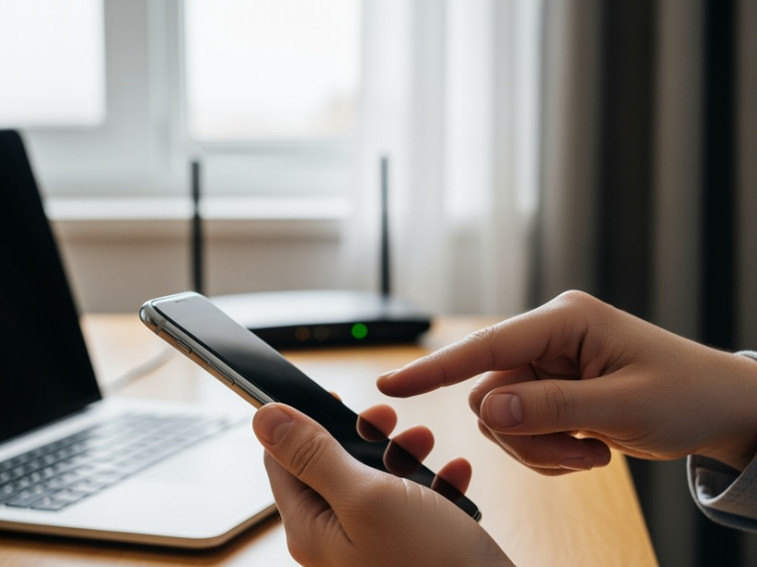
The fundamental mobile data advantage lies in its direct, unshared architecture. When you bid via a 4G or 5G cellular network, there is no local sharing of bandwidth with a busy household. Your smartphone or tethered tablet connects straight to the nearest mobile network mast.
Mobile data offers a dedicated connection, eliminating any interference from interior walls, microwaves, or competing household devices. Furthermore, cellular networks are designed to handle massive, simultaneous connections with incredible consistency, even during peak evening times when domestic broadband often slows down. The actual data usage for placing text-based bids on auction platforms is minimal, meaning you aren't risking massive phone bills. This direct digital link removes several uncontrollable variables that frequently cause failures during critical bidding moments.
Understanding Ping vs. Download Speed
To refine your bidding setup, you must understand the difference between download speed and latency, which is commonly referred to as ping. Most home broadband packages are sold based on large download speeds, like 500Mbps fiber connections. However, high download speed only dictates how much data you can pull down at once, which is great for downloading large files but largely irrelevant for bidding.
Ping measures the reaction time of your connection, specifically how fast a tiny packet of data travels from your device to the auction server and back again. A home Wi-Fi network might have an incredible 500Mbps download speed but suffer from a terrible 80ms ping due to routing issues. Conversely, a strong 4G mobile signal might only offer a 30Mbps download speed, but it could deliver a fast, stable 20ms ping. In the world of live auctions, the lower ping generally secures the final bid. Reliability and response time heavily trump raw bandwidth.
The Architecture of Auction Servers
To visualize why this matters, you have to look at how auction servers process information. When an auction enters its final ten seconds, the server switches to an aggressive queueing system. If three different buyers all click the bid button at precisely the same visual second on their screens, the server awards the bid to whoever's data packet physically arrives at the data center first.
If your Wi-Fi router takes an extra 40 milliseconds to process your click, encrypt it, send it to your modem, and push it out to your internet provider, you may lose to a buyer sitting on a direct cellular connection. Server synchronization relies heavily on the stability of the client's connection. A micro-latency dropout, a gap in connection lasting less than half a second, can cause your digital handshake with the server to fail, resulting in an unplaced bid.
The Hybrid Strategy That Actually Works
Many successful professional buyers do not rely exclusively on one network; they utilize a smart hybrid strategy. A recommended approach is to utilize your Wi-Fi network for the hours of deep research and background checks, and then physically switch to mobile data for the execution of the actual bidding.
When a desired auction hits the final three-minute warning, actively disconnect your device from the Wi-Fi network. Force your phone or tablet to rely entirely on its cellular data connection. By doing this before the critical final minute, you ensure the transition is complete and the connection is perfectly stable before you need to strike. Better yet, use a dedicated secondary smartphone as your exclusive bidding device, leaving your primary computer connected to Wi-Fi for monitoring the broader market. This strategy ensures you are never caught off guard.
What About 4G vs 5G?
A common misconception is that you need the latest 5G technology to bid successfully. In reality, in an area with decent, stable 4G coverage, online bidding is perfectly fine. The actual bandwidth requirements for transmitting a bid command are microscopic, often just kilobytes of data.
Consistent signal strength is much more important than the generation of the network. A stable three bars of 4G coverage will typically beat a fluctuating one bar of 5G coverage that keeps dropping back down. Before the bidding starts, strictly check your signal bars. If your signal is fluctuating or jumping between network bands, physically move your location immediately.
The Impact of Device Processing Power
Your internet connection is only half of the technical equation. The device you are using to place the bid can also bottleneck your success. Many buyers mistakenly blame their network connection when, in reality, their old laptop or smartphone simply lagged while trying to execute the background code required to place the bid.
If you are using an older device to browse car auctions online, and you currently have numerous internet tabs open while a video plays in the background, your device's memory and processor are severely strained. When you click to bid, the overloaded browser may freeze for a second before it even attempts to send the signal to your router. You should treat your bidding device like a professional tool: close unnecessary applications, clear your browser cache, and ensure the device has the processing power required to react instantly when you tap the screen.
Practical Testing: What Has Been Learned
Practical observations from real-world auction environments frequently show the superiority of dedicated connections. Professional traders operating out of large industrial units often find that their office Wi-Fi, which is shared with staff and security cameras, slows down during peak afternoon auction closures.
In scenarios where high-traffic motorcycle auction lots are closing simultaneously, traders who switch to a dedicated cellular connection often report smoother experiences landing last-second bids. If you are specifically hunting for inventory where the bidding is fierce, relying on a shared network introduces unnecessary risk. An isolated connection helps remove external interference.
The Technical Stuff (Without Getting Boring)
To put it simply, Wi-Fi introduces several wireless hops into your data's journey. When you bid via Wi-Fi, your data packet goes from your phone, through the air to your router, through a wire to your modem, out to your street cabinet, and finally to your internet provider. Every single hop is a potential point of failure, congestion, or delay.
Mobile data effectively cuts out the local middleman. Your data goes straight from your device's antenna to the local cellular mast, which is usually directly connected to large fiber-optic backbones. This reduction in physical and wireless hops is what creates the lower latency. When you are bidding on active uk van auctions to expand your business fleet, those saved milliseconds maximize the chance that your bid reaches the central server in time.
What About Ethernet Cables?
If you are bidding on a desktop computer or a laptop with the appropriate ports, a hardwired ethernet connection remains the gold standard of internet connectivity. It is fundamentally faster, highly stable, and immune to the wireless interference that affects both Wi-Fi and cellular data.
For mechanics operating from a fixed office environment, running a physical ethernet cable directly from the router to the bidding computer is highly recommended. If you are consistently investing large sums of capital into high-value lots, the minor inconvenience of a physical cable is outweighed by the enhanced stability it provides. Wireless connections offer convenience, but wires offer the highest level of reliability.
What to Do If Your Connection Drops Mid-Bid
Even with excellent preparation, unexpected dropouts can occur. The worst thing you can do when your screen freezes mid-bid is panic. Frantically refreshing the page ten times will only confuse your browser and further delay your reconnection.
If you are on Wi-Fi and the page hangs, instantly disable Wi-Fi on your device to force it onto mobile data. Many auction platforms are designed to briefly hold your session token, meaning if you switch networks within a few seconds, you will not have to log back in. If you are assessing whether to repair or scrap your car and the connection dies in the final 30 seconds, having a secondary device already loaded on a different network is an excellent insurance policy. You simply drop the frozen device, pick up the backup, and execute the bid.
The Pre-Auction Connection Checklist
Professional buyers rarely leave their connection to chance. Exactly five minutes before your targeted auction is scheduled to end, it helps to run through a strict connection checklist to optimize performance.
First, verify your exact signal strength on your chosen network. Second, close unnecessary applications running in the background of your device to free up processing memory. Third, ensure your backup device is unlocked, charged, and logged into your account. Finally, physically position yourself in the location you know provides the best possible network response. By making this checklist a standard part of your internet connection auction bidding routine, you reduce technical variables and are better prepared to act. Taking these steps is standard practice for users operating on established platforms like RAW2K, where the auction environment is fast-paced.
Location Matters More Than You Think
Your physical positioning within a building drastically affects your signal integrity. Sitting in a basement office or a metal-clad warehouse while trying to execute a mobile bid can lead to connection issues. Metal structures act as cages that severely degrade cellular signals.
Find a specific spot in your home or workplace that offers proven, reliable reception, often near a window or on an upper floor. If you are commuting on a train, be aware of your surroundings; avoid a final-second bid if you are about to enter a tunnel or pass through a known rural dead zone. Your digital connectivity is heavily dictated by your physical environment.
The Cost Question: Is Mobile Data Worth It?
Some casual buyers hesitate to use their cellular data for bidding, worrying about exceeding their monthly usage caps or incurring extra charges. This concern is usually misplaced. The amount of data consumed by clicking a bid button and receiving text-based price updates is completely negligible.
You must compare the minor cost of cellular data to the financial implications of a missed opportunity. Missing out on repairable salvage cars that align with your budget is significantly more costly than a few megabytes of mobile data. Investing in a robust data plan with a reliable network provider is a sensible choice for any serious automotive trader.
The Psychological Edge of a Solid Connection
Beyond the technical advantages, a reliable internet connection provides a psychological edge. Complete confidence in your technology matters. Knowing your connection is secure allows you to bid decisively and aggressively when required.
Hesitation caused by the underlying worry that your Wi-Fi might drop out can cause you to place bids too early, driving up the price prematurely, or too late, missing the lot entirely. When you trust your technical setup, you bid with authority. This psychological advantage prevents panic bidding, eliminates frustrating technical anxiety, and helps you execute your pre-planned financial strategy.
Final Thoughts: Don't Let Technology Beat You
Hours of meticulous vehicle research, budget planning, and mechanical assessments are rendered completely useless if your internet connection fails at the finish line. Unlike the actions of competing bidders, your connection is a factor largely within your control.
Refining your internet connection auction bidding strategy gives you greater control over your purchasing power. For serious bidding, isolating your network via mobile data or hardwiring via ethernet are the most secure choices. Always have a backup plan, keep your devices optimized, and avoid trusting a shared Wi-Fi network in the final thirty seconds. If you are ready to put these technical strategies into practice, complete your auction registration today to access nationwide inventory. Should you ever experience technical difficulties or have questions about the platform, please feel free to contact us for immediate assistance.