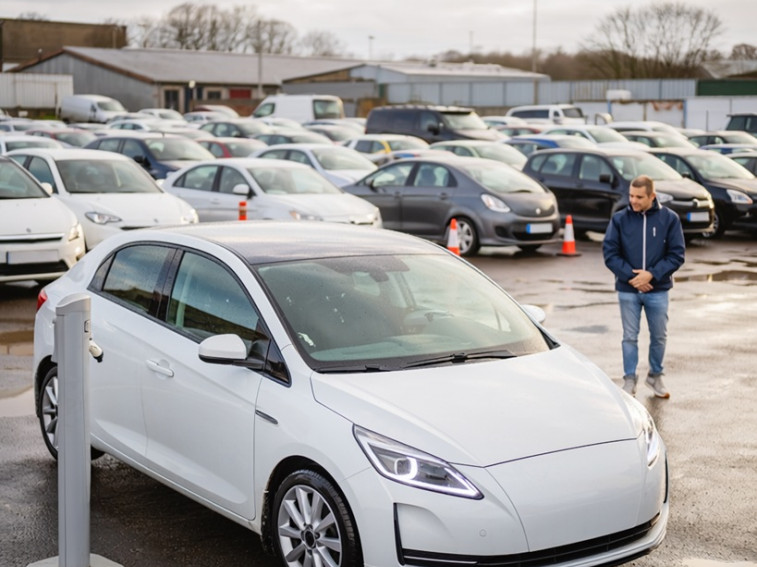
One does not need a crystal ball to see the significant changes approaching the UK automotive market. The fuel supply crunch expected in 2026 is not a distant hypothetical scenario, as it is already reshaping the used vehicle market today. Professional observations of auction floors over the last fifteen years suggest that when buyers anticipate a major shift, they move with remarkable speed.
Currently, secondhand electric vehicles are selling at speeds not previously seen in the industry. This is not solely due to environmental concerns, but rather because professional buyers and consumers alike are reading the clear signals regarding future energy availability. Fuel prices are climbing, supply chains remain fragile, and the 2026 fuel shortage looms as a potential tipping point for petroleum availability across the UK.
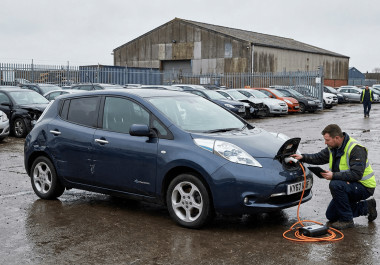
The strategic capital is already shifting. Trade buyers who were hesitant to touch an electric vehicle (EV) two years ago are now actively acquiring salvage Nissan Leaf units and low-mileage Renault Zoe models. Private buyers who have never previously considered electric power are suddenly exploring online auctions for electric delivery vehicles. This shift is substantiated by data and is accelerating as the 2026 deadline approaches.
Understanding the Factors Behind the 2026 Supply Crunch
It is essential to examine the facts behind the predicted fuel disruptions. The 2026 fuel shortage stems from several converging factors that provide little reassurance for those relying on petrol or diesel. Firstly, refinery capacity across Europe has been steadily declining. The UK has lost multiple refineries over the past decade, and those remaining are ageing. When refineries close, they rarely reopen, as the infrastructure investment required is massive. Consequently, the UK is producing less fuel domestically than at any point in recent history.
Secondly, global crude oil supply remains exceptionally volatile. Production cuts from major oil-exporting nations, geopolitical tensions, and general underinvestment in new extraction all contribute to tighter supplies. When supply tightens, prices rise as a matter of basic economics, and this impact is felt directly at the forecourt.
Thirdly, the transition away from fossil fuels has created a strange paradox. Oil companies are reducing investment in new long-term infrastructure because they recognise the eventual phase-out of combustion engines. However, the UK is not yet at the point where electric vehicles dominate the road. This gap, where old infrastructure crumbles faster than new alternatives can scale, is where the year 2026 becomes problematic. Experts predict significant fuel price spikes and potential supply disruptions by the middle of that year, with some forecasts suggesting petrol could hit £2.50 per litre. For any business fleet or long-distance commuter, such costs are simply unsustainable.
Strategic Advantages of Early Electrification
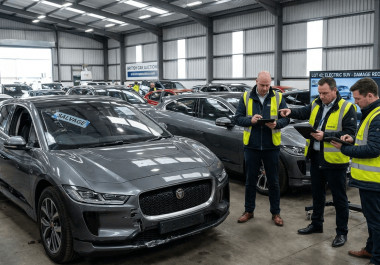
I once watched a dealer pay £8,500 for a Category N Tesla Model 3 at auction. Six months earlier, he would not have considered the vehicle. When questioned, his logic was clear: he could see the coming supply crunch and knew that waiting would only increase his eventual costs. This current surge in secondhand EV demand is not a result of panic, but rather strategic positioning.
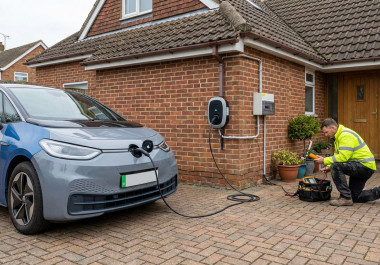
Buyers are making calculated moves based on several clear advantages. Electricity prices fluctuate, but they do not match the extreme volatility of petroleum. When fuel hits £2.50 per litre, charging an EV overnight on an off-peak tariff becomes an exceptionally cheap alternative. This cost certainty is invaluable to businesses and families alike. Furthermore, even at current prices, running an EV costs roughly a third of an equivalent petrol car. As the 2026 fuel shortage approaches, this gap will only widen.
There is also the matter of beating the rush. The market for write-off cars that are electric is already tightening. Prices for quality electric vehicles have stabilised after years of depreciation, and in some cases, they are beginning to rise. Waiting until the shortage is in full effect means competing with desperate buyers in a seller's market. Smart buyers are picking up Category N cars at significant discounts, repairing them economically, and either using them or reselling them for a profit before the market peaks.
Auction Reality and Model Trends
Bidding behaviour around electric vehicles has seen a stark shift. A few years ago, an electric vehicle might sit through multiple auction cycles before finding a buyer. Today, quality EVs attract competitive bidding within hours of being listed. This demand spans both professional and private categories. Trade buyers target higher-mileage vehicles or salvage stock they can repair, while private buyers and small businesses focus on lower-mileage, unrecorded vehicles.
There is particularly strong interest in affordable and reliable models such as the Nissan Leaf. These units provide enough range for most daily use and frequently disappear fast at auction, often exceeding their reserve prices. Similarly, the Renault Zoe is popular with urban buyers and small businesses due to its compact size and practical range for city work.
Even premium models like the Tesla Model 3 and Model S command strong prices, even in salvage condition. The brand cachet and performance attract buyers willing to invest in professional repairs. Furthermore, commercial buyers are increasingly recognising the economics of electric delivery vehicles such as the Nissan e-NV200 or Renault Kangoo Z.E. With the 2026 fuel shortage looming, these commercial units are becoming highly sought after on the auction floor.
Technical Considerations for Auction Buyers
Purchasing an electric vehicle at auction requires a different approach than buying a petrol car. The risks are specific, and inspection priorities must shift to what truly matters for long-term performance. Primarily, EV battery health is the most critical factor. The battery pack represents roughly 40% of the vehicle's total value. A vehicle with a degraded battery can become a significant expense, regardless of the condition of the bodywork.
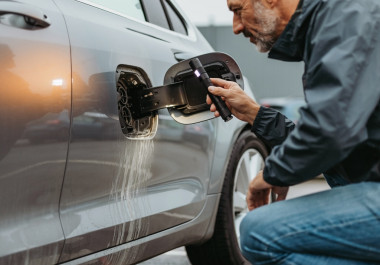
Professional buyers look for a battery state of health (SoH) above 85%. Anything below 80% suggests a reduced range and potential replacement costs in the future. Furthermore, charging capability is an essential consideration. Older models may use CHAdeMO fast charging, while modern infrastructure is increasingly focused on CCS charging points. In current electric vehicle auctions, understanding which standards the vehicle supports is vital for practical usability.
When evaluating salvage stock, categories require extra scrutiny. A Category N vehicle with cosmetic damage can be an exceptional bargain, but a Category S with structural damage near the battery pack requires professional assessment. Water damage is particularly problematic for EVs; if the battery pack has been compromised, repair costs can quickly exceed the vehicle's value. Detailed research into the specific make and model is always recommended to understand degradation rates and parts availability.
Commercial Fleet Transition and Regional Variations
The 2026 fuel shortage is not just a consumer problem; it is a business crisis in the making. Fleet managers running diesel delivery vans are looking at a potential cost explosion. A delivery van covering 30,000 miles annually currently costs roughly £6,000 in diesel. If prices spike to £2.50 per litre, that figure jumps to over £10,000. For a ten-vehicle fleet, that represents an extra £40,000 in annual operating costs.
Electric delivery vehicles effectively eliminate this exposure. Charging costs for equivalent mileage remain substantially lower, even when accounting for potential electricity price increases. This is why commercial buyers are currently dominating the bidding on electric vans. By acquiring a Category N van and performing cosmetic repairs, a business can end up with a functional electric fleet for a fraction of the retail price, perfectly positioned for the coming fuel crunch.
This demand is also seeing regional hotspots. London and the South East lead the way due to Ultra Low Emission Zone (ULEZ) requirements, but Scotland is showing strong growth thanks to government support and an expanding charging network. Buyers in the North West and Wales are also recognising that waiting for perfect infrastructure means missing out on affordable secondhand stock. Identifying salvage auction locations across the UK allows buyers to source stock from areas where competition might be slightly less intense.
The Long-Term Outlook
The 2026 fuel shortage is a catalyst for a transition that is already inevitable. Even if supplies eventually stabilise, the trajectory for internal combustion engines is clear. The UK government's commitment to phasing out new petrol and diesel sales by 2030 means the secondhand market will continue to shift.
Buying now, while auction prices remain competitive and stock is available, positions a buyer ahead of the curve. Whether for resale or professional use, the time to move is before the general market reaches the same conclusion. For those ready to respond to these market signals, the first step is to register on the RAW2K platform. By browsing current inventory, buyers can secure their position and protect themselves against the upcoming volatility of the fuel market. Professional research and timely action are the best tools for navigating the transition to an electric future.