The salvage auction sector has evolved significantly over the last two decades, but nothing has changed the landscape quite like the rapid adoption of electric vehicles across the United Kingdom. Ten years ago, a damaged luxury car meant entering a world of depreciation hell, where complex mechanical failures scared off all but the bravest mechanics. Today, premium EV salvage can fetch prices that would make a mint-condition diesel saloon weep. The transformation of the industry is palpable, shifting the focus from purely mechanical restoration to high-tech component recovery and specialised electrical repair.
The numbers tell a compelling and consistent story for anyone monitoring the market closely. Tesla salvage auction prices consistently pull bids significantly higher than equivalent petrol or diesel vehicles in similar condition. Buyers across digital platforms are seeing this trend play out week after week, with bidding wars frequently erupting over specific models. It is not just about the undeniable brand cachet that companies like Tesla have cultivated; it is fundamentally about battery pack value, intense parts demand, and a complete shift in how trade buyers view damaged electric vehicles when they access online platforms. The traditional metrics of evaluating a damaged car simply do not apply in the same way to a modern electric vehicle.
The Battery Gold Rush
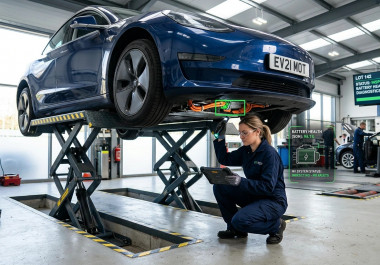
Most casual bidders stepping into the salvage arena do not fully grasp that an EV battery pack is not like a conventional fuel tank. It is not simply a container for energy. Instead, it is more akin to the engine, gearbox, and half the drivetrain rolled into one extraordinarily valuable, highly engineered unit. A Tesla Model S battery pack alone can be worth significant sums on the secondary market, even when exhibiting moderate degradation or minor physical imperfections. The materials within, combined with the complex management systems, make it a prize for specialized buyers.
That pack often represents a huge percentage of the vehicle's total salvage value, sitting densely packed in one structural component beneath the floorboards. Battery pack value drives the market entirely because the margin for parts specialists who can safely extract and test these units is substantial. Consequently, battery health becomes the single most critical factor in determining a vehicle's worth. A Category N Tesla with severe cosmetic damage but a verified, pristine battery pack is considered auction gold. Professional buyers can systematically search high-value salvage listings to find these specific high-margin opportunities, knowing that recovering the battery alone can often guarantee a profitable return on their initial investment.
Parts Demand Outstrips Supply
Traditional salvage economics have always relied heavily on volume. Breakers needed a steady stream of similar cars to ensure they always had the right parts in stock for local garages. Premium EVs completely flip that model on its head. While Tesla has sold substantial numbers of vehicles in the UK over recent years, their presence on the roads is still only a fraction of mainstream brands like Ford or Vauxhall. Therefore, when a premium EV inevitably gets damaged and written off, the usable parts recovered from it become genuinely scarce commodities.
Independent repairers face significant hurdles because they cannot easily get parts through official channels to complete their customer jobs. Many manufacturers actively restrict access to genuine components, preferring to keep repairs within their own approved, and often much more expensive, network. This strategy inadvertently forces independent repair shops directly toward the secondary market to source what they need. Recovering genuine components from salvage creates intense, daily competition among these repairers, which directly and consistently inflates Tesla salvage auction prices. The exact same pattern holds true for other luxury models like the Audi e-tron and Porsche Taycan. These vehicles are not just cars; they are strategic inventory for specialists who have built entire, highly profitable businesses around premium EV repair and component supply.
Lower Running Costs Create Export Demand
The domestic UK market is only one part of the pricing equation. International buyers aggressively target premium EV salvage, adding another layer of intense competition to the bidding process. Eastern European markets, in particular, have developed highly sophisticated, streamlined operations centered around importing damaged UK vehicles, repairing them to local standards, and putting them back on the road. Export demand remains incredibly high because a fully repaired Category N Tesla offers drivers luxury transport with daily running costs that are merely a fraction of their petrol or diesel equivalents.
Crucially, these export buyers are not constrained by the same strict UK insurance categories that govern the domestic market. A classification common to Category S EVs that might understandably scare off UK retail buyers, or make domestic insurance premiums unviable, often means absolutely nothing in markets where the vehicle will be re-registered abroad under completely different regulatory frameworks. This dynamic creates a robust price floor that simply does not exist for conventional internal combustion vehicles. No matter how bad the UK market perceives the damage, there is almost always an international buyer ready to calculate a profitable repair based on their lower local labour rates and different compliance standards.
Technology Retention and Software Value
To truly understand the value of these vehicles, it is helpful to consider a premium EV not just as a car, but as a highly advanced smartphone on wheels. The core technology powering the vehicle does not inherently degrade with physical accident damage in the same way that complex mechanical components, like a radiator, exhaust manifold, or timing chain, do. The comprehensive tech stack, which includes radar sensors, connectivity modules, autonomous driving hardware, and the main infotainment computers, retains immense value even when the exterior bodywork is severely compromised.
Furthermore, software-locked features create a hidden layer of value that astute buyers actively look for. The modern automotive approach of hardware-enabling features through software means a salvage vehicle might possess activated, high-cost options (like enhanced autopilot or acceleration boosts) that can potentially transfer with swapped genuine components or be reactivated after a rebuild. Unlike a conventional luxury car from ten years ago, where the navigation and entertainment tech is almost immediately outdated, EVs retain their utility and desirability much longer due to over-the-air updates. Savvy buyers can routinely browse salvage vehicle auctions to find specific models equipped with these highly sought-after, high-specification technology packages.
Repair Economics Favour Skilled Buyers
Make no mistake, premium EV repair requires significant expertise and specialised tooling, but the actual physical work is often mechanically much simpler than tackling equivalent conventional vehicles. There is no heavy engine block to hoist, no complex automatic gearbox to rebuild, and no intricate exhaust and emissions system to troubleshoot. That inherent mechanical simplicity translates directly into lower labour costs for buyers who know exactly what they are doing and have the right equipment in their workshop.
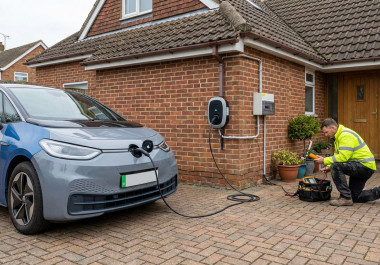
When the drivetrain is largely modular, body damage becomes the primary concern for the repairer. If the high-voltage electrical architecture remains fully intact and undamaged by the impact, garages equipped with the proper EV certification can turn Category S EVs around surprisingly quickly. This efficiency means a significantly faster return on their capital investment. The repair equation heavily favours those forward-thinking businesses that have already invested in specific high-voltage training for their staff, allowing them to bid confidently while traditional garages shy away from the perceived complexity.
Brand Perception and Retail Demand
Over the past decade, Tesla has successfully cultivated a unique market environment where damaged and subsequently repaired vehicles simply do not carry the same heavy stigma as conventional cars. A well-repaired Category N Tesla, assuming the work is documented and the battery is sound, will often sell exceptionally well on the retail market to consumers eager to enter the EV space at a slight discount. That underlying consumer confidence allows professional buyers to bid accordingly at auction, knowing they have a willing retail audience waiting at the end of the repair process.
This trend has strengthened considerably as the general public has become more educated about electric vehicles. Category S EVs are no longer seen as untouchable pariahs; they are now established, highly desirable inventory for specialist used car dealers who have painstakingly built their reputations around providing quality, certified EV repairs. This normalisation of salvage EVs ensures that the end-market remains incredibly buoyant, keeping auction prices high.
The Advantage for EV Buyers
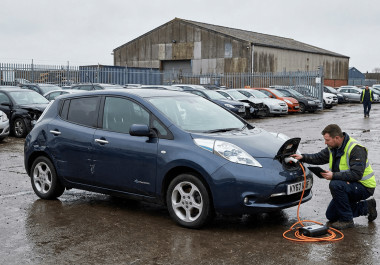
The shift toward an online-only auction model actually provides distinct advantages for the modern EV buyer. While traditional visual inspections in a muddy, physical yard have obvious limitations, especially when you cannot plug into the vehicle's diagnostic port, the RAW2K digital platform provides detailed, comprehensive listings. These listings typically include high-resolution imagery from multiple angles and available damage assessments provided by the insurance assessors. This data-rich environment allows experienced, professional bidders to calculate their potential repair costs with far greater precision than a quick walk-around ever could. If you ever need assistance understanding platform features or managing your bidding account, our support staff are available for guidance.
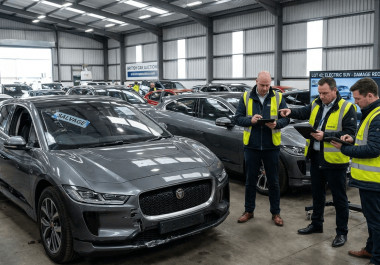
For premium electric vehicles specifically, successful trade buyers do not just browse aimlessly; they meticulously track specific models, year brackets, and damage types, moving incredibly fast when the right lot appears on the dashboard. That systematic, professional approach to sourcing inventory is exactly what separates sustainable, long-term profit from occasional luck in the salvage game.
Market Trajectory and Future Auctions
The EV salvage market is rapidly maturing, moving past its infancy into a highly structured sector of the automotive industry. As the first massive waves of electric vehicles sold in the UK finally reach prime accident age, overall salvage volumes will naturally and steadily increase. Furthermore, understanding battery pack value will become even more crucial as continuous technology improvements mean that newer vehicles, equipped with significantly longer-range and more efficient packs, will command even higher premiums at auction. For those professionals actively tracking these long-term trends, consistently monitoring salvage cars for sale provides crucial, real-time market intelligence that dictates their buying strategies.
We are also seeing that specialisation among buyers is actively driving prices upward. Some businesses now focus purely on safe battery extraction and repurposing for home energy storage, while others target only light-panel damage for quick retail repair. Because each segment values completely different aspects of the exact same vehicle, they push bids higher in competition with one another. As mainstream, legacy manufacturers fully ramp up their own electric production, the sheer volume of available salvage will increase, and so too will the technical sophistication of the buyers competing for it.
Understanding Risks and Professional Strategies
It is vital to state clearly that premium EV salvage is not simply free money waiting to be claimed. The consistently higher bids certainly reflect the inherent value of the parts, but they also reflect a significant degree of risk that must be managed. Battery damage remains catastrophic; if the main pack is compromised, pierced, or structurally warped, the replacement costs are massive and will usually render any repair completely unviable. Furthermore, software-locked features can also be a double-edged sword if aggressive manufacturers decide to permanently restrict Supercharger access or software updates for vehicles registered as rebuilt salvage.
Because of these variables, it is always wise to thoroughly understand your baseline vehicle scrap value before committing to a particularly high bid, ensuring you clearly know the absolute worst-case scenario for basic parts recovery if the repair proves impossible. The most consistent winners in this arena treat this sector as a highly specialised, demanding trade. They invest heavily in ongoing high-voltage training, build strong logistical relationships with battery specialists, and deeply understand the nuances of international export markets. The casual, weekend flipper often struggles mightily against this level of entrenched, well-funded expertise.
Final Thoughts on Premium Salvage
The UK automotive market has spoken clearly over the last few years: premium EV salvage is undoubtedly the new gold standard in the auction lanes. The potent combination of incredibly high residual parts value, remarkably strong export demand from growing markets, and relative repair simplicity for those specific technicians who possess the right skills, drives Tesla salvage auction prices consistently upward month after month. The days of picking up a damaged EV for a fraction of its value are largely over, replaced by a highly competitive, data-driven marketplace.
For trade buyers currently considering entering this market, the underlying message is crystal clear: you must invest in expertise and infrastructure before you invest in inventory. If you are thoroughly prepared and ready to compete in this high-value, high-reward sector, ensure your strategy relies on precise calculations rather than guesswork. If you have any questions regarding your account status, bidding limits, or how to navigate the digital platform effectively, feel free to contact us directly for assistance.
To start actively bidding on premium electric stock and building your specialized inventory, complete your salvage auction registration today and join the professionals shaping the future of vehicle recovery.