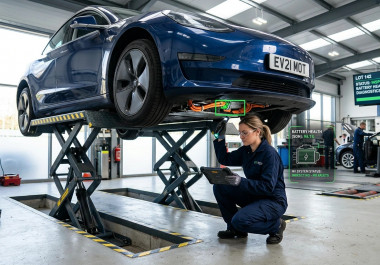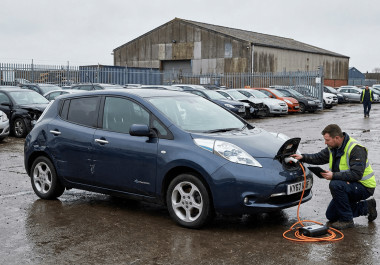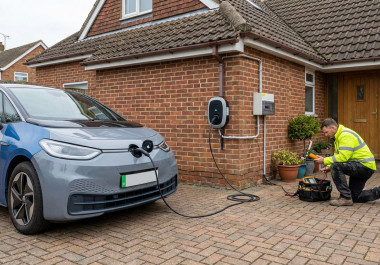
The streets of the capital were simply not built for modern automotive traffic. Historic lanes barely wide enough for a horse cart are now crammed with taxis, buses, and delivery vans. This extraordinary density creates a highly specific type of automotive wear that eventually floods the secondary market. As a result, london salvage cars carry very distinct scars that tell a detailed story about urban driving pressures.
Central districts process roughly 2.6 million vehicle movements daily through an area of just thirty-two square kilometres. This concentration creates exponentially more opportunities for low-speed impacts compared to open rural roads. Drivers are constantly competing for the same narrow patches of tarmac and extremely tight parking spaces. This unique pressure cooker environment generates continuous congestion damage across all vehicle classes.
Stop-Start Traffic and Panel Damage Patterns
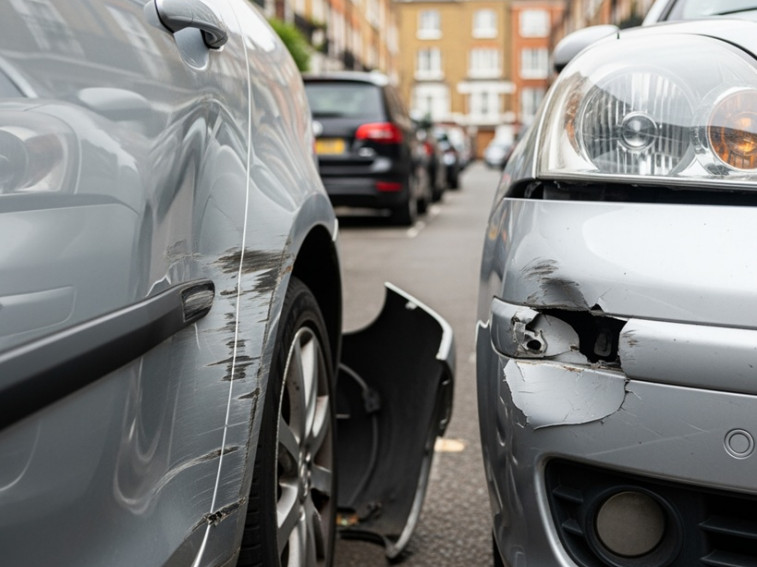
Constant acceleration and sudden deceleration fundamentally alter how drivers judge stopping distances in heavy traffic. At crawling speeds in a persistent jam, driver attention frequently wanders, leading to delayed reaction times. Low-speed rear-end shunts completely dominate the lists of london vehicle damage recorded by major insurers. While modern vehicles feature excellent crumple zones for high-speed impacts, even a gentle five-mile-per-hour tap can cause severe financial headaches.
Today, standard bumpers house complex parking sensors, reversing cameras, radar units, and active safety system brackets. A minor impact can easily trigger thousands of pounds in repairs once sensor recalibration is factored into the final bill. Insurance companies frequently write off vehicles when these technical repair costs exceed standard economic thresholds. This simple economic reality directly explains why so much congestion damage enters the secondary auction ecosystem.
Narrow Streets and Side-Impact Collisions
Historic city planning never accounted for the width of modern vehicles or protruding wing mirrors. Many residential streets measure barely enough for two modern cars to pass safely. Adding parked vehicles on both sides creates a single-lane chicane where navigating oncoming traffic becomes highly hazardous. This environment makes side-swipe damage almost inevitable for daily commuters.
Industry professionals constantly observe perfectly functioning vehicles with pristine fronts and rears but comprehensively scraped flanks. These congestion-related collisions usually occur when drivers misjudge the distance while squeezing past a stationary delivery van or a builder's skip. A misjudgment of just ten centimetres means the entire door, wing, and sill require immediate replacement. Because the mechanical components remain entirely untouched, these specific models offer fantastic urban salvage value.
Parking Pressure and Multi-Storey Damage
The capital features a severe shortfall in available parking spaces compared to registered vehicles. This deficit creates aggressive parking behaviour and an increased risk of minor collisions in public facilities. Multi-storey car parks become particularly hazardous due to tight turning circles and low concrete ceilings. Drivers rushing for appointments frequently misjudge these obstacles, perpetually feeding the supply of london salvage cars.
Pillar strikes account for a significant proportion of the london vehicle damage originating from central postcodes. The pattern is highly distinctive, featuring localised crushing to a rear quarter panel often mixed with concrete paint transfer. Modern vehicles utilise bonded aluminium construction, meaning technicians cannot simply hammer out a dent and respray the surface. Instead, the entire panel requires costly professional replacement.
Commercial Vehicle Impact in Congested Zones
The modern delivery economy has exploded, adding thousands of commercial vans to streets that were already heavily saturated. These drivers often navigate unfamiliar dimensions while working against incredibly tight delivery windows. This high-pressure environment frequently results in roof strikes against low bridges or height restriction barriers. Exploring damaged cars for sale reveals numerous commercial models bearing these exact hallmarks.
Commercial vehicle damage differs from private car wear in one crucial aspect, as it accumulates much faster over time. A delivery van might make fifty stops daily, with each stop presenting fresh collision opportunities. This intense exposure differential perfectly explains why commercial congestion-related collisions feature heavily among younger, newer models. These vehicles are worked incredibly hard in confined spaces until a final scrape triggers an insurance assessment, often leading them to salvage auto auctions for quick disposal.
The Insurance Write-Off Economics
Insurance premiums across central postcodes accurately reflect this elevated congestion-related risk. The insurance industry possesses decades of claims data demonstrating exactly how urban density translates to collision frequency. However, the economic write-off threshold has not always kept pace with modern vehicle retail values. This disparity creates a scenario where relatively minor impacts easily trigger a total loss classification.
When repair estimates cross a specific percentage of the total vehicle value, insurers prefer to settle the claim financially. Most urban impacts result in Category N vehicles, meaning the damage is strictly non-structural and entirely cosmetic. The underlying chassis remains uncompromised, and the internal engine components are completely untouched. Finding these specific models among used cars for sale provides buyers with structurally sound vehicles requiring only basic panel replacement.
Strategic Sourcing and Value Opportunities
These specific patterns of congestion damage create highly undervalued but mechanically sound assets. This dynamic is exactly why savvy buyers specifically target these urban models over high-speed motorway crash victims. High-speed impacts compromise structural integrity, deploy internal airbags, and heavily buckle chassis rails. By comparison, urban models simply require new bolt-on panels and basic smart repairs to return to the road.
Targeting Category N vehicles ensures the underlying chassis remains uncompromised during the initial accident. Investing a sensible amount in smart repairs often yields a finished asset worth thousands more than the total initial investment. Evaluating cosmetic imperfections reveals they matter very little if the underlying mechanics are solid. Participating in online car bidding allows purchasers to secure these predictable repair paths and capitalise on exceptional urban salvage value.
Buyers should thoroughly review all available photographs, focusing heavily on mechanical components rather than just the scraped panels. Comparing the required cosmetic parts against the potential retail value ensures the investment remains strictly profitable. Establishing a rigid financial ceiling prevents emotional overspending on simple cosmetic projects. Searching for repairable vehicles for sale with a clear budget strategy protects trade professionals from overpaying in competitive environments.
The Bottom Line
The unique density of capital traffic guarantees a steady, predictable supply of london salvage cars. These assets are not dramatic highway wrecks; they are the inevitable result of cramming thousands of vehicles into spaces designed for far fewer. For buyers who fully understand what they are purchasing, these cosmetically challenged models represent exceptional financial opportunities. Those ready to take advantage of these predictable supply lines can simply register for salvage auctions to start securing highly profitable vehicles.
The damage that triggers the salvage classification rarely affects the long-term mechanical reliability of the asset. Buyers are essentially acquiring fully functional Category N vehicles at significant discounts because commercial repair rates exceed rigid insurance thresholds. As vehicle complexity continues to inflate standard repair bills, this steady stream of valuable inventory will only increase. By utilizing the RAW2K platform, trade professionals can conduct independent pricing analysis and track regional variations effectively.
Successful acquisition requires patience, discipline, and a deep understanding of urban collision dynamics. Every bid should be calculated strictly on the cost of replacement panels versus the final repaired retail value. If the numbers do not align, the smartest move is to wait for the next suitable vehicle to appear. Should buyers require any administrative assistance regarding platform navigation or bidding rules, please contact our team directly for reliable guidance.