Losing the keys to an unwanted or end-of-life vehicle presents a surprisingly common dilemma for both private sellers and business fleet managers. When preparing to dispose of a car, the presence of the key often seems like a strict necessity. However, the process of scrapping a vehicle is primarily governed by paperwork and logistics, rather than physical access. If you need to arrange a scrap car without keys service, understanding the necessary steps ensures a smooth, legitimate, and secure end-of-life vehicle disposal.
The Initial Challenge: Disposal Logistics and Ownership
The primary concern when dealing with a car that cannot be started or moved is twofold: proving legal ownership and physically relocating the vehicle. Reputable disposal facilities and auction partners must adhere to strict legal requirements set by the Driver and Vehicle Licensing Agency (DVLA). Ignoring these initial administrative steps can lead to significant delays or the complete rejection of your scrap request.
Why Keys Matter in Vehicle Disposal
While keys are essential for driving or unlocking a car, their absence does not legally prevent scrapping. Keys simply act as a quick security check for both the seller and the collector, confirming rightful possession of the asset. Without them, the processing facility must take extra security measures to verify that the vehicle has not been stolen.
This complication means the collection agent will rely entirely on DVLA ownership documentation and photographic evidence to proceed with the transaction. Often, these immobile vehicles are either processed by an ATF or channelled through dedicated vehicle auctions to be sold whole to salvage buyers.
The Legal Requirements for Vehicle Disposal
The non-negotiable requirement for legally disposing of any vehicle is providing the correct proof of title. This crucial step builds trust and protects all parties involved in the transaction. The most important document is the vehicle’s logbook, officially known as the V5C registration certificate.
This DVLA ownership documentation must be presented to the collection agent as definitive evidence of your right to scrap the vehicle. Failure to produce this paperwork will halt the entire process. Selling a non-runner requires the exact same stringent proof of title as selling a perfectly running model.
Navigating the Process of Non-Runner Scrapping
It is certainly possible to proceed with a disposal even if the keys are lost. However, it requires careful coordination with your chosen disposal service. The two main hurdles—legal ownership and physical removal—must be addressed proactively to prevent last-minute issues. Being prepared with all supporting paperwork and understanding the non-runner collection logistics ensures the transaction is handled quickly and efficiently.
Verifying Legal Ownership Without Physical Keys
You can successfully execute a scrap car without keys transaction, provided the ownership verification requirements are successfully satisfied. A key is simply a mechanical component used to operate the vehicle; it is the V5C logbook that actually confers legal ownership and the right to authorize disposal. Professional disposal partners like RAW2K are fully equipped to handle these unique situations, prioritizing your official paperwork over the presence of physical keys.
The Added Logistics of a Non-Runner
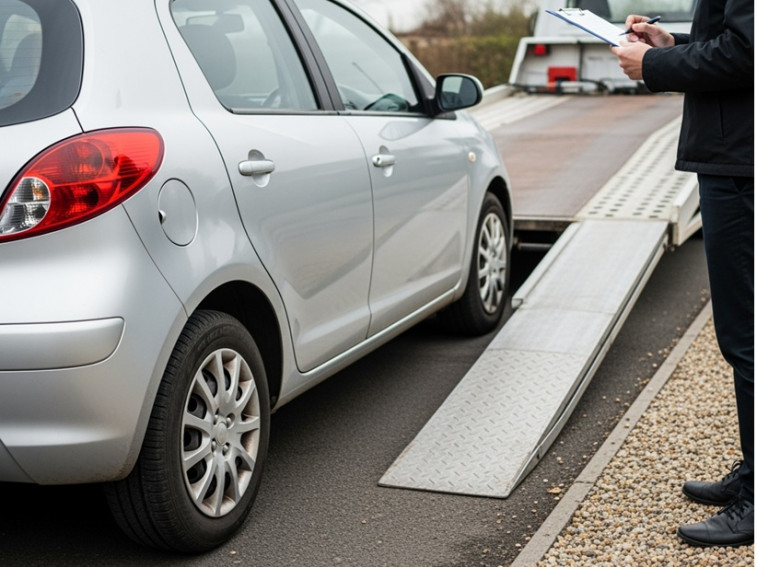
The absence of keys automatically classifies the car as an immobile asset, which fundamentally changes the non-runner collection logistics. When arranging disposal, the seller must clearly specify that the vehicle has no keys and cannot be driven or rolled. This crucial information allows the collection team to arrive with the necessary equipment, such as a flatbed truck or a hiab crane.
When dealing with non-runner collection logistics, accessibility is everything. The disposal agent needs clear, unobstructed access to safely winch or lift the car onto their transport. If the vehicle is parked in a restrictive location, detailed photographs of the car’s position should be provided immediately. For example, a seller utilizing vehicle auctions in North West England provided photos of a blocked-in van, allowing the collection team to dispatch the correct lifting equipment and save valuable time. These exact same logistical rules apply whether you are clearing commercial vans, family hatchbacks, or assets destined for motorcycle auctions.
Proving Ownership and Identity
Because a high-value transaction involving the official transfer of an asset is taking place, rigorous photographic identification checks are essential. This crucial step protects both the seller and the disposal service from potential fraud. Strict security protocols ensure that only the rightful keeper can authorize the scrapping or sale of the vehicle.
The Role of the V5C Logbook
The V5C logbook is the single most important piece of paperwork in the entire process. It serves as official certification of ownership and your direct link to the national registration records. When a vehicle is scrapped, the registered keeper must accurately complete and submit section 9 of the V5C. Without this completed DVLA ownership documentation, the government will continue to hold the former keeper responsible, leading to potential fines or tax liabilities.
Secondary Documentation Checks
What if the keys are present but the V5C has been misplaced? The legal obligation to prove ownership remains exactly the same. The registered keeper must apply for a replacement V5C from the DVLA. Alternatively, some services can use photographic identification checks combined with a recent utility bill to verify the registered name and address.
A reputable disposal company requires multiple forms of ID to establish trustworthiness. Without a V5C, these strict photographic identification checks may require a slightly longer vetting process before accepting the vehicle. If you need clarification on acceptable forms of identification, a professional disposal service can advise you on the necessary steps.
The Financial Impact and Valuation
Sellers often worry that lacking keys will drastically reduce their final payment. While the inability to start the engine does factor into the initial valuation, the overall price is driven by much larger market forces. Knowing these factors helps set realistic expectations for your financial outcome when you arrange a scrap car without keys collection.
How Missing Keys Affect Value
The fact that a vehicle is immobile may slightly reduce its salvage value to a dealer who planned to repair it. However, for a vehicle destined for an Authorised Treatment Facility and dismantling, the keys have almost no financial impact. The value of a scrap vehicle is primarily determined by its physical weight and current scrap metal market prices.
If the vehicle is a newer, high-spec model and the engine cannot be assessed, the valuation for salvage cars and their reusable components might be conservatively estimated. For older vehicles, missing keys are simply a logistical note, not a major devaluation point.
Factors Determining Final Scrap Price
The final price offered depends on three primary components: the vehicle’s weight, its make and model, and prevailing scrap metal market prices. Heavier vehicles will generally yield a better return because of their sheer metal content. Furthermore, certain makes and models may command a higher price if their catalytic converters contain valuable precious metals. While missing keys require specific collection arrangements, they rarely prevent a fair valuation based on global scrap metal market prices.
Conclusion
Choosing a reputable disposal partner is the final critical step to ensure a legal and safe transaction. Whether you require a scrap car without keys collection or need to offload an entire fleet, dedicated platforms work with certified facilities that guarantee environmentally responsible processing and correct documentation. By providing accurate details and preparing your paperwork, the process remains simple and financially rewarding. If you need any specific help regarding your documentation or collection logistics, please contact our support team. If you are looking to source replacement stock after your sale, register for vehicle auctions today to explore our nationwide marketplace.