The Vehicle Identification Number, or VIN, serves as the unique legal fingerprint for every car, motorbike, and commercial vehicle worldwide. For anyone participating in UK vehicle auctions, understanding this 17-digit code is not merely technical; it's a crucial legal and financial necessity. The VIN links the vehicle to its entire history, including manufacture, ownership, accident reports, and official documentation like the V5C logbook. Thorough VIN checks and legal duties must be carried out to ensure your purchase is legitimate and hassle-free, whether you're buying a used car or a salvage lot.
A robust due diligence process using the VIN is the cornerstone of successful auction buying. Understanding your responsibilities and how to avoid legal VIN problems entirely ensures confident purchases.
The Core Role of the VIN in Vehicle Auctions
The VIN is mandated for all modern vehicles and is the consistent identifier used by every official body, from the police and DVLA to insurance companies and auction houses. When you bid on a vehicle, the VIN guarantees you are buying the exact lot described in the listing. It is the primary tool used to verify the history of salvage cars for sale and to confirm there are no outstanding finance agreements or write-off declarations that haven't been correctly processed. Category write-off confirmation through VIN checks protects buyers from undisclosed vehicle damage.
Decoding the 17-Digit Code
The 17-character identification code in a VIN is standardised globally and provides critical information about the vehicle's origins. The first three digits identify the manufacturing country, the maker, and the vehicle type. Digits four through nine detail features like the engine type, body style, and weight.
The tenth digit confirms the model year, and the eleventh identifies the specific assembly plant where the vehicle was built. The final six digits are the unique serial number, which distinguishes that specific vehicle from every other one produced by the manufacturer. Knowing how to read this code can offer confidence that the listing details match the vehicle's manufactured identity.
Your Legal Responsibilities as a Buyer
When you commit to a purchase at auction, you also assume the legal duties associated with that vehicle. This means the onus is on the buyer to verify the vehicle's identity using the 17-character identification code and history before and after the sale. Ignoring these responsibilities can lead to significant financial loss and potential regulatory issues, especially when dealing with Cat S or Cat N vehicles.
Pre-Purchase VIN Checks and Legal Duties
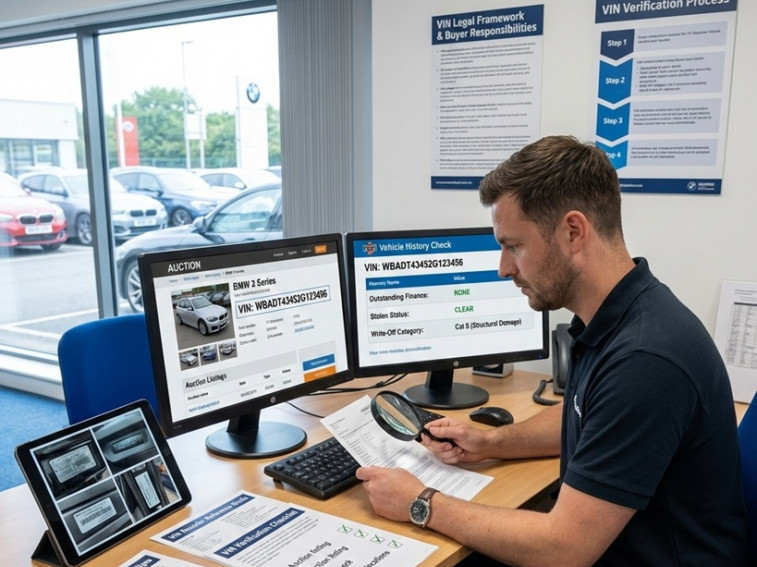
The moment you see a lot you are interested in, you should use the provided VIN to run a comprehensive history check. This is generally referred to as an HPI check, though many providers offer HPI history reports or similar services to flag legal issues. These checks reveal crucial details like outstanding finance, status as stolen property, or previous categorisation as an insurance write-off. Category write-off confirmation ensures you understand the vehicle's damage history before bidding. These VIN checks and legal duties protect you from acquiring a vehicle with a hidden past. This is why transparent platforms, such as RAW2K Vehicle Auctions, always provide clear images and all available documentation to facilitate your due diligence process.
Post-Purchase Obligations for Salvage Vehicles
For vehicles classified as Category S or Category N, the VIN becomes central to the re-registration process. Reviewing HPI history reports alongside repair documentation helps verify the vehicle's complete history. After the necessary repairs are completed, a vehicle must undergo a new MOT to confirm its roadworthiness. The repair documentation must often be supplied alongside the V5C application to the DVLA to officially place the vehicle back on the road. For commercial buyers frequently sourcing vehicles through platforms that explore live auction inventory, like those attending vehicle auctions in Scotland, being well-versed in this compliance is essential. Private buyers must also adhere to these strict standards.
Common Issues to Avoid with VINs at Auction
While most vehicle listings are straightforward, there are specific situations where a compromised VIN can lead to serious legal complications. By being vigilant about the vehicle's unique identifier, you take proactive steps to avoid legal VIN problems. This approach ensures your auction purchase remains a profitable opportunity rather than a regulatory headache.
Discrepancies and Alterations
One of the most concerning issues is a discrepancy between the VIN displayed on the vehicle's chassis plate, the dashboard, and the V5C logbook. Proper chassis plate verification ensures all numbers match exactly; any variation is a major red flag that warrants immediate inquiry. Similarly, look closely for signs of tampering, such as scratching, welding, or obvious replacement of the VIN plate itself.
Tampered VINs can indicate the vehicle has been ringed or illegally re-identified. In such cases, the vehicle may be seized by authorities, meaning you lose both the vehicle and the money paid. Proper chassis plate verification checking multiple VIN locations on the vehicle, as detailed in the lot images, is vital for your security. If you have specific questions about the VIN's legibility or the vehicle's listing details, you can reach our support team for platform assistance.
VIN Issues in Parts Vehicles (Cat B)
Vehicles listed as Category B (Break) must never be re-registered or driven on the public highway. Even though they are purchased solely for parts, the VIN remains legally significant because it must be officially recorded as 'broken' or 'dismantled' by the breaker. For vehicles unsuitable for repair, obtaining scrap valuation ensures proper legal disposal through authorised channels. This is a crucial distinction that helps authorities track parts and prevent the illegal re-use of structural elements. If you are regularly purchasing large-capacity stock for breaking by viewing available salvage listings, such as from our main vehicle auctions, ensure you comply with all legal record-keeping requirements for the VIN.
VIN Integrity Across Vehicle Types
The need for accurate VIN reporting applies universally, whether you are bidding on a two-wheeled vehicle or a large commercial lorry. The same principles of documentation checking and integrity verification apply across the entire inventory.
VINs for Commercial Vehicles and Motorbikes
For commercial buyers focused on fleet expansion or parts sourcing, the VIN for vehicles in van auctions dictates their exact specifications, weight capacity, and homologation status. This information is critical for ensuring compliance with commercial road transport regulations. Similarly, the VIN is essential for tracking the history and specifications of smaller vehicles available through motorcycle auction listings, confirming key details like engine size and model variant.
Your Path to Legally Sound Auction Purchases
The VIN is the most important piece of identification for any asset purchased through UK vehicle auctions. By treating VIN checks and legal duties as the foundation of your bidding strategy, you effectively mitigate the primary legal and financial risks associated with vehicle purchases. Understanding how to avoid legal VIN problems through proper verification protects your investment. Discover damaged car inventory with transparent VIN documentation to support informed bidding decisions. RAW2K Vehicle Auctions provides transparent and detailed information to help you in this process. Register to access auctions to view detailed vehicle listings and VIN documentation for thorough due diligence.