The automotive sector has witnessed a massive expansion in the secondary market for electric models. Five years ago, battery-powered hatchbacks rarely appeared within mainstream auction environments. Currently, they represent a significant and rapidly growing segment of daily sales. This growth has triggered a fundamental change in how buyers evaluate used cars.
Buyers constantly need to verify exactly how the core power unit has survived its initial years on the road. A battery health certificate provides the exact data required to answer these critical questions. It acts as the ultimate safeguard for buyers navigating the market for used electric vehicles. By stripping away the mystery surrounding energy storage, these documents provide a clear path to making a sound financial investment.
Defining the Official Documentation
A battery health certificate is a formal document detailing the exact physical condition of an electric vehicle's primary power unit. It specifically measures the State of Health (SoH) percentage. This metric shows precisely how much energy capacity remains compared to when the battery was brand new.
For example, a pristine battery holds 100% of its designed capacity. After three years of operation, that identical unit might retain 92% or drop to 75% depending on previous charging habits. These diagnostic capacity reports remove all dangerous guesswork from the purchasing process. Standard certificates typically include several crucial data points. Buyers will find the current capacity percentage, the total number of completed charge cycles, and individual cell voltage readings. The document also provides the specific date of the assessment and confirms the operational status of the thermal management cooling systems.
Why Capacity Metrics Outweigh Traditional Mileage
The electric secondary market completely changes how buyers must evaluate vehicle histories. With a standard diesel van, reading 100,000 miles on the dashboard provides a clear indication of mechanical wear. With electric models, traditional mileage figures reveal almost nothing about the underlying power unit.
In fact, lithium-ion degradation rates do not follow a simple mileage formula. A hatchback with 45,000 miles of smooth motorway driving frequently exhibits better capacity than a similar model displaying just 25,000 miles of short urban trips. High-voltage capacity metrics are heavily influenced by temperature exposure and charging habits rather than pure distance. Leaving a battery fully charged in direct summer heat accelerates internal wear rapidly. Consequently, purchasing an asset without verified data introduces an unacceptable level of financial risk.
The Diagnostic Generation Process
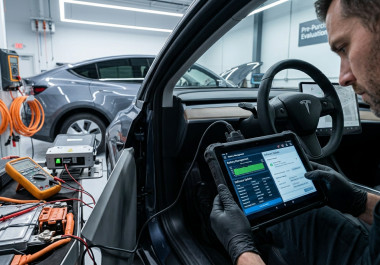
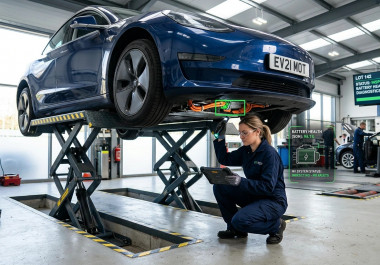
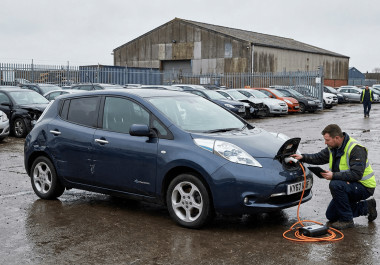
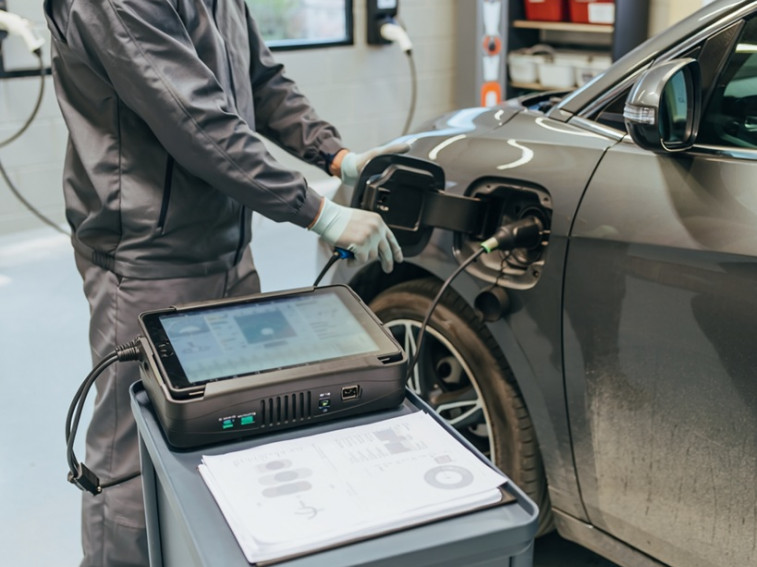
Generating these essential documents requires highly specialised equipment. A certified technician connects directly to the vehicle's onboard diagnostic port using manufacturer-approved software. This software interrogates the internal Battery Management System (BMS). The BMS quietly records every temperature fluctuation and charging cycle since the vehicle left the factory.
This data extraction is highly accurate and provides a comprehensive history of the vehicle's electrical stress. Main dealer networks easily generate these documents for their specific brands. Additionally, highly equipped independent specialists increasingly provide these essential diagnostic capacity reports for private buyers and commercial fleets. Monitoring these metrics across salvage auto auctions allows buyers to separate high-potential units from those with compromised energy storage.
Interpreting State of Health Percentages
Once a buyer obtains the paperwork, interpreting the data correctly is vital for setting a budget. A State of Health reading above 90% indicates excellent condition, promising years of reliable operation. Readings between 85% and 89% remain highly functional and represent standard wear for a three-year-old model.
However, metrics falling below 80% require careful financial consideration. For those exploring damaged cars for sale, an 82% reading on a large premium battery might still provide 200 miles of practical range. Conversely, that same percentage on a compact city car severely limits its daily utility and drastically reduces its secondary market value. Correctly interpreting high-voltage capacity metrics is the difference between a profitable project and a financial liability.
Navigating Manufacturer Warranties
The intersection between degradation metrics and manufacturer warranties creates unique financial opportunities. Many automotive brands provide guaranteed capacity thresholds, often promising 70% or 75% retention over an eight-year period. If a battery health certificate proves the capacity has dropped below this guaranteed threshold, the manufacturer may replace the unit entirely.
This scenario transforms a heavily degraded asset into a highly lucrative acquisition. When browsing salvage vehicle auctions, smart buyers actively search for vehicles resting just below these warranty thresholds. However, buyers must strictly verify that the warranty remains active and that previous rapid charging habits have not invalidated the manufacturer agreement. Monitoring lithium-ion degradation rates carefully is the absolute secret to exploiting these specific warranty clauses.
Strategies for Undocumented Vehicles
Buyers frequently encounter auction listings lacking official diagnostic paperwork. Sellers may simply lack the equipment to test the vehicle, or they may deliberately withhold unappealing data. In these scenarios, strict financial discipline is an absolute requirement. Buyers should automatically assume a lower State of Health and adjust their maximum bids downward to absorb the hidden risk.
Purchasing used electric vehicles without documentation requires budgeting for immediate post-purchase testing. For buyers targeting used cars for sale, factoring an independent mobile diagnostic assessment into the initial budget is a highly recommended strategy. Securing this documentation before attempting any secondary resale is absolutely mandatory for achieving maximum market value.
Regional Testing and Future Standardisation
Access to certified diagnostic testing varies significantly across different regions. Major urban centres boast numerous main dealers and independent specialists equipped to verify high-voltage capacity metrics. In contrast, rural areas offer fewer options, occasionally requiring buyers to transport newly acquired vehicles long distances for official testing.
Fortunately, the wider automotive industry is moving rapidly toward standardised capacity reporting. Monitoring regional listings through salvage inventory platforms reveals that comprehensive data transparency is steadily improving. Within a few years, selling an electric asset without documented capacity metrics will likely become an exceptionally rare occurrence.
Practical Bidding Mathematics
Securing profitable assets relies on stripping emotion from the bidding process and focusing entirely on the mathematics. Buyers must deduct the cost of potential module replacements if the diagnostic capacity reports reveal severe underlying issues. They must also factor in the high specialist labour rates required for working on electrical architectures.
Understanding acceptable lithium-ion degradation rates allows buyers to accurately project the vehicle's remaining lifespan. Tracking high-voltage capacity metrics ensures that every pound spent translates directly into reliable, long-term utility. To explore current market pricing and review available electric models, buyers can browse the RAW2K platform today.
Should any questions arise regarding account creation or platform navigation, please contact our team directly for administrative assistance.
Once prepared to execute a heavily researched acquisition, simply register for salvage auctions to begin securing thoroughly vetted used electric vehicles across the national market.