It is a frequent question for both private car owners and professional traders: what happens when a vehicle's MOT expires or it fails the test? Facing unexpected repair bills often makes owners feel stranded. They might believe the car is completely unsellable until it passes a new examination. The core truth is that you can absolutely sell car without MOT certificates in the UK, but the transaction must adhere to strict legal requirements. Understanding these regulations is key to legally and efficiently disposing of your vehicle, whether it is a non-runner or simply needs minor repairs.
The Legal Framework for Non-MOT Vehicle Disposal
The UK law is definitive: you cannot drive a car on public roads without a valid MOT certificate, except under specific, rare circumstances. This primary rule dictates the safe and legal way you must approach the sale and transfer of ownership. As the seller, your responsibility is to ensure the new owner is fully informed about the vehicle's MOT status and physical condition before any money changes hands.
Navigating Exceptions and Buyer Responsibility
While driving without a certificate is heavily restricted, the law does permit the actual sale of a vehicle without an MOT. It is the buyer’s responsibility to arrange for the vehicle to be towed, tested, or repaired before ever using it on the road. You must clearly state the vehicle's condition to the purchaser, particularly if it has known faults or is categorized as a high-risk asset. Failing to be totally transparent can lead to complex disputes and legal issues later down the line.
Weighing the Disposal Options for Non-Runners
When a vehicle requires significant work and lacks a current MOT, its market value drops dramatically in the private sales arena. Potential buyers are often incredibly wary of hidden defects or expensive mechanical failures. Because of this, private negotiation becomes a frustrating and time-consuming process. For many sellers, the immense effort of repairing the car just to gain a marginal increase in the private price is simply not financially viable.
The Pitfalls of Private Sales
Attempting to sell car without MOT paperwork privately limits you to a very specific pool of interested parties. These buyers are typically looking for cheap project cars or spare parts, and they expect substantial discounts due to the perceived risk and necessary transport costs. Dealing with numerous low-ball offers and wasted viewings can quickly undermine any profit you hope to achieve. This process rarely yields the best result, especially when disposing of multiple vehicles at once.
Accessing Specialist Trade Buyers
A far more efficient solution is accessing specialist trade buyers. If you are disposing of non-runners or managing fleet vehicles, listing them in dedicated vehicle auctions is the optimal route. This ensures your stock is immediately exposed to professional dealers who specialise in refurbishment and safe dismantling.
These specialist trade buyers actively seek all types of damaged vehicles and understand the inherent condition of the stock. They are fully equipped to handle complex logistics, including professional recovery. Even smaller, personal vehicles can achieve competitive prices in motorcycle auctions when listed correctly to the right audience.
Maximising Returns with a Specialist Platform
The process to sell car without MOT approval is completely transformed when you use a dedicated disposal platform like RAW2K. Such platforms streamline disposal and maximise returns by providing a competitive marketplace, bridging the gap between a non-running vehicle and the trade professional. The key is in the platform's ability to attract serious, qualified no MOT car buyers. The platform acts as a curated marketplace, completely removing the need for sellers to personally vet individual buyers.
Connecting with Professional Networks
The registered bidders typically comprise licensed mechanics, motor engineers, and parts specialists. These professionals possess the infrastructure to handle non-running vehicles legally and safely. This professional interest ensures that the vehicle's true value is realised through competitive bidding rather than haggling.
Furthermore, the auction structure provides a clear, documented sales record, which is a significant advantage over often ambiguous private transactions. Selling to specialist trade buyers guarantees a faster turnaround, allowing sellers to recover capital quickly and efficiently.
Geographic Reach and Competitive Bidding
The platform’s geographic reach is a major advantage. By listing your car, you immediately access competitive bidding from buyers across the UK. For example, knowing that the platform facilitates vehicle auctions in South East UK means sellers can attract buyers specifically interested in stock from that exact region.
The reach is nationwide, potentially reducing transport costs and encouraging higher bids. A strong focus on transparency ensures that all bidders are fully informed about known faults. This allows the price to settle at the vehicle's true trade value without the risk of private disputes. Dedicated platforms easily connect sellers with experienced no MOT car buyers.
The Final Steps: Documentation and Transfer
While the auction process simplifies the sale, sellers still have responsibilities to ensure a smooth, legal transfer of ownership. Having all your paperwork perfectly in order is critical. The correct documents must be prepared to legalise the transfer once the sale is final. Gather the necessary items to speed up the transaction when clearing salvage cars from your property.
Getting Your Paperwork Ready
-
V5C registration certificate: This is essential for transferring ownership and must be completed and sent off to the DVLA. Handing over the V5C registration certificate legally protects the seller from future liabilities.
-
Service History: Any documented history of servicing or repairs can add immense value and clarity for the trade buyer.
-
MOT failure sheet: Providing the official MOT failure sheet explains exactly why the vehicle failed. Buyers will use the MOT failure sheet to calculate their repair costs and bid accordingly.
Arranging Handover and Liability
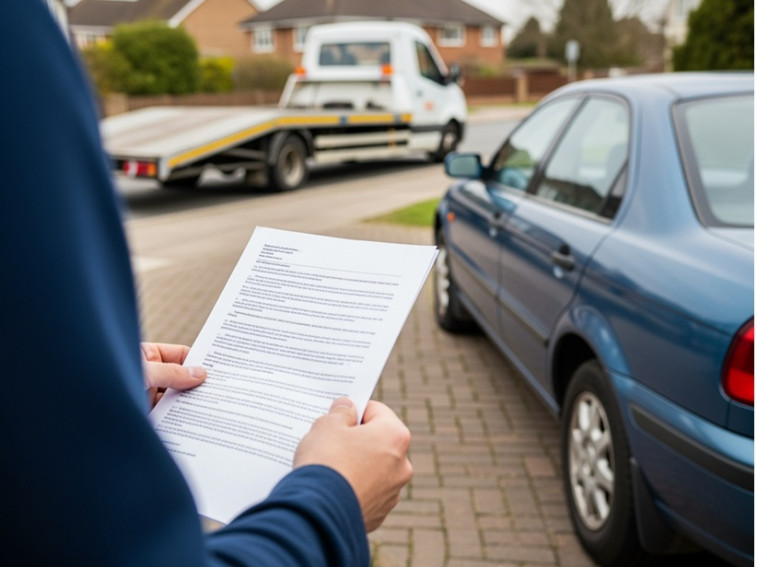
Once the auction closes and the winning bidder's payment is secured, the vehicle is ready for professional collection. Since the car lacks a valid MOT, it cannot be legally driven away, and specialist buyers are fully accustomed to arranging recovery trucks. Finding reliable no MOT car buyers is often the biggest hurdle for private sellers, but a professional network eliminates this stress completely.
Conclusion
Choosing to dispose of a non-MOT vehicle through the trade market is the most practical and efficient decision. By utilising a transparent, competitive environment, sellers bypass the headaches of the private market and secure a fast, clean sale. If you have any questions about preparing your V5C registration certificate or coordinating the handover, please contact our support team. If you need to source a roadworthy replacement after your sale, register for vehicle auctions today to explore our nationwide marketplace.