The climate in Scotland is famously unforgiving. Between persistent rain, coastal salt spray, and sudden temperature fluctuations that transform roads into hazardous surfaces, vehicles in the north endure significant environmental stress. Decades of observation in the motor trade reveal how local weather conditions can escalate minor issues into total losses far more rapidly than in milder regions.
The salvage market north of the border operates under distinct parameters due to these environmental factors. Weather-related damage accounts for nearly 40% of salvage classifications in Scotland, compared to approximately 22% in southern England. This disparity is a direct result of geography impacting mechanical and structural integrity. Understanding the unique challenges facing scottish salvage vehicles is essential for anyone operating within this specific market.
Environmental Factors and Market Opportunities
The meteorological patterns in Scotland create distinct cycles within the salvage industry. Heavy rainfall between October and March consistently results in a steady supply of flood-damaged vehicles, while winter ice storms frequently generate collision clusters on major arterial routes such as the M8 and A9.
Coastal regions present further complications. Vehicles sourced from Aberdeen, Dundee, or coastal towns along the Firth of Clyde often carry hidden chassis corrosion that accelerates mechanical deterioration. A five-year-old vehicle might appear pristine externally while suffering from significant structural compromise underneath. These scottish salvage vehicles require a specialised assessment to accurately evaluate their long-term viability.
In the Highlands, the geography adds a logistical dimension. Remote locations often mean that accident recovery takes longer, increasing the time a vehicle is exposed to the elements. A car that leaves the road near Fort William might remain in snow or rain for several days before being retrieved, which can compound the initial impact damage.
Understanding Category Classifications in Northern Climates
While the standard UK categorisation system applies, the local weather often influences insurance assessors to push borderline cases into higher brackets. Category S (structural damage) and Category N (non-structural) represent the majority of weather-affected stock appearing in vehicle auctions.
Category S vehicles have sustained frame or structural damage that requires professional intervention. In Scotland, this frequently involves chassis corrosion that has weakened the vehicle, often discovered during post-accident inspections. The consistent dampness can accelerate existing rust, turning what might have been simple Category N damage in a drier climate into a structural concern.
Category N covers mechanical, electrical, or cosmetic issues where the structural integrity remains intact. While Scottish flooding is often freshwater from lochs and rivers, it still wreaks havoc on complex modern electronics. This moisture creates specific opportunities for buyers who possess the technical skills to handle electrical diagnostics.
Flood Damage: The Persistent Northern Threat
Scottish flooding is often persistent and underestimated rather than being limited to dramatic storm surges. Vehicles parked near the Water of Leith in Edinburgh or the Clyde in Glasgow can quickly find themselves axle-deep in rising water.
Freshwater flooding affects vehicle systems differently than saltwater. Electronics are typically the first to fail. Components such as engine control units, airbag sensors, and infotainment systems can stop functioning even after the vehicle has dried out. It is common for flood-damaged vehicles to develop electrical gremlins that are expensive to diagnose but manageable for those with the right expertise.
Insurers frequently write off these vehicles to avoid the risk of ongoing warranty claims. This creates a consistent supply of stock in auctions for buyers who can accurately judge whether the water ingress is superficial or systemic. Key areas to inspect include door seals, boot seals, and the cabin air intake near the base of the windscreen, as water entering here often floods the footwells where control modules are located.
Winter Conditions and Collision Patterns
Winters in the north produce predictable collision patterns that fuel the salvage inventory. The first hard frost in November often catches road users unprepared, leading to multiple-vehicle incidents on motorways. These accidents frequently result in repairable damage that nevertheless exceeds the vehicle's pre-accident value according to insurance metrics.
Black ice is a significant factor on bridges and shaded sections of road. Routes like the A9 through the Cairngorms and the A82 along Loch Lomond become collision hotspots, producing salvage stock with front-end damage but otherwise sound mechanical components.
Winter collision damage incidents tend to involve newer vehicles with comprehensive insurance policies. Owners of three-to-five-year-old cars often file claims for relatively minor impacts, but the high cost of replacement parts and labour in the UK means insurers may still opt for a total loss declaration. These Category N units represent excellent value for buyers who can source panels and handle repairs independently.
Corrosion and Long-Term Deterioration
The combination of coastal air and aggressive road gritting schedules creates corrosion rates that are noticeably higher than in drier climates. Salt-accelerated rust does not merely affect aesthetics; it compromises brake lines, fuel lines, and vital mounting points that are essential for passing an MOT.
Impact of Coastal Salt and Road Gritting
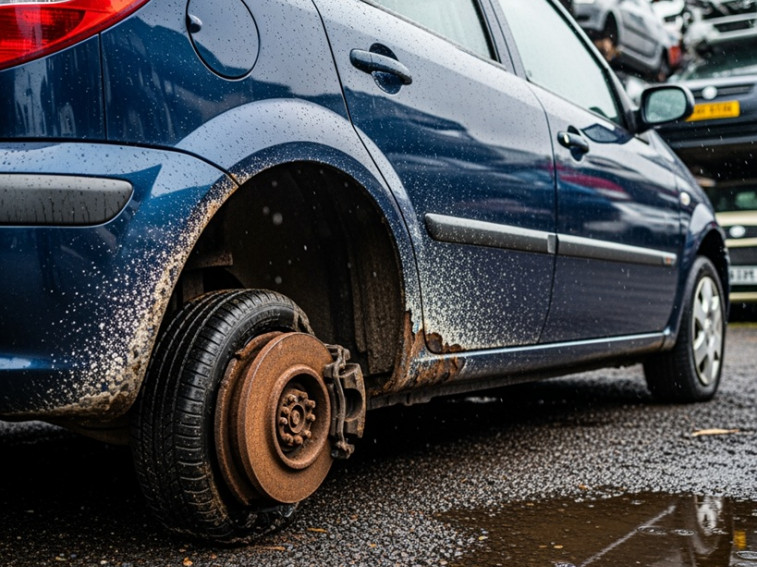
Modern vehicles feature improved corrosion protection, but the Scottish environment remains a formidable opponent. A thorough underbody inspection is mandatory when considering salvage from coastal postcodes such as AB (Aberdeen), DD (Dundee), or PA (Argyll and Bute). Critical areas for inspection to identify chassis corrosion include:
-
Bubbling paint along the edges of sills and wheel arches.
-
Surface rust on brake discs that extends to the caliper mountings.
-
Corrosion affecting exhaust hangers and heat shields.
-
Perforation of the chassis rails or crossmembers.
The aggressive nature of sea air and road salt is a primary factor that insurance assessors consider during total loss calculations. This specific type of weather-related damage is a major reason why many scottish salvage vehicles enter the auction circuit.
Commercial Vehicle Salvage Patterns
Regional van auctions and heavy vehicle listings show that the weather affects commercial stock differently. High mileage and heavy usage compound the effects of environmental damage, though commercial units often retain higher salvage value due to their simpler mechanical configurations.
Transit vans are a dominant force in this sector. Because they are so common, parts are easily accessible and repairs are generally straightforward. A Category S Transit with damage from a winter collision damage incident on the A90 might be acquired at a competitive price and returned to roadworthy condition relatively easily.
Refrigerated transport presents unique considerations. Rapid temperature fluctuations can stress refrigeration units, and moisture ingress during floods can damage specialised insulation. Furthermore, truck auctions occasionally feature HGVs that have been damaged in remote Highland areas where the cost of specialised recovery exceeds the value of the repair.
Strategic Buying and Seasonal Cycles
The salvage market follows a predictable seasonal rhythm. Understanding these cycles allows buyers to identify the most lucrative opportunities and avoid overpaying for stock.
-
January to March: This period sees a peak in flood and winter accident inventory. As insurers process claims from the December peak, auctions are frequently stocked with weather-damaged vehicles.
-
April and May: This is often a period for "spring cleaning," where vehicles that sat through the winter with emerging chassis corrosion or electrical gremlins are finally traded in or claimed upon.
-
June to August: This season typically sees the lowest volume of salvage as better weather leads to fewer accidents.
-
September to October: Inventory begins to rise again as weather conditions deteriorate and summer holiday usage ends.
Regional Variations and Logistics
Scotland is not geographically homogeneous, and damage patterns vary by region. The Central Belt, including Glasgow and Edinburgh, produces the highest volumes due to the density of the population. In contrast, the Northeast produces vehicles with higher corrosion concerns but often better maintenance histories due to the local economy.
In the Highlands and Islands, the salvage volume is lower, but the opportunities are unique. A vehicle might be declared a total loss simply because the logistical costs of recovery and assessment from a remote location are too high. This can lead to the availability of vehicles with relatively minor damage that are technically repairable.
Conclusion and Final Recommendations
Scottish weather undeniably shapes the salvage market, presenting both challenges and distinct opportunities. Persistent rain, coastal salt, and winter ice create specific damage profiles that require informed assessment. Whether dealing with electrical gremlins in flood-damaged vehicles or structural repairs on a winter collision damage case, success depends on matching the vehicle's condition to your specific skills.
Turning these environmental challenges into a successful investment requires research and preparation. It is advisable to verify a vehicle's history, check parts availability, and maintain a conservative repair budget. By understanding regional variations and seasonal cycles, buyers can find genuine value in the northern market.
For those interested in exploring these opportunities further, we recommend that you register to view the latest inventory and start bidding. For any specific enquiries regarding the auction process or local salvage stock, please contact us for professional assistance.