Young families across the UK frequently face significant financial pressures. Securing safe, reliable transport for school runs, supermarket trips, and weekend family visits is essential, but allocating £8,000 to £15,000 for a standard used vehicle is increasingly restrictive alongside rising household costs.
Professional industry analysis shows that exploring the salvage market offers a viable financial alternative. When approached with discipline, sourcing family salvage cars provides a practical way to bypass highly inflated retail markups. These are not necessarily heavily wrecked vehicles; they are often structurally sound cars written off by insurance companies due to the high cost of main-dealer cosmetic repairs. The key to success lies entirely in understanding which vehicles are suitable for domestic use.
Identifying Suitable Salvage Categories
Not all family salvage cars suit every household's daily life. A household requiring dependable daily transport should not take on complex restoration projects. The priority must be safety, reliability, and predictable repair costs.
As a result, Category N salvage cars are widely considered the most appropriate budget vehicle options for young families. This classification denotes non-structural damage. The issues are typically cosmetic, such as dented panels, scraped bumpers, or minor interior faults, while the vehicle's core chassis and structural integrity remain completely sound. Once professionally repaired, a Category N vehicle is as safe as any standard used car on the road.
Conversely, Category S vehicles require extreme caution. These vehicles have sustained structural damage that an insurer deemed repairable. While they can be returned to a safe condition, they demand rigorous inspection. For a primary family vehicle, buyers should only consider structural salvage if they have access to highly trusted, certified automotive professionals.
Calculating Total Acquisition Costs
The financial argument for salvage is compelling. A three-year-old family hatchback in good condition might command £10,000 at a standard dealership. The identical model, possessing a Category N marker and requiring straightforward repairs, could achieve a hammer price of £5,000 to £7,000 at auction.
However, precise budgeting is required. A £4,000 initial saving is substantial, but buyers must factor in secondary expenses. A comprehensive pre-purchase mechanical inspection typically costs between £100 and £200. Repair budgets vary wildly, but allocating £500 to £1,500 for quality parts and labour is sensible. Transporting the vehicle home adds logistical costs, and buyers should expect initial insurance premiums to rise slightly. Even after calculating these necessary additions, families typically save thousands of pounds compared to traditional retail channels.
Optimal Family Vehicle Profiles
Certain vehicle profiles appear frequently at auction and consistently deliver post-repair reliability. Estate cars and MPVs dominate the practical family segment. Models such as the Vauxhall Zafira, Ford Mondeo estate, and Volkswagen Touran appear regularly in salvage inventory. These vehicles often sustain minor urban collision damage but retain their essential family features, including multiple ISOFIX points, expansive boot capacity, and high crash-test safety ratings.
Compact SUVs like the Nissan Qashqai or Kia Sportage also represent excellent value. Families appreciate the elevated driving position and robust cabin designs. When these units appear with non-structural markers, the repairs are generally confined to bolt-on front-end components. Reliable family saloons, particularly Japanese models with stellar reliability records, should also not be overlooked. Buyers are advised, however, to avoid premium German brands unless they are fully prepared for the highly elevated cost of specialist replacement parts.
Mandatory Safety and Background Checks
When transporting children, safety is entirely non-negotiable. Rushing a salvage purchase without conducting proper due diligence frequently leads to expensive and dangerous mistakes.
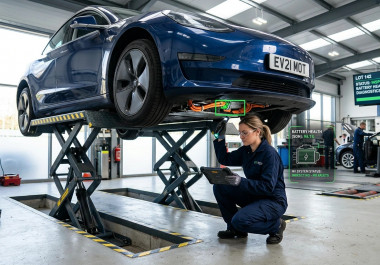
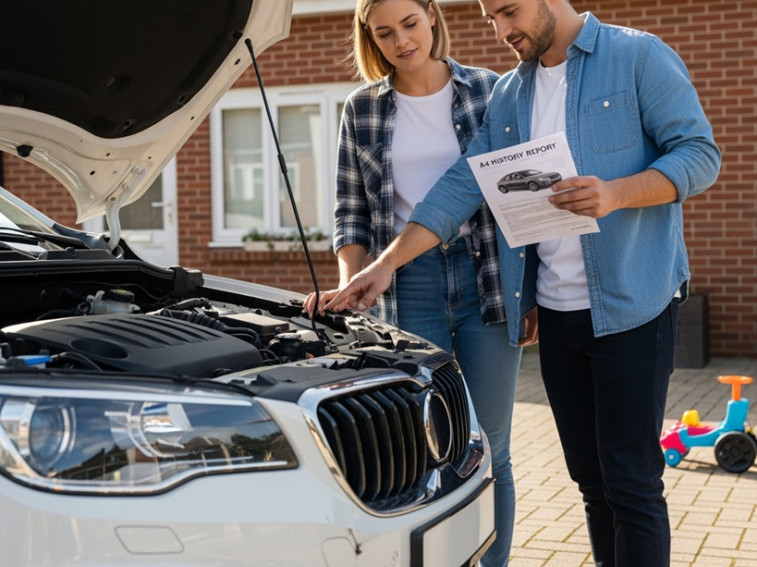
Before placing any bids on salvage car auctions UK, buyers must obtain the V5C logbook details and run a comprehensive background check. This confirms the exact salvage category and reveals any hidden history, such as stolen-recovered status, outstanding finance, or issues with prior salvage vehicle registration. In addition, booking a professional pre-purchase mechanical inspection is highly recommended. A qualified technician will verify frame alignment, brake system responsiveness, suspension integrity, and ensure no hidden electronic faults exist beneath the cosmetic damage.
Industry professionals frequently observe cases where seemingly perfect structural repairs mask poor welding that would fail a standard MOT. Relying solely on auction photographs is a risk; an independent physical assessment guarantees the vehicle meets the strict safety standards required for family transport.
Sourcing and Bidding Strategies
Not all auction environments are tailored for private buyers. Some platforms cater exclusively to high-volume trade purchasers. Identifying online platforms hosting damaged cars for sale that provide clear, transparent damage descriptions and high-resolution imagery is crucial for making informed decisions.
Timing also heavily influences the final price. Auctions concluding midweek during standard working hours typically attract less competition than those ending on a Saturday morning. Tracking identical models over several weeks helps buyers establish a realistic pricing baseline. When bidding, families must set a firm mathematical ceiling that includes the purchase price, parts, labour, and transport, refusing to exceed this limit regardless of live auction pressure.
Navigating Insurance and Administration
Arranging insurance requires proactive research. Some mainstream providers hesitate to cover Category S vehicles, while others apply premium loadings that erode the initial financial savings. Specialist insurers are generally more accommodating, as they assess each repaired vehicle individually rather than applying blanket automated rejections.
To secure the best rates, buyers must compile comprehensive salvage documentation. This includes detailed repair invoices, photographic evidence of the restoration process, and an independent engineer's report confirming total roadworthiness. While comprehensive cover generally costs more for a categorised vehicle, third-party policies rarely offer significant savings and fail to provide the necessary protection a family requires.
Administrative compliance is equally vital. Proper salvage vehicle registration must be completed with the DVLA, and missing paperwork can leave a buyer unable to tax or legally drive their newly repaired car.
Repair Protocols and Long-Term Value
Categorising repairs ensures the budget is managed safely. Minor cosmetic fixes, such as replacing bolt-on bumpers or fitting new light clusters, can often be safely managed domestically. However, any repairs involving safety systems, structural alignment, or complex electronics absolutely demand certified professional intervention.
Looking long-term, a properly repaired salvage vehicle holds its value differently than a clean-title car. A repaired Category N vehicle typically sells for 20% to 30% less than a non-categorised equivalent. However, because the family acquired the asset for 30% to 40% less initially through online car bidding, the financial advantage remains intact.
To maximise future resale value, maintaining meticulous service records is essential. Retaining all MOT certificates, professional repair invoices, and comprehensive salvage documentation proves the vehicle has been uncompromisingly maintained.
The Bottom Line
Sourcing family salvage cars is not a guaranteed shortcut; it requires diligent research, strict budgeting, and realistic expectations. However, for young families requiring dependable transport while managing strict financial limits, these vehicles offer an exceptionally practical solution.
By targeting non-structural damage, enforcing rigorous independent safety checks, and focusing on reliable models, buyers can secure excellent budget vehicle options for significantly less capital. The savings achieved can then be reallocated to other essential family priorities.
When you are ready to secure your next family vehicle, simply explore the RAW2K platform to review current listings.
By choosing to register for salvage auctions, you can begin placing strategic bids and safely navigate the salvage market today.