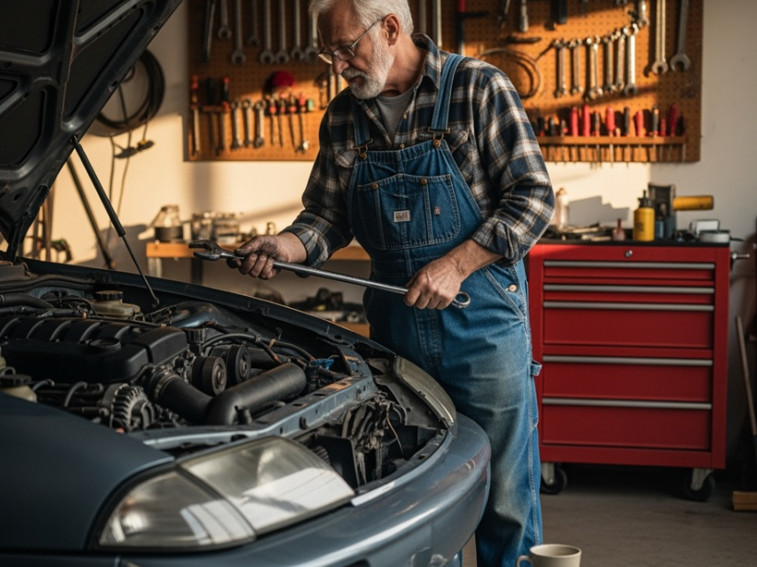
Retirement significantly alters daily routines. Stepping away from strict deadlines provides an abundance of time, and for those who have spent decades within the motor trade, leaving the professional workshop does not necessitate abandoning automotive passions.
Engaging in retired enthusiasts salvage projects offers a rare combination: a substantial technical challenge that remains financially manageable. These vehicles are not pristine showroom models; they possess complex histories and require dedicated attention. Whether demanding a comprehensive mechanical overhaul or precise cosmetic refinement, these projects provide a compelling reason to apply accumulated expertise. For individuals who appreciate automotive engineering and the satisfaction of complex problem-solving, undertaking retirement hobby projects fills the professional void perfectly.
The Economics and Flexibility of Retirement Projects
Unrestricted time is the primary advantage when approaching any vehicle restoration. Unlike younger enthusiasts balancing careers and family commitments, retired professionals can operate at their own pace. Sourcing specific components or meticulously fitting complex parts can be executed without strict time constraints.
Cost management is also a critical factor, and salvage vehicles deliver inherent value that standard used cars cannot replicate. Buyers are acquiring potential rather than polished aesthetics. A structurally sound vehicle with front-end damage might cost significantly less than its undamaged equivalent, yet the core mechanical components often remain perfectly sound. For someone experienced in classic car mechanics, this is not a deterrent; it is a calculated opportunity.
After decades in the trade, experienced individuals recognise the difference between a sound repair and a poor compromise. This expertise transforms salvage acquisition from a gamble into a calculated financial decision. Buyers assess risk using decades of knowledge, ensuring their retired enthusiasts salvage investment remains economically viable.
Understanding Salvage Categories and Structural Implications
Insurance companies classify damaged vehicles into strict categories, and understanding these parameters is essential before committing capital. Category A and Category B vehicles should be entirely avoided, as they are designated strictly for scrap or parts, with no legal route back to public roads.
Category S indicates structural damage. The frame, chassis, or core structure has sustained an impact. These projects require professional assessment, proper alignment equipment, and meticulous repair documentation. Re-registering these vehicles requires comprehensive receipts and often an independent engineer's report before the DVLA approves road use.
Category N covers non-structural damage. This includes electrical faults, minor interior damage, or cosmetic issues that simply exceeded the pre-accident salvage value. These typically form the best foundations for retirement hobby projects because the core vehicle remains structurally uncompromised. Exploring damaged cars for sale within this category often reveals vehicles requiring simple replacement panels rather than highly specialised structural welding equipment.
Sourcing and Evaluating the Right Project Vehicle
Digital platforms have transformed how buyers access damaged inventory. It is now possible to evaluate hundreds of vehicles remotely when you buy salvage cars online. Filtering by make, model, and damage type streamlines the acquisition process significantly, ensuring buyers only view relevant stock.
Inspecting photographic evidence requires professional scepticism. While listings include multiple angles, experienced buyers look for subtle indicators such as uneven panel gaps or hidden rust in wheel arches. Missing documentation, such as the absence of a V5C logbook, often signals a complicated ownership history that may delay restoration progress.
Setting a strict budget prior to bidding is crucial. Restoration projects naturally expand, so factoring in parts, labour valuation, transport, and a 20% contingency fund is vital. If a strict budget is set at £3,000, bidding must cease at £2,400 to accommodate these secondary costs. Auction fever ruins more restoration projects than underlying mechanical faults.
Optimal Vehicle Profiles for Domestic Restoration
Classic British models offer exceptional parts availability and strong community support. Vehicles from the 1960s and 1970s feature straightforward classic car mechanics, and fitting replacement parts rarely requires modern diagnostic computers.
Modern classics from the 1980s and 1990s provide a sensible middle ground. Vehicles like early Mazda MX-5s or BMW E30s blend relative mechanical simplicity with enough modern reliability for regular use. Parts remain highly accessible through specialist breakers and community networks.
It is generally advised to avoid modern prestige marques unless the buyer possesses deep financial reserves and highly specialised electrical knowledge. Exploring online vehicle auctions for luxury German vehicles might reveal low initial purchase prices, but the replacement components and complex control modules can quickly exceed the pre-accident salvage value, rendering the project financially unviable.
Essential Skills and Workshop Requirements
A fully equipped commercial facility is not necessary to commence a project. Basic mechanical competence is the primary requirement. The ability to safely replace suspension components and diagnose electrical faults using a multimeter provides the foundation for most restorations.
Welding proficiency separates casual hobbyists from serious restorers. Tackling structural rust remediation requires solid MIG welding capabilities. For diagnostics on post-2001 vehicles, basic OBD-II scanners prevent expensive guesswork when dashboard warning lights illuminate.
Maintaining rigorous documentation is equally important. Photographing the damage prior to repair, cataloguing removed parts, and recording completed work provides an essential paper trail. For buyers sourcing stock from local salvage auction yards, this photographic evidence proves the quality of the restoration to DVLA inspectors and future purchasers.
Navigating Administration and Legal Compliance
Re-registering a categorised vehicle requires specific administrative diligence. The DVLA scrutinises structural repairs carefully, necessitating proof of ownership and comprehensive receipts for all utilized components. In addition, MOT testing is mandatory before taxing the restored vehicle. Engaging with a testing facility that understands the nuances of salvage restoration ensures a fair and thorough examination.
Insurance also demands proactive research. Specialist insurers evaluate risk based on documented repair quality rather than solely relying on the insurance marker. Engaging with salvage car auctions UK necessitates a strict adherence to these legal protocols before returning any vehicle to the road.
Connecting with a dedicated vehicle restoration community provides invaluable support throughout this process. Engaging with marque-specific forums offers troubleshooting advice and parts recommendations when complex issues arise. Experienced restorers share their knowledge freely, and this collective wisdom saves significant diagnostic time. When encountering highly specialised tasks, outsourcing to certified professionals is often the most efficient approach.
Should buyers have general inquiries regarding documentation requirements or specific bidding procedures, dedicated customer support is readily available to provide reliable platform assistance.
The Bottom Line
Retirement represents an opportunity to redirect professional energy toward deeply rewarding automotive challenges. Engaging in retired enthusiasts salvage projects perfectly combines technical problem-solving with tangible, practical accomplishments. The financial investment remains highly controllable, and the social connections built within the vehicle restoration community effectively combat isolation.
To explore available models and assess current market pricing, buyers can browse the RAW2K platform to locate appropriate project foundations.
Once prepared to secure a vehicle, simply choose to register for salvage auctions to begin placing strategic bids and initiate your next major automotive build today.