You have just secured the winning proxy bid on a 1.5-tonne mini digger. Or perhaps you successfully outbid the competition on a premium Yamaha R6 featuring a seized engine. The excitement of the digital win is immediate, but it must be quickly followed by clinical logistical execution. You now have a very tight, highly regulated window of time to extract that asset from a secure digital platform compound.
Buyers across the UK frequently celebrate massive bargains online, only to panic an hour later when they realise they have exactly 48 hours to collect a heavy excavator from a storage hub located 200 miles away. Amateurs frequently arrive in standard transit vans lacking heavy-duty ramps, spending hours attempting to manhandle completely uncooperative machinery, and risking severe injury or secondary damage to the vehicle. Securing your auction win safely is not simply about hiring the cheapest available van. It requires the correct heavy-duty equipment, precise paperwork, and meticulous advance planning. Knowing exactly how to transport motorcycle after auction purchases—and mastering the completely different science of heavy plant machinery logistics—prevents a profitable digital acquisition from transforming into an incredibly expensive logistical nightmare.
Why Transport Planning Matters Before You Bid
The vast majority of novice auction buyers focus entirely on the digital hammer price. They monitor the listing, set their strict maximum budget, and submit their proxy bid without factoring in the immediate, inescapable cost of physical extraction. This oversight is a guaranteed route to destroying your carefully calculated profit margins.
Transport costs dictate ultimate profitability. A £500 damaged motorcycle instantly becomes a £900 liability if you must pay a specialist courier £400 to extract it from a compound located across the country. A heavily discounted site dumper completely loses its financial appeal if you are forced to hire a low-loader and a specialist haulier simply to move it. Before you ever place a bid, you must digitally assess the exact location of the asset, accurately calculate the mileage to your workshop, and assess the vehicle's rolling condition. If the digital photos show flat tyres, missing wheels, or a completely seized drivetrain, you must instantly adjust your transport budget to accommodate specialist winch-loading recovery equipment.
Transporting Motorcycles: The Professional Options
Motorcycles are undeniably easier to extract than commercial heavy plant, but they remain highly vulnerable to transit damage if handled incorrectly. If you are buying from a significant distance or lack your own transport hardware, hiring a professional auction courier is the absolute safest operational route. Professional UK motorcycle couriers utilize fully enclosed vans fitted with dedicated front-wheel chocks and heavy-duty floor anchors. Expect to pay between £1.00 and £1.50 per mile for a solo bike, with strict premiums applied for urgent, next-day compound extractions.
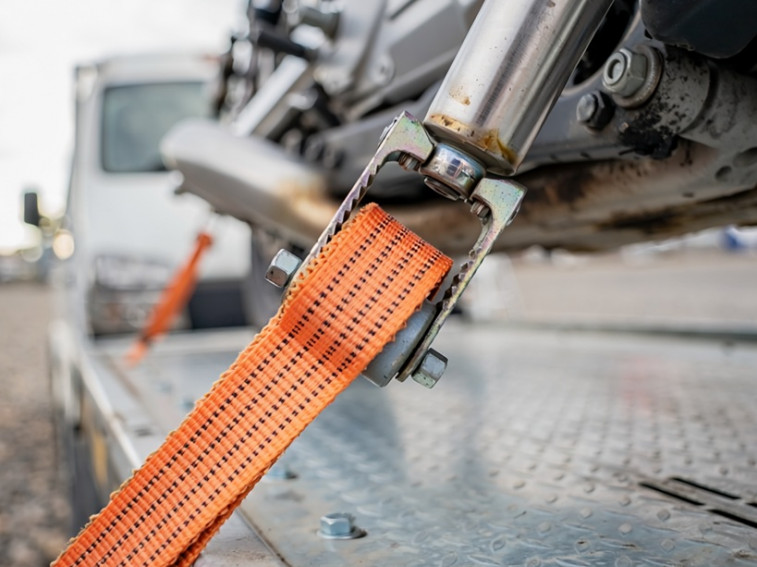
If you are executing self-transport using a standard commercial van, you must possess the correct extraction equipment. Do not attempt to lift a 200kg machine manually. You require heavy-duty aluminium loading ramps rated for a minimum of 300kg, a dedicated wheel chock to prevent the front wheel from twisting, and a minimum of four heavy-duty ratchet straps. When securing the machine, compress the front suspension slightly and strap directly to the lower triple clamps or the solid main frame. Never run securing straps over fragile plastic fairings, seats, or mirrors, as the immense transit pressure will instantly shatter them.
Motorcycle Trailer Towing Considerations
For trade professionals who regularly acquire two-wheeled inventory, investing in a dedicated single-bike trailer is highly cost-effective. Used trailers typically cost between £300 and £500, rapidly paying for themselves after just a few compound collections. If you choose this route, you must rigidly verify your specific car's towing capacity within the manufacturer handbook; standard hatchbacks are typically restricted to unbraked loads of 500kg to 750kg.
Towing alters vehicle handling dramatically. You must allow for significantly increased braking distances and massively reduced cornering speeds. Furthermore, you must verify your commercial insurance policy explicitly covers in-transit goods. Standard domestic car insurance frequently excludes coverage for valuable assets being towed on an open trailer, leaving you completely exposed if a highway accident occurs during the extraction journey.
The "Riding Home" Myth and Compound Rules
A dangerous myth persists among amateur buyers that if a confiscated or mildly damaged motorcycle possesses a valid MOT, it can simply be ridden home from the auction. This is absolutely false. Modern secure salvage compounds operate under massive liability restrictions and exceedingly strict Health and Safety Executive (HSE) guidelines.
You are strictly prohibited from starting an engine or riding any vehicle out of the compound gates, regardless of its legal road status. The environment is heavily active with forklifts and heavy loaders; public driving is entirely banned. Every single vehicle must be extracted via a professional flatbed recovery truck, a secure trailer, or a loaded van. Furthermore, you are purchasing "sold as seen" salvage. Riding a machine with an entirely unknown mechanical history at highway speeds is incredibly dangerous. Minor impacts frequently cause severe, hidden stress fractures to brake lines or steering head bearings that will fail catastrophically under load.
Moving Plant Machinery: Weight and Dimensions
Extracting heavy agricultural or construction equipment completely shifts the logistical parameters. You cannot rely on a standard commercial van. Plant machinery transport demands highly specialised, heavy-duty commercial haulage. Before you attempt to arrange collection, you must meticulously verify the absolute gross weight and physical dimensions of the specific machine.
A highly compact 1.5-tonne mini digger weighs exactly 1,500kg, while a mid-range site excavator easily exceeds 5,000kg. You must extract this data from the provided digital auction listing or rigorously check the manufacturer's technical specification sheets. Width and height are equally critical; a machine featuring a fixed safety cab might be too tall for standard transport routes featuring low railway bridges, or too wide for a standard plant trailer. Furthermore, if the digital photos show shredded rubber tracks or heavily seized hydraulic drive motors, you must explicitly inform your haulier that the machine requires a heavy-duty commercial winch to load.
Low-Loader and Plant Trailer Hiring
If you possess a heavy commercial 4x4 capable of legally towing 3,500kg, hiring a dedicated plant trailer from a local tool hire firm (£80 to £150 per day) is a highly viable extraction method for lighter machinery. However, for anything exceeding that strict weight limit, you must hire a professional low-loader operator.
When you contract a professional haulier for heavy site equipment, expect to pay between £2.00 and £5.00 per mile. Because highly secure salvage compounds strictly prohibit third-party HIAB cranes from operating within their perimeters for Health and Safety reasons, you must explicitly coordinate the extraction with the compound manager. Typically, the compound's own heavy telehandlers will physically load the dead asset onto your hired flatbed, but this logistical requirement must be confirmed long before you submit your maximum proxy bid.
Plant Machinery Transport Legal Requirements
Moving heavy commercial assets on UK public roads is heavily monitored and aggressively enforced by the DVLA and highway authorities. If you are self-towing, you must strictly adhere to licence weight categories, just as you would when arranging collection from a standard vehicle auction. A standard Category B car licence only permits towing if the combined weight of the vehicle, the trailer, and the load remains strictly under 3,500kg.
For heavier loads, you must possess a Category B+E licence (car and heavy trailer) or a Category C1 commercial licence. Furthermore, towing a trailer completely alters your legal speed limits; you are strictly restricted to 60mph on motorways and dual carriageways, and 50mph on standard single carriageways. Professional hauliers inherently manage these complex legalities, which is why commercial buyers frequently outsource heavy extraction entirely to protect their operator licences.
Load Securing Techniques for Heavy Assets
The physical mass of plant machinery makes load shifting incredibly dangerous. Unlike securing standard passenger cars sourced from salvage cars platforms, standard automotive straps are entirely insufficient for heavy plant. You must utilize heavy-duty commercial ratchet straps rated for a minimum breaking strain of two tonnes.
For tracked machinery, standard fabric straps frequently slip against the heavy steel or rubber tracks. You must use heavy-duty grab-hook chains combined with commercial load binders to anchor the machine directly to the trailer's designated lashing rings. Always utilize heavy wooden blocks or dedicated wheel chocks to completely neutralize forward and backward rolling momentum. Once loaded, it is a strict commercial transport rule to pull over after the first twenty miles to manually re-tension every single strap or chain, as heavy machinery frequently settles onto its suspension during transit.
Collection Deadline and Paperwork Management
Online liquidation platforms operate on incredibly tight logistical schedules. Once your cleared payment is received, you typically have a strict window of 3 to 5 working days to complete the physical extraction. Failing to meet this strict deadline results in severe, rapidly accumulating daily storage fees, exactly as it does when purchasing standard fleet stock from car auctions uk.
Paperwork must also be meticulously managed. In the salvage market, the original V5C logbook is frequently surrendered to the insurer or destroyed. If the digital listing states the logbook is missing, you must manually submit a V62 application form to the DVLA to establish yourself as the new registered keeper. In the interim, your official auction platform receipt serves as your absolute proof of legal ownership during transit. If you are specifically using a motorcycle auction to source inventory, ensure your designated courier possesses a copy of this release documentation to prevent delays at the compound security gate.
If you miscalculate the transport logistics and discover that moving a severely damaged, heavy machine costs significantly more than the asset is actually worth, running a rapid scrap my car or heavy metal recycling valuation on the raw materials can occasionally help mitigate a disastrous financial exposure.
Pre-Collection Checklist and Final Verification
Before your recovery truck departs for the secure RAW2K compound, you must execute a clinical final checklist. Verify the specific opening hours of the storage facility; compounds operate strictly on standard commercial hours and will turn away hauliers who arrive late. You must ensure the driver possesses valid photographic identification and the correct, digitally barcoded release paperwork.
Upon arrival, immediately verify the asset against the digital listing photos before loading commences. If new, entirely unlisted transit damage has occurred while the vehicle was stored at the compound, it must be reported to the site manager immediately, before the asset crosses the perimeter gate. Once you sign the release manifest and drive away, you accept absolute liability for the current condition of the vehicle.
Conclusion
Properly calculating how to transport motorcycle after auction wins, or managing the heavy logistics of commercial plant machinery transport, is the ultimate difference between a highly profitable acquisition and a massive financial loss. The digital hammer price is never the final figure; haulage is a mandatory, immovable operational expense.
For heavy machinery, rely entirely on professional commercial hauliers equipped with appropriate low-loaders. For two-wheeled inventory, utilizing professional couriers or investing in proper ramp equipment ensures the asset reaches your workshop completely unscathed. Always verify the physical dimensions, accurately assess the rolling condition, and ensure your collection falls strictly within the designated compound timeframe.
If you require specific guidance regarding compound locations, collection deadlines, or specific vehicle dimensions prior to placing a bid, please contact our team for professional assistance. To begin actively sourcing and safely extracting premium salvage inventory for your workshop or business, create your professional profile and register to bid today.