Securing a potential bargain from online vehicle auctions requires more than just identifying visible damage; it demands a keen eye for issues that often remain completely hidden until repair work commences. For buyers, professional dealers, or enthusiastic restorers, the ability to spot structural damage on salvage cars before you bid is invaluable. This skill transforms an uncertain gamble into a calculated, informed decision.
Whilst cosmetic damage is usually obvious from photographs in auction listings, the structural implications of an impact are often far less visible. Identifying hidden damage in salvage vehicles protects you from unforeseen repair costs that can quickly erode the value of even the cheapest purchase. Understanding how forces translate through a vehicle's chassis and bodywork is crucial for accurate assessment. A minor-looking scrape might conceal a catastrophic chassis buckle, whilst a door that sits slightly proud can signal significant structural misalignment. The ability to read these subtle signs separates successful auction buyers from those who end up with expensive mistakes. This comprehensive guide will equip you with practical inspection techniques that can be applied remotely, using only the information provided in an online listing.
Understanding Salvage Categories and Their Structural Implications
Before inspecting any vehicle for hidden problems, you must be familiar with the salvage categorisation system used in the UK. These codes immediately tell you the extent and type of damage the vehicle has sustained, which influences both the repair costs and the methods required to return the car to the road. Ignoring these classifications is the fastest way to miscalculate your investment.
Category S: Structural Damage
Category S (formerly Category C) denotes a car that has sustained structural damage, meaning the vehicle's chassis, monocoque, or subframe has been impacted, bent, or compromised. Whilst repairable, structural damage requires professional jig work and specialist alignment equipment to restore the car to safe operating condition. These repairs are expensive and time-consuming, making structural problems Cat S cars a more complex purchase. Without proper equipment and expertise, even minor chassis distortions remain invisible, yet they fundamentally compromise the car's safety and handling.
Category N: Non-Structural Damage
Category N (formerly Category D) covers non-structural damage, which includes engine faults, cosmetic bodywork, or electrical issues. Although easier to repair than Cat S vehicles, these cars can still harbour hidden damage in salvage vehicles that extends far beyond the initial assessment. For instance, water ingress that led to a Cat N classification might have invisibly corroded wiring looms that only fail months after purchase. Don't assume that non-structural automatically means simple; thorough inspection is still required.
Spotting Structural Damage Remotely via Auction Listings
For buyers unable to physically inspect a vehicle before auction close, the high-quality photographs and vehicle descriptions provided by reputable platforms like RAW2K are your primary tools. Learning to analyse these resources effectively allows you to spot structural damage on salvage cars from the comfort of your workshop or home. This section details the specific visual cues that betray underlying structural problems.
Analysing Panel Gaps and Alignment
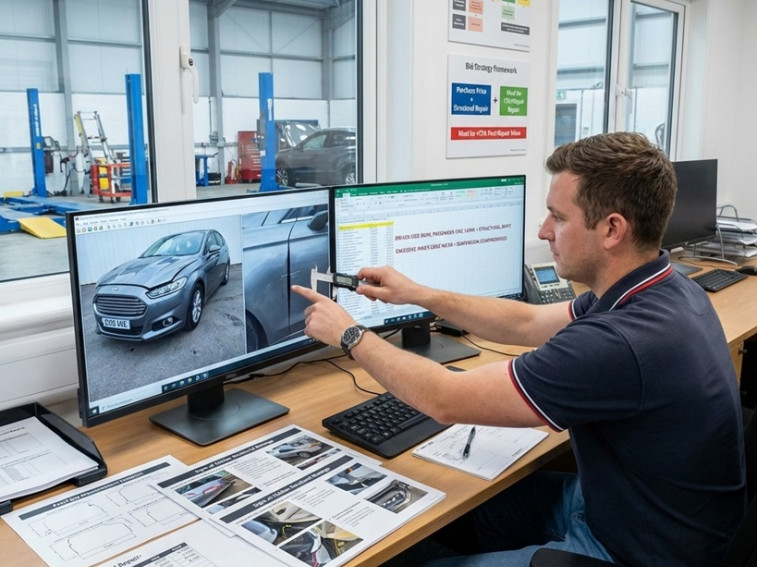
One of the most reliable indicators of hidden chassis damage is inconsistent panel gaps. Compare the space between the bonnet and the wings on both sides of the car. Measure the gap between the door and the rear quarter panel, and then check if it matches the opposite side. If you notice that one side has a significantly wider or narrower gap, it strongly suggests that the underlying structure has shifted. Even a difference of just a few millimetres indicates frame distortion.
Similarly, inspect how the doors and boot or tailgate sit within their apertures. If a door appears proud at the bottom but flush at the top, the subframe or sill beneath has likely bent. This uneven sitting is a classic sign of an improperly repaired chassis. Fresh paint or colour mismatches are obvious indicators, but look deeper for signs of hurried repair work through online salvage car auction listings.
Checking Paint Condition and Overspray
Fresh paint or colour mismatches are obvious indicators of prior damage, but look deeper for signs of hurried or poor-quality repair work. Examine areas around the bonnet, door shuts, and sills for overspray or paint misting on rubber seals, plastic trims, or glass edges. This suggests the car was repainted quickly, potentially to disguise a more serious issue. If a Cat S car shows extensive repainting but the structural alignment still looks off, that's a major red flag that corner-cutting occurred during the repair process.
The Telltale Signs of Chassis and Subframe Distortion
The chassis and subframe are the foundation of a vehicle's structural integrity. Damage to these areas is often invisible in static photos unless you know exactly what to look for. By understanding how impact forces distribute through a car, you can infer structural compromise from secondary indicators.
Tyre Wear Patterns and Camber Issues
Uneven tyre wear is one of the most reliable external signs of structural misalignment. If the inner or outer edge of a tyre is significantly more worn than the rest, it usually means the suspension geometry is incorrect. This misalignment occurs when the subframe or chassis is distorted through buy Cat S vehicles with full reports. Even if the listing states new tyres were fitted, check for unusual camber angles visible in the photographs. A wheel that leans inwards or outwards excessively indicates a bent mounting point or control arm, both of which are expensive structural repairs.
Floor and Sill Integrity
The sills and floor pan are crucial load-bearing members of the vehicle's structure. Rust, cracks, or patches in these areas weaken the entire car's rigidity. If you spot any welding repairs to the sills or floor in the photos, investigate further, as amateur welding often fails to restore full structural strength. For salvage car damage inspection purposes, any weakness here should prompt questions about the full extent of the damage.
Advanced Remote Inspection Techniques
Professional buyers use advanced methods to assess hidden damage that go beyond simple visual checks. Applying these techniques, even remotely, can significantly improve your bidding accuracy.
Scrutinising Suspension and Steering Components
Damaged suspension mounting points or bent steering components directly result from structural impacts. Zoom into images showing the wheel wells and undercarriage. Look for bent control arms, twisted tie rods, or misaligned shock absorber towers. If any of these components appear out of position or show fresh paint, it confirms a significant structural event. Suspension components should be symmetrical; if one side looks different to the other, further investigation is essential. For serious buyers, it's worth arranging an independent inspection to confirm suspicions before bidding. These same principles apply whether you're inspecting cars or reviewing motorcycle salvage listings where frame straightness is paramount.
Assessing Engine Bay Alignment
The engine bay offers crucial clues about the overall structural health of a vehicle. Check that the radiator support panel (the metal structure behind the bumper) is level and square. If it sits at an angle or shows buckling, the front end sustained a heavy impact. Similarly, examine the strut towers (the metal towers the suspension mounts to); they should be symmetrical, vertical, and free from cracks or fresh welds. These areas are often overlooked but are vital for revealing hidden damage in salvage vehicles.
Strategic Considerations Before Bidding
Once you've identified potential structural issues, the next step is determining whether the repair is economically viable. Not every salvage car is a lost cause, but the cost-benefit analysis must be rigorous to avoid financial disaster.
Calculating Repair Feasibility
If your inspection reveals structural problems Cat S cars typically have, you must obtain realistic repair quotes before bidding. Contact a specialist body shop that has chassis jig equipment and explain the extent of the damage based on your findings. Professional jig work is expensive, often exceeding £2,000-£3,000 depending on complexity. Add this figure to the auction price, plus parts, paint, and your own time. If the total cost approaches or exceeds 75% of the vehicle's retail value post-repair, the project is financially questionable.
When sourcing salvage vehicles, platforms with nationwide auction coverage provide access to diverse stock across the UK, allowing you to compare vehicles from multiple regions before committing to a purchase. If you have questions about the auction platform or need help with your account, contact support for assistance.
Planning for Post-Purchase Verification
Even if you've conducted an exhaustive remote inspection, always budget for a professional, hands-on inspection immediately after securing the vehicle. This physical check will reveal any issues that were impossible to spot from photographs alone. Many buyers use independent regional inspection services or transport the car to trusted mechanics for a full structural assessment before committing to the repair.
The ability to spot structural damage on salvage cars from remote listings is a learnable skill that directly impacts your auction success rate. By understanding salvage categories, scrutinising panel alignment, and analysing secondary damage indicators, you can make informed bids that balance risk with reward. Combining this expertise with a realistic budget for professional inspections and structural repairs ensures you secure genuinely good deals, not expensive problems. Start your account today to begin bidding with confidence.