Purchasing from salvage vehicle auctions is often a strategic financial decision, especially when the damage is limited to cosmetic issues. These Category N vehicles present excellent opportunities for skilled DIY enthusiasts or trade professionals seeking low-cost stock. Understanding how to tackle car body repair efficiently and affordably is the key to maximising your profit or enjoying your newly restored vehicle. By focusing on non-structural imperfections, you can significantly enhance a vehicle's value without incurring prohibitive costs.
Acquiring the right knowledge is crucial for accurately assessing, budgeting for, and executing high-quality, budget-friendly car body repair work. Achieving great results doesn't require a professional workshop; it demands patience, the right materials, and a disciplined approach. Buyers will gain essential insights into everything from smart sourcing of used replacement parts to techniques for flawlessly blending new paintwork.
Accurately Assessing Damage Before You Bid
Before placing a bid, buyers must distinguish between damage that is purely aesthetic and damage that hints at deeper structural problems. Category N vehicles might look rough on the outside but are typically sound underneath. Conversely, a vehicle designated as Category S requires a much more intensive and expensive approach that often requires professional intervention.
Differentiating Cosmetic and Structural Issues
Cosmetic car repair involves the exterior panels, interior trim, paintwork, and non-essential lighting components. These issues don't compromise the safety or integrity of the vehicle's core chassis or steering mechanism. However, when reviewing Category N stock, particularly those listed with accident history, always check beyond the obvious dent. Look closely at door gaps, bonnet alignment, and the fit of the wings to spot underlying shifts that require advanced techniques beyond basic car body repair.
If a vehicle is flagged as Category S, it means damage has occurred to the structural frame and professional jig work is mandatory for a safe, legal return to the road. Should a project reveal severe underlying frame damage, utilising a scrap car collection service allows you to responsibly dispose of the shell and recoup some capital. For budget-conscious restoration, stick primarily to Category N vehicles or used vehicles with clearly defined surface imperfections. Commercial vehicles often show similar cosmetic damage patterns, and proactive assessment ensures any project remains financially viable and manageable.
The Essential Remote Inspection Toolkit
While bidding primarily takes place online, customers can conduct a thorough remote inspection using the detailed documentation provided by the auction house. Never rely on one image; scrutinise every photo, paying special attention to angles that show panel joins or wheel arches. You are looking for clear indicators of the damage type, depth, and location before participating in salvage vehicle auctions.
Your virtual toolkit should include:
-
High-Resolution Zoom: Examine close-ups for spiderweb cracks in the paint, deep key marks, or signs of rust bubbling under the surface.
-
Documentation Review: Cross-reference the description of the damage with the images provided to confirm consistency and transparency.
-
Budget Calculator: Immediately estimate repair costs for the visible damage, adding a contingency for hidden clips or unexpected issues before sourcing used replacement parts.
If you have specific questions about a lot or need more clarity on the vehicle's condition before committing, you should always consult our salvage vehicle buying guide. Detailed documentation and support channels exist to ensure you can make informed bidding decisions.
Practical Techniques and Smart Parts Sourcing
Effective car body repair work on minor imperfections can be completed at home with standard tools and readily available materials, significantly cutting down on garage costs. Targeted repairs allow for a huge visual difference without heavy investment. The key is knowing which tool is appropriate for the imperfection being tackled during a cosmetic car repair.
Addressing Minor Scratches and Dents
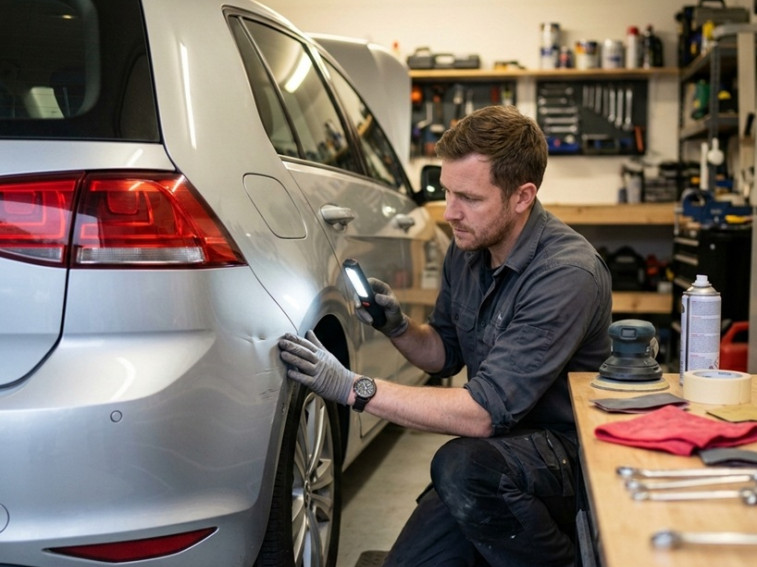
Scratches that haven't penetrated the clear coat layer are the easiest and cheapest fixes, typically only requiring some elbow grease. Use a high-quality cutting compound applied with a machine polisher or even a microfibre towel for smaller areas. For smaller, smooth dents where the paint hasn't cracked, paintless dent removal tools gently massage the metal back into its original shape from the inside. Mastering basic paintless dent removal techniques can save hundreds of pounds per panel.
For larger, sharper dents where paint has been damaged, filling and sanding are required. Use a quality two-part filler, applying it in thin, multiple layers, and sanding down gradually until the area is perfectly flush with the surrounding panel. This preparation is critical for a professional finish. Buyers seeking smaller used replacement parts might find suitable options through salvage motorcycle auctions UK, as many small electrical or hardware components are transferable across vehicle types.
Maximising Savings Through Used Parts
The cost of replacement parts can quickly erode any budget, especially when defaulting to brand-new original equipment manufacturer (OEM) components. Savvy buyers know it pays to explore damaged vehicle auctions to secure parts affordably. When inspecting potential donor vehicles, headlight units or bumper covers too damaged to repair can often be replaced affordably at a fraction of the cost of new components.
If replacing an entire panel, finding identical salvage cars for sale can sometimes yield parts in the exact colour you need. Otherwise, focus the paint job just on that area and blend the clear coat into the neighbouring panels to prevent sharp colour lines. Achieving a seamless paint repair is the final hurdle in any cosmetic car repair. Use the vehicle's paint code to get a professional match, and remember that good prep work accounts for 80% of a successful finish.
Knowing When to Seek Professional Assistance
While the DIY approach saves money on basic tasks, some jobs exceed the scope of a home garage and can negatively impact the vehicle's future value if done poorly. Recognising one's limits is a sign of a truly smart restorer working on Category N vehicles sourced from the RAW2K online salvage auction platform. The final outcome of the restoration must not only look good but also be durable and safe for the road.
If damage extends beyond the outer skin, such as hidden corrosion or serious misalignment of mounting points, it's time to consult a specialist. Advanced welding, specific frame pulling equipment, or intricate electrical diagnostics are best left to professionals. A small investment in professional paint blending for a repaired door, for instance, often delivers a return in a higher resale price.
Documenting Repairs and Maximising Resale Value
Proper documentation of all repairs is paramount, especially for vehicles purchased as salvage stock. Keep receipts for all materials, paint, and used replacement parts, and take photos throughout the restoration process. Buyers will pay a premium for a vehicle with a clear, transparent repair history. This documentation reinforces expertise and ensures trustworthiness when the vehicle is eventually sold. If you are ready to find your next project, complete your salvage auction registration to access current listings.
The ultimate goal of undertaking a cosmetic car repair on a budget is to transform a high-potential, low-cost purchase into a high-value asset. For general inquiries about the bidding process, contact our auction customer support team for assistance.