Responsible vehicle ownership extends far beyond driving and maintenance; it includes the careful handling of components at the end of their useful life. Tyres and batteries are two of the most environmentally challenging parts of any car, van, or motorcycle. They cannot simply be thrown away due to the toxic materials and non-biodegradable nature they contain. Knowing the correct procedures for safe tyre and battery recycling is essential for both private buyers and professional dealers handling vehicle stock. This guide outlines the best practices for ensuring these heavy items are processed safely and in line with UK environmental standards.
The Environmental Imperative of Vehicle Component Disposal
Improper disposal of vehicle components can lead to serious environmental contamination, affecting soil, water, and air quality. Components like batteries contain corrosive and toxic substances, whilst tyres represent a long-term landfill problem, taking centuries to decompose. Dealers who regularly acquire salvage vehicles or non-runners have an amplified responsibility to manage this waste stream correctly. Adopting sustainable practices protects the environment and enhances the reputation of all involved in the automotive sector through proper tyre recycling methods.
The Hidden Hazards of End-of-Life Vehicle Parts
Car batteries are particularly hazardous because they contain lead and highly corrosive sulfuric acid, both of which are toxic and dangerous if they leach into the ground. If a battery is damaged or leaks, the acid can cause severe chemical burns and contaminate local water systems. Tyres, when incorrectly stockpiled, can also become fire risks; these fires are notoriously difficult to extinguish and release heavy, toxic smoke into the atmosphere. This is why following established guidelines for safe tyre and battery recycling is a legal requirement as well as an ethical choice.
Linking Auctioned Vehicles to Sustainable Practice
Every vehicle purchased at auction, especially those listed in the salvage or non-runner categories, eventually enters a cycle of repair, reuse, or dismantling. Consider a scenario where a dealer buys ten Cat S vehicles from a regional auction for parts removal. Before stripping the cars for reusable components through salvage vehicles for breaking and recycling, they must systematically remove and separate all the end-of-life hazardous materials. These components should always have their batteries and tyres removed first. By managing the disposal process transparently, dealers help minimise the environmental footprint of the UK's used vehicle market.
Proper Tyre Recycling Methods: From Road to Resource
Tyres represent a massive waste volume globally, but modern recycling technology means very few tyre components should end up in a landfill. The vulcanised rubber structure makes tyres incredibly durable, which is precisely why they pose a long-term disposal challenge. By adhering to proper tyre recycling methods, you ensure this versatile material finds a second life in infrastructure and manufacturing. This process conserves finite resources and significantly reduces the need for raw materials.
Preparing Tyres for Collection
Before transporting tyres to a recycling facility, basic preparation ensures they are accepted and processed efficiently. Tyres must be free from excessive mud and debris, as cleaning heavy contamination adds cost and time to the recycler's process. The presence of metal wheel rims is the most common reason tyres are rejected by standard collection schemes. You should remove any rims or metal parts before disposal, as metal is often recycled separately.
It's also crucial to record the quantity of tyres being sent for recycling, especially for businesses, as this is often required for environmental compliance reporting. Never cut or attempt to shred tyres yourself, as specialised machinery is needed to safely process the tough rubber and internal steel belts. For those handling large quantities, such as dismantling teams working on stock sourced through RAW2K auctions, using a licensed waste carrier is mandatory.
Repurposing Rubber: The Second Life of Tyres
The effort put into recycling pays off dramatically because recycled rubber is an incredibly valuable resource. Once shredded and processed, the material is used in a vast range of secondary products. This closes the loop on the manufacturing process, transforming waste into usable goods and demonstrating proper tyre recycling methods.
Common second-life uses for recycled tyre rubber include:
-
Road Construction: Tyre chips are mixed with asphalt to create highly durable and flexible road surfaces, increasing longevity and reducing noise
-
Safety Surfaces: Rubber crumb is essential for manufacturing soft, protective flooring used in children's playgrounds and sports courts
-
Moulded Products: Recycled rubber is used to make items like speed bumps, floor mats, railway crossing foundations, and agricultural matting
-
Fuel Source: In some high-temperature industrial settings, shredded tyres are safely burned as a fuel source, known as Tyre Derived Fuel (TDF)
Ensuring Safe Tyre and Battery Recycling Practices
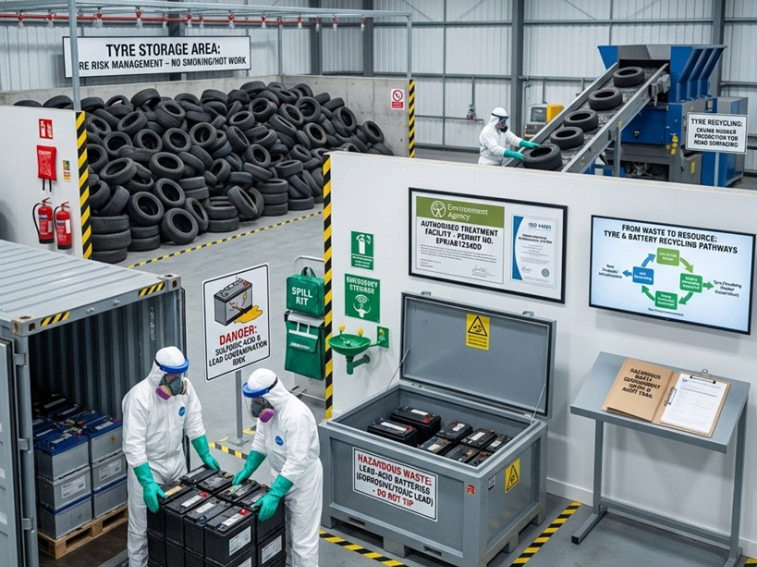
The potential harm associated with vehicle batteries requires stringent handling and disposal protocols to protect both human health and the environment. Lead-acid batteries are classified as hazardous waste and cannot be disposed of with general commercial or domestic rubbish. These regulations are designed to prevent accidental exposure to corrosive materials and heavy metals. Every private individual and business must adhere strictly to these rules for safe tyre and battery recycling.
The Dangers of Incorrect Battery Disposal
When batteries are sent to landfills, the casing eventually degrades, allowing the highly concentrated sulfuric acid and lead plates to seep into the surrounding environment. This poses an immediate threat to the ecosystem and can contaminate vital resources. Furthermore, the lead is a heavy metal that accumulates in the environment and the food chain, creating long-term health risks. This is why the processes involved in safe tyre and battery recycling differ significantly from standard waste management.
Even modern lithium-ion batteries, found in hybrid and electric vehicles available through buy hybrid and EV salvage cars, carry a significant risk if damaged or improperly stored. They are prone to thermal runaway, which can lead to intense, uncontrolled fires. For this reason, all automotive batteries must be securely contained, kept upright, and transported with care to dedicated recycling facilities.
Identifying Certified Recycling Schemes
In the UK, the disposal of hazardous waste like batteries is governed by environmental regulations that mandate the use of approved recycling schemes. Both dealers and private individuals should only use Authorised Treatment Facilities (ATFs) or registered waste carriers for collection and disposal. These facilities have the necessary infrastructure to neutralise the acid, safely separate the lead and plastic components, and ensure 100% recycling of the battery's core materials.
Always request proof of disposal, such as a waste transfer note, when handing over large quantities of batteries or tyres. This documentation provides a legal paper trail, proving that your responsibilities were fulfilled and the waste was handled by a licensed professional. Using an approved centre guarantees the material re-enters the circular economy responsibly.
Practical Steps for Vehicle Owners and Dealers
Integrating sustainable practices into your routine is straightforward once you know the basic legal and safety requirements. Whether you have one old tyre from a flat or several dozen from dismantling salvage auction inventory online, the steps remain consistent. Preparation and safe transport are the keys to a successful recycling experience.
Transporting Hazardous Waste Safely
When transporting batteries, ensure the terminals are covered or taped to prevent accidental short-circuiting, which can generate extreme heat and fire. Batteries should be secured in the vehicle so they cannot tip over, preventing the spillage of corrosive acid. Tyres are heavy and can shift during transit, so they should be stacked securely and strapped down to prevent them from becoming a hazard whilst driving. Never overload a standard vehicle when transporting these heavy items; make multiple trips or hire a professional waste carrier if necessary.
Finding Your Nearest Approved Recycling Centre
The easiest way to locate a facility that handles these specific items is through government-approved waste regulation websites or by contacting your local council. Many vehicle parts suppliers and scrap yards also act as collection points for old batteries, often offering a small rebate. Always use certified Authorised Treatment Facilities or registered waste carriers to ensure proper disposal and environmental compliance.
Start browsing the wide range of used, salvage, and seized vehicles today through nationwide auction listings. For those interested in smaller vehicles, motorbike sales offer additional opportunities for sustainable component management. Create your account now to access comprehensive listings and begin your journey towards proper tyre recycling methods and responsible disposal practices.