Successfully purchasing a vehicle and completing necessary repairs is a major achievement, especially when dealing with Category S or N inventory. Whilst the bodywork might look pristine and the engine may run smoothly, the unseen structural and electronic systems demand careful scrutiny before the car is declared roadworthy. Performing thorough safety checks for repaired vehicles protects you, your passengers, and other road users. This systematic approach ensures the vehicle meets all legal requirements and returns to its pre-loss operational standards.
This comprehensive guide is designed to help buyers, from those tackling a weekend project to those engaged in high-volume dealer vehicle sourcing, focus on the non-negotiable safety areas. Ignoring these vital checks can lead to serious legal and mechanical complications down the line. We aim to equip you with the expertise to confidently sign off on a vehicle's readiness for the road, establishing crucial post-repair vehicle safety protocols. Don't rush the final inspection; it is the most important stage of the entire restoration process.
Verifying Structural Integrity and Alignment
Structural damage is not always visible on the surface, which is why a repaired salvage car requires the most stringent checks once repair work is completed. A vehicle's primary safety mechanism is its ability to absorb impact predictably, something only possible with perfect chassis alignment. Compromised structure impacts handling, tyre wear, and most importantly, crash performance.
Assessing the Chassis and Subframe
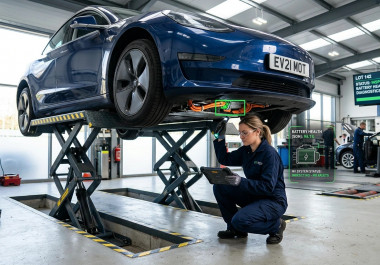
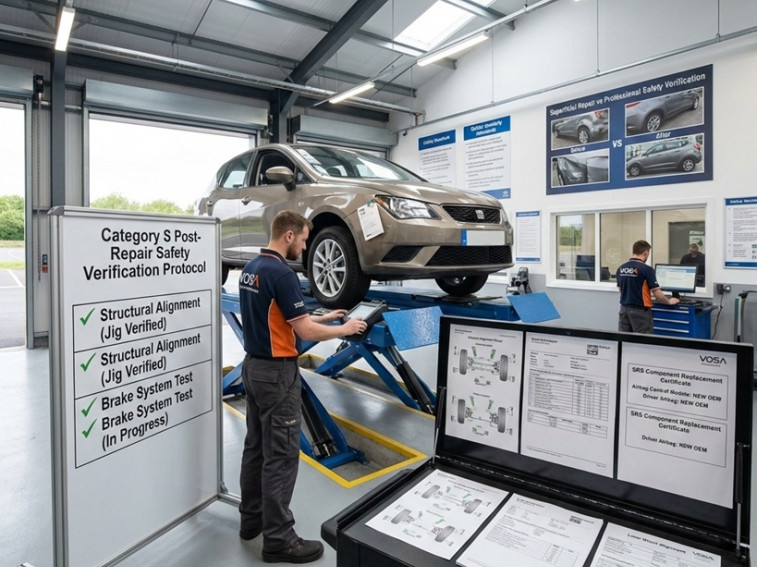
Any vehicle that has suffered significant impact damage, particularly Category S, must have its chassis measured against manufacturer specifications. Even small deviations in the main frame or subframe can affect suspension geometry and steering accuracy. Professional body shops use advanced jig equipment to confirm the frame is square and true to the factory setup. This confirmation is arguably the most critical step after heavy structural repairs have been performed. When sourcing salvage vehicles from platforms like RAW2K, correct wheel alignment is crucial for safe handling, braking stability, and preventing rapid tyre wear.
Wheel Alignment and Suspension Geometry
Correct wheel alignment is crucial for safe handling, braking stability, and preventing rapid tyre wear. Suspension components that were replaced or repaired need careful recalibration after the vehicle has been reassembled. Check that the steering wheel is centred when the car is driving straight and that the vehicle tracks perfectly without pulling to either side. You should always use a reputable centre equipped with laser tracking gear for this specific part of the safety checks for repaired vehicles.
Critical Systems: Braking and Steering
The braking and steering systems are your vehicle's first and last lines of defence in an emergency. If either system fails, the driver loses all control, highlighting why they must be tested extensively after any repair work. Even minor bodywork repairs can inadvertently affect wiring harnesses, leading to ABS sensor failures.
Comprehensive Brake System Overhaul
After a major repair, the entire braking system, including the master cylinder, lines, callipers, discs, and pads, should be scrutinised for air pockets, leaks, or component wear. The brake fluid needs to be fully flushed and replaced to ensure peak performance and to remove any contaminants introduced during the restoration process. A firm pedal feel is the minimum expectation, and you should always test the anti-lock braking system (ABS) activation in a controlled environment. Failing to verify the braking performance means the vehicle isn't just non-compliant, it's fundamentally unsafe.
Steering and Component Movement
Check all steering rack mounts, tie rods, and track rods for play, damage, or improper torquing. Smooth and predictable steering response is essential for maintaining control at speed. On many newer cars, the power steering pump or electronic assist module may require recalibration following component replacement. These intricate steps are part of the safety checks for repaired vehicles that separate a superficial restoration from a quality, roadworthy fix. Always turn the wheel lock-to-lock several times to listen for unusual noises or binding.
Supplemental Restraint System (SRS) Verification
The airbag and seatbelt pretensioner system is designed to operate once only. After an accident severe enough to trigger deployment, the entire supplemental restraint system must be replaced with brand-new OEM parts. This is not an area where compromises can be made; cheap aftermarket or second-hand components can fail catastrophically in a subsequent collision.
Replacing Critical SRS Components
Every deployed airbag, the main control module, the crash sensors, and the seatbelt pretensioners must be replaced. Simply clearing the fault codes without replacing the hardware is illegal and extremely dangerous. A professional repairer will issue a certificate confirming all components are new, correctly installed, and tested. This documentation is crucial for Category S vehicle safety compliance and should be retained for future resale.
Testing and Calibration
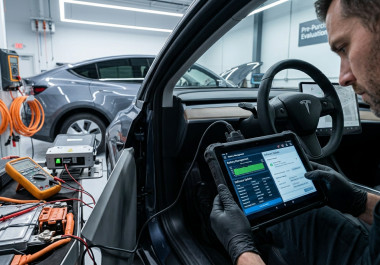
Modern vehicles have complex electronic control units that require recalibration after SRS component replacement. This process involves using specialist diagnostic tools to confirm the system is armed correctly and will deploy in the correct sequence during an impact. Without this step, even a car with new airbags might fail to protect occupants in an accident. A certified VOSA registered MOT tester can verify that all warning lights are functioning correctly and that there are no fault codes stored in the vehicle's memory.
Essential Lighting, Signalling, and Visibility Checks
Effective lighting and signalling is essential for road safety, particularly in poor weather or low-light conditions. After a repair, especially if there was frontal or rear-end damage, all lighting systems need to be inspected and tested.
Headlight Alignment and Lens Condition
Headlights must be aligned correctly to illuminate the road without dazzling oncoming drivers. Even if new headlights were fitted, they need professional alignment using a beam setter. Cracked or fogged lenses should be replaced, not just polished, as they reduce beam intensity. The electrical wiring for the lights should also be checked to ensure no connections were compromised during the repair.
Indicator and Brake Light Functionality
Every indicator, brake light, hazard light, and rear fog lamp must operate correctly. Faulty signalling is a common MOT failure point and is easily overlooked. Repaired salvage car checks should include verifying that the wiring harness has been correctly reconnected, especially if the rear quarter panels or tailgate were repaired.
If sourcing salvage vehicles for repair projects, you can find comprehensive stock through buy inspected salvage vehicles or salvage motorcycle auctions with detailed condition reports.
Statutory Checks: MOT and Insurance
Before returning a repaired salvage vehicle to the road, it must pass a standard MOT test conducted by a VOSA registered MOT tester. This government-regulated check confirms the vehicle meets the minimum safety and environmental standards. For salvage vehicles, the inspection is likely to be more rigorous, focusing on the previously damaged areas.
The MOT certificate is also a legal requirement for insuring the vehicle. Without a valid MOT, securing coverage is almost impossible. Insurance companies will scrutinise the repair history carefully, especially for Cat S vehicles, so ensuring all repairs are documented and certified significantly eases this process. Buyers securing vehicles from auction locations nationwide benefit from a consistent national MOT standard that applies across the UK.
Final Verification and Documentation
Once all safety checks for repaired vehicles are complete, compile a comprehensive file documenting every stage of the repair and inspection process. This folder should include:
-
Repair Invoices: Itemised bills showing all parts and labour costs
-
Photographs: Before, during, and after images showing the extent of the damage and the quality of the repair
-
Alignment Reports: Printouts from the jig or laser alignment equipment confirming the chassis is within specification
-
SRS Certificates: Proof that all supplemental restraint components are new and correctly installed
-
MOT Certificate: The official pass certificate from the VOSA registered MOT tester
This documented evidence is invaluable for resale and provides peace of mind that the vehicle is genuinely roadworthy. Maintaining this level of transparency upholds the reputation of the platform and ensures future buyers have confidence in the quality of repaired vehicles. Post-repair vehicle safety depends entirely on the thoroughness of these checks.
The process of completing safety checks for repaired vehicles might seem exhaustive, but it is the only way to guarantee the car is safe and legal for the road. Treating the final inspection with the same seriousness as the repair work itself is the mark of a professional approach.
Browse our Cat S vehicle auction platform to find quality salvage stock with detailed condition reports. For questions about the auction platform or your account, contact support. Join our platform today to access the best opportunities in the auction marketplace.