A Category S premium saloon sits on the digital auction lot boasting a fresh MOT and a flawless service history. The visual damage appears entirely rectified, and a commercial repair invoice sits in the documentation folder. Many inexperienced buyers acquire these specific assets and immediately deploy them to the retail forecourt, assuming the standard MOT certificate proves total roadworthiness. Three months later, the retail consumer discovers a hairline crack in a rear suspension mount during a routine tyre replacement. The commercial operator is subsequently forced to absorb a massive financial loss under the Consumer Rights Act.
That exact scenario occurs constantly across the UK motor trade. Independent structural assessments are not bureaucratic hurdles invented to complicate the acquisition process. They exist because severe chassis rectifications are practically impossible to verify through simple visual appraisals. Structural alignment affects vehicle safety in ways that only become apparent under severe stress or during secondary collisions.
For commercial operators, the vendor and the buyer rarely possess equal access to historical repair intelligence. Understanding exactly when specific inventory requires independent engineer inspections separates highly profitable operators from those absorbing massive uncalculated liabilities.
What Structural Assessments Actually Check
Specialist assessments on recorded inventory are fundamentally different from generic service evaluations. A qualified automotive engineer examining a post-repair salvage chassis is specifically hunting for evidence of residual structural distortion, improper welding techniques, or hidden geometry issues that standard testing protocols actively ignore.
Standard MOT testing assesses basic roadworthiness against a strictly defined, highly limited checklist. The testing facility confirms the lighting circuits operate, the braking efficiency falls within legal parameters, the tyre tread meets minimum depths, and the visible suspension components remain securely attached. The MOT protocol does not include a structural integrity assessment of internal welded repair areas. It does not utilize laser geometry equipment to verify frame alignment against strict manufacturer specifications, and it requires absolutely no historical knowledge regarding the asset's pre-accident condition.
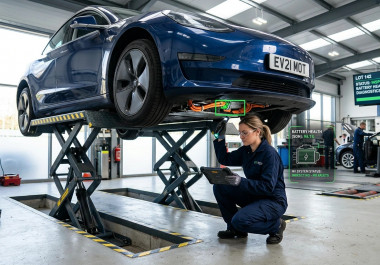
A professional structural integrity assessment performed by a certified expert goes considerably deeper. These specialists utilize ultrasonic measurement to inspect weld penetration on repaired sections. They check for minute frame twisting using advanced alignment rigs, hunt for micro-cracking around high-stress mounting points, and verify that the repair methodology precisely matches the original manufacturer directives.
This distinction is a critical commercial metric because a vehicle can easily pass a standard MOT while simultaneously carrying severe structural compromises that present catastrophic risk during a highway collision. Standard testing simply was not designed to catch advanced chassis fatigue.
The Compliance and Underwriting Requirements
The UK motor trade operates under strict regulatory frameworks regarding how damaged inventory returns to the public highway. The compliance obligations differ substantially between the official salvage classifications, and commercial operators must understand exactly where the legal and financial liabilities sit.
Category N vehicles have suffered strictly non-structural damage. A Category N chassis can be commercially repaired and legally returned to the road without any mandatory independent structural assessment. If the cosmetic or electrical repairs are completed and the vehicle successfully passes a standard MOT, the DVLA considers the asset legally roadworthy.
While the DVLA solely requires a V62 application and a valid MOT to execute formal Category S re-registration, securing the mandatory commercial insurance to actually drive the asset legally creates a separate, far more demanding hurdle. Historically, the UK government mandated official Identity and Vehicle Registration checks for structural write-offs, but this system was abolished and replaced by a strictly market-driven compliance model. Today, the true barrier to putting a Category S vehicle back on the road is the insurance sector.
Because underwriters assume immense liability when covering repaired structural damage, they consistently demand formal engineer inspections before authorizing comprehensive policies. Without this independent verification, mainstream and specialist underwriters will flatly refuse to cover the asset.
Category N Inspections: Optional But Strategic
The absence of a strict underwriting mandate for independent assessments on Category N vehicles does not render them unnecessary. It simply transfers the complete risk assessment burden directly onto the commercial buyer.
Category N vehicles frequently harbor hidden mechanical deterioration that severely affects long-term safety and commercial viability. An electrical wiring harness damaged during a light frontal collision might function perfectly during a brief forecourt test drive, only to trigger cascading sensor failures weeks later.
While a full chassis assessment is not strictly required for cosmetic write-offs, higher-value acquisitions demand rigorous due diligence. When evaluating digital vehicle auctions for assets where the cosmetic damage occurred dangerously close to structural mounting points, an independent assessment provides objective intelligence that no standard invoice can supply.
The financial outlay for these independent assessments typically ranges between £150 and £350. When measured against the substantial capital savings generated by acquiring a Category N asset at 30 percent below clean market value, this assessment fee operates as a highly cost-effective risk mitigation strategy.
The Underwriting Hurdle for Structural Inventory
Completing the Category S re-registration process merely satisfies the DVLA database. To actually retail the vehicle or deploy it into a commercial fleet, the operator must satisfy the strict documentation requirements demanded by the UK insurance sector. Understanding what these independent assessors verify helps trade buyers gather the correct paperwork before initiating the final sale.
The independent assessor evaluates three distinct commercial metrics. They verify the physical vehicle identity remains consistent and untampered, ensuring the VIN matches all digital records. They conduct the structural integrity assessment to confirm the chassis parameters meet factory tolerances. Finally, they cross-reference the physical repair work against the supplied commercial bodshop invoices to ensure no hidden damage was ignored during the rebuild.
Securing these specialized engineer inspections provides the necessary documentation to satisfy strict underwriting algorithms. When trade professionals supply this verified intelligence to their retail buyers, it removes the primary market friction associated with structural salvage, allowing the end-consumer to secure comprehensive coverage smoothly.
Failure to compile this documentation renders the formal Category S re-registration effectively useless, as the asset cannot be legally deployed or retailed without corresponding insurance coverage. Trade professionals who acquire unrepaired structural inventory must factor the cost of this final independent report directly into their initial workshop budgets.
What Qualifications to Look For in an Inspector
Not all vehicle examiners possess the legal credentials required to sign off on severe structural rectifications. Utilizing an unqualified assessor wastes working capital because underwriters will simply reject the submitted report.
Commercial operators must source inspectors holding specific Institute of the Motor Industry certification in accident damage assessment or advanced vehicle damage appraisal. Furthermore, utilizing specialists who hold Independent Motor Examiner credentials guarantees the resulting documentation carries absolute authority within the insurance sector.
Standard consumer pre-purchase inspections provide a reliable baseline for evaluating light mechanical wear on Category N inventory, but they operate as poor substitutes for specialist structural assessments on complex Category S chassis rails.
Professional operators must demand highly detailed written reports featuring specific structural measurements and high-resolution supporting imagery. Verbal confirmations hold zero commercial value when negotiating with a strict insurance underwriter. The physical report establishes a vital audit trail that protects the commercial seller against future liability claims.
Using Inspection Data to Calculate Acquisition Costs
Because digital salvage platforms operate efficiently and securely, trade buyers cannot dispatch engineers to perform intrusive ultrasonic measurements on the auction lot prior to bidding. Instead, successful commercial operators factor the strict costs of these mandatory post-repair assessments, alongside a contingency budget for potential hidden rectifications, directly into their initial working capital calculations.
Trade professionals assume that every Category S acquisition will require a formal independent assessment before it can be legally retailed or insured. By pre-calculating the cost of this final structural sign-off, the commercial buyer simply adjusts their maximum auction bid downward, ensuring the overhead is absorbed entirely by the acquisition margin.
Trade buyers sourcing specific inventory through regional hubs, such as vehicle auctions in the North West, rely heavily on the platform's high-resolution imagery and detailed damage descriptions to establish an asset's baseline condition. Combining this transparent digital intelligence with a pre-calculated structural assessment budget ensures the final acquisition price accurately reflects the physical reality of the chassis without requiring impossible pre-bid physical inspections.
V5C Documentation: What to Check Before Committing
The V5C logbook operates as the primary document confirming a vehicle's legal status and historical classification. For recorded inventory, this document carries specific markers that commercial buyers must verify before deploying any capital.
The official salvage category is permanently stamped onto the V5C. A Category S marker remains indefinitely, regardless of the subsequent repair quality or a flawless decade of clean MOT passes. The logbook also details the previous keeper history. Multiple rapid keeper changes following a structural repair frequently signal that persistent mechanical issues emerged post-rebuild, prompting previous owners to quickly liquidate the asset.
Professionals evaluating vehicle auctions in Scotland routinely run the vehicle registration through external DVLA database checkers prior to bidding. This external verification instantly confirms the current tax status, the MOT history, and the exact date the salvage marker was formally applied.
Any discrepancy between the physical chassis and the digital logbook demands immediate caution. Mismatched VIN stamps, incorrect colour designations, or engine displacement anomalies act as severe red flags. In these scenarios, the asset presents an identity risk that no amount of structural repair quality will resolve. If commercial operators acquire unviable inventory that cannot be legally authenticated or economically repaired, utilizing a dedicated scrap my car service provides an immediate avenue to liquidate the problematic chassis and recover baseline working capital.
The Commercial Case for Strict Verification
Executing independent structural assessments consumes working capital upfront. For trade buyers operating on tight commercial margins, paying an external examiner might initially feel like an unnecessary depletion of workshop funds.
However, the commercial mathematics heavily favor strict verification. An assessment that identifies severe, unrepairable chassis twisting saves the operator from deploying thousands of pounds into a fundamentally doomed project. Conversely, an assessment that confirms perfect structural alignment serves as a powerful sales tool, allowing the trade professional to command a higher retail price on the forecourt.
For operators analyzing complex digital inventory, such as specialized motorcycle salvage auctions, relying on external expertise mitigates the severe risks associated with high-speed performance assets.
If trade professionals require assistance with account verification or have questions regarding tier-based buyer fees, please feel free to contact us for immediate guidance.
To apply this professional due diligence to live inventory and build a highly profitable acquisition strategy, secure auction bidding access today.
Once registered, professionals can immediately evaluate the extensive catalog of trade inventory available across the RAW2K digital gateway.