Buying a salvage vehicle at auction is the easy part. The real challenge begins when you get it home and face the repair work ahead. Success with salvage projects depends heavily on preparation, and that means having the right workspace, the right tools, and a realistic plan before you start unbolting anything.
Proper DIY repair planning separates completed projects from abandoned ones rusting in driveways. The buyers who consistently profit from salvage purchases understand that investment in workspace and tools pays dividends across multiple projects. Cutting corners on preparation leads to frustrating repairs, bodged results, and projects that drag on far longer than necessary.
This guide covers everything you need for effective salvage workspace requirements, from minimum viable setups to ideal configurations. Whether you are working from a single garage or making do with a driveway, understanding what you need helps you plan realistically before bidding on your next project from platforms like RAW2K.
Assessing Your DIY Capabilities
Before investing in tools and workspace, honestly assess what repairs you can realistically tackle yourself. DIY repair planning starts with understanding your current skills and which new skills you are prepared to learn.
Skill Categories
Mechanical work suits most competent DIYers. Replacing suspension components, servicing brakes, and swapping engines all follow logical processes that can be learned from manuals and videos. These repairs need patience and proper tools more than specialist training.
Bodywork and paint present steeper learning curves. Achieving professional panel fitment and paint finish takes practice. Many DIYers handle mechanical repairs themselves but outsource final paint to specialists.
Electrical diagnosis requires systematic thinking and proper equipment. Modern vehicles have complex systems that need diagnostic scanners and electrical knowledge. Some DIYers excel at this while others find it frustrating.
Structural work on Cat S vehicles typically requires professional involvement. Chassis alignment needs specialist jigs and training. Unless you have this equipment and expertise, structural repairs should go to qualified specialists.
Building Skills Progressively
Start with repairs matching your current abilities. Cat N vehicles with cosmetic and mechanical damage suit DIY beginners better than complex Cat S structural projects. Success builds confidence and skills for tackling more challenging work on future projects.
Workspace Fundamentals
Your workspace determines what repairs you can practically complete. Understanding salvage workspace requirements helps you assess what projects suit your situation.
Minimum Space Requirements
A single vehicle workspace needs roughly 6 metres by 3 metres minimum, allowing access around the vehicle and space for a small workbench. This is tight for anything beyond basic work. Double these dimensions for comfortable working with room for parts storage and tool organisation.
Indoor vs Outdoor Considerations
Indoor workspace provides weather protection, security, and consistent conditions. Outdoor work is possible but limits what you can tackle. Paint work needs controlled environments. Electrical diagnosis is difficult in rain. Long projects suffer from weather exposure.
A garage or industrial unit provides ideal conditions for salvage workspace requirements. If indoor space is unavailable, plan projects around weather windows and focus on mechanical work that tolerates outdoor conditions.
Flooring Requirements
Concrete flooring supports vehicle weight and resists fluid spills. Seal concrete to prevent oil absorption and simplify cleaning. Interlocking garage tiles provide comfortable standing surfaces and quick cleanup.
Avoid working on gravel, grass, or unsealed surfaces. Dropped fasteners disappear. Jacks and stands need solid foundations. Fluid spills create environmental issues.
Lighting Needs
Good lighting prevents mistakes and reduces eye strain during detailed work. LED shop lights providing 500+ lumens per square metre transform dark garages into productive workspaces. Position lights to minimise shadows in working areas.
Portable inspection lights supplement fixed lighting for underbody work and dark engine bays. Rechargeable LED work lights have largely replaced traditional inspection lamps.
Power Requirements
A 13-amp socket supports most DIY power tools. Heavier equipment like MIG welders or large compressors may need 16-amp or 32-amp supplies. Assess your power availability before purchasing equipment that exceeds it.
Multiple socket positions around the workspace prevent trailing cables across working areas. Consider an electrician for additional circuits if your current supply is limited.
The Ideal Garage Setup
If you have the luxury of dedicated garage space, optimising the layout maximises productivity for your DIY repair planning.
Optimal Dimensions
A single garage (6m x 3m) accommodates basic work but feels cramped for larger projects. Double garages (6m x 6m) provide comfortable working space with room for a proper workbench and storage. Larger units (8m x 6m or more) allow multiple projects or dedicated areas for different work types.
Ceiling height matters for lift installation and working on vans or trucks. Standard 2.4m ceiling height limits options. 3m or higher opens up vehicle lift possibilities and overhead storage.
Workbench Configuration
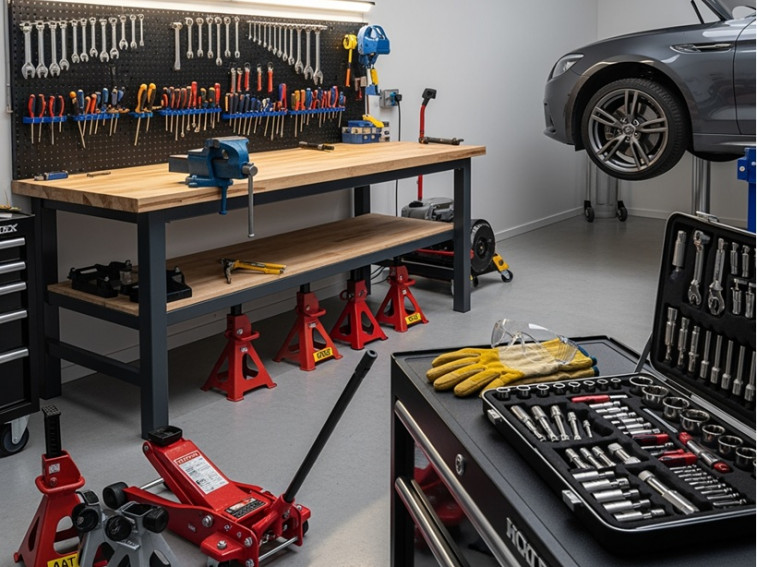
A sturdy workbench is essential for assembly, parts cleaning, and detailed work. Position the bench against a wall with good lighting above. 600mm depth and 1800mm length provides adequate work surface. Include a vice for holding parts during work.
Pegboard or tool panels above the workbench keep frequently used tools visible and accessible. Drawer units below the bench surface store smaller items securely.
Tool Storage
Quality tool storage protects your investment and maintains organisation. Roller cabinets provide portable storage that moves to the work area. Wall-mounted cabinets and shelving maximise floor space.
Separate storage for consumables, fasteners, and fluids from main tool storage. Clearly label everything. Time spent searching for tools is time not spent on repairs.
Vehicle Lift Considerations
A two-post or four-post lift transforms salvage work efficiency. Working at comfortable height rather than on your back dramatically speeds underbody repairs. Four-post lifts also provide storage underneath when not in use.
Lift installation requires adequate ceiling height (minimum 3.6m for most two-post lifts), concrete floor of sufficient thickness (typically 100mm minimum), and appropriate power supply. Installation costs add several hundred pounds to equipment purchase.
Budget constraints mean most DIYers work with jacks and stands. A quality trolley jack and four rated axle stands enable most repairs safely if not as conveniently as a lift.
Working Without a Garage
Many successful salvage repairs happen without dedicated garage space. Adapting your DIY repair planning to available space is entirely possible with proper preparation.
Driveway Workspace
A concrete or paved driveway provides workable outdoor space. Ensure the surface is level for safe jack and stand use. Check local regulations regarding vehicle work on residential property. Some areas restrict major repairs or prohibit them entirely.
Weather dependency is the main limitation. Plan work around forecasts. Have covers ready for unexpected rain. Accept that some repairs will need to pause mid-project.
Portable Shelter Options
Carport structures provide rain and sun protection without permanent building requirements. Pop-up gazebos offer temporary shelter for specific work sessions. More substantial portable garages with fabric covers provide semi-permanent workshop space.
Check planning requirements for any structure. Temporary structures often avoid planning permission but permanent installations may require approval. Consider neighbours and ensure structures do not create disputes.
Tool Security
Working outdoors requires secure tool storage. Lockable tool chests and cabinets prevent theft. Consider moving valuable tools indoors after each work session rather than leaving them in outdoor storage.
Portable toolboxes allow transporting essential tools to the workspace while keeping main storage secure. This approach suits driveway work where permanent workshop storage is impractical. Proper salvage workspace requirements include security considerations.
Essential Hand Tools
Quality hand tools form the foundation of any DIY repair planning toolkit. Investing in reliable basics serves you across countless projects.
Socket Sets
A comprehensive socket set is the single most important tool purchase. Start with a 1/2" drive set covering 10mm to 32mm in 12-point configuration. Add a 3/8" drive set for lighter work and tight spaces. Extension bars, universal joints, and wobble extensions expand access capabilities.
Quality matters with sockets. Chrome vanadium construction with proper heat treatment resists rounding and cracking. Budget sets often fail under heavy use. Invest in recognised brands like Bahco, Halfords Professional, or equivalent.
Spanners and Wrenches
Combination spanners from 8mm to 24mm cover most automotive fasteners. Ratcheting spanners speed repetitive work significantly. Adjustable spanners serve as backup but should not replace proper sized tools.
Flare nut spanners prevent damage to brake and fuel line fittings. Crowfoot spanners access awkward fittings that standard spanners cannot reach.
Screwdrivers
A comprehensive screwdriver set covers Phillips, Pozidriv, flat blade, and Torx fittings in multiple sizes. Impact-rated screwdrivers handle stubborn fasteners without head damage. Stubby versions access tight spaces.
Modern vehicles use Torx and other security fittings extensively. A Torx bit set is essential for interior trim, bodywork, and many mechanical components.
Pliers and Cutters
Combination pliers, long-nose pliers, and side cutters cover basic gripping and cutting needs. Locking pliers (Mole grips) hold parts during work. Circlip pliers (internal and external) enable retention clip removal and fitting.
Specialist pliers like hose clamp pliers, trim clip removal tools, and brake spring pliers simplify specific tasks significantly.
Power Tools for Salvage Work
Power tools accelerate repairs and enable work that hand tools cannot practically achieve.
Angle Grinders
A 115mm angle grinder with cutting and grinding discs is essential for salvage work. Cutting corroded bolts, removing damaged panels, and preparing surfaces for welding all require grinder work. Quality discs matter more than the grinder itself for most DIY use.
Variable speed grinders provide more control for finishing work. Wire brush and flap disc attachments extend grinder versatility.
Drills and Drivers
A cordless drill driver handles most drilling and fastening tasks. 18V systems provide adequate power for automotive work. Impact drivers significantly outperform standard drills for stubborn fasteners.
Drill bit sets should include HSS bits for metal, masonry bits if drilling into garage walls, and step drills for enlarging holes cleanly. Spot weld cutters enable panel separation without excessive damage.
Air Tools vs Electric
Air tools traditionally dominated workshops due to power-to-weight advantages. Modern brushless electric tools have largely closed this gap for DIY use. Electric tools avoid compressor investment and noise.
If choosing air tools, budget for an adequate compressor. Small DIY compressors run continuously during impact wrench or spray gun use and overheat quickly. A minimum 50-litre tank and 8 CFM output suits basic air tool use.
Welding Equipment
MIG welders enable panel repairs and fabrication work. Entry-level gasless MIG welders cost from £150 but produce spatter-prone welds. Gas MIG welders from £300 produce cleaner results suitable for visible repairs.
Welding requires practice before tackling vehicle repairs. Source practice material and develop skills before working on your project vehicle. Safety equipment including auto-darkening helmet, welding gloves, and appropriate clothing is essential. Factor these into your DIY repair planning budget.
Diagnostic and Electrical Tools
Modern vehicles require electronic diagnosis alongside mechanical repair. The salvage auction guide notes that electrical issues are common in salvage vehicles.
Multimeters
A digital multimeter tests voltage, resistance, and continuity. These basic tests diagnose many electrical faults. Auto-ranging multimeters simplify use for beginners. Models with current clamp attachments measure circuit current without breaking connections.
OBD Diagnostic Scanners
All vehicles from 2001 onwards have OBD-II diagnostic ports. Basic code readers display fault codes that indicate problem areas. More advanced scanners provide live data, system tests, and manufacturer-specific functions.
Budget Bluetooth OBD adapters work with smartphone apps for basic diagnosis. Dedicated handheld scanners provide faster operation and more comprehensive functions. Professional-level tools cost thousands but are unnecessary for DIY use.
Battery Equipment
A quality battery charger maintains and recovers batteries during project downtime. Smart chargers with reconditioning modes can revive sulphated batteries. Jump packs provide starting power without requiring a second vehicle.
Battery testers assess cell condition and predict remaining service life. Knowing whether to replace a battery or simply recharge it prevents unnecessary expense.
Bodywork and Paint Equipment
Cat N cosmetic repairs often involve bodywork. Proper equipment achieves professional results where improvisation produces obvious amateur finishes.
Panel Preparation Tools
DA (dual action) sanders produce swirl-free finishes for paint preparation. Electric or air-powered DA sanders with 150mm pads suit most panel work. Sanding discs in grits from 80 to 2000 cover stripping through to final preparation.
Body filler application requires spreading tools, mixing boards, and cheese grater files for rough shaping. Flexible sanding blocks follow panel contours for smooth finishing.
Spray Equipment Options
Aerosol cans suit small touch-up repairs but lack the coverage and finish quality for panel resprays. Gravity-feed spray guns with adequate compressor supply produce professional results with practice.
HVLP (high volume low pressure) guns reduce overspray and improve transfer efficiency. Budget HVLP guns start around £50 but quality guns from £150 upward provide better atomisation and finish quality.
Paint Environment
Dust-free environments are essential for quality paint finish. Temporary spray booths using plastic sheeting and extraction fans provide basic protection. Water dampening floors and surfaces reduces airborne dust.
Temperature and humidity affect paint application and curing. Most paints require 15-25°C and moderate humidity. Avoid painting in cold, damp conditions regardless of workspace quality.
Lifting and Support Equipment
Safe working under vehicles requires proper lifting and support equipment. Never compromise on this aspect of salvage workspace requirements.
Jacks and Stands
A trolley jack with adequate capacity (minimum 2 tonnes for cars, 3 tonnes for vans) provides primary lifting. Low-profile jacks access vehicles with limited ground clearance. Racing jacks lift quickly but cost more.
Axle stands must match or exceed jack capacity. Four stands enable full vehicle support for comprehensive work. Never work under vehicles supported only by jacks.
Ramps and Alternatives
Drive-on ramps provide quick elevation for oil changes and inspections. They suit level surfaces and vehicles with adequate ground clearance. Ramps cannot raise vehicles high enough for many repairs.
Wooden cribbing stacked beneath chassis points provides stable support during extensive work. Purpose-built wheel cribs allow wheel removal while vehicle rests securely.
Engine Hoists
Engine removal and installation requires a hoist or crane. Folding engine cranes store compactly when not in use. 1-tonne capacity suits most car engines. Heavier engines require 2-tonne equipment.
Load levellers attach between crane and engine to adjust angle during removal and installation. Engine stands hold removed engines for work and storage.
Safety Equipment Essentials
Workshop safety protects you from immediate injury and long-term health effects. Include safety equipment in your DIY repair planning from the start.
Personal Protective Equipment
Safety glasses protect eyes from debris, fluids, and chemical splashes. Wear them constantly during any grinding, cutting, or hammering. Prescription safety glasses are available for those needing vision correction.
Hearing protection prevents long-term damage from grinder, impact tool, and compressor noise. Both foam plugs and ear defenders work; choose based on comfort and convenience.
Gloves protect hands from cuts, chemicals, and heat. Nitrile disposable gloves suit fluid handling. Mechanics gloves provide grip and cut protection. Welding gloves handle hot materials.
Respiratory protection ranges from dust masks for sanding to half-mask respirators with appropriate cartridges for paint spraying. Match protection to the hazard.
Fire Safety
A fire extinguisher suited to vehicle fires (foam or powder type) should be immediately accessible. Know how to use it before you need it. Check pressure indicators monthly and replace as required.
Welding and grinding create sparks that ignite fuel vapours, oily rags, and flammable materials. Clear work areas of ignition risks before hot work. Have a fire watch during and after welding.
First Aid
A properly stocked first aid kit addresses cuts, burns, and eye contamination. Mount it visibly and check contents regularly. Know the location of your nearest accident and emergency department.
Eye wash stations or bottles flush contaminants immediately. Speed matters with chemical eye exposure. Have eye wash accessible wherever chemicals are used.
Budgeting for Tools and Equipment
Tool investment builds over time. A sensible DIY repair planning approach prioritises essential purchases and adds specialist tools as needed.
Starter Toolkit Investment
A basic toolkit enabling simple repairs costs £300-£500. This covers socket sets, spanners, screwdrivers, pliers, jack, and stands. Focus on quality basics rather than comprehensive quantity.
Expanding to tackle more comprehensive salvage work requires £1,000-£2,000 additional investment. This adds power tools, diagnostic equipment, and bodywork tools. Spread purchases across multiple projects as budget allows.
Quality Investment Priorities
Prioritise quality for frequently used items. A quality socket set used daily justifies premium pricing. A specialist tool used once per year suits budget options.
Lifetime warranty tools from recognised brands provide long-term value despite higher initial costs. Replacing broken budget tools eventually costs more than buying quality once.
Hire vs Buy Decisions
Specialist tools used rarely suit hiring rather than purchasing. Engine cranes, panel lifters, and specialist diagnostic equipment all hire for reasonable daily rates. Compare hire costs against purchase price and anticipated usage frequency.
Tool libraries and sharing arrangements with other enthusiasts reduce individual investment requirements. Online communities often facilitate tool sharing among members working on salvage cars for sale projects.
Organising Your Workspace
Organisation multiplies productivity and reduces frustration. Time spent searching for tools or parts is time not spent on repairs.
Tool Organisation Systems
Shadow boards show tool positions at a glance and reveal missing items immediately. Foam drawer inserts keep tools organised and protected. Label everything clearly.
Frequently used tools belong within arm's reach of primary work areas. Rarely used specialist tools can live in less accessible storage. Organise by function rather than by set.
Parts Storage
Label all removed parts and fasteners immediately. Plastic bags and containers keep related components together. Photograph assemblies before disassembly to guide reassembly.
Dedicated shelving for project-specific parts prevents confusion when working on multiple vehicles. Clear bins allow visual identification of contents.
Project Documentation
Photograph progress throughout repairs. Document which fasteners came from which locations. Note torque specifications and alignment marks. This documentation guides reassembly and helps if the project pauses.
Maintain a parts list with sources, costs, and order status. Track outstanding items and expected delivery dates. This organisation keeps projects moving efficiently.
Explore damaged vehicle auctions to find your next project once your workspace is ready.
Conclusion
Successful DIY salvage repairs depend on proper preparation. The right workspace, appropriate tools, and organised approach enable quality repairs that would otherwise require expensive professional labour. Investment in salvage workspace requirements pays returns across every project you complete.
Start with honest assessment of your space, skills, and budget. Prioritise essential tools over comprehensive collections. Build capabilities progressively through increasingly challenging projects. Maintain safety as a non-negotiable priority throughout.
Your DIY repair planning determines whether salvage purchases become profitable completions or abandoned projects. Proper preparation transforms auction bargains into roadworthy vehicles or profitable resales. The time invested in workspace and tool setup multiplies the value of every subsequent hour spent on repairs.
Browse UK salvage auctions and salvage motorcycle auctions to find your next project. Register for salvage auctions today.