Acquiring a salvaged vehicle at auction can be a cost-effective and profitable venture. However, this potential is only realised if the internal damage is accurately assessed before bidding. Many buyers concentrate solely on visible body damage, missing crucial underlying mechanical problems that can quickly deplete a repair budget. Therefore, a comprehensive overview of the most common car mechanical issues in accident-damaged cars is vital.
The key to profitable restoration lies in due diligence, which means understanding how impact forces travel through a chassis and affect core operational systems. When reviewing listings on the bidding platform, restorers must look past the bent bumper and focus on what cannot easily be seen. Effective assessment turns a risky gamble into a calculated investment for private restorers and professional dealers alike.
Evaluating Hidden Damage Beyond the Bodywork
An immediate visual check is only the beginning when assessing crash damaged cars. The impact energy often transfers deep into the vehicle's heart, causing failures in systems that appear untouched from the outside. Experienced buyers know that the true repair cost often originates beneath the bonnet or the chassis rail, not just the damaged panels.
The Critical Role of Structural Integrity
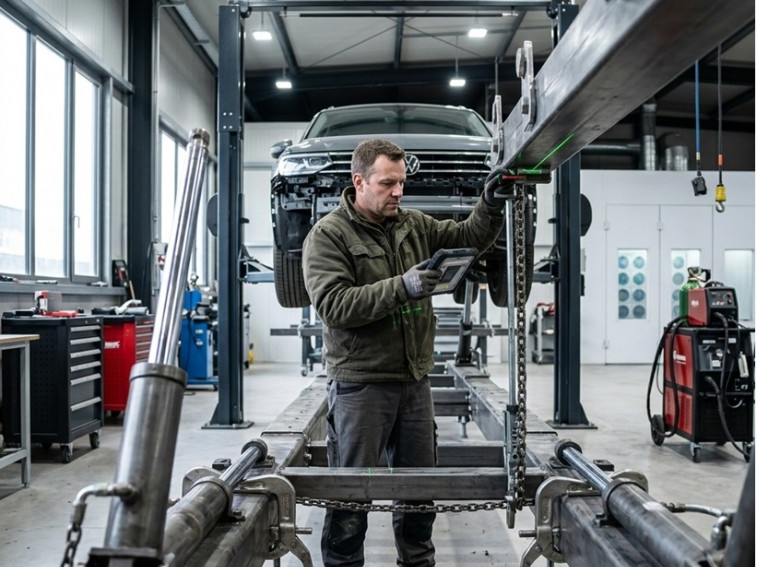
The structural integrity of a vehicle is its ability to protect occupants and maintain alignment, and any compromise here is severe. Frame or chassis damage is the defining characteristic of a Category S (Structural) write-off. Buyers should look for signs of distortion, where the main rails are bent or distorted, requiring specialist jig work for repair.
Even small creases in the chassis rails can indicate significant force transfer, affecting everything from suspension geometry to door fitment. The structural integrity of the crumple zones must be restored to factory specification to ensure future road safety. Failing to budget for this specialised structural repair is a common mistake for novice auction buyers.
Differentiating Between Category S and Category N
The insurance category provides the first crucial hint about the likely extent of hidden mechanical damage. Category S vehicles almost guarantee complex structural and mechanical repairs that demand expert involvement. Conversely, Category N (Non-structural) vehicles usually involve less complicated car mechanical issues, perhaps related to the cooling system or minor suspension components.
For instance, a Category N designation might mean the front panel and radiator need replacing, but the engine and gearbox mounts remain intact. Always remember that the category only defines the type of damage, not necessarily the severity. Buyers must confirm the specifics by meticulously reviewing the detailed imagery and vehicle notes provided in the listing.
Major Mechanical Systems Prone to Failure
Impacts rarely happen in isolation; the kinetic energy must go somewhere, resulting in sequential damage across multiple mechanical systems. Buyers should investigate several specific areas where major faults commonly occur, especially when considering heavy-duty assets. By browsing the online bidding platform for salvage, restorers can find varied inventory where these kinetic energy transfers must be carefully considered.
Undercarriage and Suspension Damage
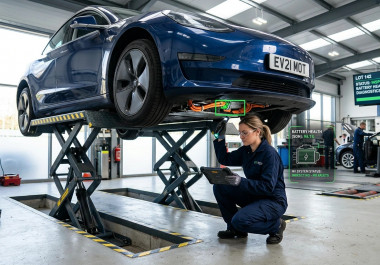
Damage to the undercarriage and suspension system is one of the most common and expensive hidden faults in crash damaged cars. A seemingly minor bump can transmit force through the wheels directly into the wheel hubs, steering rack, and subframe. Suspension arms may be bent, shock absorbers fractured, or even mounting points ripped from the chassis.
Like trying to level an uneven table, correcting suspension geometry involves far more than just replacing a single broken part; it requires precision and alignment. Even if the car starts, a distorted subframe will lead to poor handling, uneven tyre wear, and eventual steering failure. Check pictures for misaligned wheels or visible fluid leaks around the strut towers.
Engine, Cooling, and Fluid Systems
A frontal collision frequently compromises the engine's supporting systems, leading to serious secondary car mechanical issues. The radiator, condenser, and associated pipework are immediately vulnerable, leading to immediate coolant loss. Look for potential damage to the oil sump or gearbox housing if the car has scraped the ground during the accident.
Engine mounts, often rubber and steel, absorb crash forces and may shear or crack, leading to significant engine movement when running. Even if the engine appears undamaged, internal problems can arise if debris or metal shavings entered the oil system or intake manifold during impact. Rapid coolant loss or oil leaks should be identified early in the assessment. Always assume a comprehensive fluid and filter change will be necessary.
Transmission and Drivetrain Complications
The transmission and drivetrain systems are susceptible to trauma, particularly in side or heavy rear impacts that jar the vehicle dramatically. In front-wheel-drive vehicles, axle shafts can bend or pop out of the gearbox casing upon impact. This can cause severe internal damage to the differential, eventually leading to complete transmission failure.
For four-wheel-drive or rear-wheel-drive vehicles, check the propeller shaft and differential housing for physical cracks or alignment issues. Even minor damage to the driveshaft can lead to severe vibration and eventual transmission failure once the car is driven at speed. This kind of heavy mechanical repair can be particularly costly on specialised stock, such as those found in damaged motorcycle listings.
The Electrical and Electronic Nightmare
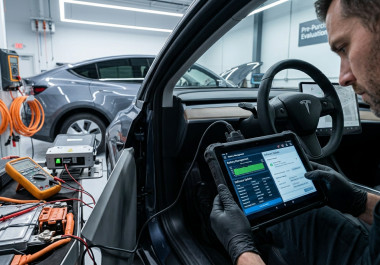
Modern vehicles rely heavily on interconnected electronic control units (ECUs) and complex wiring looms, which are notoriously fragile in an accident. Water ingress from a broken windscreen or simply severed wiring can create electrical problems that are often expensive and time-consuming to diagnose. This complexity makes purchasing accident-damaged vehicles more challenging than ever.
Airbag and Sensor System Failures
One guaranteed post-crash cost is the replacement of deployed airbags and associated sensors. Crucially, the airbag control module often stores "crash data" and must be replaced or professionally reset, as it remains locked after deployment. This is a non-negotiable safety repair that affects the vehicle's roadworthiness.
Beyond the airbags, the collision may have damaged proximity sensors, parking aids, and even the adaptive cruise control radar unit. These delicate components require careful calibration after repair, adding both complexity and cost to the restoration process. If electrical problems persist, the final resale value can be significantly affected.
Wiring Loom and ECU Complications
Wiring looms are complex bundles of wires that run throughout the vehicle, and a sharp impact can easily sever or short-circuit critical sections. Tracing the cause of an electrical fault can consume many hours of labour, turning a quick repair job into a prolonged diagnostic session. Furthermore, if the Electronic Control Unit (ECU) suffered a power surge or physical damage, a very expensive replacement may be necessary.
This is a riskier component to assess remotely. When examining images in the salvage vehicle inventory, look for signs of fire damage, frayed wiring, or water exposure in the engine bay or under the dashboard. If there is uncertainty about the extent of electrical trauma, it is wise to err on the side of caution.
Calculating the True Cost of Restoration
Making a profit on crash damaged cars hinges on accurately predicting the cost of bringing it back to roadworthy condition. Underscoring the necessity of detailed financial planning, many first-time restorers budget only for body panels but fail to account for severe structural damage, such as a bent steering column or damaged subframe. These issues can double projected labour costs, so checking regional auction centres for stock close to the workshop is advised to save on logistics.
Sourcing Parts and Labour Budgeting
High-quality parts are essential for a safe and lasting repair, particularly when dealing with structural components. Always factor in the cost difference between new OEM parts, which offer certainty, and used or aftermarket parts, which can save money but carry a higher risk. Specialist labour, like frame alignment or complex diagnostic work, will demand higher hourly rates than simple panel swapping.
It is helpful to get preliminary repair estimates for the most common mechanical issues identified, such as a full suspension rebuild or a gearbox removal. Use these estimates to determine the absolute maximum bid, ensuring the final total acquisition and repair cost remains competitive for the vehicle's potential resale value. For more detailed advice, consult our comprehensive salvage buyer resources.
The Post-Repair Inspection Process
After completing all mechanical and body repairs, a vehicle previously categorised as salvage must undergo a stringent inspection process before it can be legally driven again. This is where the accuracy of repairs is tested, ensuring that the car mechanical issues have been fully resolved. The necessary paperwork and re-registration steps are vital for the vehicle's future legality and insurance eligibility.
The best way to ensure readiness for the bidding floor is to register to bid and explore the current listings directly on RAW2K. If there are specific questions about the documentation required for re-registering a vehicle, or if you require guidance on the procedures for a particular lot, please reach out to our customer support team. Expert support is readily available throughout the entire journey, from bidding to final paperwork. Browsing the extensive listings informed by this mechanical knowledge will ensure a genuinely worthwhile investment.