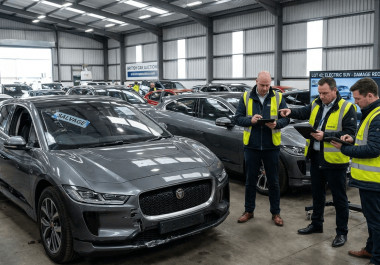
When evaluating inventory at a digital salvage auction, the initial acquisition price often appears highly lucrative. A three-year-old premium saloon listed for £4,000 or a commercial transit van displaying 40,000 miles for £2,500 immediately attracts bidding activity. It is tempting for inexperienced participants to assume recorded inventory always represents the optimal financial route compared to clean-title counterparts. However, cheaper upfront does not guarantee a cheaper total acquisition once the vehicle is fully processed for the retail forecourt.
The critical metric for any commercial operator is not whether the initial salvage car cost is lower, but whether the total financial commitment remains viable after factoring in structural repairs, insurance overheads, and final resale market resistance. Many trade buyers acquire Category S vehicles assuming they have secured a massive commercial advantage, only to discover the subsequent repair bill, insurance premium hike, and salvage vehicle depreciation completely destroy the projected profit margin. Conversely, highly successful operators routinely acquire Category N vehicles at 30 to 40 percent below market value, deploy internal repair resources efficiently, and secure substantial commercial returns.
Understanding when recorded inventory represents genuine commercial value and when it operates as a false economy requires analyzing the entire financial lifecycle beyond the digital hammer price.
The Upfront Price Difference: What the Numbers Actually Show
Salvage vehicles typically transact for 20 to 60 percent less than equivalent clean-title cars, depending entirely on the specific insurance category and the extent of the visible damage. A Category N vehicle featuring non-structural damage might achieve 70 to 80 percent of its pre-accident value if the required rectifications are minor. A Category S vehicle requiring structural repair frequently sells for 50 to 70 percent of comparable clean retail vehicles.
Consider a practical valuation scenario. A 2020 Ford Focus with 28,000 miles recently sold at our vehicle auctions for £5,200 carrying a Category N marker. An identical model possessing a clean title commanded a retail price of £9,500. This creates an immediate £4,300 upfront differential. The recorded damage involved the front bumper, headlight, and bonnet. The total commercial repair cost utilizing pattern parts equated to roughly £800, leaving a substantial theoretical margin.
Evaluating a Category S version of the exact same model, featuring professionally repaired chassis rail damage, reveals a different financial reality. Despite the structural repair being fully completed, the permanent V5C marker heavily suppresses the resale value. These assets typically sell for significantly less because trade buyers proactively price in the ongoing concerns regarding retail insurance resistance and permanent salvage vehicle depreciation, rather than just calculating the raw repair expenses.
The upfront capital saving is highly measurable, but it only represents the first phase of the commercial calculation.
The Hidden Costs That Erode Commercial Margins
Insurance Premiums: The Ongoing Retail Penalty
When trade professionals evaluate inventory, they must consider the financial friction their end-consumers will face. Most mainstream insurers charge 10 to 50 percent more to cover a recorded vehicle, even following professional rectification and independent MOT certification. Certain underwriters refuse to cover Category S vehicles entirely. When an end-consumer discovers their annual insurance quote has jumped from £600 to £1,100 due to a salvage marker, they frequently abandon the purchase. Over a five-year ownership cycle, this represents an extra £2,500 in operating costs, which directly restricts the maximum retail price a trade professional can charge on the forecourt.
Category N ownership typically incurs smaller, yet persistent, insurance increases ranging from 5 to 20 percent compared to clean vehicles. Because many mainstream insurers treat any salvage marker as an automatic decline, the retail buyer is frequently forced toward specialist providers, further shrinking the available commercial buyer pool.
Repair Costs: The Great Commercial Unknown
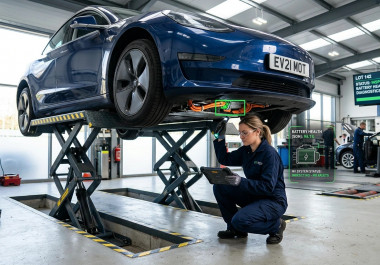
Acquiring unrepaired salvage inventory always involves calculating risk against projected repair bills. Auction imagery clearly displays primary impact zones, but secondary mechanical damage is frequently hidden behind crumpled panels. The radiator, complex grille-mounted sensors, and the underlying subframe frequently absorb substantial kinetic energy during a collision.
One commercial case study perfectly illustrates this risk. A trade buyer estimated a £1,200 rectification budget for a Category S Audi A4, accounting for a suspension arm, a replacement wheel, and standard panel work. Upon stripping the vehicle, the workshop discovered a damaged steering rack requiring a £450 replacement, a twisted subframe demanding £300 in alignment labour, and parking sensor recalibration costing £180. The initial £1,200 Category S repair estimate rapidly escalated to £2,800, instantly evaporating the projected profit margin.
Even Category N rectifications can escalate unexpectedly. Modern vehicles house expensive electronic architecture behind their bumpers. Parking sensors, adaptive cruise control radar units, and integrated camera systems cannot be replaced with inexpensive pattern parts. Restoring these systems requires acquiring main dealer components, which heavily inflates the final salvage car cost.
Resale Value: The Permanent Financial Hit
The most significant financial impact occurs during the final retail transaction. A Category S marker on the V5C permanently reduces the maximum achievable resale value by 20 to 40 percent compared to a clean equivalent, regardless of the repair quality or the presence of a pristine MOT history.
Permanent salvage vehicle depreciation impacts Category N cars slightly less, typically resulting in a 10 to 25 percent reduction compared to clean equivalents. However, the financial loss remains absolute. If a clean vehicle depreciates from £8,000 to £5,000 over three years, the owner absorbs a £3,000 loss. If a Category N version depreciates from £6,000 to £3,500 over the same period, the loss is £2,500. The initial saving exists, but the long-term depreciation curve frequently neutralizes the early commercial advantage.
Furthermore, private retail buyers remain highly cautious regarding recorded history. Trade professionals must accept they are marketing to a restricted demographic, which inherently extends forecourt holding times and increases negotiation pressure, tying up valuable working capital.
When Salvage Inventory Represents Genuine Commercial Value
Despite the complex financial variables, specific operational scenarios heavily favour acquiring salvage inventory. Success requires identifying which specific damage profiles align with a commercial operator's internal capabilities.
Leveraging Internal Workshop Capabilities
For independent mechanics, commercial bodyshops, and skilled operators possessing internal repair infrastructure, salvage vehicles represent a highly lucrative pipeline. By assessing damage accurately, sourcing components at trade prices, and executing rectifications without paying external labour rates, these operators maximize the commercial margin. A Category N asset requiring £1,500 in retail bodywork might only consume £400 in trade parts and internal workshop time.
A commercial operator recently acquired a Category N Vauxhall Vivaro panel van featuring damaged side panels for £3,200. The clean retail equivalent sat at £7,500. After investing £280 in replacement panels sourced from a breaker and utilizing internal paint facilities, the asset was deployed for three years of commercial use before liquidating at £4,100. This perfectly demonstrates the genuine commercial advantage when internal repair skills mitigate the primary overheads.
Strategic Long-Term Commercial Deployment
When an asset is acquired for permanent commercial fleet use, the traditional depreciation metrics become largely irrelevant. A Category S commercial vehicle that has been professionally rectified and acquired for £5,000 less than a clean version represents massive operational savings if the business intends to utilize the asset until it reaches the end of its mechanical lifespan.
This strategy is highly effective for trade professionals operating commercial fleets. Sourcing a Category N transit van at 40 percent below market rate delivers immediate capital efficiency. The business easily absorbs the slight insurance premium increase through the massive reduction in initial capital deployment and overall fleet depreciation. Operators actively monitoring commercial stock across vehicle auctions in the North West frequently execute this exact long-term deployment strategy.
Targeting Purely Cosmetic Damage Profiles
Category N vehicles featuring strictly cosmetic damage represent the optimal acquisition target. Vehicles subjected to severe hail damage, malicious paint scratching, or light panel impacts are frequently written off by insurers without possessing any underlying mechanical or structural compromise.
A professional buyer recently acquired a Category N BMW 3 Series featuring heavy hail damage across horizontal panels. The mechanical systems and service history were impeccable. The auction acquisition required £8,200, whereas a clean equivalent demanded £14,500. Following a £600 investment in smart repair techniques to address the most prominent cosmetic issues, the asset was deployed as a daily driver. The total financial saving exceeded £5,000, even after accounting for the elevated insurance premium. Trade buyers utilizing a scrap my car service to liquidate older, non-viable yard stock frequently pivot their recovered capital directly into these highly lucrative cosmetic Category N acquisitions.
When Clean Used Vehicles Deliver Superior Economics
Navigating Severe Retail Insurance Resistance
When end-consumers face demographic insurance penalties, such as young drivers or those residing in high-risk urban postcodes, the addition of a salvage marker frequently renders the vehicle uninsurable. Many younger retail buyers are entirely priced out of the Category S market because mainstream underwriters refuse to quote below £3,000 annually.
In these specific retail scenarios, acquiring a clean used vehicle at a £2,000 premium makes better financial sense because the £800 annual insurance saving recovers the initial capital difference by year three. Trade professionals supplying these specific demographics must prioritize clean-title inventory to ensure rapid forecourt turnover.
Operating within Restricted Lending Channels
Most mainstream automotive lenders automatically decline salvage vehicles or mandate severely restrictive lending terms that dramatically inflate the total repayable amount. When trade professionals evaluate their target retail demographic, they must accept that buyers relying on standard high-street automotive finance will struggle to secure funding for recorded inventory.
Because securing non-standard finance frequently requires end-consumers to absorb highly elevated interest rates and massive upfront deposits, the total cost of the vehicle rises sharply. Trade professionals targeting buyers who rely heavily on automotive finance must carefully evaluate whether recorded inventory matches their demographic's lending capabilities. Buyers evaluating diverse regional stock, such as analyzing active motorcycle auctions, rely heavily on dedicated enthusiasts who traditionally execute outright cash purchases, entirely neutralizing this financing friction.
The Impact of External Labour Rates
For buyers who lack internal mechanical capabilities and must rely entirely on external garages for rectifications, salvage acquisitions rarely deliver sustainable profit margins. A £3,000 upfront auction saving is rapidly consumed when external workshops charge £60 to £80 per hour for specialized labour. Furthermore, commercial garages frequently quote salvage rectifications conservatively to ensure they maintain their own margins against hidden damage.
A buyer recently acquired a Category S crossover for £6,500, projecting a £3,500 saving against retail value. The external garage quoted £2,400 for the primary structural repairs. During the rectification, the technicians discovered corroded mounting points requiring £300 in fabrication, a bent subframe housing costing £180, and complex geometry issues demanding £120 for specialized four-wheel alignment. The total external repair bill reached £3,000. The theoretical saving compressed to £500, leaving the buyer with a heavily marked vehicle that remained difficult to insure and challenging to sell.
The Strategic Value of Unrecorded Fleet Vehicles
An alternative commercial strategy involves targeting specific, high-value inventory profiles such as unrecorded fleet disposals or purely cosmetic write-offs rather than structurally compromised chassis. In this scenario, the buyer acquires an asset directly from the source, securing a substantial market discount without assuming the unpredictable risks of an unrepaired structural frame.
A light-damage fleet vehicle that possesses a flawless subsequent MOT history represents a highly stable commercial proposition. The acquisition price remains substantially below a clean equivalent, but the operational reliability has been practically demonstrated prior to the minor impact. Operators targeting digital vehicle auctions in Wales frequently prioritize this raw, direct-from-source inventory to minimize their exposure to unknown mechanical variables while maximizing their workshop margins.
Executing the Total Cost Calculation
Determining whether salvage vehicles are genuinely cheaper requires executing a comprehensive total cost model rather than simply comparing initial digital hammer prices. The final calculation depends entirely on internal workshop capabilities, target retail demographics, long-term deployment strategies, and the specific category of damage involved.
Commercial operators must aggregate the acquisition price, exact structural repair estimates, projected insurance overheads, and the final depreciated resale value. This combined metric must then be compared against the lifecycle costs of a clean retail equivalent.
The professionals who consistently generate profit within the salvage sector understand they are not merely purchasing a discounted vehicle; they are operating within a distinct economic environment governed by strict mathematical boundaries. Respecting these boundaries ensures that every digital acquisition represents genuine commercial value rather than a complex financial liability.
If trade professionals require assistance with account verification or have questions regarding tier-based buyer fees, please contact our customer support team for immediate guidance.
To apply this professional due diligence to live inventory and build a highly profitable acquisition strategy, secure auction bidding access today.
Once registered, professionals can immediately evaluate the extensive catalog of trade inventory available across the RAW2K digital gateway.